
























Tires rarely go from healthy to hazardous without leaving clues. Changes in pressure, tread shape, road noise, steering response, and wet-weather grip can reveal problems long before a tire becomes visibly flat. Some warnings point directly to tire damage, while others expose trouble with wheel alignment, suspension components, inflation habits, or vehicle loading.
Recognizing these 20 warning signs can help prevent premature replacement costs, unpredictable handling, and sudden tire failure. A few symptoms may have more than one possible cause, so visual checks should be combined with pressure measurements and professional inspection whenever the condition is unclear. What looks like ordinary wear may be the tire’s record of months of underinflation, repeated pothole impacts, or a mechanical issue elsewhere in the vehicle.
The TPMS Light Stays On
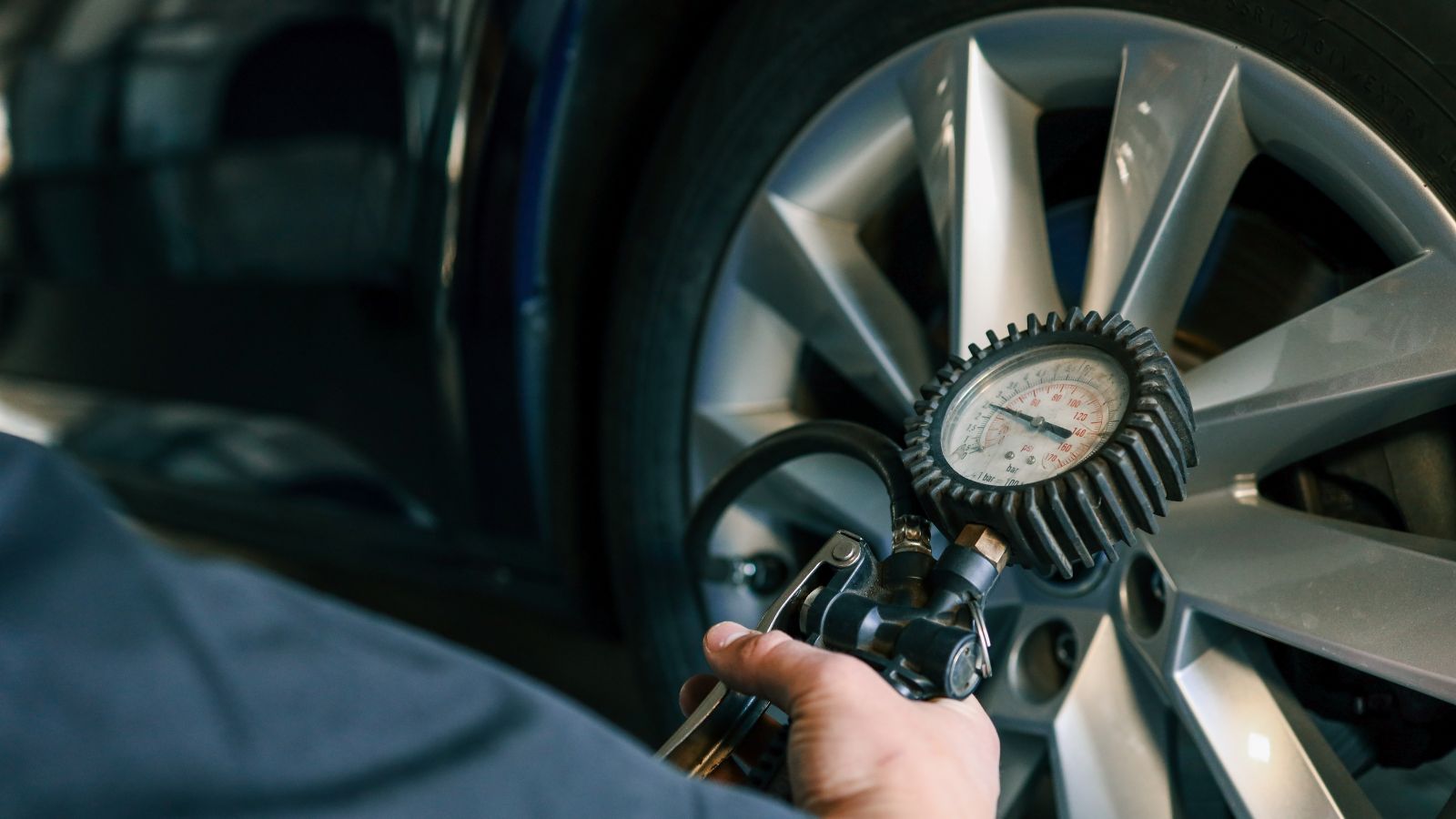
A tire-pressure monitoring system warning is not a decorative reminder. It means at least one tire is significantly underinflated, or the monitoring system itself has detected a fault. Because a radial tire can look nearly normal while carrying too little air, a visual glance is not enough. Pressure should be checked with an accurate gauge when the tires are cold and compared with the vehicle placard, usually found on the driver’s door frame rather than on the tire sidewall.
A light that appears on cold mornings and disappears after driving can still signal marginal pressure. Air pressure drops as temperatures fall, then rises as the tire warms. A warning that flashes for roughly a minute before staying illuminated may indicate a TPMS malfunction instead of low pressure. Either pattern deserves attention. Correcting pressure early can prevent heat buildup, irregular wear, sluggish handling, and damage that continues even after the tire is reinflated.
One Tire Keeps Losing Air
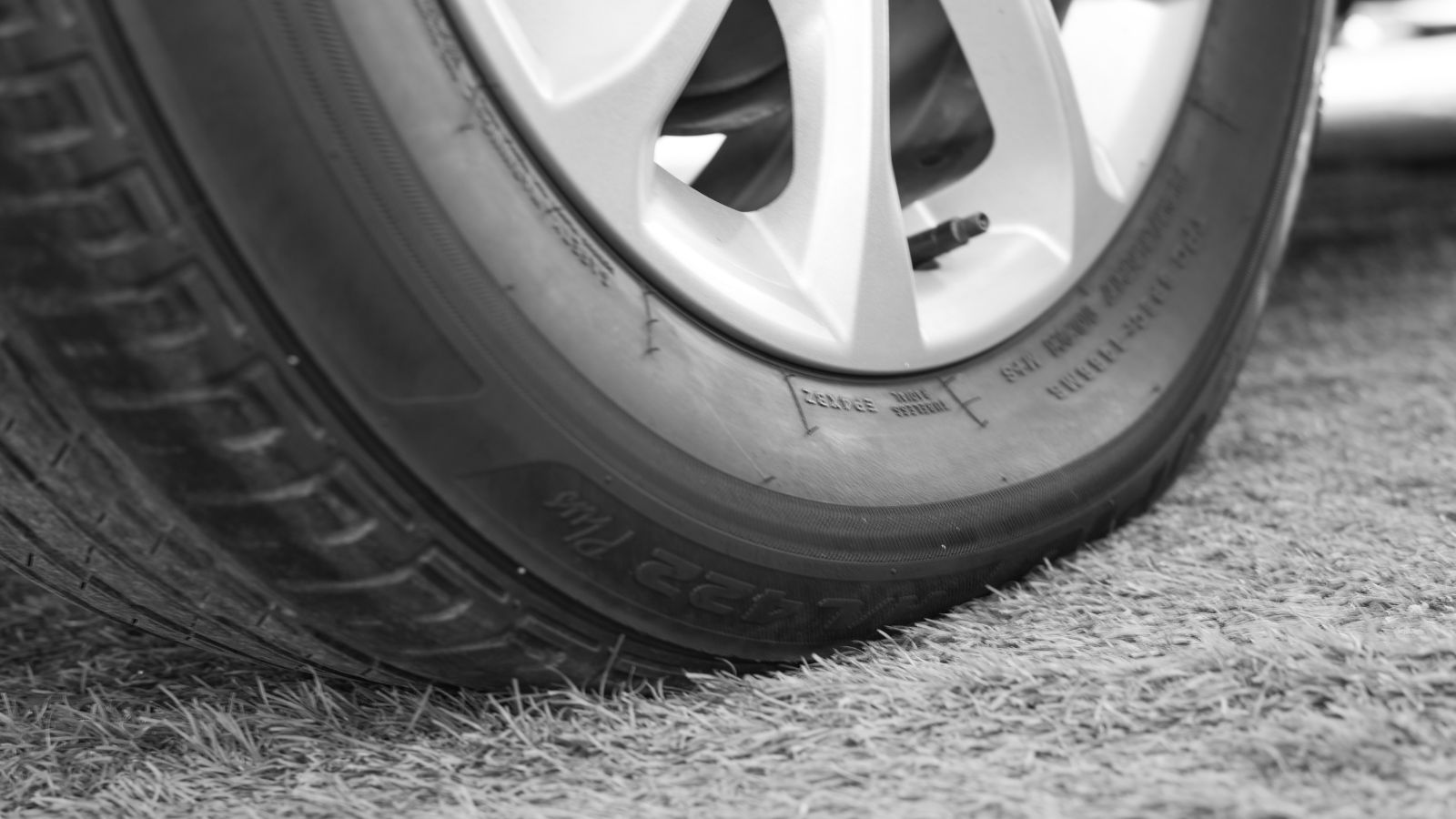
Needing to add air to the same tire every few days or weeks is a symptom, not routine maintenance. The leak may come from a small tread puncture, a damaged valve stem, corrosion where the tire seals against the wheel, or impact damage that is difficult to see. A slow leak can become more noticeable after a temperature change, but repeated pressure loss should never be blamed on weather without checking the tire and wheel assembly.
The practical clue is the pattern: three tires remain stable while one repeatedly falls below the placard pressure. Spraying soapy water may reveal bubbling around a valve or visible puncture, but an exterior check cannot show damage inside the casing. A tire professional should remove and inspect the tire before deciding whether it can be repaired. Continuing to drive underinflated can generate excess heat and internal structural damage, potentially turning a repairable puncture into a tire that must be replaced.
A Nail or Screw Is Embedded in the Tread
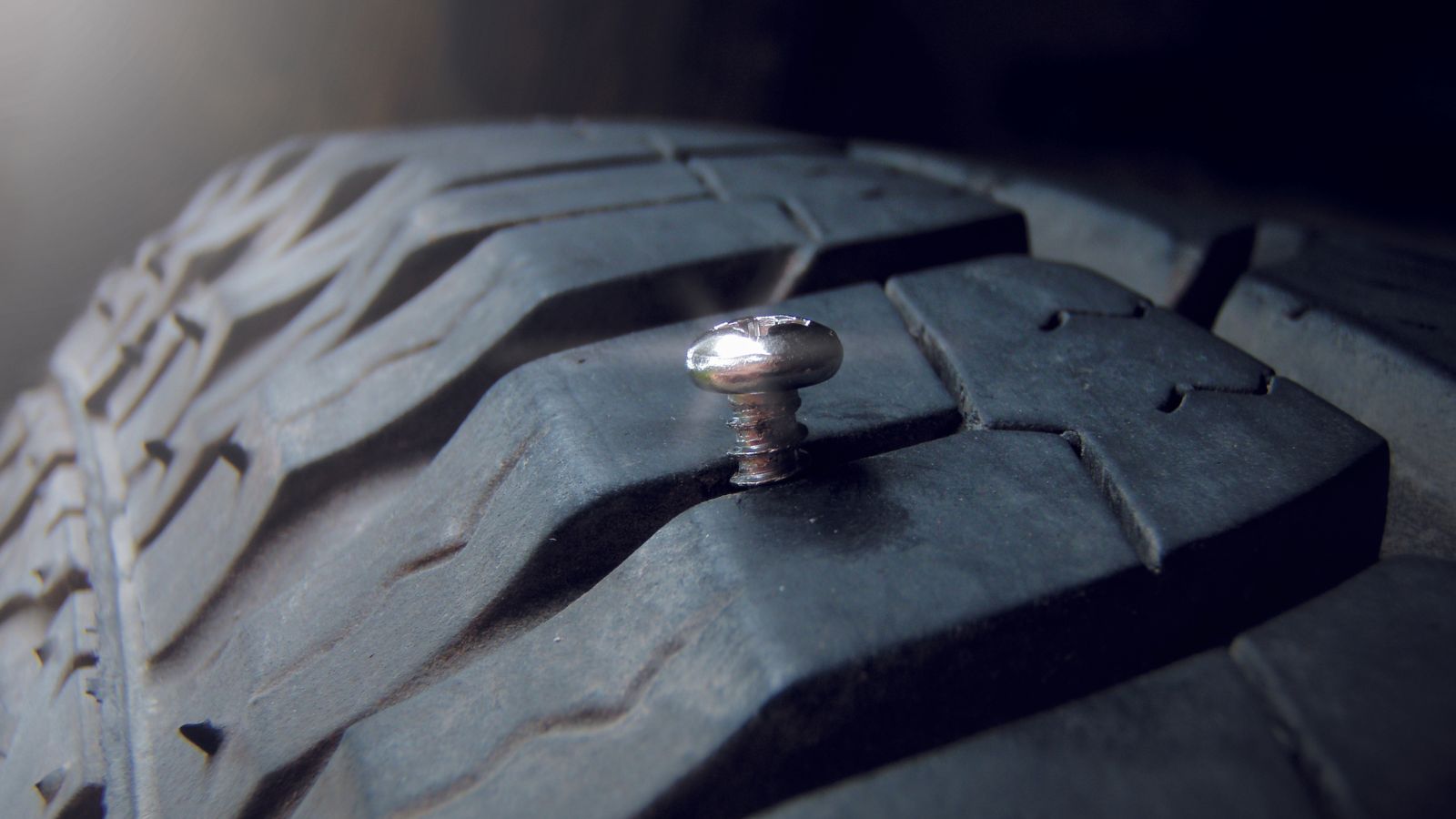
A shiny screw head or nail in a tread block may look harmless when the tire is still holding air. In reality, the object may be temporarily plugging the opening it created. Pulling it out at home can release the remaining pressure quickly, while driving on it can enlarge the injury or allow moisture to reach internal components. The safest response is to leave the object in place and have the tire assessed promptly.
Repairability depends on more than whether the hole is small. The injury generally needs to be in the central tread area, away from the shoulder and sidewall, and the tire must not have been damaged by running low or flat. A proper repair also requires internal inspection after removing the tire from the wheel. An outside-only plug may stop a leak temporarily, but it cannot reveal torn cords, abrasion, or secondary damage hidden inside the casing.
A Bulge or Bubble Appears on the Sidewall
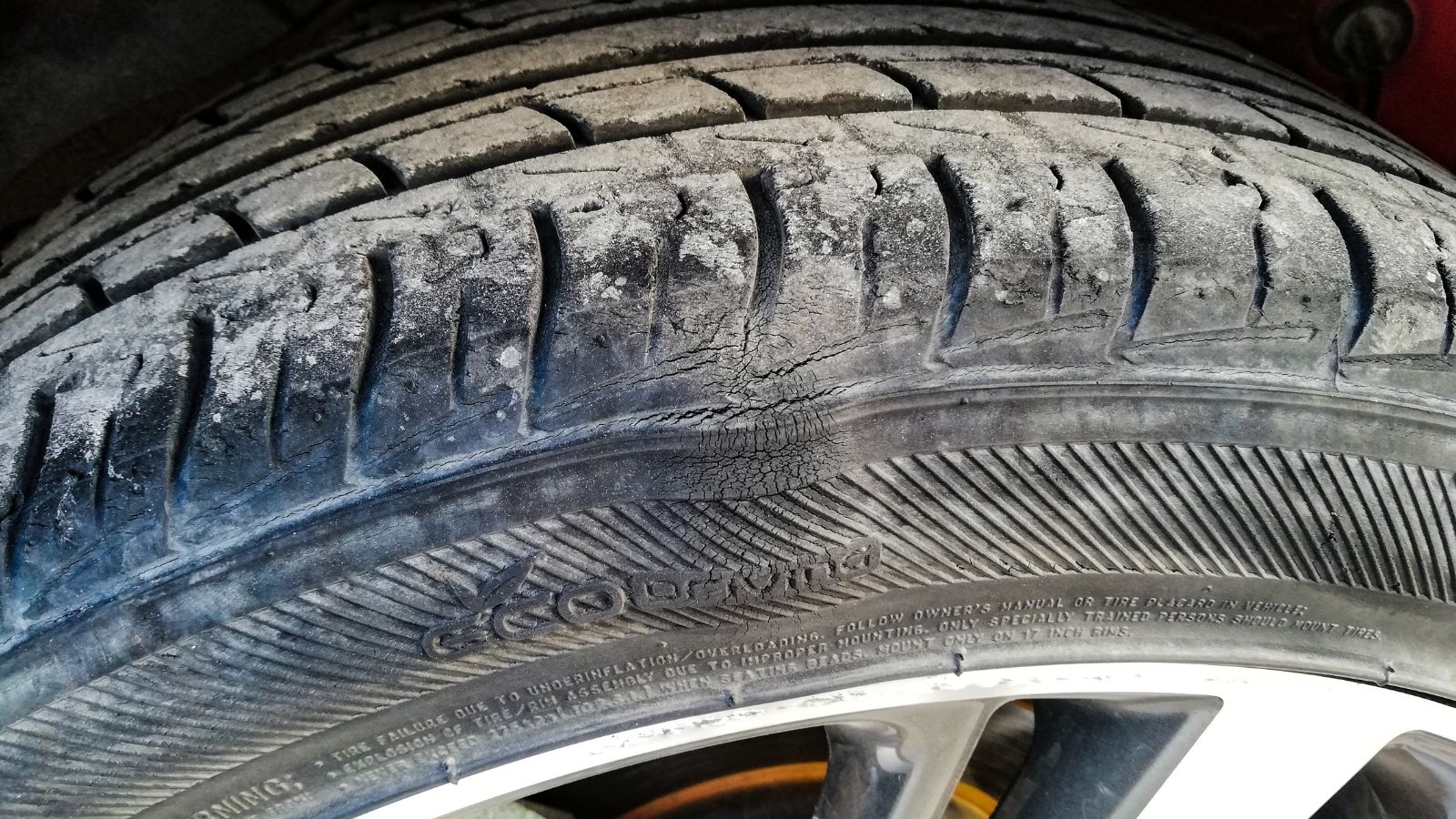
A sidewall bubble is one of the clearest signs that a tire should be removed from service. It typically forms when an impact breaks internal cords and air pushes between damaged layers. Potholes, curbs, and speed bumps taken too quickly are common triggers. Unlike a shallow inward indentation created by overlapping construction cords, a bulge protrudes outward and signals that the casing is no longer supporting pressure normally.
This damage cannot be patched safely because the structure beneath the rubber has failed. The tire may continue to hold air for a time, which can create false confidence, but the weakened area can rupture or separate later. Drivers who spot a bulge should avoid highway travel and heavy loading; using a spare or arranging roadside assistance is safer than testing how long it will last. A professional inspection can also check the wheel for bending and the alignment for impact-related changes.
Cracks Are Spreading Across the Rubber
Fine surface lines can appear as rubber ages, but widening cracks in the sidewall, shoulder, or tread grooves deserve serious attention. Heat, sunlight, ozone, long storage, low use, and poor inflation maintenance can all accelerate deterioration. Cracking that opens when the rubber flexes, exposes underlying material, or appears alongside discoloration and stiffness suggests that the tire’s compounds are no longer behaving as designed.
Tread depth does not cancel out age-related damage. A lightly driven vehicle may retain deep grooves while its tires spend years exposed to heat cycles and environmental stress. That is why seasonal cars, trailers, collector vehicles, and full-size spares can age out before they wear out. Deep cuts, slits, cracks, blisters, and bulges are all reasons for professional evaluation, and significant cracking generally means replacement rather than repair. Rubber degradation cannot be reversed with shine products, sealants, or repeated inflation. Aged tires can look acceptable until stress exposes the weakness.
Cuts or Cords Are Visible
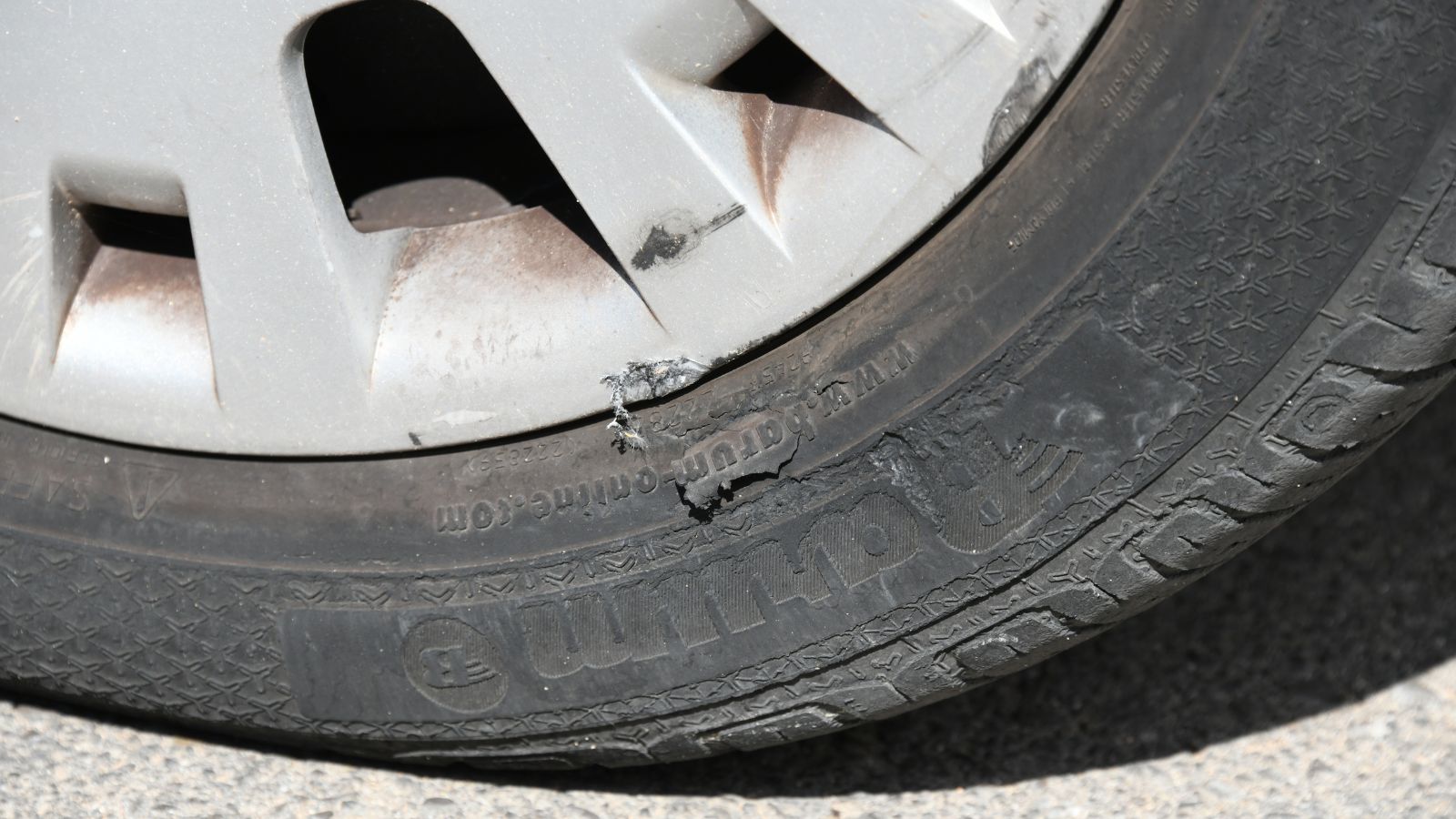
A cut becomes urgent when it is deep enough to expose fabric or steel cords beneath the rubber. Those cords help the tire carry load, contain inflation pressure, and transmit braking and steering forces. Once they are visible, the casing has lost protective material and may already be structurally compromised. Damage near the sidewall or shoulder is especially concerning because those areas flex repeatedly and are not considered suitable for ordinary puncture repairs.
The same warning applies when tread has worn through to belts or when a gash follows an impact with road debris. Continuing to drive can allow water and contaminants into the structure and can lead to rapid air loss or separation. The tire should not be treated as usable simply because it remains round. Replace it, and have nearby suspension, wheel, or body components checked if they may have caused rubbing. Exposed cords are an end-of-service condition, not a cosmetic defect.
The Wear Bars Are Flush With the Tread
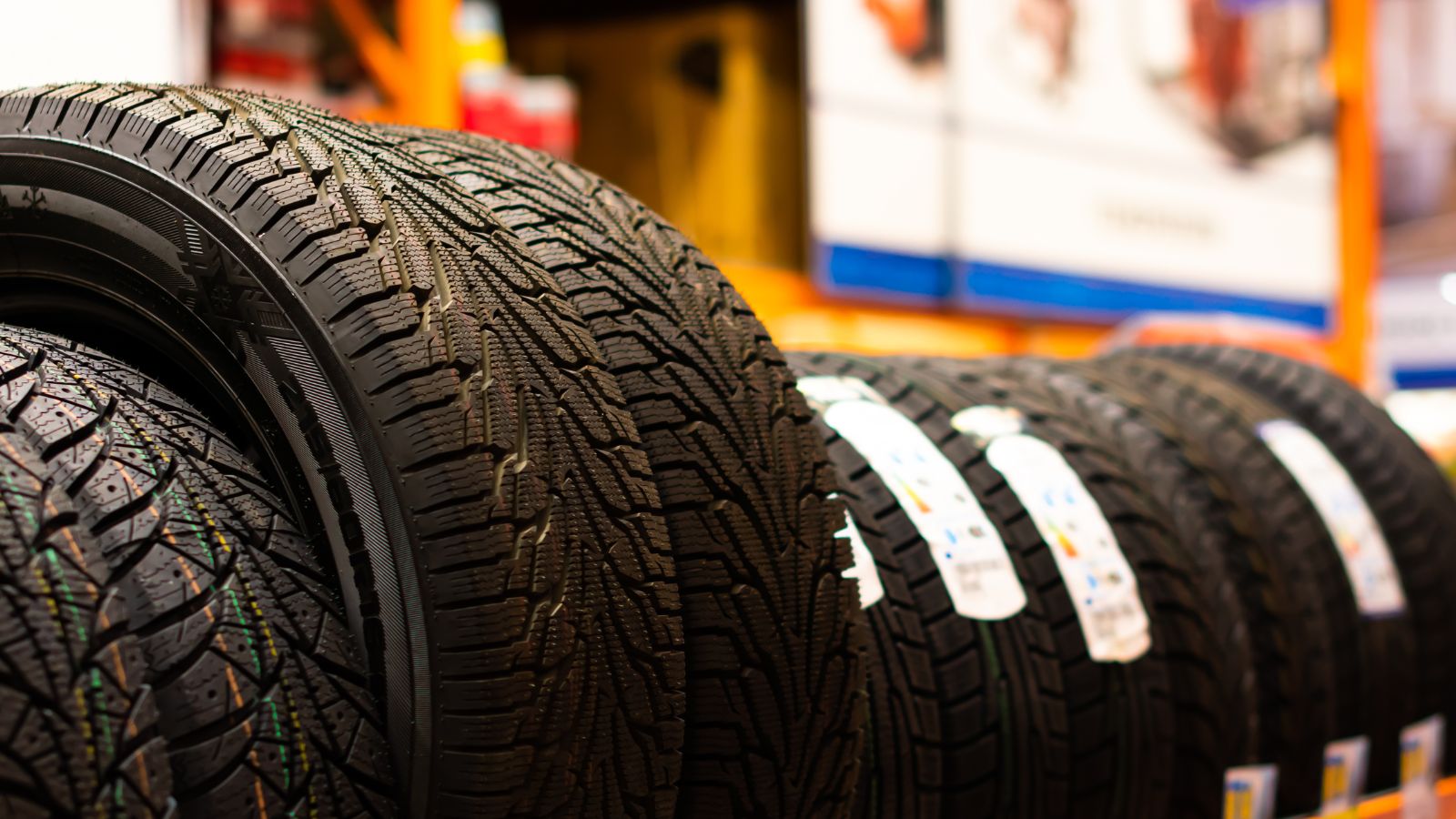
Small raised bars run across the main tread grooves of modern tires. When the surrounding tread wears down until it is level with those bars, the tire has reached approximately 2/32 of an inch, or about 1.5 to 1.6 millimetres, of remaining depth. Transport Canada and NHTSA treat that level as the replacement threshold. Measuring several grooves and several positions matters because a tire may reach the limit on one edge before the centre looks worn.
Waiting for a completely smooth tread is dangerous and unnecessary. Grooves are designed to maintain grip and move water away from the contact patch, so their ability declines long before the tire resembles a racing slick. A simple tread-depth gauge gives a clearer reading than guessing by appearance. Once the wear indicators are flush, replacement should not be delayed. For frequent rain or winter driving, changing tires earlier may preserve more wet and snow traction than waiting for the absolute minimum.
Wet Roads Suddenly Feel Much More Slippery
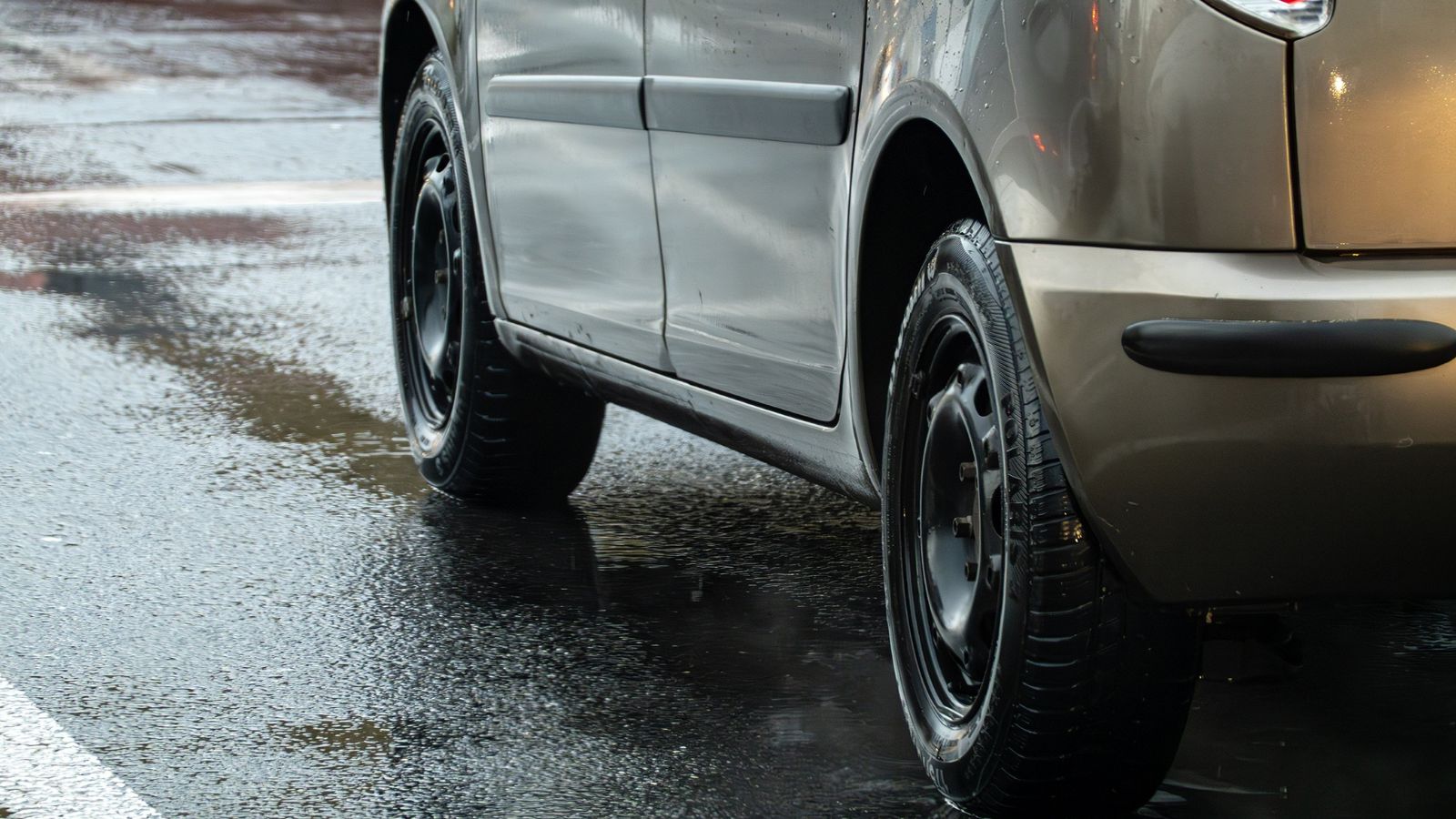
A tire can announce declining tread through behaviour before a driver notices it visually. More wheelspin when leaving a wet intersection, earlier intervention from stability control, longer stopping distances, or a lighter steering feel through standing water can indicate that the grooves are no longer clearing water effectively. Shallow tread increases the chance of hydroplaning because a water layer can separate the tire from the pavement.
The performance loss can be substantial even before the legal minimum. In AAA testing, all-season tires worn to 4/32 of an inch required about 87 additional feet to stop a passenger car from highway speed on wet pavement compared with new tires. Handling ability also fell by roughly one-third in the passenger-car test. Those results explain why a tire may be technically above 2/32 yet feel noticeably worse in rain. Wet-weather changes should prompt a tread measurement and inspection rather than being dismissed as unusually slick pavement.
Both Outer Shoulders Are Wearing Faster
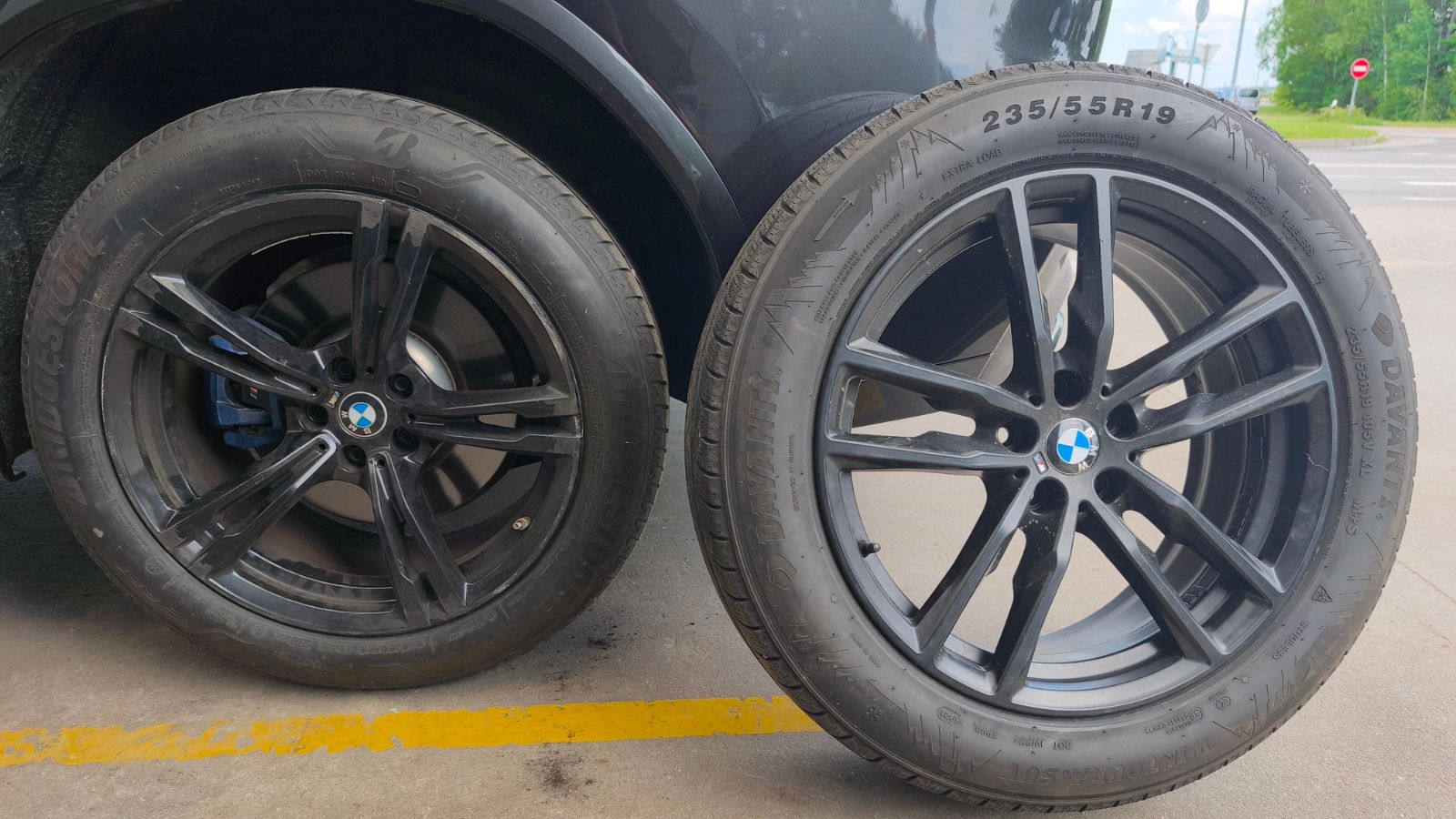
When the inner and outer shoulders of a tire are worn more heavily than the centre, chronic underinflation is a leading suspect. Too little pressure allows the side portions of the tread to carry more of the load while the centre bows away from the road. The pattern can develop gradually, especially when a tire runs only a few pounds below the vehicle’s recommendation for many months.
Shoulder wear is more than a mileage problem. Underinflation increases flexing and heat buildup inside the tire, which can damage the structure even after pressure is corrected. A gauge reading should be compared with the cold pressure on the vehicle placard, not the maximum pressure molded on the sidewall. If the tire has been driven significantly low, an internal inspection may be warranted. Alignment, loading, and rotation history should also be checked because multiple conditions can overlap and create a similar-looking pattern quickly.
The Centre of the Tread Is Wearing First
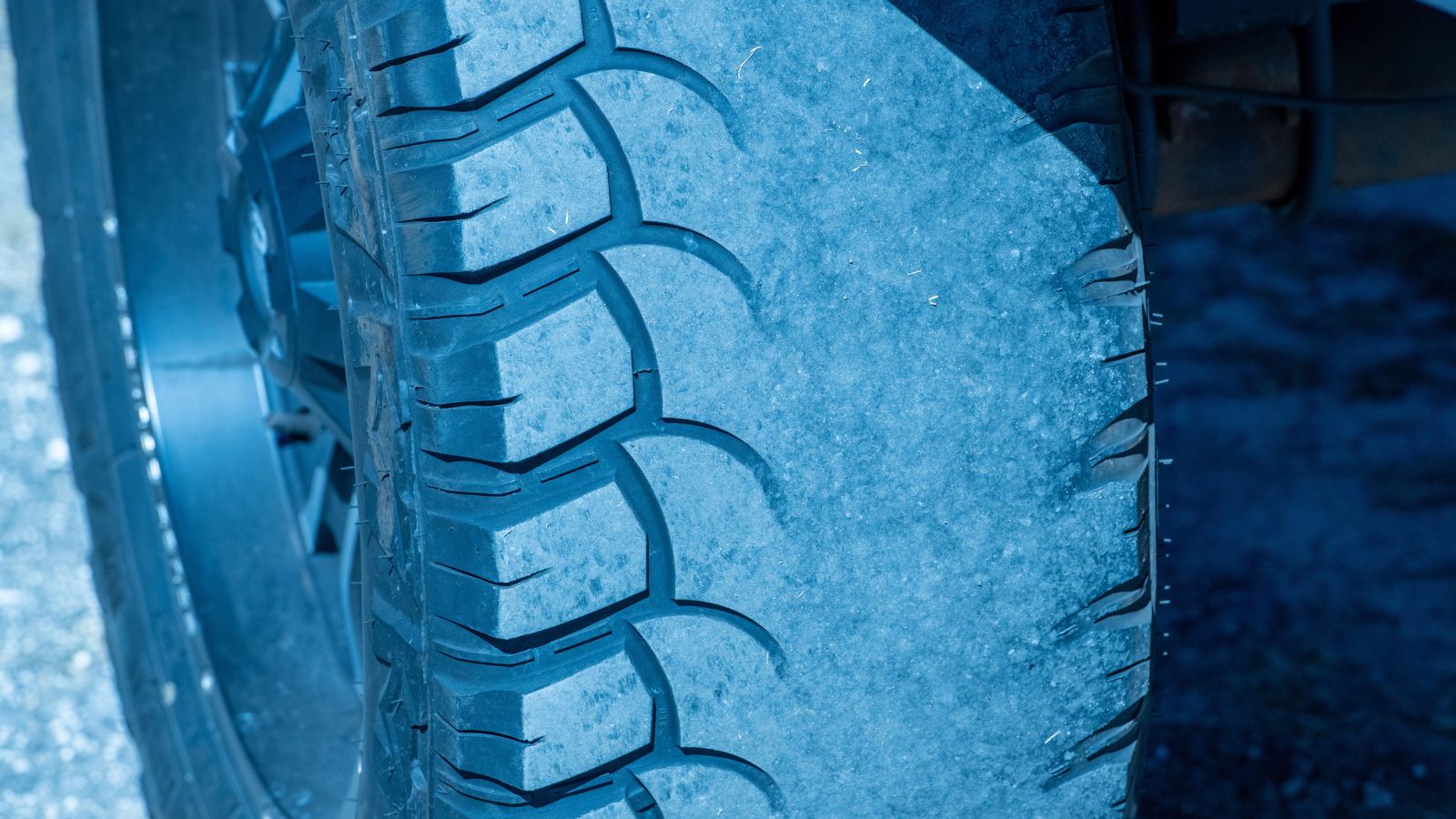
A pronounced strip of wear down the centre can indicate that a tire has spent too much time overinflated. Excess pressure can reduce the size of the contact patch and concentrate load toward the middle, producing a harsher ride and less even tread use. Transport Canada also warns that overinflation can reduce grip and contribute to steering and stopping problems. The correct target is the vehicle manufacturer’s cold-pressure specification, not the tire’s sidewall maximum.
There are exceptions, which is why diagnosis should not rely on one photograph. High torque, aggressive acceleration, and the design of some driven tires can also accelerate centre wear. Pressure records, driving conditions, tire type, and wear across the other three wheels help identify the cause. If the centre is already significantly lower than the shoulders, reducing pressure will not restore the missing rubber. The underlying cause should be corrected, then the tire’s remaining depth and wet-weather suitability should be assessed.
Only One Edge Is Wearing Away
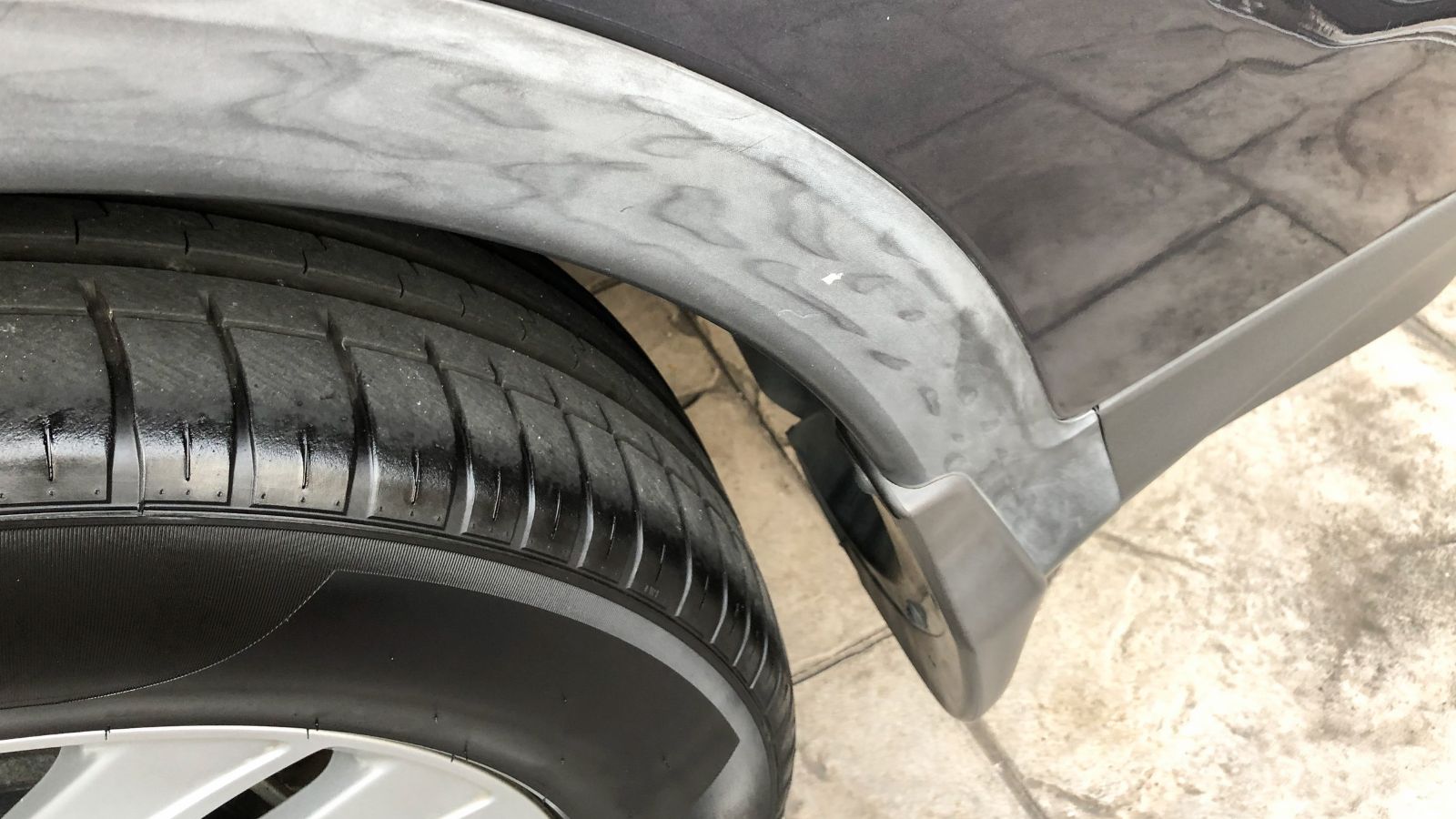
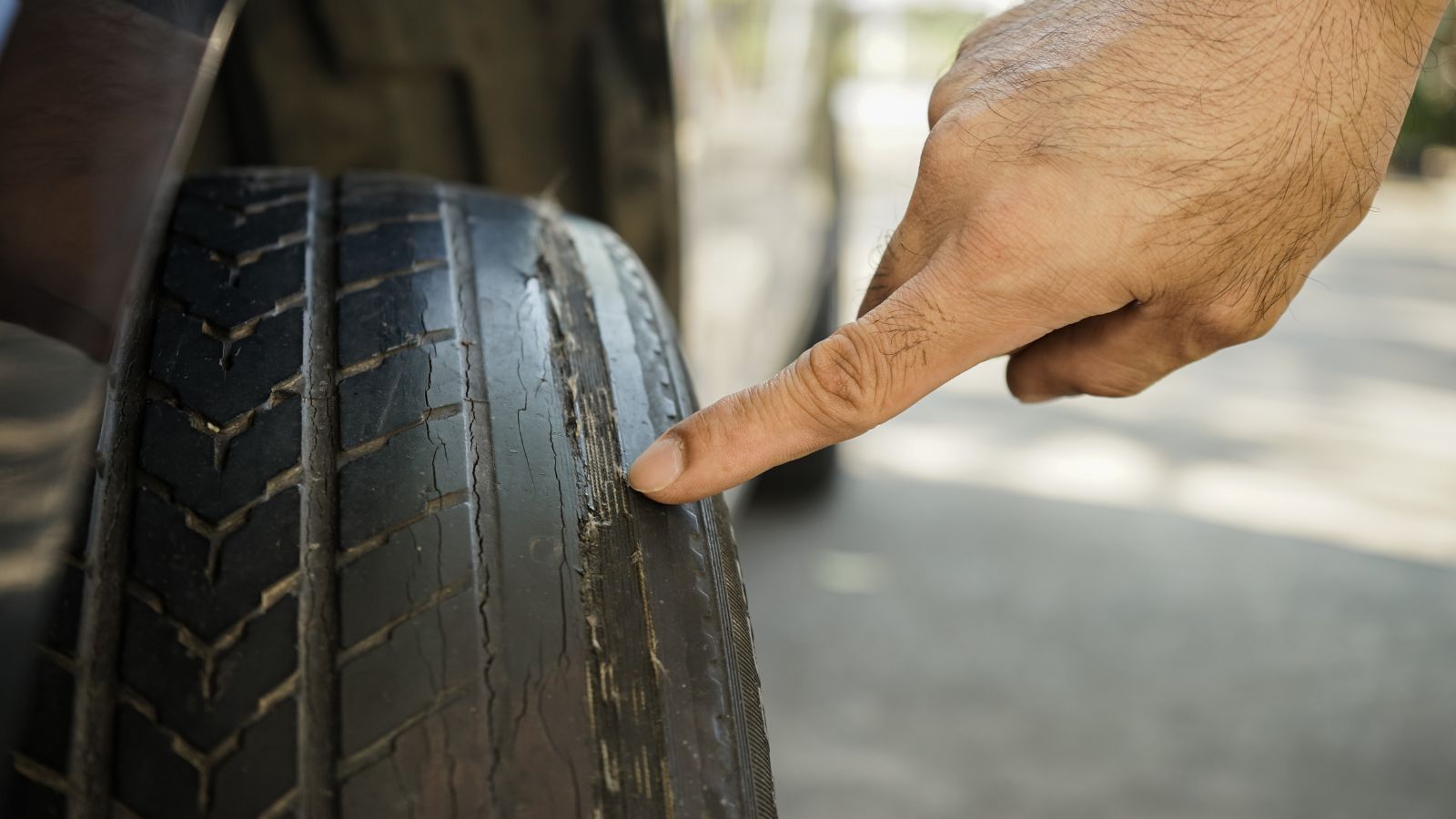
Heavy wear confined to the inner or outer edge usually points toward an alignment or suspension-geometry problem. Excessive positive or negative camber tilts the tire so one side carries more load. A pothole strike, curb impact, worn ball joint, bearing, bushing, or modified ride height can push alignment away from specification. The damage may remain hidden from the driver because the badly worn inner edge is difficult to see without turning the steering wheel or lifting the vehicle.
This pattern can consume a tire surprisingly quickly while the visible outer tread still appears healthy. A technician should measure tread across the full width and inspect steering and suspension components before simply installing replacements. Alignment correction stops the cause, but it cannot put rubber back on the worn edge. If cords are visible or the affected groove is at the wear bars, the tire is finished. Regular inspections are especially useful after a hard pothole hit, even when the steering wheel still appears centred.
The Tread Feels Sharp in One Direction
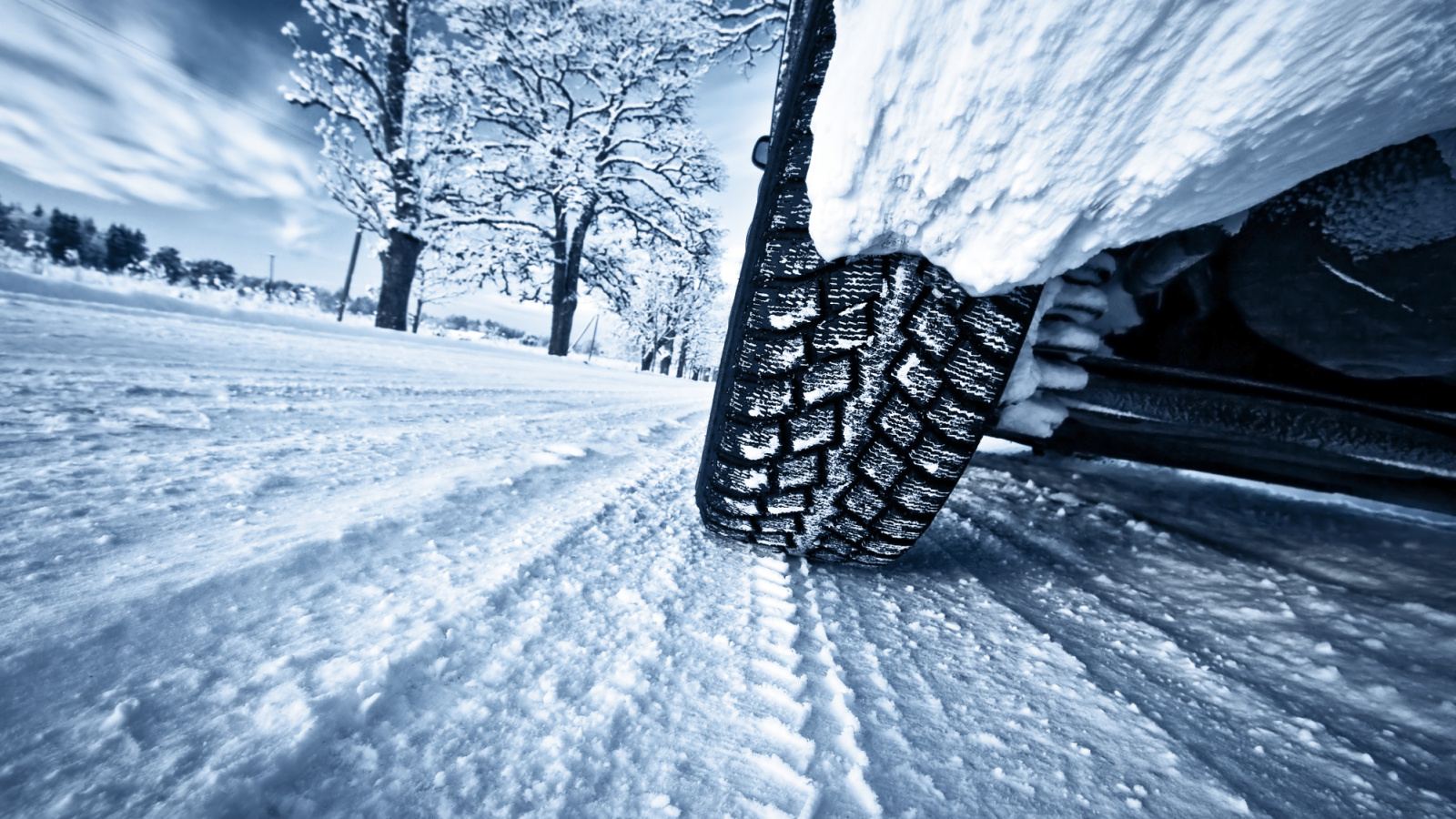
Feathering is easiest to detect by running a hand lightly across the tread after the vehicle is parked safely. Each tread rib may feel smooth in one direction and sharp in the other, creating a saw-like texture. This pattern commonly points to incorrect toe alignment, meaning the tires are aimed slightly inward or outward instead of rolling parallel. The resulting sideways scrub gradually shapes the edges of each tread block.
A feathered tire may also produce a humming sound that changes with speed, even though no single bald patch stands out. Because toe errors can affect both front tires, comparing left and right may reveal matching textures. The solution is not merely to rotate the tires; rotation may change the noise but will not correct the geometry causing it. An alignment check, inspection for worn steering parts, and evaluation of remaining tread are appropriate. Severe feathering can remain noisy after alignment because the irregular surface has already been carved into the tire.
Scooped Patches Appear Around the Tread
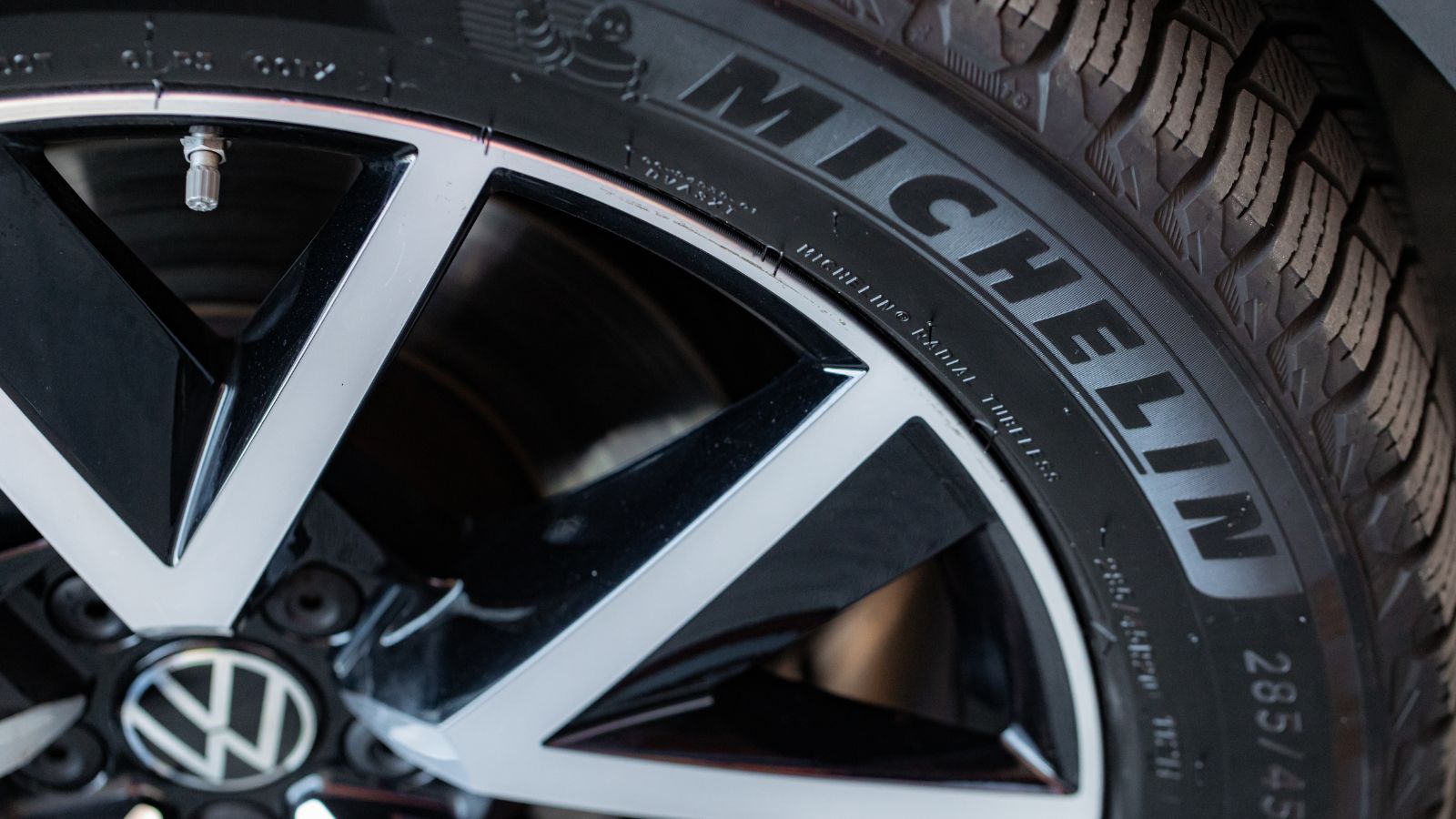
Cupping, also called scalloping, creates a series of shallow scoops or dips spaced around the tire, sometimes every few inches. It develops when the tire does not maintain steady contact with the road. Worn shocks or struts, loose steering or suspension parts, wheel imbalance, alignment issues, incorrect pressure, and missed rotations can all contribute. The visual pattern is often accompanied by vibration or a droning, helicopter-like noise that rises with road speed.
Balancing alone may not solve the problem if a weak shock absorber is allowing the wheel to bounce. A complete diagnosis should consider the tire, wheel, alignment, suspension, and maintenance history. Correcting the mechanical cause can stop further damage, but the scooped rubber will not grow back. Bridgestone notes that severe cupping, persistent noise or vibration, reduced tread depth, or traction concerns may make replacement the practical choice. Installing new tires without repairing the cause can reproduce the same pattern on the replacement set.
A Flat Spot Causes a Repeating Bump
A vehicle that sits for an extended period can develop temporary flat spotting where the loaded portion of a tire takes a set. The first drive may produce a repeating bump or steering-wheel tremor that gradually fades as the tire warms and regains its shape. Michelin notes that ordinary temporary flat spotting often diminishes after sustained driving at normal road speed, although the exact time varies with tire construction, temperature, pressure, and storage conditions.
A vibration that does not fade requires a different response. Hard braking that locks a wheel can physically wear one section of tread, while long-term storage, underinflation, heat, or internal damage can create more persistent out-of-round conditions. Modern anti-lock braking systems make braking-related flat spots less common, but they are still possible in unusual circumstances. Check pressure, inspect the tread for a localized worn patch, and have the assembly evaluated if the thump remains. Persistent flat spotting can affect comfort, traction, balance, and tire life.
The Steering Wheel Shakes at Speed

A vibration that appears mainly at a particular road speed often points toward an out-of-balance tire-and-wheel assembly. Even a small uneven distribution of mass becomes more noticeable as rotational speed rises, producing steering-wheel shimmy, seat vibration, or both. Lost wheel weights, improper mounting, mud packed inside a wheel, bent rims, and irregular tire wear are common possibilities. Balancing equipment can measure where corrective weight is needed.
Balance is not the only explanation. A tire damaged by a pothole may have broken cords or belt separation while still looking normal externally. Michelin lists new vibration at speed as a warning sign that warrants prompt inspection, and USTMA similarly advises action when noise, vibration, or air loss changes. The driver should slow down and avoid assuming the problem is merely annoying. If vibration begins suddenly, grows rapidly, or follows an impact, the tire should be inspected before further high-speed travel. Mechanical faults in bearings, steering, or suspension also need to be ruled out.
A Rhythmic Thump Grows With Speed
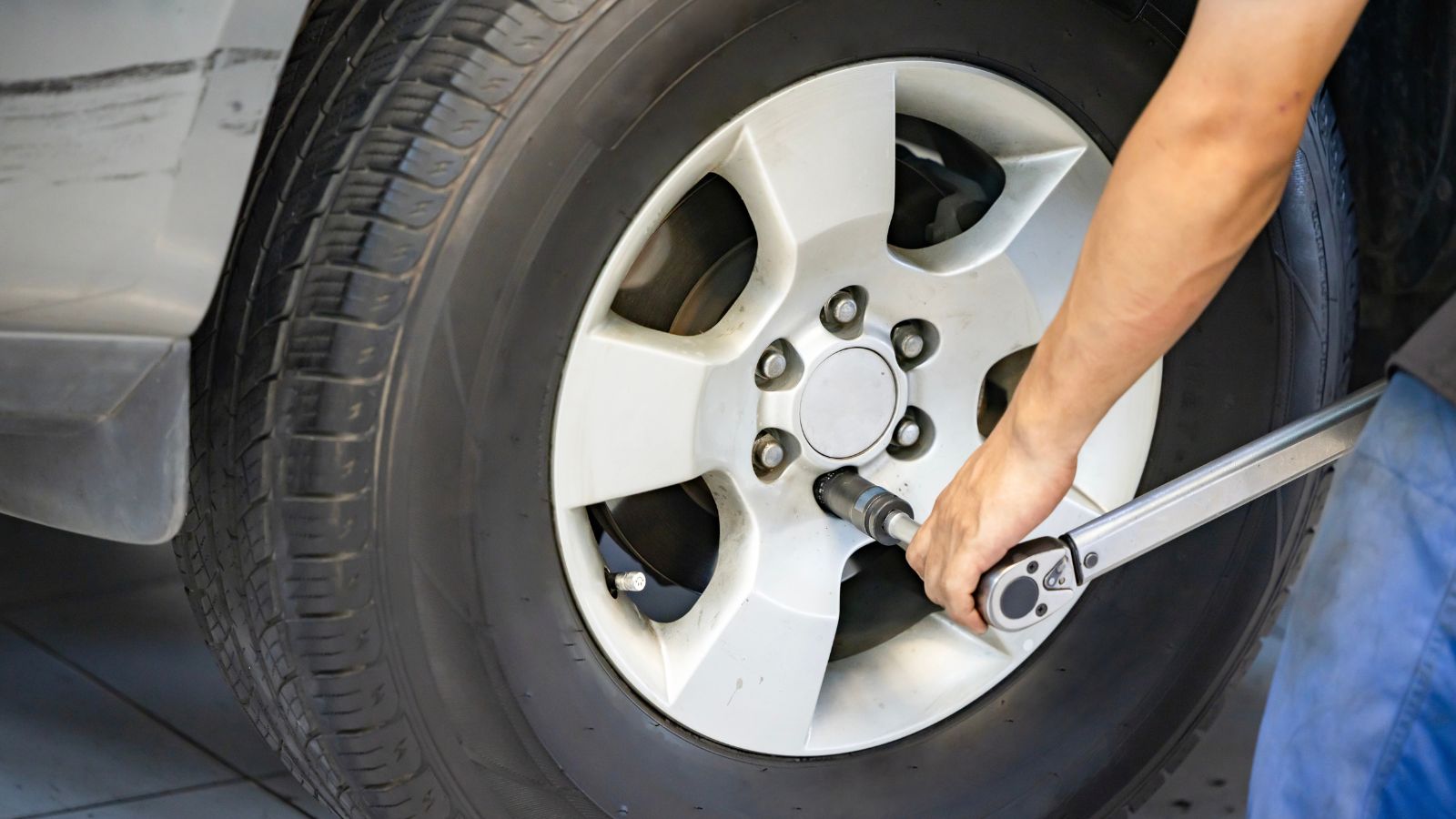
A steady thump that repeats once per wheel revolution can signal a tire that is no longer uniformly round. Possible causes include a flat spot, localized tread wear, an impact break, a shifted belt, or developing tread separation. The faster the vehicle travels, the faster the rhythm becomes. That speed-related pattern distinguishes it from many engine noises, although road surfaces can sometimes create similar sounds for a short distance.
This symptom should be taken seriously because manufacturers identify unusual road noise, particularly rhythmic thumping, as a possible warning of tire failure. Pull over safely if the sound appears suddenly after hitting debris or a pothole, then inspect for bulges, lifted tread, exposed cords, or rapid pressure loss. A tire can have internal damage without an obvious exterior mark, so silence after a brief stop does not guarantee safety. Professional inspection may require removing the tire from the wheel to examine the inner liner, belts, and casing.
The Vehicle Pulls Consistently to One Side

A persistent pull can originate with the tires even when the steering and suspension feel otherwise normal. Unequal pressure between the front tires changes their rolling characteristics, while one-sided wear, internal impact damage, or mismatched construction can alter how each tire grips the road. Alignment problems are another common cause. The first step is a cold-pressure check on all four tires, followed by a visual comparison of tread depth and wear.
Road crown can make a vehicle drift slightly on some streets, but a strong pull that remains on different roads deserves inspection. Michelin identifies consistent pulling as a warning sign of possible tire trouble, and Bridgestone notes that erratic steering or pulling often accompanies alignment faults. The behaviour may worsen during braking or acceleration depending on the cause. Correcting pressure may solve a minor imbalance; persistent pulling calls for tire, alignment, brake, and suspension checks. Driving around the problem can accelerate edge wear and reduce predictable handling during emergency manoeuvres.
A New Hum or Roar Follows the Tires
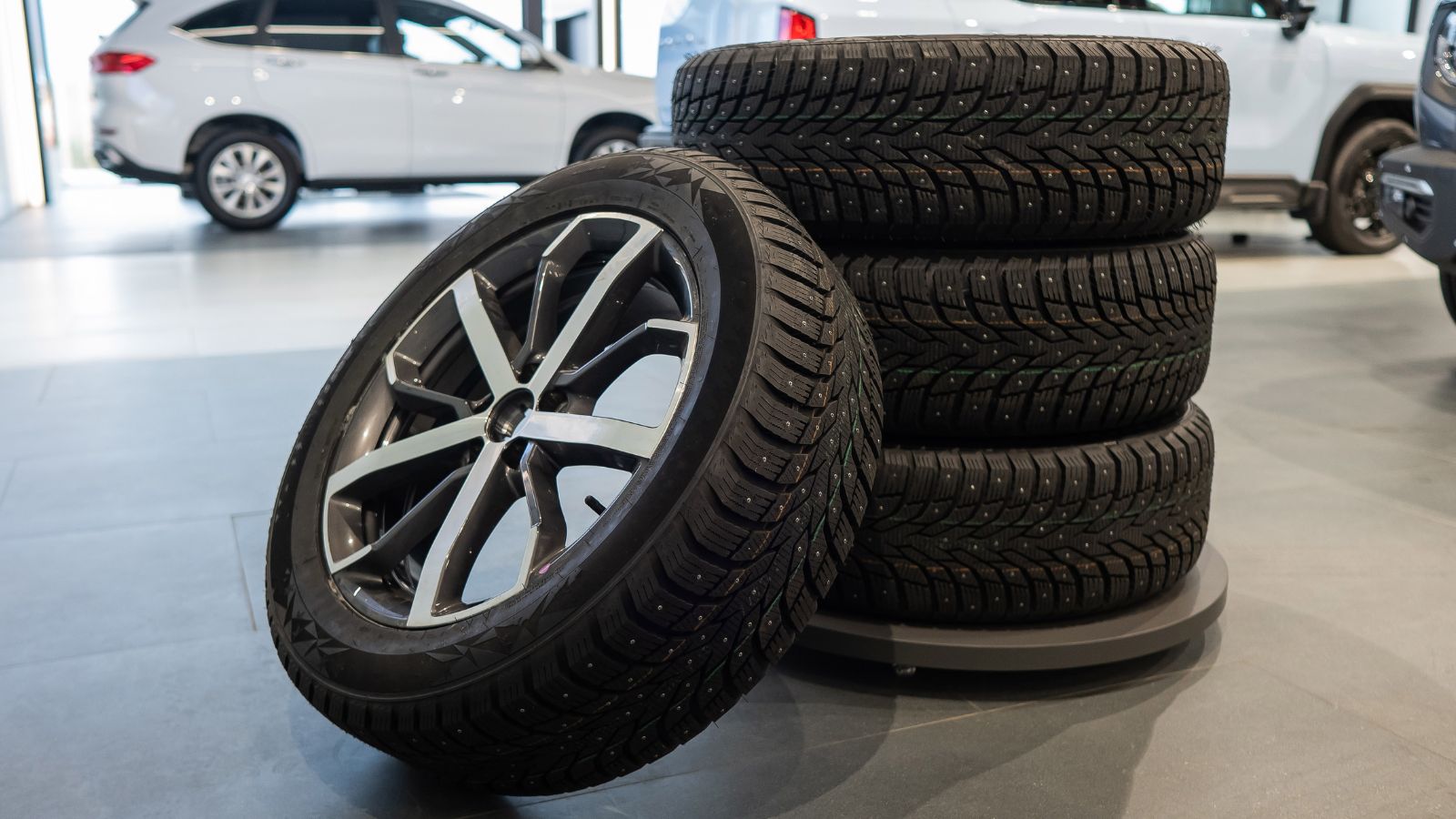
Tires naturally produce road noise, and the amount varies with tread design and pavement. A new hum, roar, or growl that increases with vehicle speed is different, especially when it appears after months of quiet driving. Feathered tread, heel-and-toe wear, or cupping can turn the rotating tire into a repeating sound source. Running a hand over the tread may reveal saw-tooth edges or scalloped dips that explain the noise.
Noise alone does not prove the tire is at fault because wheel bearings and other rotating components can sound similar. A technician may rotate the tires, inspect the tread, and road-test the vehicle to see whether the sound changes location or character. USTMA advises drivers to treat noticeable changes in tire noise or vibration as potential signs of an internal condition. If the noise is rhythmic, accompanied by a bulge, vibration, or pressure loss, the inspection becomes more urgent. Correcting alignment or suspension issues prevents the replacement tire from becoming noisy in the same way.
The DOT Date Code Shows Significant Age
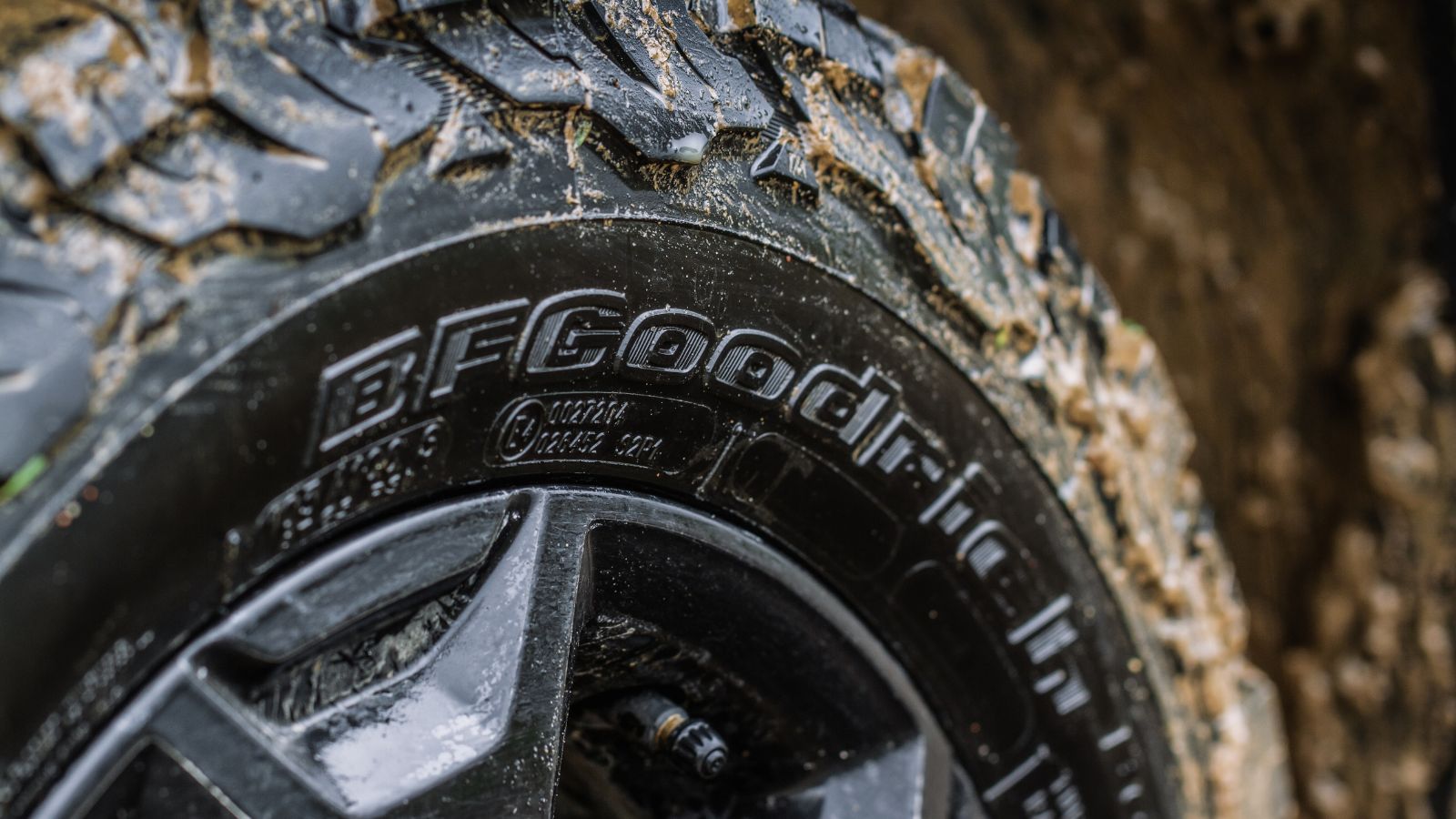
Tires carry a Tire Identification Number on the sidewall, and the final four digits show the week and year of manufacture. A code ending in 3520, for example, means the tire was made in the 35th week of 2020. The code may appear on only one side, so checking the inward-facing side may be necessary. Age matters most on low-mileage vehicles and spare tires that retain deep tread for many years.
There is no universal calendar date that guarantees failure, because heat, storage, pressure, load, impacts, and maintenance all affect service life. However, NHTSA notes that some vehicle and tire manufacturers recommend replacement at six to ten years regardless of tread. Michelin recommends annual professional inspection after five years of service and replacement by ten years from manufacture as a precaution. An old tire that also shows cracking, vibration, pressure loss, or declining wet grip is giving several warnings at once and should not be judged by tread depth alone.
The Tread Is Lifting, Wavy, or Separating
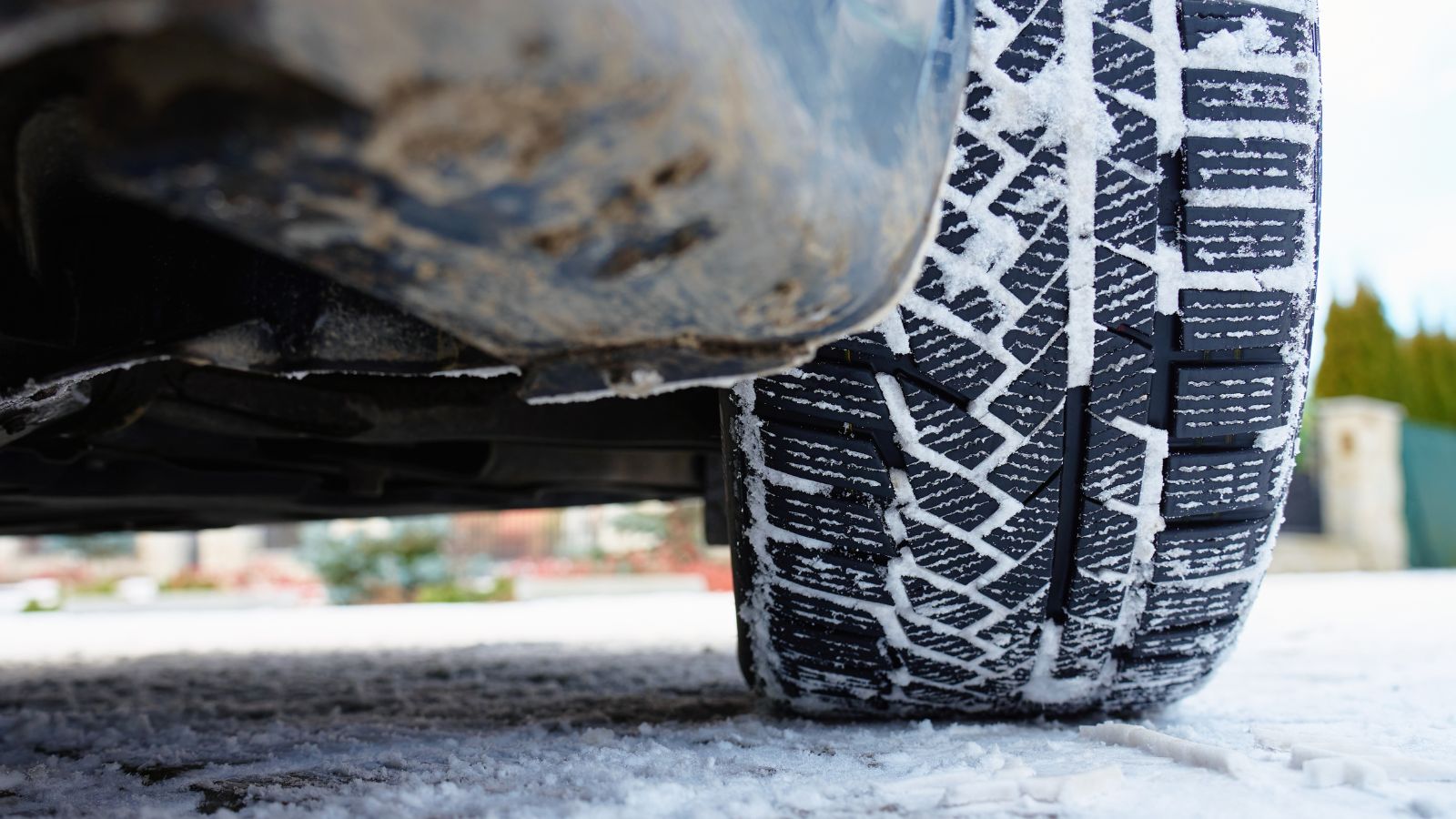
A raised section across the tread, a wavy profile, missing chunks, or an edge that appears to be peeling away can indicate separation between the tread rubber, belts, and casing. Separation may follow underinflation, overloading, impact damage, excessive heat, a puncture, poor repair, or other internal injury. Drivers may notice vibration, noise, or a thump before the distortion becomes obvious.
This is not a condition to monitor until the next scheduled service. A tire exhibiting tread or belt separation should be removed from use because the damaged layers can continue to detach and destabilize the vehicle. Avoid highway speed, heavy loads, and unnecessary travel; a spare or tow is the safer route. The companion tires should also be checked for age, pressure history, overloading, or similar damage. When the outer tread tells a story of movement underneath, the problem is structural, and adding air, balancing the wheel, or applying an exterior patch cannot restore the original bond.
22 Things Canadians Do to Their Cars in Spring That Mechanics Hate

Spring brings relief to many Canadian drivers after months of snow, freezing temperatures, and icy roads that put serious strain on vehicles. As temperatures rise across the country, drivers begin washing cars, switching tires, and preparing vehicles for warmer weather and upcoming road trips. However, mechanics across Canada notice the same mistakes every spring when drivers attempt to recover from winter damage. Road salt, potholes, and harsh winter driving conditions often leave vehicles with hidden problems that drivers ignore. Some spring habits even create new mechanical issues that could have been avoided with proper maintenance. Here are 22 things Canadians do to their cars in spring that mechanics hate.