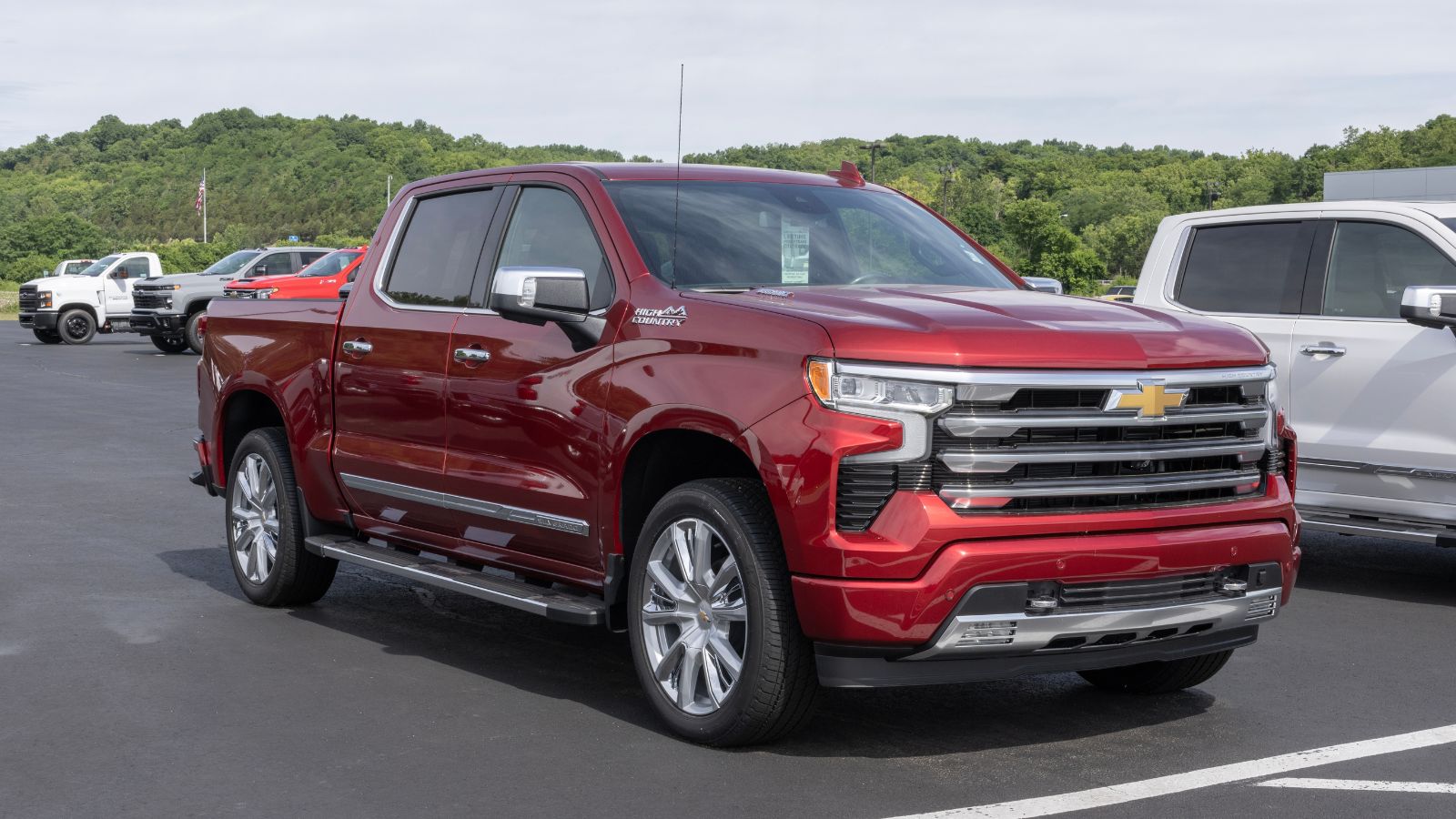
One of the pickup trucks that helped bring General Motors’ Oshawa plant back from the brink is leaving its Canadian assembly line. GM has confirmed that production of the light-duty Chevrolet Silverado 1500 at Oshawa Assembly will end in November 2026, removing the Ontario factory from the next generation of the popular half-ton pickup.
The announcement is significant, but it is not another closure notice. GM says employment at Oshawa is expected to remain unchanged as the factory increases Chevrolet Silverado HD production and prepares to add the GMC Sierra HD. That reassurance matters in a community that watched vehicle assembly stop in 2019, celebrated its return two years later and then experienced another round of layoffs in early 2026. Oshawa is losing an important truck program, but GM is simultaneously rebuilding the plant’s future around heavy-duty pickups.
November Is Now the Confirmed End of Silverado 1500 Production
GM spokesperson Jennifer Wright confirmed that Oshawa will stop producing the Chevrolet Silverado 1500 in November. The confirmation ends months of uncertainty surrounding the light-duty truck program. Industry analysts had predicted during the summer that Oshawa would lose the 1500 when GM transitioned to its redesigned pickup, while the automaker initially declined to confirm future production locations and maintained that there was no broader planned production scaleback at the Ontario plant.
The distinction between the Silverado 1500 and Silverado HD is important. Oshawa currently occupies an unusual role in GM’s manufacturing network because it builds both light-duty and heavy-duty Chevrolet pickups on the same production line. GM has called it the only North American facility performing both jobs. November will end that arrangement. Chevrolet Silverado HD production will remain in Ontario and is expected to increase, meaning Silverado badges will continue rolling out of Oshawa even after the mainstream 1500 disappears. The factory is changing its product mix rather than ending vehicle assembly.
The Silverado Helped Bring Oshawa Back From a Historic Shutdown
The loss carries more weight because Silverado production was responsible for Oshawa’s remarkable manufacturing comeback. Vehicle assembly stopped at the historic plant in December 2019, ending production at a facility deeply connected with generations of Canadian autoworkers. GM subsequently committed to reopening Oshawa for pickup production, investing heavily in a new body shop and flexible assembly operation. The first Silverado rolled off the revived line in November 2021, initially supporting approximately 1,800 new jobs and two production shifts.
Expansion happened quickly. GM added light-duty pickup production and announced a third shift in 2022, taking the number of new jobs created after reopening to more than 2,600. By June 2026, Oshawa had produced more than 500,000 Chevrolet Silverado pickups since its restart, along with more than one million aftermarket parts. Those milestones illustrate why the 1500’s departure is more than a routine model-year adjustment. Full-size pickups transformed a factory that had stopped building vehicles into one of GM’s important North American truck operations in a remarkably short period.
The Redesigned Silverado 1500 Will Be Built Outside Canada
The timing coincides with a generational change for Chevrolet’s half-ton pickup. GM has unveiled the next-generation 2027 Silverado 1500, which is scheduled to begin reaching dealerships before the end of 2026. The redesigned truck introduces new 5.7-litre and 6.6-litre sixth-generation Small Block V8 engines, an upgraded TurboMax four-cylinder and continued availability of the 3.0-litre Duramax diesel. GM is also expanding technology such as Super Cruise while updating the truck’s cabin and exterior.
Oshawa will not participate in that light-duty generation. Current production planning puts the new Silverado 1500 at Fort Wayne Assembly in Indiana and GM’s Silao operation in Mexico. For Canadian customers, that does not mean the Silverado 1500 disappears from Chevrolet dealerships; it means future examples will no longer be assembled in Ontario. GM’s October U.S. sales update said next-generation Silverado and Sierra light-duty trucks are scheduled to begin arriving at dealerships during the fourth quarter, placing their launch directly alongside the wind-down of Oshawa’s outgoing 1500.
GM Says Another Round of Layoffs Is Not Expected
The most immediate concern for Oshawa workers is whether losing such a prominent vehicle will mean fewer jobs. GM says employment levels are expected to remain unchanged when Silverado 1500 production ends. The plan is to increase Silverado HD output, giving the remaining workforce additional heavy-duty volume while the factory prepares for another truck program. That commitment makes November’s transition substantially different from the production cut workers experienced earlier in the year.
Oshawa returned from three shifts to two on February 2, 2026, with GM saying approximately 500 hourly employees would be placed on layoff. Eligible seniority employees received supplemental unemployment benefits that, when combined with Employment Insurance, could equal 70% of regular weekly earnings for qualifying periods. The experience remains fresh for the workforce. During subsequent bargaining, maintaining sufficient production volume became a critical issue for Unifor. GM’s current employment assurance is therefore significant, although it should not be interpreted as a permanent guarantee. Automotive staffing ultimately depends on demand, production schedules and future product allocations.
Oshawa Is Being Rebuilt Around Heavy-Duty Trucks
GM’s answer to the disappearing Silverado 1500 is a deeper commitment to heavy-duty pickups. Oshawa will continue producing the Chevrolet Silverado HD, and the company announced in August that it will eventually add the next-generation GMC Sierra HD. That gives the Canadian factory future responsibility for both of GM’s major heavy-duty pickup nameplates rather than depending solely on one Chevrolet product.
The investment behind that plan is substantial. GM announced an additional C$144 million for next-generation Sierra HD production, building on C$343 million previously committed to next-generation truck production and manufacturing upgrades. GM puts planned Oshawa investments associated with those programs at nearly C$500 million. Unifor says the Sierra commitment was secured during its latest collective bargaining agreement with GM. The company has not publicly confirmed an exact Sierra HD production start date, although industry reporting and the local union expect the next-generation program around late 2028. Until then, increasing Silverado HD output will be especially important in filling capacity left behind by the light-duty truck.
Oshawa Has Already Received Billions in Investment Since Its Comeback
The latest spending is only part of a much larger investment cycle. GM says approximately C$1.5 billion has gone into Oshawa since 2020, including the investments required to restart pickup production and prepare the factory for future trucks. Across GM’s Canadian operations, the company said in June that investment since 2020 had reached approximately C$3.3 billion. Governments have also had a stake in rebuilding Canada’s GM manufacturing footprint.
In 2022, Ottawa announced a $259-million federal investment supporting a broader GM project involving Oshawa and the CAMI facility in Ingersoll. The federal government said the combined GM investment exceeded $2 billion and described the Oshawa portion as helping secure thousands of manufacturing jobs. Ontario also supported the broader manufacturing expansion. That history adds another dimension to the Silverado 1500 decision. Product allocation inside a multinational automaker is not simply a factory-floor issue; Canadian governments, communities and workers have invested considerable resources in keeping assembly mandates in Ontario. Losing one model therefore attracts scrutiny even when replacement investment is being announced.
Tariffs Have Changed the Economics of Building Trucks in Canada
The production shift is also taking place during one of the most difficult periods for Canada-U.S. automotive trade in decades. Since April 2025, the United States has applied a 25% Section 232 tariff to imported automobiles, with qualifying USMCA vehicles able to have the tariff calculated against their non-U.S. content rather than their entire value. The U.S. later imposed separate duties on medium- and heavy-duty vehicles. Canada responded with its own automotive countermeasures, turning vehicle production into a central issue in the broader trade dispute.
Unifor has repeatedly connected recent Canadian automotive uncertainty with U.S. trade policy and has described the domestic industry as being under intense pressure. GM has also expanded light-duty pickup capacity in the United States while Oshawa moved back to two shifts. Those developments provide important context, but they do not prove tariffs alone caused the Silverado 1500 allocation decision. Automakers make plant assignments based on capacity, labour, logistics, investment cycles, product architecture and expected demand as well as trade costs. What can be said with certainty is that Canadian-built trucks now operate in a much less predictable cross-border environment than when Oshawa reopened in 2021.
Canada Is Still Part of GM’s Next-Generation Truck Supply Chain
Losing final assembly of the Silverado 1500 does not completely remove Canada from GM’s next-generation light-duty truck program. GM has committed C$691 million to St. Catharines Propulsion in Ontario for production of its sixth-generation V8 engines. The new engine family includes 5.7-litre and 6.6-litre V8s developed for the redesigned 2027 Silverado 1500 and GMC Sierra 1500. Initial production is taking place at GM’s Flint Engine Operations, with additional capacity planned in St. Catharines and Tonawanda.
Oshawa itself also performs work beyond final vehicle assembly. The plant supports aftermarket parts, stamping and related subassembly operations, and GM said in June that more than one million aftermarket parts had been produced there since the 2021 restart. The latest collective agreement also preserves investments in stamping and parts-related upgrades. That interconnected structure is typical of North American auto manufacturing: where the final truck rolls off the line tells only part of the story. Canadian factories can supply engines, stampings and other components for vehicles ultimately assembled on the other side of the border.
Heavy-Duty Production Now Carries More of Oshawa’s Future
GM’s heavy-duty strategy is already visible in the latest Silverado. The company confirmed in September that the updated 2027 Chevrolet Silverado HD will continue to be assembled at both Oshawa and Flint, Michigan. The truck gains an available 8.3-litre Duramax turbo-diesel V8 along with major steering, braking and trailering upgrades. For the Ontario factory, that confirmation matters because heavy-duty production is no longer simply one side of a mixed light- and heavy-duty line—it is becoming the plant’s core vehicle business.
The longer-term plan broadens that role further with both next-generation Silverado HD and Sierra HD assembly in Oshawa. Heavy-duty pickups generally sell in lower volumes than mainstream half-ton trucks, so maintaining enough production to sustain the plant will remain something workers and industry analysts watch carefully. GM’s current strategy is to increase HD output enough to offset the Silverado 1500 departure, while the future Sierra adds another nameplate. Whether that balance delivers consistent two-shift production over several years will be one of the clearest tests of GM’s Canadian investment commitments.
The Bigger Story Is What Oshawa Builds After November
For Canadian truck buyers, November will probably pass with less drama than it will inside Oshawa. The Chevrolet Silverado 1500 remains a core GM product and will continue to be sold in Canada. The difference will be found on the manufacturing label: the next generation will come from plants outside Ontario. For workers and the surrounding supplier network, however, the change represents another turn in an unusually eventful five-year stretch of shutdown, reopening, rapid expansion and production restructuring.
The important question is no longer whether Silverado 1500 production is leaving. GM has settled that point. Attention now shifts to whether increased Silverado HD production can fully replace the departing volume, when Sierra HD production actually begins and whether promised investment translates into stable employment. Oshawa has demonstrated before that a plant’s future can change dramatically in a short period. This time, GM is not walking away from the factory. It is making a calculated bet that heavy-duty trucks can carry one of Canada’s most recognizable auto plants into its next chapter.