


























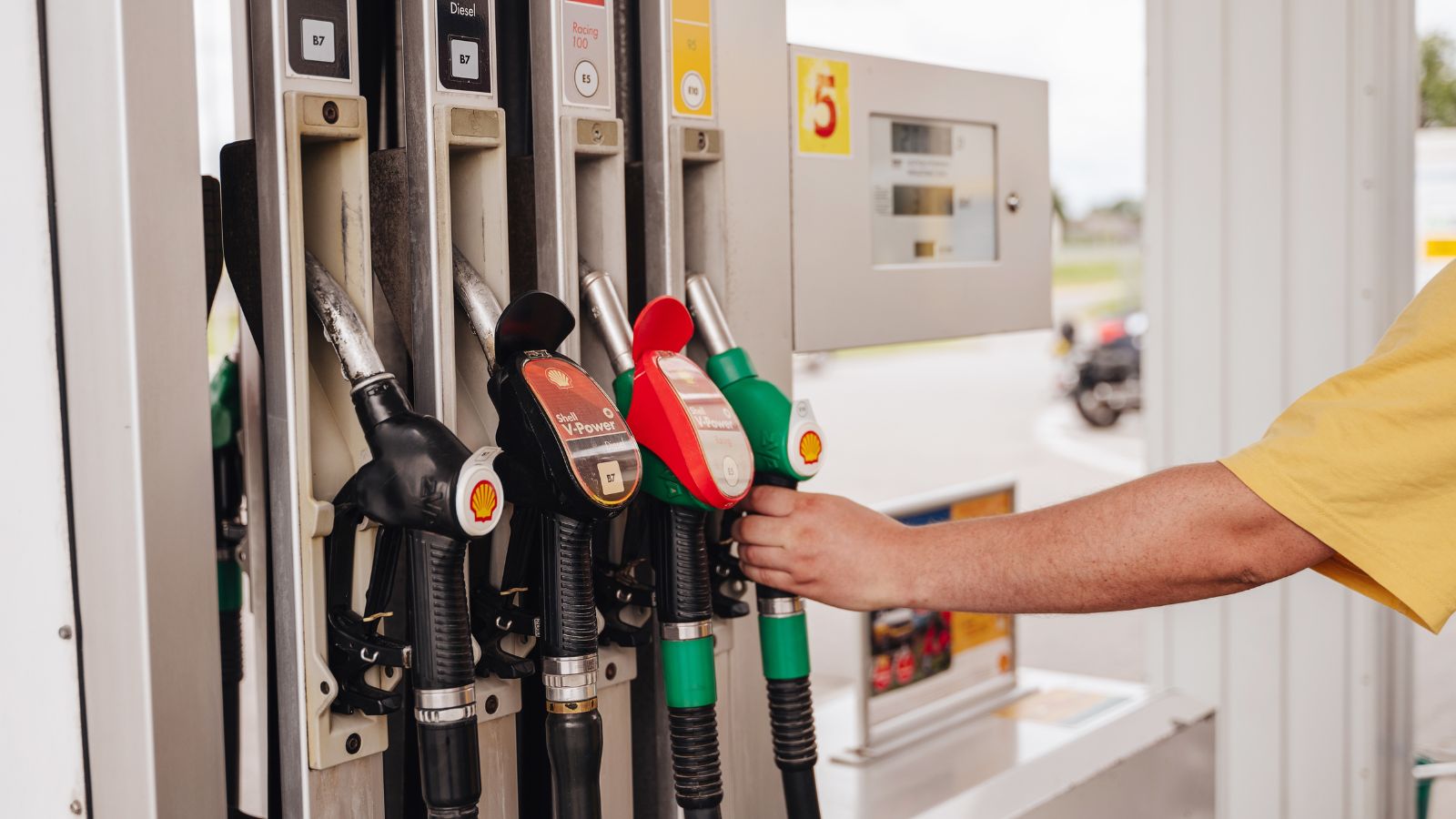
Brent crude has crossed the US$100-a-barrel mark again, putting fuel costs back at the centre of the affordability conversation for Canadian households. The international benchmark climbed above US$100 on September 9 for the first time since July 24 as renewed fighting in the Middle East threatened already-constrained energy shipments.
Canadian motorists are not seeing an identical move at every pump, and the national gasoline average actually eased slightly from the previous day. Still, the broader trend is uncomfortable: gasoline remains substantially more expensive than it was a month or a year ago. With crude costs rising, global refining markets unusually tight and key shipping routes under pressure, drivers are facing another round of uncertainty just as Ottawa extends tax relief intended to soften the impact.
The $100 Threshold Is Back
Brent crude futures climbed above US$100 a barrel on September 9, reaching roughly US$100.95 at the session high. That was the benchmark’s first move above US$100 since July 24. West Texas Intermediate, the main U.S. benchmark, remained lower but also jumped sharply, trading around US$95 to US$96 a barrel. The difference matters for Canadians because headlines saying “oil is above $100” refer specifically to Brent rather than every major crude benchmark.
The move was driven less by ordinary demand growth than by renewed fears about physical supply. Fighting involving the United States and Iran has intensified, while Iran-backed Houthi attacks have threatened Saudi energy infrastructure and shipping routes through the Red Sea. Traffic through the Strait of Hormuz, one of the world’s most important petroleum corridors, has fallen dramatically from levels seen before the latest escalation. When traders begin worrying that actual barrels cannot reach refiners, prices can move far faster than everyday fuel demand would normally justify.
Canadian Pump Prices Were Already Elevated
The renewed crude rally is landing when Canadian households are already paying considerably more for gasoline than they were earlier in the summer. CAA’s national average stood at 177.2 cents per litre early September 9. That was actually lower than the previous day’s 179.9 cents, an important reminder that oil-market movements do not appear instantly or uniformly on station signs. Compared with one week earlier, however, the average was 4.3 cents higher.
The longer comparisons are more striking. Canada’s national average was 162.9 cents a litre one month earlier and 140.9 cents a year earlier. For a 50-litre fill, today’s national average works out to roughly $88.60. At the month-ago price, the same amount would have cost about $81.45; at last year’s level, about $70.45. That helps explain why even motorists who have not encountered a dramatic overnight jump may still feel that fuel has quietly reclaimed a larger share of the household budget.
Crude Remains the Biggest Swing Factor
A litre of gasoline contains far more than the cost of crude oil. Refining, transportation, wholesale distribution, station operating costs, retail margins and taxes all influence the number displayed beside the road. Nevertheless, the Bank of Canada identifies changes in crude-oil prices as the single biggest cause of changes in gasoline prices. Natural Resources Canada similarly notes that global crude movements are a central driver of pump-price volatility.
That does not mean a three-per-cent rise in Brent automatically produces a three-per-cent rise at Canadian stations the next morning. Refiners buy feedstock on different schedules, wholesalers hold inventories, retailers may have fuel purchased at earlier prices, and local competition influences how quickly costs are passed along. Wholesale Canadian gasoline prices are also closely connected with the much larger U.S. market. The result can look confusing from the driver’s seat: crude may surge while a local station remains unchanged, only for the adjustment to arrive later as higher-cost replacement fuel moves through the supply chain.
Producing Oil Does Not Insulate Canadian Drivers
Canada’s status as a major oil-producing country can make expensive gasoline seem counterintuitive. Canadian crude oil and equivalent production averaged a record 5.35 million barrels per day in 2025, according to the Canada Energy Regulator. Canada also exported about 4.3 million barrels a day that year, with roughly 90% of those exports going to the United States. Yet domestic abundance does not create a separate bargain-priced Canadian petroleum market.
Crude and refined fuels are traded within interconnected North American and global markets, so Canadian sellers and buyers respond to international values. Geography adds another complication. Canada imported about 485,000 barrels per day of refined petroleum products in 2025, and almost 80% arrived from the United States. Those imports include transportation fuels such as gasoline, diesel and jet fuel. Some parts of Canada therefore produce enormous quantities of crude while other regions depend partly on imported finished fuel. A global disruption can consequently raise Canadian fuel costs even while Canadian oilfields continue producing at high levels.
The Pain Looks Very Different Across Canada
A national average can hide extraordinary regional differences. Gas Wizard’s September 9 city data placed regular gasoline around 211.9 cents per litre in Vancouver, while Calgary was around 171.9 cents. Toronto was near 186.9 cents, and Halifax was around 190.5 cents. Those figures can change quickly and individual stations vary, but they illustrate why two Canadian households can experience the same global oil shock very differently.
Several structural factors explain the gap. Provincial and local fuel taxes differ, as do transportation distances, refinery access, wholesale competition and the volume sold by individual stations. The Competition Bureau notes that fuel moved farther from a refinery or terminal generally incurs higher distribution costs, while local competitive conditions can affect retail margins. British Columbia’s Lower Mainland, Central Canada and Atlantic markets also have different supply routes and refining circumstances. Consequently, a Brent move above US$100 creates national pressure, but it does not dictate one uniform Canadian price. Regional supply conditions determine how strongly that pressure reaches individual pumps.
Refining Has Become the Hidden Multiplier
Crude is only part of the current problem. Global refining markets have been unusually tight, meaning consumers can face expensive gasoline or diesel even when crude itself temporarily retreats. The Bank of Canada noted in July that Canadian gasoline prices had not fallen as much as declining crude prices might have suggested, attributing the gap partly to reduced global gasoline supply caused by damaged refining capacity and restrictions on Chinese gasoline exports.
Conditions have since remained stressed. Reuters reported that European diesel refining margins reached about US$78.90 a barrel on September 1, compared with an average near US$21 in 2025. Refined gasoline in international markets has also been commanding unusually large premiums over crude. Canada has roughly 1.9 million barrels per day of domestic crude-refining capacity, and refineries ran at about 90% of capacity in 2025. That leaves less flexibility when facilities undergo maintenance or outside markets tighten. For motorists, the practical lesson is that cheaper crude alone may no longer guarantee rapid relief at the pump.
Ottawa’s Tax Extension Cushions the Blow
Canadian drivers received an important piece of relief just before Brent returned to US$100. The federal government announced September 8 that it would extend the temporary suspension of its fuel excise tax through January 31, 2027. The normal federal tax is 10 cents per litre on gasoline and four cents on diesel. Without the extension, the original suspension was due to end in early September, creating the risk that global market pressure and a returning federal tax would hit motorists at roughly the same time.
The suspension originally began April 20. Ottawa says gasoline prices dropped 11 cents per litre on its first day, although market prices can obviously move for other reasons simultaneously. The federal consumer fuel charge, commonly called the consumer carbon price, had already been eliminated effective April 1, 2025. Those policy changes provide a cushion, but they cannot control international crude prices, refining margins or supply disruptions. In other words, governments can remove part of the pump-price equation while the commodity-market portion continues moving in the opposite direction.
The Canadian Dollar Matters Too
Oil is normally priced internationally in U.S. dollars, creating another layer of risk for Canadian consumers. The Bank of Canada explains that when the Canadian dollar weakens against its U.S. counterpart, purchasing crude oil or refined gasoline becomes more expensive in Canadian-dollar terms. That can amplify an oil-price increase. A stronger Canadian dollar can provide some offset, although it rarely eliminates a large commodity-market shock altogether.
The Bank of Canada’s latest published daily average before September 9 put one U.S. dollar at approximately C$1.3784 on September 8, equivalent to roughly 72.55 U.S. cents for one Canadian dollar. Canadian wholesalers also compete with American buyers for refined fuel, strengthening the connection between the exchange rate and domestic wholesale costs. This means drivers effectively face two moving prices: the international price of petroleum and the price of the currency needed to buy it. Brent can remain unchanged in U.S. dollars while its Canadian-dollar cost changes, which helps explain why Canadian pump prices do not always move neatly alongside crude-market headlines.
Gasoline Is Already Showing Up in Inflation
Fuel was already exerting noticeable pressure on Canada’s inflation numbers before the latest return to US$100 oil. Statistics Canada reported that consumer prices rose 3.0% year over year in July, compared with 2.8% in June. Gasoline prices were 25.7% higher than a year earlier, accelerating from a 20.5% increase in June. By contrast, overall inflation excluding gasoline was 2.2%, illustrating how much energy had widened the gap.
Transportation costs as a whole were up 7.8% year over year in July. Higher jet-fuel costs also contributed to a 12% annual increase in air-transportation prices. The consequences therefore extend beyond commuters filling their own tanks. Diesel powers trucking, agricultural machinery and other commercial equipment, while jet fuel affects airlines. Earlier in 2026, the Bank of Canada estimated that higher oil prices would add roughly 0.3 percentage points to CPI inflation over the year through higher production and transportation costs. A persistent new energy shock would keep those indirect pressures difficult to ignore.
What Happens Next Depends on Supply, Not the $100 Number
For motorists, US$100 oil is psychologically important, but the more meaningful question is whether it stays there. Brent has already demonstrated extreme volatility during 2026, including a rise as high as US$126.41 in April before retreating as diplomatic hopes improved. The current rebound reflects renewed concern that Middle Eastern disruptions will last longer than traders previously expected. Shipping through Hormuz, attacks on oil infrastructure and the availability of alternative routes are therefore more important than the round-number milestone itself.
Drivers should also avoid assuming that today’s move guarantees another immediate nationwide price spike. Canada’s national average of 177.2 cents per litre remains below the 190.4-cent peak CAA recorded on May 6. Ottawa’s extended excise-tax suspension removes one potential near-term increase as well. But if Brent remains above US$100 while global gasoline and diesel refining margins stay elevated, Canadian wholesalers will face continuing cost pressure. Conversely, safer shipping routes, improving refinery availability or a meaningful easing in crude prices could reduce it. For now, uncertainty—not a guaranteed price—is the defining feature.