


























Few vehicle features are easier to overlook than a spare tire—right up until a damaged tire makes the vehicle undriveable. As automakers chase lower weight, better packaging, and small efficiency gains, conventional spare wheels have disappeared from a growing share of new models. Inflator kits, sealant, run-flat tires, and roadside assistance have taken their place, but none performs exactly the same job. In Canada, where winter temperatures, potholes, long rural highways, and large distances between services can magnify a simple tire problem, that trade-off can become painfully obvious. These 12 reasons explain why the missing spare is becoming a source of frustration for some Canadian vehicle owners.
The Spare Tire Quietly Disappeared

A spare tire used to be so ordinary that many buyers never thought to ask whether one was included. That assumption is now risky. AAA documented the shift years ago, finding that 28% of 2017-model-year vehicles in its U.S. study lacked a spare as standard equipment. More recently, Consumer Reports said roughly 45% of the new vehicles in its test fleet did not include one. The 2026 Ford Mustang Mach-E owner’s manual provides a modern example, explicitly stating that the vehicle does not include a spare wheel, tire, or vehicle jack.
That makes the first moment of regret surprisingly simple: an owner opens the cargo floor after a flat and discovers a compressor, a bottle of sealant, or storage where a wheel was expected. Automakers have legitimate reasons for deleting the spare, including weight, packaging, and cost. Those engineering benefits are largely invisible during ordinary driving, however. The inconvenience becomes extremely visible when one damaged tire suddenly leaves an otherwise perfectly functional vehicle unable to continue the trip.
Sealant Kits Only Solve Certain Kinds of Flats

The replacement for a spare is often a tire-mobility kit containing a small compressor and liquid sealant. That sounds reassuring until the damage falls outside the kit’s narrow operating window. AAA’s engineering tests found that these systems could work when a puncture occurred in the centre tread and the foreign object remained embedded. The same testing found they were unsuitable for sidewall damage, blowouts, pothole damage, curb damage, or cases where the object causing the puncture was no longer in the tire.
That distinction matters because “flat tire” describes many different failures. A screw through the tread on a suburban street may be exactly the problem a sealant kit can temporarily manage. A torn sidewall after striking road debris is completely different. Without a spare, the second problem generally becomes a roadside-assistance or towing situation. The frustration is not that inflator kits never work. It is that owners can carry emergency equipment for years before discovering, at the worst possible moment, that their particular tire failure is one the equipment cannot fix.
Pothole Damage Exposes the Biggest Weakness
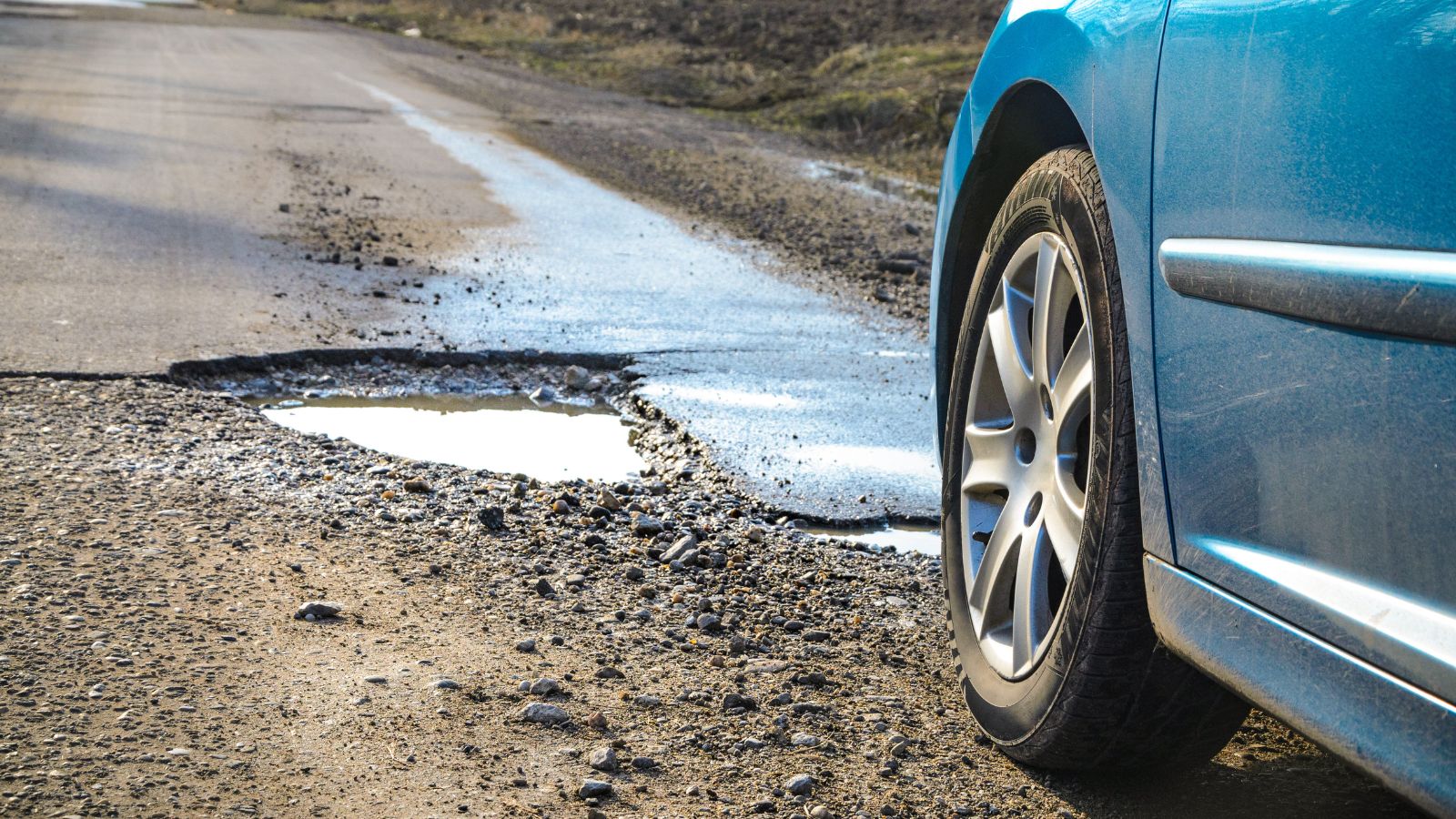
Canadian roads create one particularly awkward mismatch for sealant-only vehicles: impact damage. Michelin Canada says damage to the sidewall or shoulder generally cannot be safely repaired like a small central-tread puncture. Consumer Reports has similarly noted that a pothole can injure the sidewall, wheel, suspension, or alignment, and that a sealant kit cannot temporarily solve a flat caused by significant pothole damage. Low-profile tires are particularly vulnerable because their shorter, stiffer sidewalls have less room to absorb a sharp impact.
That is where a traditional spare starts looking less old-fashioned and more practical. A deep pothole can produce a split sidewall, bent wheel, or rapid pressure loss that no compressor can overcome. Sealant cannot reconstruct damaged tire structure, and adding air does not make a compromised tire safe to drive. Without a spare, a relatively brief encounter with a bad road surface can therefore result in a tow, a missed appointment, and a replacement tire or wheel. The vehicle itself may be mechanically perfect, yet it is still going nowhere.
Canadian Cold Makes Tire Pressure More Complicated
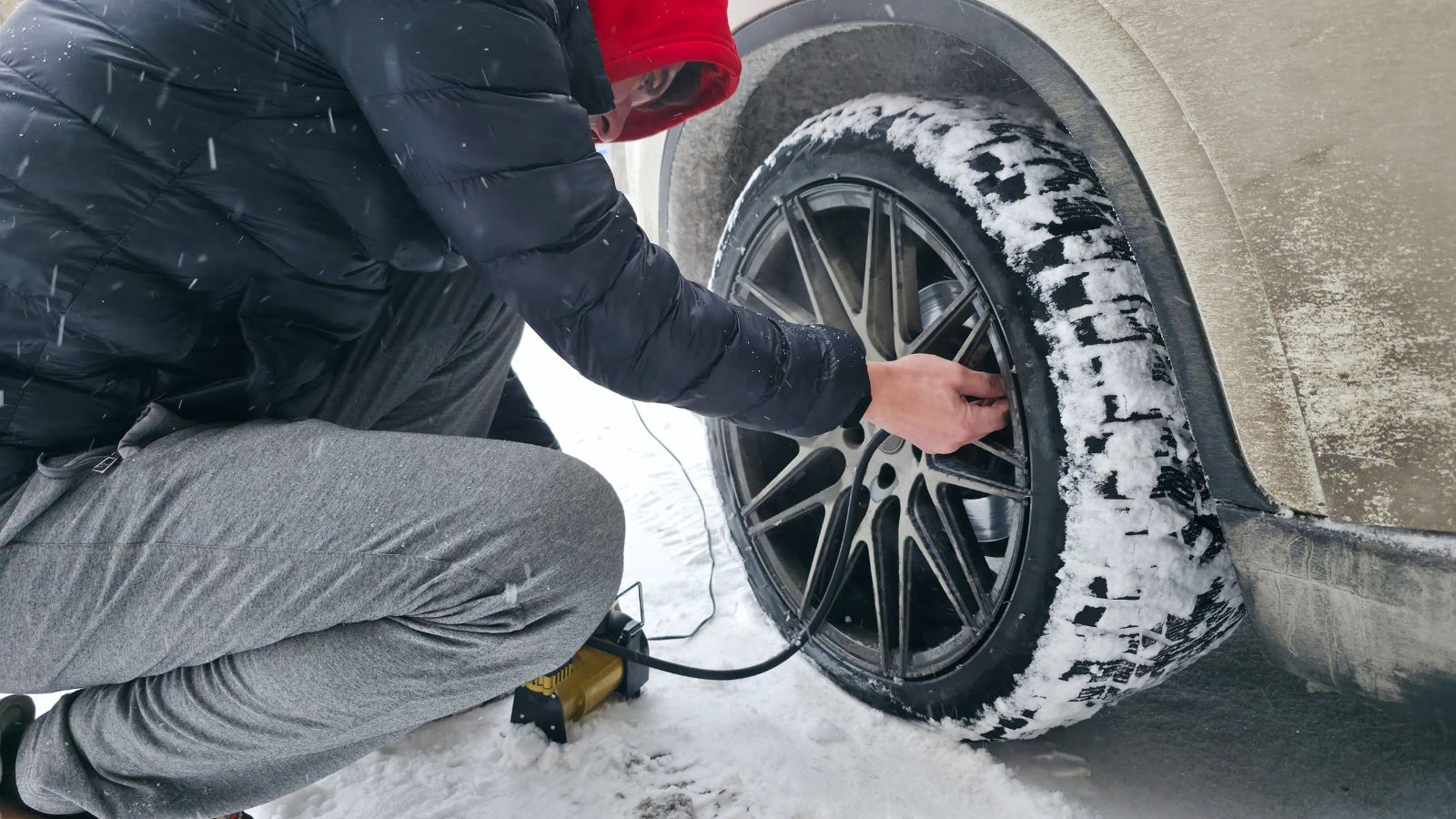
Cold weather adds another layer of vulnerability because tire pressure changes with temperature. Transport Canada says tire pressure drops by approximately 7 kPa, or 1 psi, for every 5°C decrease in temperature. It recommends measuring pressure when tires are cold and notes that tires can also gradually lose pressure naturally. Those details matter in a country where a vehicle may leave a relatively warm garage before sitting outside for hours at temperatures well below freezing.
A missing spare does not create underinflation, but it reduces the available options if a pressure problem becomes more serious. Driving on a substantially underinflated tire can generate excessive flex and heat, potentially damaging the tire. A mobility kit remains useful only if the eventual damage falls within the system’s limitations. Winter also makes being stranded considerably less pleasant. An owner who regarded a small compressor as an adequate replacement for a wheel may think differently when a pressure warning appears during a cold snap and the affected tire either cannot be reinflated or immediately loses the air again.
Canada’s Distances Can Turn a Flat Into an Expedition
Canada’s geography makes the no-spare decision feel very different outside major cities. Statistics Canada reported more than 1.04 million kilometres of public road assets in 2020, including more than 115,000 kilometres classified as rural highways. British Columbia warns that services along Highway 37 can be separated by substantial distances; the province says the longest stretch between fuel pumps on that route is approximately 270 kilometres, while major vehicle repairs may require reaching considerably larger communities.
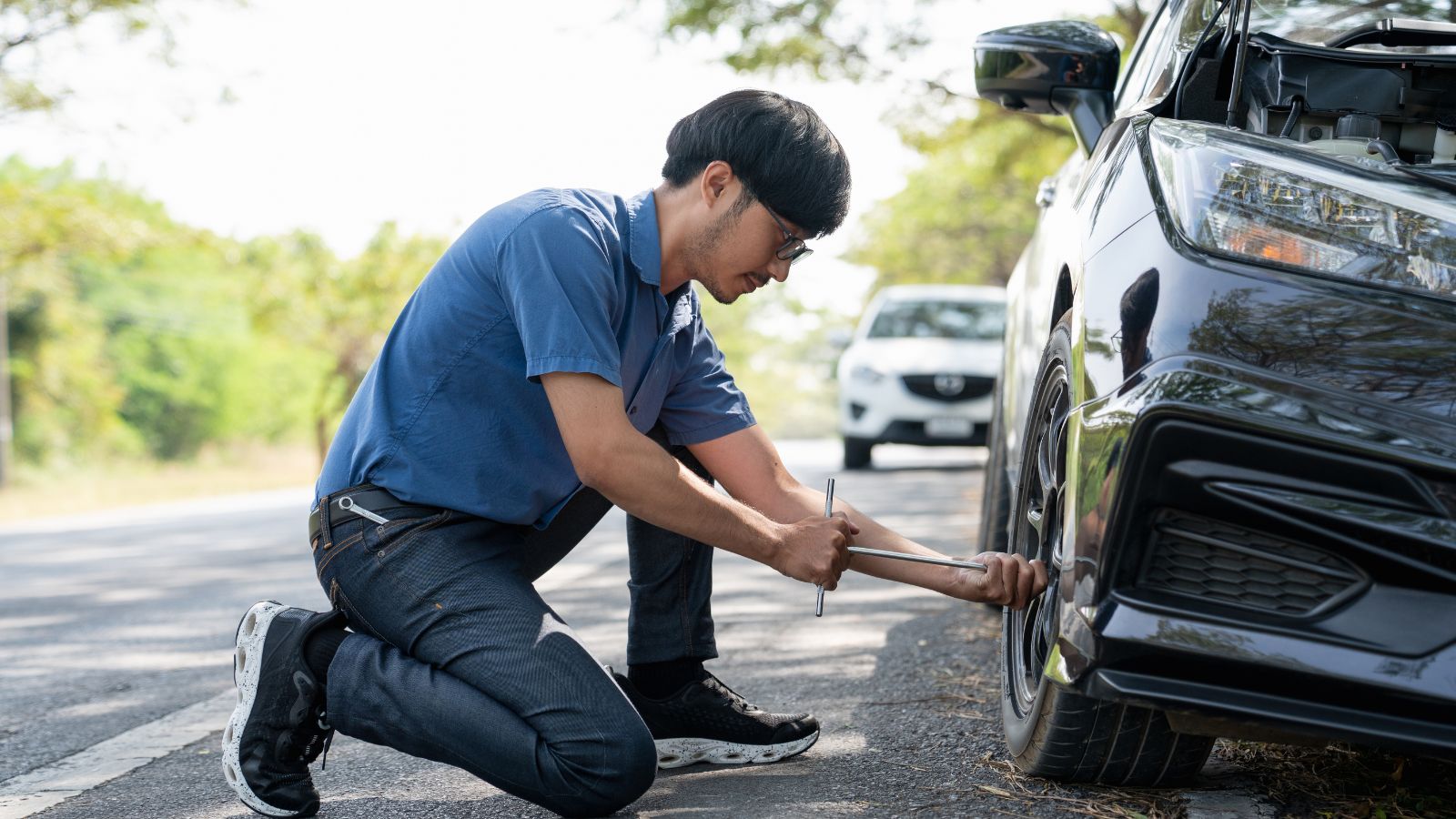
In Toronto, Montreal, Calgary, or Vancouver, a tow truck and tire retailer may be relatively close. On a northern highway, prairie back road, cottage route, or long intercity trip, the same puncture can consume hours. A temporary spare does not eliminate the need for professional repair, but it can provide enough mobility to reach a safer location or service centre. Without one, the schedule depends entirely on phone coverage, towing availability, distance, weather, and whether the nearest tire business stocks the correct replacement. A tiny tire problem can suddenly become the defining event of an entire day.
Roadside Assistance Becomes Part of the Vehicle

Vehicles without spares effectively make roadside assistance part of the flat-tire strategy. That arrangement can work extremely well, but it remains a dependency. CAA Atlantic provides 24-hour roadside assistance and specifically handles problems such as flat tires, yet its guidance notes that response times depend on location and that motorists in rural areas may have to wait longer. British Columbia also cautions travellers that cellular service can be limited in some areas, making the assumption of instant digital assistance less reliable.
There is an important safety nuance. CAA advises stranded motorists to get as far from traffic as possible, make the vehicle visible, and stay away from moving traffic when outside. On a busy freeway shoulder, calling a trained roadside professional can be considerably wiser than attempting a wheel change. Having a spare therefore does not mean one must always install it personally. What frustrates no-spare owners is losing the choice. When sealant cannot handle the damage and the vehicle cannot move, waiting is mandatory regardless of weather, location, family obligations, or how urgently the driver needs to reach a destination.
Winter Tires Add Another Layer of Complexity
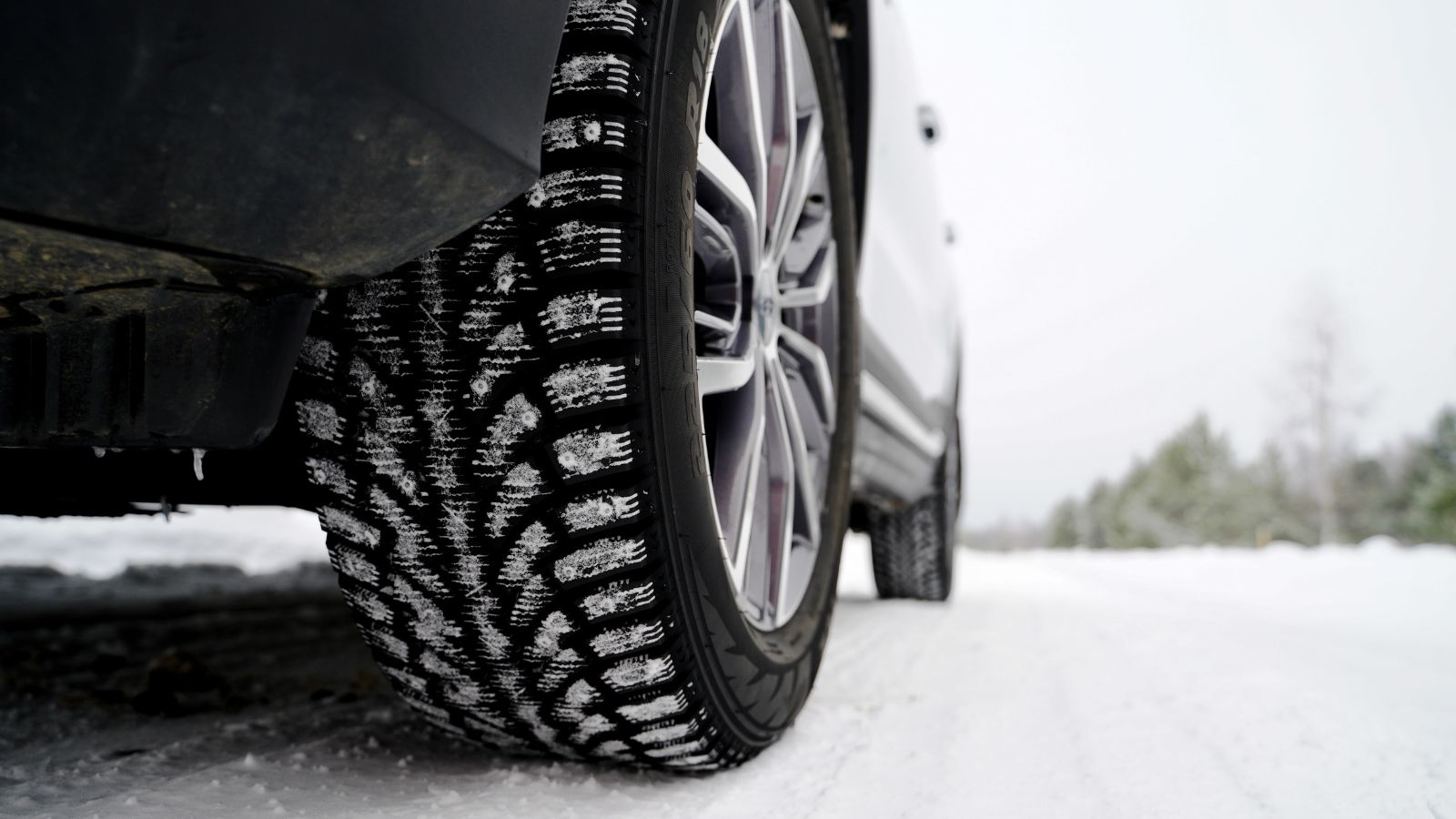
Winter-tire season can make the spare question more complicated, not less. Transport Canada recommends installing winter tires in sets of four and says matching tire type, size, speed rating, and load index helps maintain predictable handling. It warns that mixing substantially different tires can reduce vehicle stability. Transport Canada also notes that below 7°C, conventional all-season and summer tires begin losing elasticity, one of the reasons proper winter tires become increasingly important as Canadian temperatures fall.
A compact emergency spare is deliberately a temporary solution, so nobody should expect it to deliver the same snow and ice performance as four matching winter tires. Its purpose is simply to provide limited mobility under the vehicle manufacturer’s stated restrictions. That limited mobility can still be valuable when a winter tire fails and an exact replacement is not immediately available. There is one catch: spare tires require maintenance too. Transport Canada recommends checking their inflation regularly. A neglected spare sitting under the cargo floor for years can be almost as disappointing as discovering there was never a spare there at all.
Run-Flats Help, but They Have Hard Limits
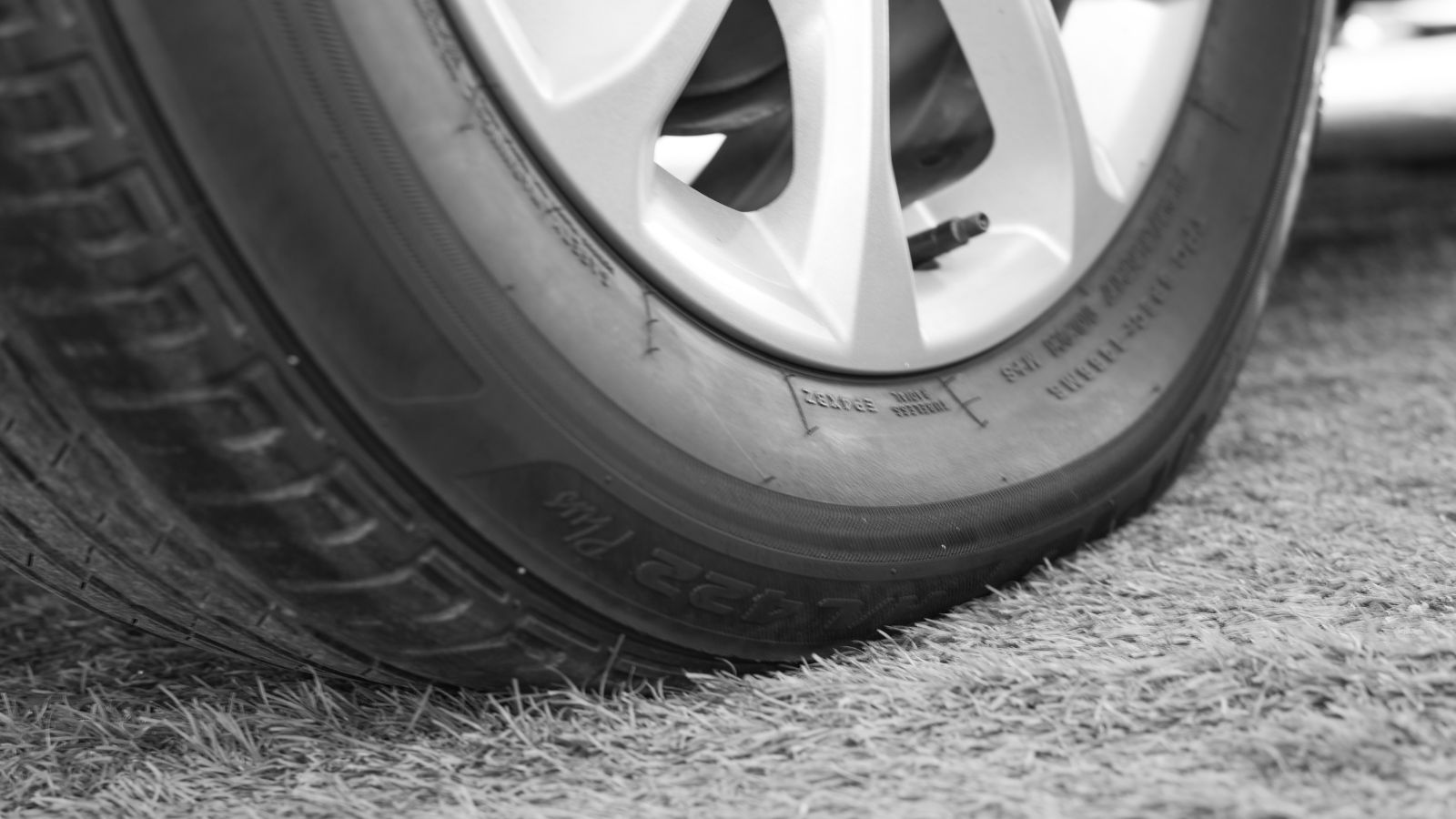
Run-flat tires are another way manufacturers can eliminate a spare, and in certain situations they are substantially more capable than liquid sealant. Michelin Canada explains that reinforced sidewalls allow these tires to support the vehicle temporarily after pressure loss. A typical operating limit is around 80 km/h for approximately 80 kilometres, although the actual speed and distance restrictions depend on the specific tire and vehicle. The goal is enough mobility to reach a repair facility—not indefinite driving on a flat.
The trade-offs become clearer when replacement time arrives. Michelin says a run-flat that has been operated with little or no pressure must be professionally inspected because internal damage may not be visible. It also says run-flat tires typically cost around 20% to 40% more than comparable conventional tires and can produce a somewhat firmer ride. For owners who assumed “no spare” effectively meant “no problem,” those details can alter the ownership experience. Run-flats provide a useful safety bridge, but they replace a simple wheel with specialized construction, higher tire costs, strict operating limits, and greater dependence on finding appropriate replacement rubber.
The Weight-Saving Argument Is Real—But Small

Automakers are not removing spare tires without a reason. Vehicle mass directly affects energy consumption. Natural Resources Canada says heavier vehicles require more energy to move and that reducing weight is an effective way to lower fuel consumption. Its consumer guidance estimates that a mid-size car’s fuel use rises by roughly 1% for each additional 25 kilograms it carries. AAA has estimated that a spare tire, wheel, jack, and related tools can weigh 30 pounds or more, so removing them provides a small but measurable efficiency advantage.
The point that frustrates some owners is the scale of the trade-off. The efficiency benefit exists, but the spare remains one relatively small component of a vehicle weighing well over a tonne. Its practical value, meanwhile, can feel enormous on the rare day it becomes necessary. Neither side of the calculation is irrational. Vehicle engineers work aggressively to eliminate unnecessary kilograms because dozens of small reductions accumulate. A driver sitting beside a disabled vehicle after a sidewall failure understandably places much greater value on the additional weight represented by one usable emergency wheel.
EVs Make the Decision Understandable—and Still Frustrating
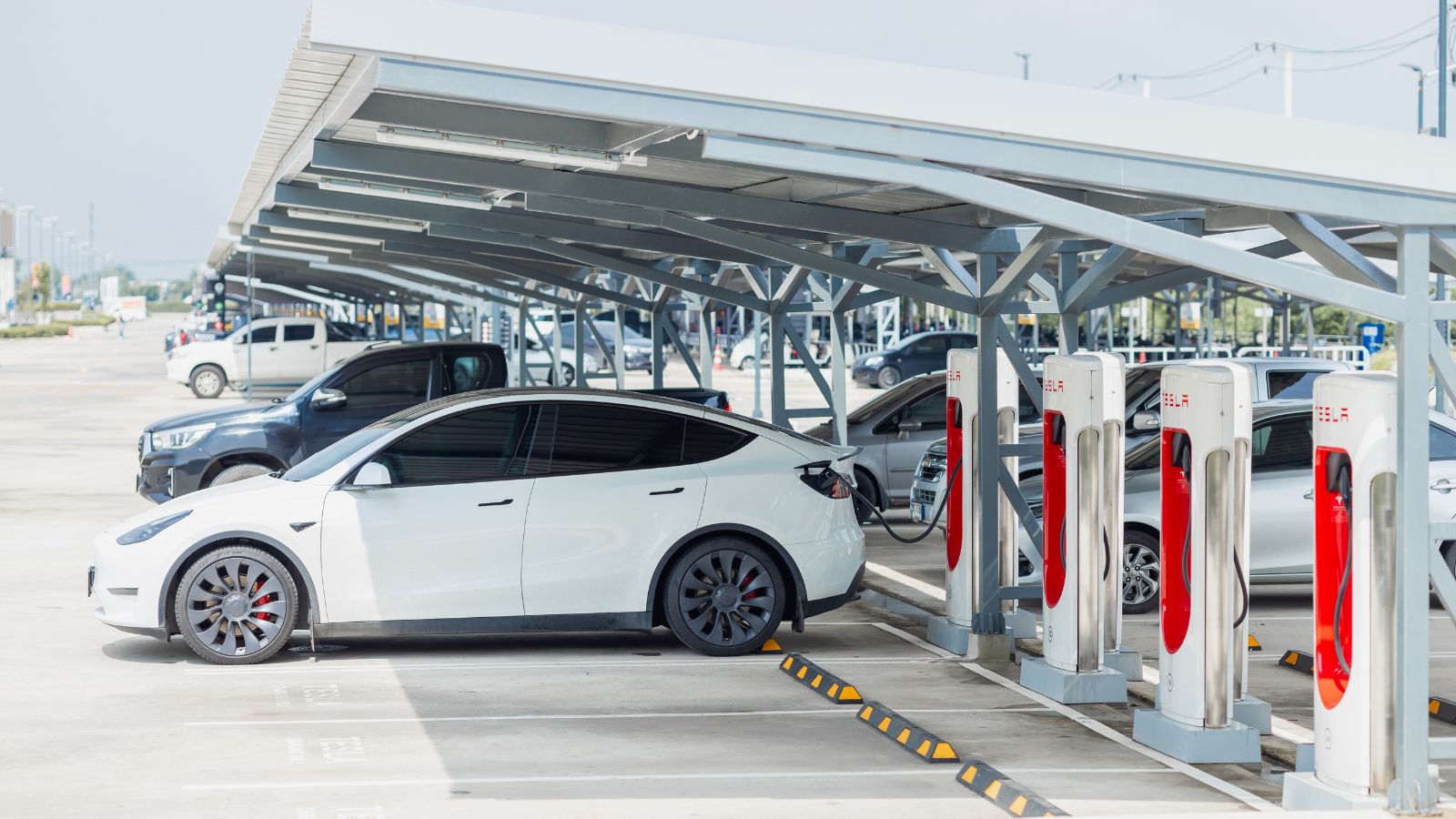
Electric vehicles make the weight and packaging arguments particularly easy to understand. Their large batteries contribute considerable mass, and Consumer Reports notes that EVs are often heavier than comparable combustion vehicles. Many therefore require extra-load or high-load-rated tires. The 2026 Mustang Mach-E GT, for example, carries a large battery and 20-inch tires, while Ford’s owner documentation states that the vehicle does not include a spare wheel, tire, or jack. A tire-mobility solution takes far less space and weight than another wheel.
Yet an EV can also demonstrate why owners become frustrated. A vehicle might have hundreds of kilometres of battery range remaining and still be completely immobilized by one damaged sidewall. The electric motors, high-voltage battery, and charging system can all be functioning normally while the vehicle waits for a tow. For owners accustomed to planning around charging infrastructure, tire mobility effectively becomes a second form of range planning. The point is not that every EV should carry a full-size spare. It is that long-distance buyers need to understand how the vehicle handles an unrepairable flat before discovering the answer far from home.
There Can Be Costs After the Emergency Is Over
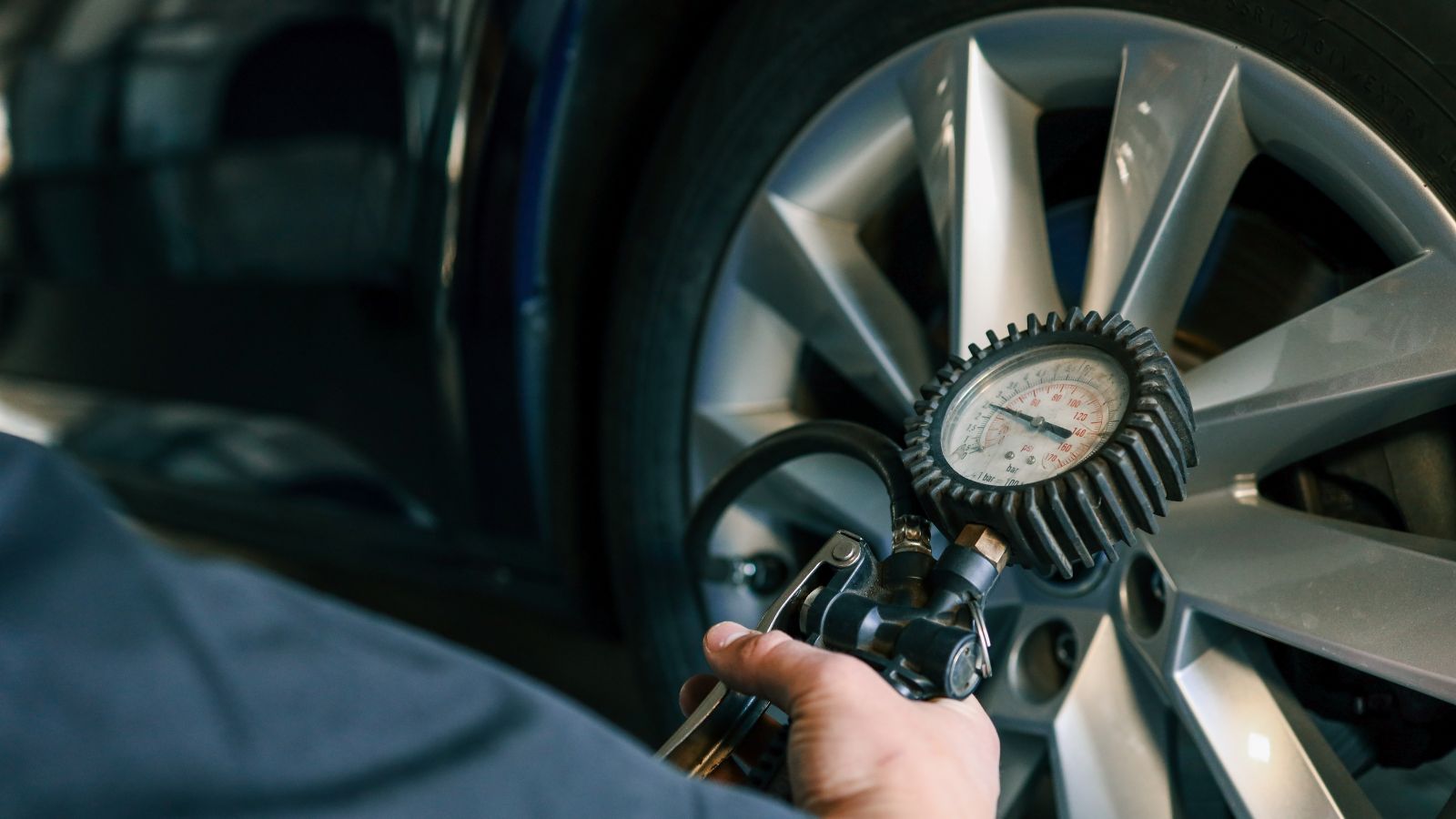
The cost of going without a spare does not necessarily end when roadside help arrives. AAA’s tire-inflator testing found that, in some circumstances, dealing with a tire after sealant use could become substantially more expensive than using a spare, partly because the emergency kit must be replenished and tire-pressure-monitoring components may require attention. AAA also recommends checking sealant expiration dates, noting that many canisters need replacement after roughly four to eight years even if they have never been used.
Modern Canadian pricing shows that emergency equipment itself is not always trivial. Tesla’s Canadian store currently lists its Air Compressor + Tire Repair Kit 3.0 at $150. Tesla describes the system as a temporary repair and says it is designed for relatively small punctures in the tread, not sidewall damage. Consequently, an owner can purchase emergency equipment, use the sealant once, still need professional tire service, and potentially require towing if the damage is outside the kit’s capability. A spare wheel costs money and occupies space too, but its purpose and limitations are considerably easier for most drivers to understand.
The Best Time to Discover the Problem Is Before Buying

The strongest defence against no-spare regret begins before vehicle delivery. AAA specifically advises shoppers not to assume that a new vehicle includes a spare and recommends asking whether one can be purchased as an option. That question belongs on the same ownership checklist as winter-tire costs, insurance premiums, service intervals, and fuel or charging expenses. Buyers should determine whether the manufacturer relies on conventional spares, temporary spares, run-flats, sealant and a compressor, or roadside assistance, then read the actual restrictions before leaving the dealership.
Some vehicles can accept a purpose-built spare kit afterward. Ford Canada, for example, sells a temporary-spare package for certain Mustang models containing an 18-by-5-inch wheel, tire, scissor jack, wrench, and retaining hardware. Compatibility cannot be assumed, however. Brake clearance, tire diameter, drivetrain requirements, jacking points, and storage space all matter. Canadians who routinely drive remote routes may decide the extra weight is worthwhile. Urban motorists may prefer roadside coverage or run-flats. Either choice can make sense. The mistake is allowing that decision to be made unknowingly at the factory.
19 Used Cars Canadians Should Avoid in 2026 (Based on Owner Complaints)

Buying a used car in Canada can feel safe until repair bills start stacking up. Owner complaints tell a different story than glossy listings. Transmission failures, electrical problems, and weak winter reliability show up again and again in consumer reports. Many of these issues appear after warranties expire, when owners least expect them. Some vehicles look affordable upfront, but become expensive to keep on the road. Others struggle in cold weather, urban driving, or long highway commutes. Here are 19 used cars Canadians should avoid in 2026 (based on owner complaints).
19 Used Cars Canadians Should Avoid in 2026 (Based on Owner Complaints)