


























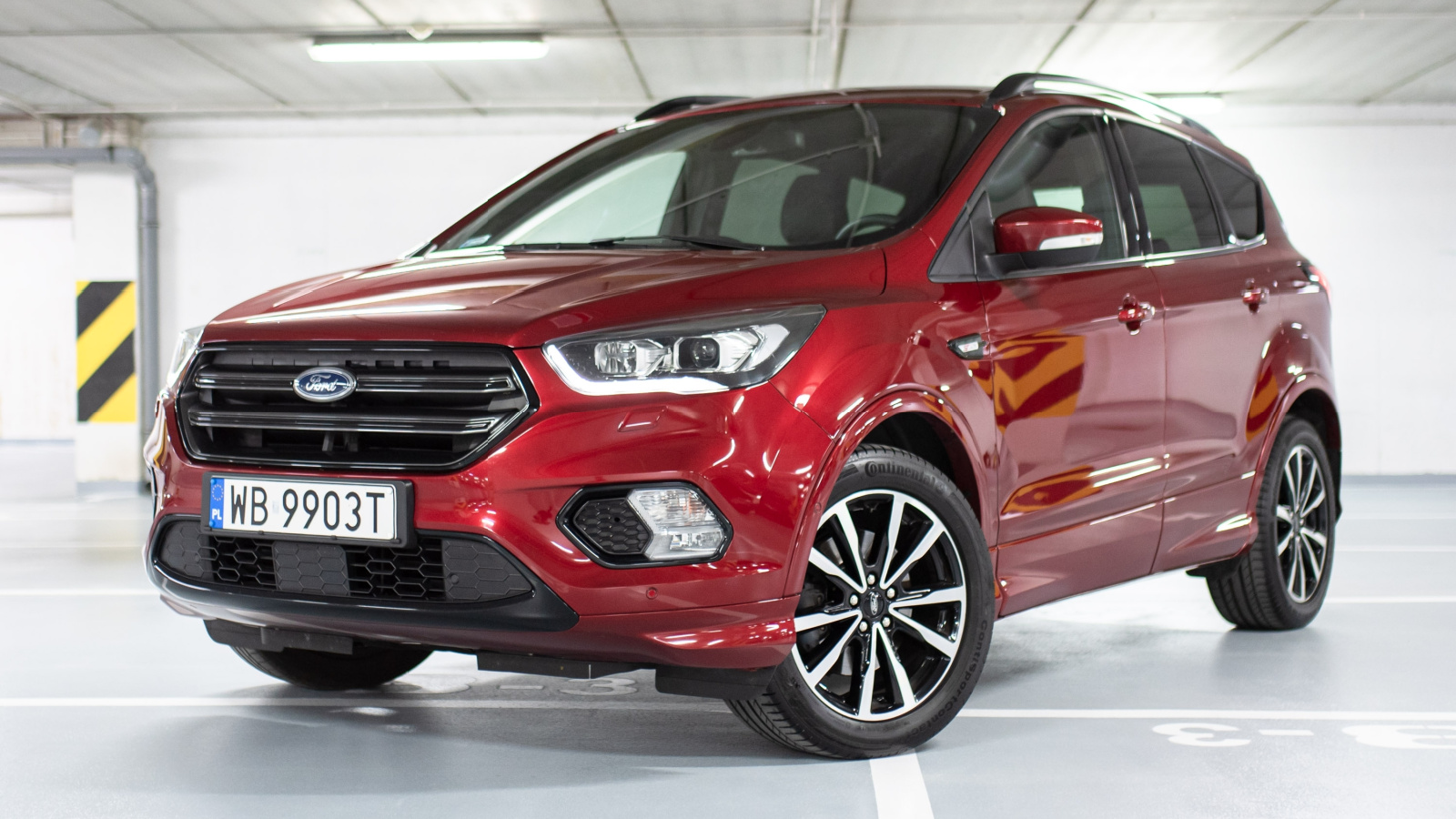
Two of Canada’s most familiar Ford nameplates are moving in sharply different directions on the used market. September data from CarGurus shows the average asking price for a used Ford Escape fell 9.3% from a year earlier to $18,432, while the Ford F-150 climbed 4.1% to $44,438.
The split is especially striking because most popular used vehicles are getting cheaper. Eight of the 10 best-selling models tracked by CarGurus posted year-over-year price declines, leaving the F-150 and Toyota RAV4 as the only two to record increases. For Canadian buyers and sellers, the numbers show why broad statements about used-car prices can miss what is happening with individual vehicles.
Escape’s 9.3% Drop Pushes a Familiar Crossover Further Into Budget Territory
The Ford Escape posted the largest year-over-year price decline among CarGurus’ 10 best-selling used vehicles in September, with its average asking price dropping 9.3% to $18,432. The decline was not an isolated one-month comparison. In August, the Escape was already down 7.9% year over year at an average asking price of $18,701, meaning the average declined another $269 between the two monthly snapshots while the year-over-year drop widened. That movement puts the Escape considerably deeper into the affordable end of Canada’s used-SUV market at a time when overall used prices remain relatively high. As of October 20, CarGurus placed the average Canadian used-vehicle listing at $33,232, while SUVs and crossovers averaged $32,348. Those figures cover very different combinations of ages, trims and kilometres, so they should not be treated as direct like-for-like comparisons with an Escape. They do, however, illustrate just how far below the broader market the typical Escape listing now sits. There is also an important product-cycle change behind the nameplate. Ford Canada currently tells shoppers that the Escape has “reached the end of its journey” and directs prospective customers toward alternatives such as the Bronco Sport and Maverick. The end of a model line does not automatically cause used examples to depreciate faster, and the pricing data does not prove that discontinuation caused the 9.3% decline. It nevertheless changes the environment surrounding the vehicle: there is no longer the same active new-model pipeline supporting the Escape name, while dealers and consumers increasingly encounter it primarily as a used vehicle rather than as both a new and pre-owned choice.
A second Canadian dataset reinforces the Escape’s growing role as a value-focused vehicle. Clutch’s August 2026 pricing analysis, which examined sold vehicles from model year 2016 and newer with fewer than 200,000 kilometres, found that the Escape was the most popular SUV in its sub-$20,000 category. It accounted for 6.6% of sales in that price tier, with an average selling price of $14,275. That figure should not be directly compared with CarGurus’ $18,432 number because the two companies use different datasets and methodologies—Clutch is looking at a defined group of completed sales, while CarGurus is reporting average listing prices across its marketplace. Taken together, however, the findings point in the same direction: used Escapes have become a significant option for Canadians shopping below the price of many newer compact crossovers. For a household trying to replace an aging commuter or add a second vehicle without spending $30,000 or more, that can make the Escape noticeably more accessible than it was a year ago. The other side of the equation matters for existing owners. A falling market benchmark can translate into greater pressure on trade-in and resale expectations, particularly for vehicles with high kilometres or less desirable equipment. Buyers also need to remember that a national average cannot determine whether a particular Escape is inexpensive or expensive. Model year, mileage, drivetrain, trim level, maintenance history and condition can move an individual vehicle thousands of dollars away from the average. The headline therefore signals a market opportunity rather than an automatic bargain: prices are clearly moving downward, but the condition and specification of the individual vehicle still matter more than the national percentage alone.
F-150’s 4.1% Increase Shows How Strong Model-Level Demand Can Defy a Softer Truck Market
The F-150 presents almost the opposite picture. Its average used asking price reached $44,438 in September, 4.1% higher than a year earlier, making it one of only two vehicles in CarGurus’ top 10 to record a year-over-year increase. The Toyota RAV4 was the other, rising a much smaller 1.2%. The F-150’s strength also appears to have been building through late summer: in August, CarGurus put its average listing price at $44,531, up 2.3% from August 2025. The F-150 was the platform’s top-selling used vehicle in Canada that month and was also one of the fastest-moving vehicles tracked, averaging about 36 days on the market. There is an important nuance in those numbers. September’s $44,438 average was actually slightly lower than August’s $44,531, even though its year-over-year gain accelerated from 2.3% to 4.1%. In other words, the September result should not be interpreted as the truck suddenly becoming 4.1% more expensive in a month. It is a comparison with September 2025, and changes in the mix of model years, trims, mileage and configurations being advertised can influence the average. The broader truck market was not rising in unison either. By October 20, CarGurus reported that pickup-truck asking prices had fallen 1.12% over the previous 30 days to an average of $46,039. Canadian Black Book likewise recorded a 0.30% weekly decline across its truck and SUV wholesale category for the week ending October 10. The F-150 is therefore outperforming a generally softer market rather than simply being carried upward by rising pickup prices overall.
Demand at lower price points provides another clue to the F-150’s unusual staying power. Clutch’s August analysis found the F-150 accounted for 22.7% of all truck sales in its under-$30,000 category, easily making it one of the most important models for Canadians searching for a less expensive full-size pickup. The average F-150 sold within that particular tier was $25,258. Again, that number reflects a different slice of inventory than CarGurus’ nationwide $44,438 listing-price average; cheaper trucks will typically be older, have more kilometres, or carry different equipment. What it demonstrates is the breadth of demand for the nameplate. An F-150 can compete at the relatively affordable end of the used-truck market while newer, lower-mileage and higher-trim examples push the overall average substantially higher. That breadth is valuable in a country where pickups serve very different owners—from contractors and agricultural users to families needing towing capacity or four-wheel-drive capability. Canadian Black Book has also continued to describe demand for high-quality used vehicles as strong even while overall wholesale values soften. None of that guarantees continued appreciation for the F-150, especially when broader pickup prices and wholesale truck values are currently moving lower. It does explain why relying on a market-wide depreciation figure can be misleading. Between the Escape’s 9.3% decline and the F-150’s 4.1% increase, the two Ford models are separated by 13.4 percentage points of year-over-year price movement. For shoppers, that means bargaining power may be improving much faster on an Escape than on a desirable F-150. For owners preparing to sell or trade, it means the Ford badge alone says very little about resale performance: vehicle category, supply, demand, age, specification and the stage of a model’s life cycle can produce dramatically different outcomes.