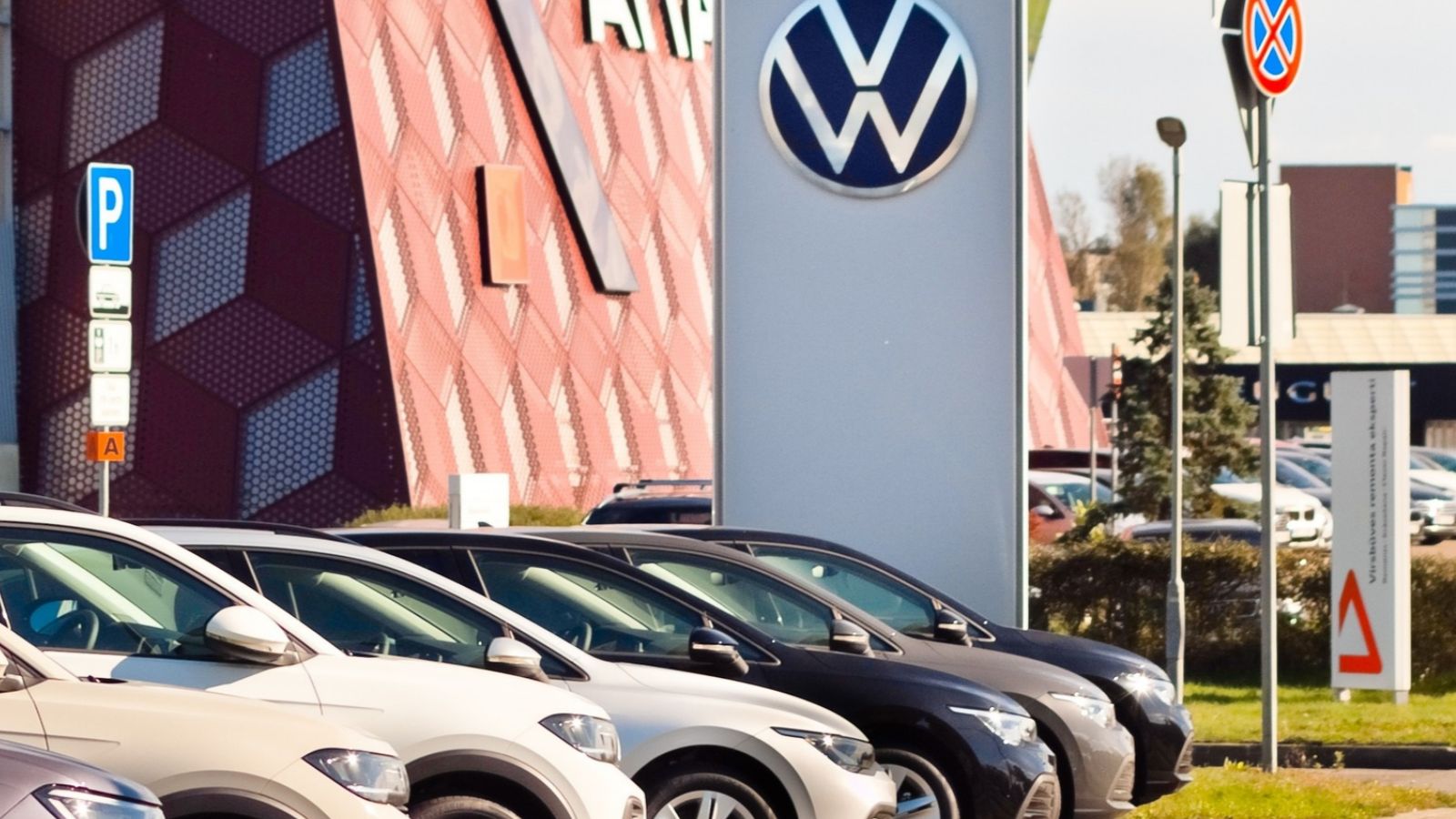
Thousands of Volkswagen ID.4 owners in Canada are being asked to change the way they charge their vehicles while the automaker investigates a potentially serious high-voltage battery problem. Volkswagen has recalled 5,633 ID.4 electric SUVs from the 2023 through 2025 model years because the battery could overheat and create a fire risk, including while a vehicle is parked and switched off.
The immediate instruction is simple: affected owners should set their maximum charge level to 80% and leave it there until recall repairs are completed. What is less straightforward is the repair itself. Volkswagen has not yet finalized a permanent solution, and the underlying cause remains under investigation. That leaves owners temporarily relying on a charging restriction rather than a dealership fix.
The Canadian Recall Covers 5,633 ID.4s
Transport Canada’s recall record identifies 5,633 affected Volkswagen ID.4 electric SUVs in Canada covering model years 2023, 2024 and 2025. The recall was issued September 30 under Volkswagen campaign number 93EX and was updated in early October. The identified problem is in the high-voltage system: on certain vehicles, the traction battery could overheat. Transport Canada warns that overheating could create a fire risk even when the ID.4 is parked and turned off.
That last detail makes this more consequential than a defect that occurs only while accelerating or actively charging. An owner could finish the evening commute, park the vehicle and reasonably assume the high-voltage system is no longer relevant until the next drive. Transport Canada’s notice makes clear that the potential hazard is not limited to a moving vehicle. At the same time, a model year alone does not establish that a particular ID.4 is affected. Recall populations are VIN-specific, meaning two apparently identical 2024 ID.4s can have different recall status depending on their components and production history.
The 80% Limit Has Changed From Advice to a Safety Instruction
Volkswagen has long suggested that EV drivers aim for an 80% charge during routine use as a way to reduce battery degradation. Under normal circumstances, that is a battery-care recommendation rather than an absolute limit. Owners might still charge to 100% before a long highway trip when maximum range is useful. For ID.4s covered by recall 93EX, the meaning of that number has changed. Volkswagen is now specifically advising owners not to charge beyond 80% as an interim safety measure.
The difference is important. A routine recommendation can be adjusted around a driver’s plans; a recall instruction should be treated as part of the manufacturer’s safety response. Volkswagen’s U.S. filing for the same 93EX campaign says that certain charging patterns combined with a state of charge above 80% may trigger a dangerous battery condition. Until the investigation produces a permanent remedy, that top portion of the battery is effectively off limits for affected vehicles. For a commuter who normally stops at 80% anyway, daily life may change very little. For someone accustomed to filling the battery before a long trip, the restriction is much more noticeable.
Losing the Top 20% Matters Most on Longer Drives
The practical effect depends heavily on which ID.4 is being driven. Volkswagen Canada’s specifications for the 2025 model list a 62-kWh gross battery in the Base model and an 82-kWh battery in the Pro and Pro AWD. With a full charge, Volkswagen lists Natural Resources Canada-tested ranges of 332 kilometres for the Base, 468 kilometres for the rear-wheel-drive Pro and 423 kilometres for the Pro AWD. Actual range varies with temperature, speed, terrain, heating and air-conditioning use, battery age and driving habits.
An 80% charging ceiling therefore does not make the ID.4 unusable, but it removes some of the reserve owners may rely on when travelling between chargers. In a Canadian winter, when cold temperatures can already affect EV efficiency, that extra cushion can matter. Drivers may need to stop somewhat earlier or plan charging locations more carefully on highway journeys. Volkswagen’s ID.4 models can accept DC fast charging at rates of up to 140 kW or 175 kW depending on configuration, so the vehicle remains designed for road-trip charging. The current Canadian recall restricts how full the battery should become, not how the vehicle is driven day to day.
Volkswagen Still Has Not Identified the Root Cause
Transport Canada’s Canadian notice gives owners the essential safety information but relatively little engineering detail. Volkswagen’s more extensive U.S. safety filing for campaign 93EX provides a clearer picture of what engineers are investigating. The filing states that the root cause remains unknown. It says that in certain affected high-voltage batteries, particular charging profiles combined with a state of charge above 80% may cause thermal propagation inside the battery.
Thermal propagation is more serious than a battery simply becoming warmer than intended. In lithium-ion packs, an overheating cell can enter thermal runaway, an uncontrolled process in which heat is produced faster than it can dissipate. That heat can then spread to neighbouring cells. U.S. safety regulators have documented how cell-to-cell propagation can result in smoke and fire, and in extreme cases other hazards. Volkswagen has not said every recalled ID.4 is experiencing that process. Rather, the company has identified conditions under which it believes the risk can emerge and is reducing owners’ maximum state of charge while the exact initiating cause is investigated.
The U.S. Investigation Shows Why Volkswagen Acted
Volkswagen’s U.S. filing provides a timeline extending back several months. On June 17, 2026, the company’s Product Safety Committee ordered a field study after preliminary information from battery thermal events suggested that certain electrical-resistance measurements and DC-charging patterns might be relevant. By September 21, Volkswagen’s engineers had identified a relationship involving certain charging profiles and battery state of charge above 80%, although they still had not identified the underlying cause.
Two days later, on September 23, Volkswagen decided to conduct a voluntary U.S. safety recall. Its filing lists 22 U.S. claims identified between January 18, 2024 and August 7, 2026. That number should not be interpreted as 22 confirmed vehicle fires or injuries; the filing describes them simply as claims. Volkswagen estimated that approximately 0.1% of the 22,524 vehicles in the American recall population actually contain the defect. There is no equivalent defect-rate estimate in the Canadian notice, so the U.S. percentage should not be applied directly to Canada’s 5,633 vehicles. Even a low estimated occurrence rate can justify a recall when the potential consequence involves fire.
The Battery Supplier Is Identified, but the Defect Is Not
The U.S. safety report identifies SK Battery America in Commerce, Georgia, as the supplier associated with the high-voltage batteries in the 93EX campaign. Volkswagen says it established the American recall population using vehicle assembly records, battery traceability information, supplier production records and available vehicle charging information. Vehicles outside that U.S. population either had cells produced outside the suspect range or sufficient charging data indicating use below a defined threshold.
That does not mean Volkswagen has determined that a particular manufacturing error at the supplier is responsible for this latest campaign. The company explicitly states that the root cause has not yet been identified. That distinction is important because the ID.4 has been involved in previous battery recalls where specific cell-production problems were known. In the current case, Volkswagen has evidence connecting certain batteries and charging behaviour to the potential thermal event, but it is still working backward toward the failure mechanism. Until engineers know exactly what causes the condition, designing a permanent inspection procedure, software change or hardware replacement program is more complicated.
Owners Cannot Yet Book a Final Recall Repair
For Canadian owners, perhaps the most frustrating part of the recall is that there is not yet a completed repair to schedule. Transport Canada says Volkswagen will notify affected owners by mail but describes the corrective actions as still being developed. In other words, taking an affected ID.4 to a dealer immediately does not necessarily mean the dealer can permanently eliminate the 93EX fire risk. The 80% charge limit is intended to bridge that gap.
The American filing offers a glimpse of Volkswagen’s interim strategy. It says owners in that market will receive warning stickers reminding drivers not to exceed an 80% state of charge. Depending on the vehicle’s configuration and online connectivity, some U.S. vehicles may also be configured so their maximum charge level is limited to 80%. Interim American owner notifications are expected by November 27, followed by another notification when the permanent remedy becomes available. Transport Canada’s record does not currently promise the same notification date or technical measures for Canadian vehicles, so Canadian owners should follow instructions from Volkswagen Canada rather than assuming the U.S. timetable automatically applies.
Owners Should Check the VIN Instead of Relying on Model Year
Seeing “2023–2025 ID.4” on a recall notice can understandably make every owner of one of those model years wonder whether the vehicle in the driveway is affected. Recall campaigns rarely work that broadly. Volkswagen Canada’s recall system allows owners to enter their 17-character vehicle identification number to see campaigns associated with a specific vehicle. The VIN can normally be found through the lower portion of the windshield on the driver’s side as well as on registration and ownership documentation.
That check is particularly useful before a recall letter arrives. Volkswagen notes that mailed notices rely on vehicle-registration information supplied by provinces and territories, which may not always reflect a recent move or change of ownership immediately. A used ID.4 buyer can face the same issue if registration information has recently changed. Volkswagen Canada lists Customer Care at 1-800-822-8987 for recall questions and directs affected owners to authorized dealers. The important point is that an ID.4 being from one of the listed model years does not by itself confirm the recall. The individual VIN is what resolves that question.
This Is Not the ID.4’s First Canadian Battery Recall
Volkswagen owners may recognize some of the language because the ID.4 has faced other high-voltage battery campaigns. Transport Canada recall 2025669, announced in December 2025, covered 189 Canadian ID.4s from the 2023 and 2024 model years. In that case, improperly manufactured battery cells could overheat, and Volkswagen instructed affected owners to limit charging to 80%, avoid Level 3 fast charging and park outdoors away from vehicles and structures until the affected battery modules were replaced.
A much larger Canadian campaign followed in January 2026. Recall 2026017 covered 8,526 ID.4s from model years 2023 through 2025 because battery cells might not have been manufactured properly. Volkswagen’s remedy for that campaign involved inspection, an update to the self-discharge detection software and battery-module replacement when necessary. These recall totals should not simply be added to the latest 5,633 figure as though they represent entirely different vehicles. Campaign populations can overlap. An individual ID.4 can be subject to more than one recall, which is another reason VIN-level checking matters more than headline totals.
The Current Recall Does Not Include a Park-Outside Order
The differences between those campaigns are important for owners trying to decide what precautions to take. Transport Canada’s current 93EX notice tells affected Canadian owners to restrict maximum charging to 80%. It does not currently instruct them to stop driving, avoid Level 3 fast charging or park outside. In the parallel American campaign, NHTSA’s manufacturer filing likewise does not mark the recall with either a “Do Not Drive” or “Park Outside” consumer advisory.
That can seem surprising because Transport Canada warns that an overheated battery can create a fire risk even while the vehicle is parked and turned off. Owners should resist the temptation to combine instructions from different ID.4 recalls and create their own interpretation. A vehicle subject to an older battery campaign may have additional restrictions that do require outdoor parking or avoidance of fast charging, while a vehicle included only in 93EX currently has a different set of directions. The safest approach is to check every open campaign attached to the VIN and follow the specific instructions Volkswagen and Transport Canada provide for each one.
The Next Update Will Matter as Much as the Recall Announcement
The unresolved part of campaign 93EX is now the most important one. Volkswagen has identified a set of vehicles, isolated conditions associated with elevated risk and given owners an interim charging limit, but engineers still need to determine the underlying failure mechanism and establish a final repair. That remedy could involve software, battery inspection, module replacement or another measure, but Volkswagen has not yet committed publicly to one in the Canadian recall. Speculating beyond that would be premature.
Until then, affected owners have a relatively straightforward checklist: verify the VIN, set the maximum charge level to 80%, monitor Volkswagen and Transport Canada communications and arrange the recall work once the company announces that a remedy is available. The situation deserves attention without exaggeration. Volkswagen’s U.S. filing estimates a small proportion of recalled vehicles actually contain the defect, but battery-fire consequences can be severe enough that the precaution still matters. For Canadian ID.4 drivers, the inconvenience of giving up the top portion of the battery is temporary; the priority is keeping it there until Volkswagen can offer a permanent solution.