Los Angeles has a new electric taxi company, and its arrival marks an important expansion for Vietnam’s growing automotive industry. Green and Smart Mobility (GSM), the ride-hailing operator closely connected to electric-vehicle manufacturer VinFast, officially launched its Green SM service in Los Angeles on October 13, 2026.
The company is entering North America with a fleet of VinFast electric SUVs, professionally employed drivers and an operating model designed to compete with established ride-hailing services such as Uber and Lyft.
The launch comes as electric transportation becomes increasingly important in major cities, including those across Canada. VinFast already sells electric vehicles in the Canadian market, but Green SM has not announced a Canadian taxi service, launch date or expansion schedule.
For now, the company’s American debut offers an early look at how its international strategy may develop.
Green SM Officially Launches Its First North American Taxi Service
Green SM began operating in Los Angeles on October 13, making the United States its ninth international market and its first in North America. The company, formally known as Green and Smart Mobility, was established in Vietnam in 2023 and has expanded rapidly across Asia and Europe. Its entry into California represents a significant milestone because the American transportation market is already dominated by established ride-hailing platforms with extensive customer networks. Unlike an announcement about future expansion, the Los Angeles opening marks the start of actual passenger operations.
The company confirmed the launch through a statement released on October 14, emphasizing its commitment to electric vehicles and professionally operated transportation. Green SM’s American chief executive, Hoang Thanh Hang, described the expansion as an opportunity to develop customer relationships through dependable service and trained drivers. Los Angeles provides a demanding environment for that approach, with heavy traffic, long travel distances and substantial competition for passengers. The opening establishes a physical operating presence in the United States, but it does not mean the company has begun serving other North American cities. No Canadian operations were included in the announcement.
A Fleet of 500 VinFast Electric SUVs Will Carry Los Angeles Passengers
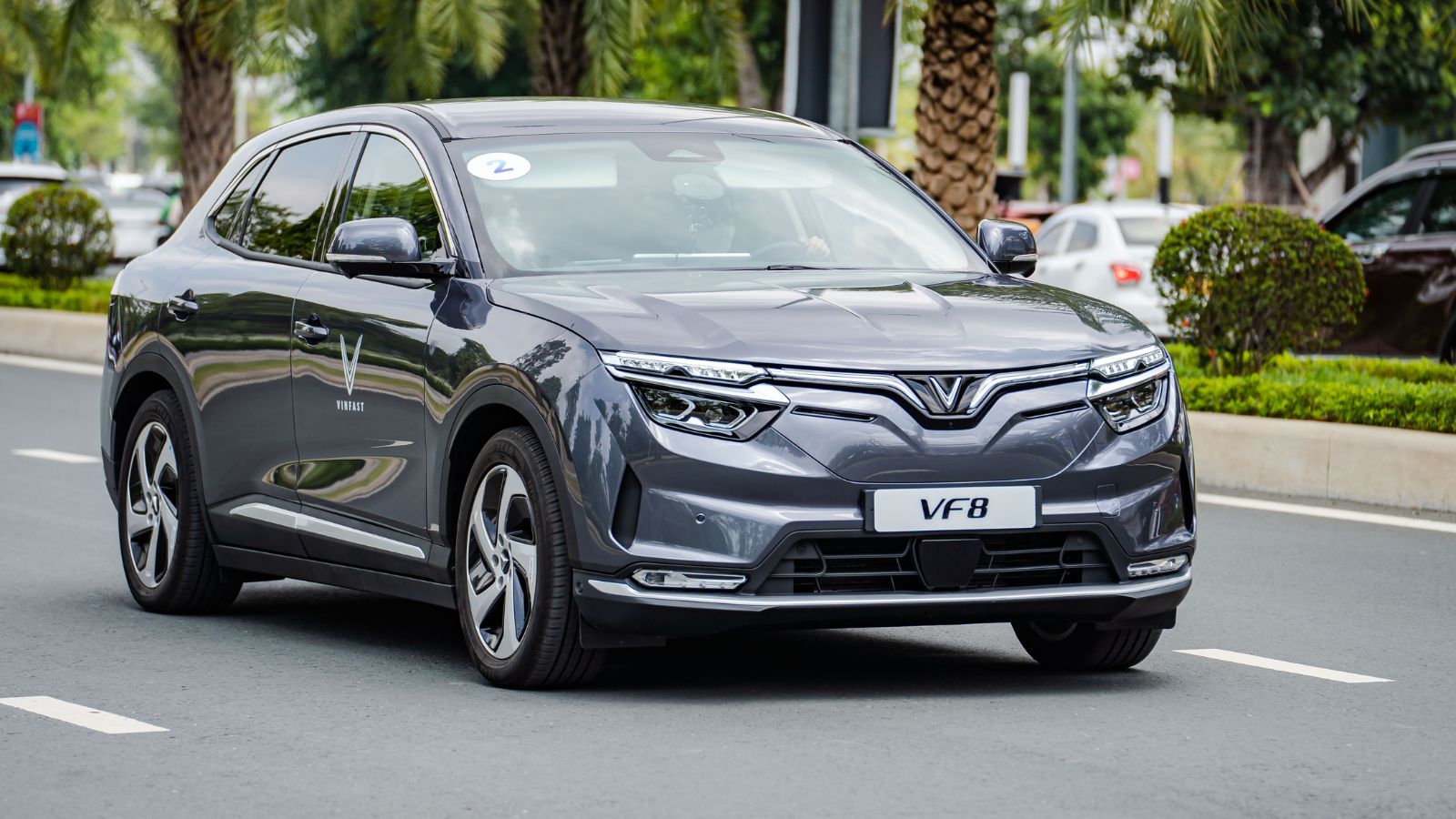
Green SM’s initial Los Angeles operation is built around a fleet of 500 all-electric VinFast vehicles and 500 drivers, according to reporting by the Los Angeles Times. The company is using the VinFast VF 8, a five-passenger electric SUV already offered to consumers in the United States and Canada. Its distinctive cyan-coloured vehicles give the service a recognizable appearance on the road. Rather than relying primarily on drivers to supply their personal cars, Green SM owns and maintains its vehicles, giving the operator greater control over maintenance, vehicle presentation and fleet management.
The VF 8 is a substantial electric SUV, not a compact city taxi. VinFast’s American specifications list an 87.7-kWh usable battery, dual-motor all-wheel drive and EPA-rated ranges of 256 miles for the Eco version and 235 miles for the Plus. However, the company has not publicly identified the exact VF 8 trim or battery configuration used throughout its Los Angeles taxi fleet. That distinction matters because passenger capacity, air-conditioning demands, charging schedules and daily mileage influence a vehicle’s suitability for commercial service. A fleet that operates consistently throughout the day must manage charging downtime just as carefully as passenger pickup times.
Passengers Can Book Through an App, Hotline or Street Hail
Green SM is offering several ways for Los Angeles customers to arrange a ride. According to its launch announcement, passengers can use the company’s smartphone application, contact its booking hotline or hail one of its vehicles directly from the street. The service covers Los Angeles County and extends south into Orange County, according to the Los Angeles Times. That provides access to a geographically diverse market, from dense urban neighbourhoods to suburban communities where residents often depend on cars for daily transportation. The company intends to serve short trips, longer journeys and airport-related travel as operations develop.
However, there is an important limitation for passengers heading to Los Angeles International Airport. At launch, Green SM had not received approval to serve LAX, despite identifying airport transfers as part of its broader ambitions. That distinction illustrates why a service announcement should not be interpreted as unrestricted operating access. Airport pickups often involve separate permissions and operating arrangements. For someone scheduling a flight, reliability depends on more than finding an available vehicle in the app. Green SM will need to expand its approved operating access while demonstrating that its fleet can consistently meet passenger demand across a large metropolitan region.
Green SM Uses Salaried Drivers Instead of the Standard Gig-Work Model
One of Green SM’s most distinctive features is the way it employs its drivers. The Los Angeles operation is launching with approximately 500 professional drivers working as full-time W-2 employees, rather than following the predominantly independent-contractor model used by Uber and Lyft. The company also owns the vehicles its drivers operate, giving it responsibility for fleet maintenance and service standards. Green SM says its drivers are selected and trained to provide a consistent passenger experience. For riders, the intended benefit is a service that feels closer to a professionally managed taxi fleet than a conventional app-based driver marketplace.
The distinction arrives during an important period for California’s ride-hailing workforce. Uber and Lyft drivers have spent years debating worker classification, compensation and access to employment protections. California’s Proposition 22 allows qualifying app-based platforms to continue treating drivers as independent contractors under a separate regulatory framework. In September 2026, regulators certified a union representing Uber and Lyft drivers, marking another development in the state’s labour debate. Green SM’s employment structure offers an alternative, although the company has not publicly disclosed a comprehensive breakdown of wages and employee benefits for its Los Angeles workforce. Whether its approach can remain financially sustainable as the fleet expands will be an important test.
Launch Discounts Offer 50% Off the First Five Rides
Green SM is using promotional pricing to encourage Los Angeles residents to try its service. New customers who register are being offered 50% off their first five trips, subject to a maximum discount of US$12 per ride. The company is also providing a complimentary Green Pass membership with 10 monthly discount vouchers, each offering 30% off fares up to US$10 per trip. These incentives are designed to lower the initial cost of trying an unfamiliar transportation brand. For passengers accustomed to established ride-hailing platforms, meaningful savings can provide a practical reason to download another app.
Beyond its introductory offers, Green SM intends to compete on service quality and everyday pricing. Christopher Walker, the company’s U.S. head of operations, told the Los Angeles Times that fares would depend on journey time and distance, with pricing intended to be competitive with Uber Comfort. That places the service in a segment where passenger experience matters alongside affordability. However, promotional discounts should not be confused with permanent fare reductions, and no comprehensive independent price comparison was available at launch. The company’s challenge will be persuading first-time passengers to return after introductory incentives expire. Comfortable vehicles and courteous drivers may attract attention, but long-term loyalty generally requires predictable prices, convenient availability and reliable pickups.
Los Angeles Provides a Tough Test Against Uber, Lyft and Robotaxis
Green SM is entering one of the world’s most competitive urban transportation markets. Uber and Lyft have established extensive ride-hailing networks in Los Angeles, while autonomous taxi operators are expanding their presence in Southern California. The region is also preparing transportation improvements ahead of the 2028 Olympic Games. Green SM’s strategy is to differentiate itself through an exclusively electric fleet, professional drivers and a managed service experience. Unlike robotaxis, its vehicles depend on human drivers, allowing it to emphasize personal assistance and direct customer interaction as part of its offering.
Environmental policy provides another reason why California is an important testing ground. The California Air Resources Board’s Clean Miles Standard establishes targets for transportation-network companies, including a goal for 30% of their vehicle miles to be electric in 2026 and 90% by 2030. Electric cars produce no tailpipe emissions, although electricity generation and vehicle manufacturing still create environmental impacts. Green SM’s all-electric fleet aligns with the broader transition toward cleaner transportation, but the company’s environmental benefit will also depend on vehicle utilization, charging practices and the amount of additional traffic its operations generate. Electric vehicles can reduce pollution without necessarily eliminating congestion.
VinFast and Green SM Share a Powerful Business Connection
Although Green SM operates as a separate mobility business, its relationship with VinFast extends far beyond purchasing a few electric cars. Both companies are closely connected to Vietnamese billionaire Pham Nhat Vuong, the founder of VinFast and chairman of Vingroup. Reuters reported in September that Vuong and his family control Green and Smart Mobility. The operator exclusively uses VinFast vehicles, creating a business relationship in which one company manufactures electric cars while the other introduces them into commercial transportation networks. For VinFast, every additional fleet deployment can support vehicle deliveries and expand public familiarity with the brand.
The financial relationship is substantial. Green SM has said it intends to purchase as many as one million VinFast electric vehicles between 2026 and 2030, although that remains a stated purchasing plan rather than completed sales. Reuters reported that related parties, primarily Green SM, accounted for 72% of VinFast’s vehicle sales in 2023. That proportion subsequently declined to approximately one-quarter, with the companies expecting related-party demand to remain significant. The Los Angeles launch illustrates both the strength and complexity of this arrangement. It gives VinFast another route into the American market while leaving Green SM responsible for attracting enough passengers to justify operating and maintaining a large fleet.
Green SM Expands From Vietnam Into Nine International Markets
Green SM’s American launch follows more than three years of international expansion. Before entering the United States, the company had established operations or market-entry programs in Vietnam, Laos, Indonesia, the Philippines, India, Kazakhstan, Denmark and the Netherlands. Its European expansion is relatively recent. Green SM officially launched its electric taxi service in Copenhagen on July 30, 2026, before beginning pilot operations in the Netherlands on September 25. The Dutch rollout initially focused on selected service areas, driver recruitment and operational testing rather than an immediate nationwide launch.
The company has also reported substantial activity across its broader transportation ecosystem. According to its October 14 announcement, Green SM has completed approximately 850 million rides and covered nearly six billion kilometres since its establishment. It estimates that these operations have avoided more than 800,000 tonnes of carbon dioxide emissions. Those environmental figures are company estimates, rather than independently verified results presented in the announcement. The geographic expansion nevertheless demonstrates a clear strategy: introduce VinFast vehicles into commercial service, develop local transportation networks and build recognition for a Vietnamese mobility brand internationally. Success in Los Angeles could strengthen that strategy, but operating conditions differ significantly between markets, particularly when it comes to labour costs, regulations and charging infrastructure.
Planned Hong Kong IPO Adds Financial Pressure to International Expansion
Green SM’s expansion comes as the company prepares for a potential stock-market listing in Hong Kong. Reuters reported in September that the operator was targeting a 2028 initial public offering, while more recent reporting based on an October 8 update from Vietnamese brokerage VNDirect confirmed plans for a listing without establishing a definitive date or valuation. VNDirect reported that Green SM generated approximately US$1 billion in gross merchandise value during 2025. That measures the value of transactions handled through the business and should not be confused with company revenue or net profit. The brokerage also reported positive earnings before interest, taxes, depreciation and amortization.
The financial challenge is closely tied to Green SM’s operating model. Purchasing electric vehicles, maintaining them and employing full-time drivers requires substantial capital. Reuters has previously reported concerns from industry analysts about whether the company’s international fleets can generate sufficient utilization to justify those costs. A fleet with too many idle cars can become expensive even when electricity costs less than gasoline. The Los Angeles operation therefore represents more than a geographic milestone. It is a test of whether a vertically integrated electric taxi business can compete effectively in a high-cost American city while developing a financial track record that may eventually appeal to public-market investors.
VinFast Already Operates in Canada, but Green SM Has Not Announced a Launch
The Los Angeles opening could easily be misunderstood as VinFast’s first expansion into North America. In reality, the automaker already has an established Canadian retail presence, offering the VF 8 and larger VF 9 electric SUVs through its Canadian website and dealership network. VinFast lists sales and service locations in Ontario, Quebec and British Columbia, including facilities in Mississauga, Oakville and the Vancouver area. Canadian consumers can therefore already encounter the same automotive brand supplying Green SM’s new American taxi fleet. What has not arrived is the company’s associated ride-hailing service.
As of October 14, 2026, Green SM has not announced Canadian taxi operations, a Canadian fleet purchase, local driver recruitment or a launch date for any Canadian city. Its latest expansion statement identifies Los Angeles as its first North American location and the United States as its ninth market. Canada is absent from the company’s published operating-market list. That does not rule out a future Canadian expansion, particularly given VinFast’s existing commercial infrastructure, but it provides no basis for claiming that a launch is planned. A Canadian service would require separate operational arrangements, including transportation licensing, insurance, charging facilities and customer-support infrastructure. The ability to sell electric SUVs in Canada does not automatically grant another company permission to operate them as taxis.
Canada’s Push Toward Electric Taxis Creates Potential, Not a Confirmed Expansion
Several Canadian cities already have policies encouraging cleaner commercial transportation, creating an environment where operators such as Green SM could eventually see opportunities. Toronto, for example, has established a goal of transitioning its vehicle-for-hire industry toward net-zero greenhouse gas emissions by 2030, with requirements for zero-emission vehicles and specific exceptions. The city also regulates private transportation companies and their drivers through licensing and inspection requirements. In British Columbia, passenger-directed vehicle drivers must satisfy licensing and screening obligations, including a qualifying commercial driver’s licence. A new operator would need to navigate these requirements before offering rides.
The Canadian market also has an existing electric ride-hailing presence. Uber reported in April 2026 that more than one-third of the miles travelled through its platform in Vancouver were electric, demonstrating that electric transportation is already a meaningful part of some Canadian urban markets. Nevertheless, fleet ownership, charging access, winter reliability, employment costs and passenger demand would all influence the feasibility of introducing another service. Green SM’s Los Angeles launch may provide useful lessons about those challenges, but it is not evidence of a Canadian expansion agreement. For the moment, the confirmed development is limited to California: a Vietnamese electric taxi operator has entered North America, while Canadian drivers and passengers remain outside its announced service footprint.