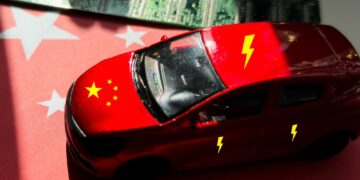






















North America’s auto market is beginning to split along a line that would have seemed unlikely only a few years ago. In Washington, a bipartisan effort to put sweeping restrictions on Chinese-connected vehicles into federal law has run into a procedural Senate roadblock, delaying a fast-track passage attempt until lawmakers can address a lone holdout. North of the border, Canada has already gone in a different direction.
Ottawa has dismantled the 100% surtax that largely shut China-made electric vehicles out of the Canadian market, replacing it with a controlled import quota and a 6.1% tariff. The contrasting approaches come as Chinese manufacturers expand rapidly overseas, forcing governments to weigh national security, industrial jobs, vehicle affordability and trade relationships at the same time.
The Senate Roadblock Is a Delay, Not a Defeat
The immediate obstacle in Washington is procedural rather than evidence that congressional support has collapsed. Republican Senator Bernie Moreno of Ohio and Democratic Senator Elissa Slotkin of Michigan had planned to seek unanimous consent on September 24 for their Connected Vehicle Security Act of 2026. That procedure can move legislation through the Senate quickly, but it has one obvious vulnerability: a single senator can stop it. The sponsors instead postponed their attempt until the next week after Republican Senator Rand Paul raised concerns that they hoped to address. Paul had not publicly laid out a detailed substantive case against the legislation when the planned vote was delayed.
The numbers illustrate just how unusual the situation is. Slotkin told Reuters her understanding was that support stood at “99 to 1,” although that was her characterization rather than a formal roll-call vote. The Senate Commerce Committee had already advanced the measure unanimously in July, and the reported version was placed on the Senate legislative calendar on September 22. That means the bill has travelled much farther than most proposals introduced only months earlier. Still, unanimous consent is not the same thing as final passage. Until the Senate and House approve legislation and it is signed into law, the existing regulatory framework—not the proposed statute—remains the controlling federal policy.
Congress Wants to Turn Existing Restrictions Into Law
The United States is not starting from an open market. In January 2025, the Commerce Department’s Bureau of Industry and Security finalized rules restricting connected vehicles, software and communications hardware with a sufficient nexus to China or Russia. The restrictions cover vehicle connectivity systems such as telematics units, cellular connections, Wi-Fi, Bluetooth and satellite communications, as well as software associated with highly automated driving. The software restrictions take effect beginning with model-year 2027 vehicles, while covered hardware restrictions generally start with model-year 2030 vehicles.
The Connected Vehicle Security Act would give that policy a statutory foundation. Its reported Senate text seeks to prohibit the importation, manufacture, sale, resale or introduction into interstate commerce of covered connected vehicles and related technologies associated with designated foreign adversaries. That distinction matters. Regulations created by an administration can potentially be revised by a later administration through another regulatory process. A federal statute is considerably harder to unwind because changing it normally requires Congress to act again. The phrase “permanent ban,” frequently used by the legislation’s supporters and auto-industry groups, therefore describes an effort to make the restrictions durable. The legislation still contains detailed provisions involving implementation, existing exclusions and federal rulemaking, so it is more complex than a simple blanket prohibition on every vehicle manufactured in China.
The Security Fight Is Really About the Technology Inside the Car
The argument in Washington goes beyond where a vehicle is assembled. Modern cars increasingly resemble mobile computer networks. A connected vehicle can communicate through cellular service, Bluetooth, Wi-Fi and satellite systems while collecting information used for navigation, diagnostics, entertainment, driver assistance and vehicle management. That is why the Commerce Department’s rule focuses heavily on Vehicle Connectivity System hardware and automated-driving software rather than treating every mechanical component as equally sensitive.
U.S. officials have framed the restrictions as a risk-management measure involving foreign control over technologies capable of collecting, processing or transmitting data. That should not be interpreted as proof that every China-made vehicle is secretly collecting information for Beijing; the federal framework instead uses ownership, control and jurisdictional links to identify technologies officials consider an unacceptable security risk. The concern is becoming more significant as China’s automotive footprint expands. The International Energy Agency estimates China produced nearly 75% of the world’s electric cars in 2025, while Chinese EV exports doubled to more than 2.5 million vehicles. In markets outside Europe and the United States, imports from China accounted for 55% of electric-car sales in 2025, compared with less than 5% five years earlier.
Automakers and Labor Have Found Rare Common Ground
The push for legislation has produced an unusually broad coalition. The Alliance for Automotive Innovation, whose membership includes companies responsible for most vehicles sold in the United States along with suppliers, battery companies and technology businesses, called on congressional leaders in September to enact what it described as a permanent prohibition on Chinese connected vehicles, hardware and software before the current Congress ends. The organization has argued that the issue combines economic competition with national-security concerns rather than fitting neatly into a conventional tariff dispute.
Major organized-labor groups have also supported the legislation. The United Auto Workers praised the Senate Commerce Committee’s unanimous July vote and argued that U.S. auto policy should favour domestic production and employment. Slotkin’s office has additionally listed the Teamsters, International Association of Machinists, United Steelworkers and MEMA, the Vehicle Suppliers Association, among supporters. Labor and manufacturers do not necessarily agree on every detail: the UAW, for example, has explicitly warned against corporate carve-outs. Their alignment on the broader restriction is nevertheless significant. The debate therefore is not simply a traditional fight between protectionist unions and multinational manufacturers. Both groups see rapid Chinese automotive expansion as something that could reshape investment decisions across an industry supporting millions of American jobs.
Trump’s Factory-First Position Adds Another Complication
President Donald Trump has articulated a position that is not identical to the approach being pursued by many lawmakers and industry groups. On September 11, he said he would be comfortable with Chinese companies manufacturing vehicles in the United States if they built American factories and employed American workers. He compared the concept with foreign automakers from countries such as Japan establishing large U.S. production operations over previous decades. At the same time, Trump opposed Chinese automakers producing vehicles in Mexico and shipping them north into the American market.
That leaves an important policy question unresolved. The existing Commerce Department connected-vehicle rule reaches beyond imports: Chinese- or Russian-linked manufacturers can also be prohibited from selling covered connected vehicles even when those vehicles are manufactured inside the United States. The congressional bill similarly focuses on foreign-adversary connections rather than assuming domestic assembly eliminates the security issue. The Alliance for Automotive Innovation has pushed for restrictions that encompass sale, import and manufacture. In practical terms, Trump’s emphasis on local factories and employment and Congress’s emphasis on ownership and connected technology address different risks. Whether those approaches can be reconciled will matter if a Chinese manufacturer eventually proposes a large American assembly operation.
Canada Has Already Dismantled Its 100% EV Tariff Wall
Canada’s policy has moved in the opposite direction, although Ottawa is not opening the market without limits. The federal government imposed a 100% surtax on electric vehicles manufactured in China in October 2024. Following a new Canada-China economic arrangement announced in January 2026, that surtax was lifted effective March 1. In its place, Canada established an annual country-specific quota allowing 49,000 qualifying EVs from China to enter at the normal most-favoured-nation tariff of 6.1%.
The quota is designed to expand gradually rather than suddenly. The initial 49,000-vehicle allowance rises by 6.5% annually, while Canada says an increasing share will be reserved for lower-priced vehicles. By 2030, half of the quota is intended for EVs with an import price of C$35,000 or less. Federal officials have emphasized that the opening remains comparatively small: the initial allocation represents less than 3% of Canada’s new-vehicle market and roughly returns China-origin EV imports toward volumes seen before the 2024 trade restrictions. The distinction between “Chinese cars” and “cars from China” is important here as well. Canada’s quota is based on origin, meaning China-built vehicles from non-Chinese manufacturers can also qualify.
Ottawa’s Auto Decision Was Part of a Much Bigger Trade Bargain
The Canadian decision makes more sense when viewed beyond auto showrooms. Ottawa negotiated the EV opening as part of a wider effort to resolve trade disputes with Beijing affecting Canadian agricultural and seafood exporters. Beginning March 1, China reduced the combined tariff applying to Canadian canola seed from roughly 84% to about 15%. The federal government says the change improves market access for a sector associated with approximately C$4 billion in annual Canadian canola-seed exports.
China also suspended anti-discrimination tariffs through the end of 2026 on selected Canadian products including canola meal, peas, lobster and crab, a group Ottawa says represents approximately C$2.6 billion in exports. That gives the agreement a very different texture outside Ontario’s auto corridor. For a Prairie canola producer or an Atlantic seafood business, the trade arrangement is not primarily a debate over whether BYD, Chery or another automaker eventually gains Canadian customers; it can affect whether an established export market becomes commercially viable again. Ottawa therefore accepted managed access for Chinese EV production while securing concessions in sectors hit by Chinese trade measures. The bargain links industries thousands of kilometres apart.
Canada’s Auto Industry Remains Deeply Divided Over the Opening
Ottawa argues that controlled competition can support lower-priced EV choices while potentially encouraging Chinese companies to form joint ventures and invest in Canada’s automotive supply chain. The government’s January agreement said it expected the quota to catalyze new joint-venture investment with Canadian partners and help create or preserve manufacturing jobs. The wording is important: investment is an expectation attached to the strategy, not a guaranteed commitment from Chinese automakers. Allowing imports does not by itself ensure that an assembly plant or battery operation will eventually be built in Canada.
Canadian autoworker representatives have taken a sharply different view. Unifor described the January agreement as a serious risk to Canadian auto employment and argued that companies seeking access to the market should be required to manufacture locally. Workers in communities such as Oshawa, Brampton and Windsor are watching the issue against a backdrop of existing uncertainty over assembly shifts, investments and North American trade rules. Those concerns coexist with another policy objective: making EVs available at lower prices. Ottawa’s decision to reserve a growing share of the quota for vehicles priced at C$35,000 or less shows that affordability is built into the framework. Whether Canada ultimately gets both cheaper vehicles and significant domestic investment remains an open question rather than a settled outcome.
Chinese Automakers Are Already Treating Canada as a Serious Market
The policy shift has moved beyond diplomatic announcements. Reuters reported in June that roughly 20 Canadian auto dealers travelled to China and visited Chery’s headquarters in Wuhu after attending the Beijing auto show. Chery was conducting cold-weather testing in Canada and preparing for a possible Canadian launch. BYD had begun regulatory procedures for two passenger vehicles and was working with an advisory firm on plans for six Canadian dealerships, while Geely-owned Lotus also developed a Canadian dealer presence. Changan had a team working on a potential Canadian launch.
That activity is notable because Canada is small compared with the neighbouring U.S. market. Roughly 1.9 million vehicles were sold in Canada in the previous year compared with more than 16 million in the United States, according to figures cited by Reuters. Industry consultants consequently described Canada as a potentially useful proving ground because consumer preferences and regulations have similarities with the United States. BYD executive Stella Li rejected the idea that her company needed Canada as a “practice run” for America, underscoring that individual manufacturers have different strategies. What is clear is that Canada now offers something the United States currently does not: a regulated path for China-origin EVs to build a customer base, dealer relationships and real-world experience in a major North American market.
One Border Is Now Separating Two Very Different Auto Strategies
The divergence could eventually become more visible at the border itself. In addition to the Connected Vehicle Security Act, separate legislation called the Protecting America from Chinese Cars Act was introduced in both chambers of Congress in June. The Senate version, S. 4710, would prohibit the entry into the United States of connected vehicles associated with designated foreign adversaries and was referred to the Senate Finance Committee. A House version was introduced separately. Neither proposal is currently law, so Canadian motorists should not interpret it as a present-day ban on crossing the border in a particular vehicle.
Still, the direction of policy is striking. Canada has moved from a 100% surtax to a managed quota designed to permit tens of thousands of China-origin EVs each year. U.S. lawmakers are simultaneously trying to move existing connected-vehicle restrictions from regulation into federal statute and have proposed additional controls involving vehicle entry. The September Senate roadblock has slowed one piece of that effort, but it has not erased the broader policy split. As of September 26, the American legislation remains unresolved, while Canada’s new import system is already operating. For automakers planning years ahead, that difference is no longer theoretical.