
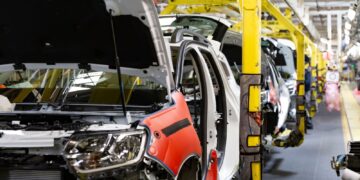





















For thousands of auto workers in Brampton, Ontario, the uncertainty surrounding their future has become a political standoff over jobs, public money, and corporate accountability. Premier Doug Ford is refusing to commit additional provincial funding to Stellantis, even as his own economic development minister suggests financial assistance could help keep the city’s idled assembly plant alive.
The disagreement comes as Stellantis moves to sell the facility to Canadian defence manufacturer Roshel, despite previous government funding commitments intended to preserve automotive production in Ontario. With more than 2,000 workers affected, Ottawa threatening legal action, and provincial officials offering conflicting messages, the fight over Brampton has become a test of how far governments should go to protect Canadian manufacturing jobs.
Ford Refuses to Guarantee More Provincial Funding
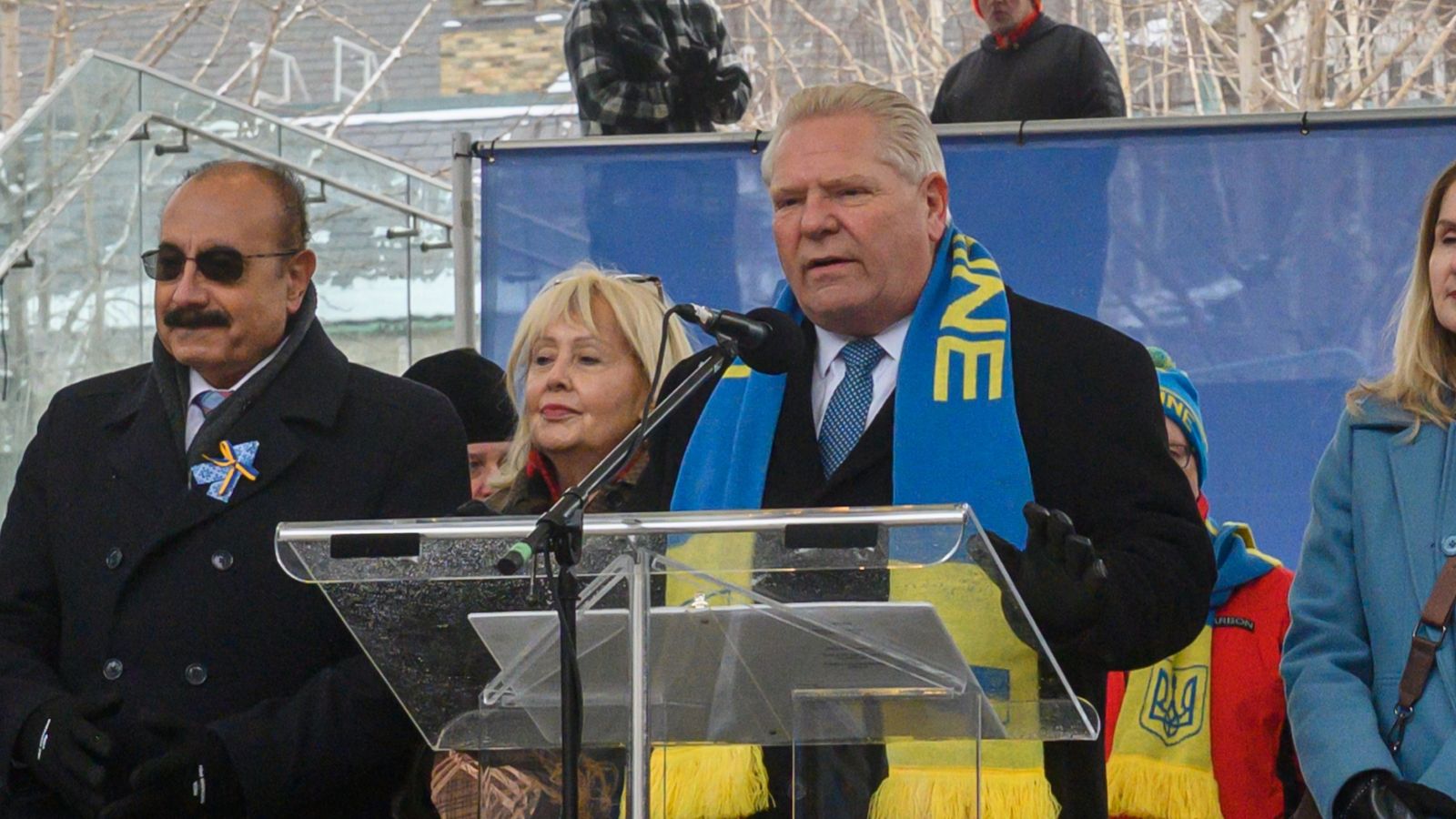
On November 16, Premier Doug Ford said Ontario could discuss the Brampton factory’s future if Stellantis committed to employing 3,000 to 4,000 people. His priority, he said, was bringing back workers who lost their jobs. However, he stopped short of promising another provincial contribution. Ford said he was not confirming any offer of money, adding that Ottawa remained involved in negotiations. The distinction is significant: an invitation to negotiate is not an agreement to spend public funds.
That leaves an opening for Stellantis while putting employment at the centre of Ontario’s position. Ford gave no figure for possible assistance and did not outline what guarantees he would require from the automaker. Nor did he explain how a new proposal might affect the pending sale to defence manufacturer Roshel. For families who once counted on paycheques from the assembly line, the statement provided one encouraging detail: jobs remain the premier’s stated goal. It offered no date for production to restart or workers to return.
Vic Fedeli Says $2.5 Billion in Automotive Support Is Available
Ontario Economic Development Minister Vic Fedeli struck a more expansive note at Queen’s Park on November 16. Answering opposition questions, he urged Stellantis to keep Brampton open and ready for another model rather than dispose of the property. He pointed to $2.5 billion in recently announced automotive support and said governments would take their case directly to global chief executive Antonio Filosa. His comments suggested financial tools were available to bridge the gap between an idle factory and new production.
The funding is real, but it is not a dedicated payment to Stellantis. Announced by Ottawa and Ontario on October 21, it offers up to $1.5 billion in federal funding and $1 billion provincially over two years for large automotive capital projects. Its purpose is to modernize production lines for connected and electrified vehicles. Fedeli did not identify an amount reserved for Brampton. Ford’s caution therefore exposed conflicting public messages, not a previously approved offer that he had cancelled.
More Than 2,200 Brampton Workers Remain Caught in the Dispute
More than 2,200 members of Unifor Local 1285 have been on layoff since Brampton stopped assembling vehicles in December 2023. For them, a new owner and a promise of industrial activity do not automatically mean familiar jobs will return. The uncertainty has complicated Stellantis-wide labour talks: Unifor declared negotiations at an impasse in September 2026, with Brampton central to the disagreement. The union warned that the sale could threaten wages, pensions and other benefits built up through years of collective bargaining.
At the legislature on November 16, NDP Leader Marit Stiles recounted meeting a worker named Rocco who had been helping retool the site. His experience captured the frustration behind the employment figures: workers prepared for a new chapter while the factory stayed silent. Unifor also says its collective agreement requires at least one year’s notice before a closure or sale. Whatever plan emerges, employees will judge it by opportunities to return to stable, comparable work, not simply by whether the building finds a buyer.
Brampton Was Supposed to Receive a New Jeep Production Program
Just before Christmas 2023, Brampton produced its last Dodge Charger, Dodge Challenger and Chrysler 300 vehicles. The shutdown was supposed to make way for renewal, not an exit from car assembly. Stellantis had announced a $3.6-billion investment covering its Brampton and Windsor operations in 2022. Brampton was scheduled for retooling and a future Jeep Compass program. Workers left with an expectation that new equipment and a replacement vehicle would eventually bring the lines back to life.
Retooling began in early 2024, but Stellantis paused work in February 2025. In October of that year, the automaker assigned future Jeep Compass production to its Belvidere operation in Illinois, leaving Brampton without a confirmed new vehicle. The decision unfolded amid U.S. tariffs and broader changes to Stellantis’s North American production plans. What began as a temporary manufacturing transition has therefore become a dispute over whether passenger-vehicle assembly will return at all. That history explains why officials are demanding a specific vehicle program rather than general assurances about future investment.
Roshel’s Purchase Agreement Creates a Complicated Alternative
On November 9, Stellantis and Brampton-based Roshel announced an agreement to sell the plant and equipment for an undisclosed price. They also proposed exploring cooperation on defence-related vehicle technology and services. According to Stellantis’s regulatory filing, the transaction is expected to close by the end of 2026, subject to conditions and applicable approvals. It is a signed sale agreement, not proof that ownership has already transferred. Governments seeking to change the outcome must now contend with a negotiated deal.
Roshel chief executive Roman Shimonov says the site could generate more than 2,000 jobs as production expands, with laid-off Stellantis staff receiving priority consideration. He has also told Reuters that Roshel is talking with automakers about possible civilian-vehicle manufacturing. Those are potential opportunities, not guarantees of equivalent jobs for every displaced worker. Shimonov has stressed that Roshel is not taking over Stellantis’s previous commitments. For Unifor, that difference is fundamental: a factory returned to industrial use may still be very different from the automotive workplace its members lost.
Ontario Promised $132 Million for Brampton but Says None Was Paid
Before this dispute, governments had promised Stellantis substantial assistance, but promised money and paid money are different. In May 2022, Ottawa committed up to $529 million and Ontario up to $513 million toward a roughly $3.6-billion modernization program covering Windsor and Brampton. Ontario earmarked $132 million for the Brampton work. Fedeli said in November 2026 that no provincial funding had actually been advanced for Brampton. That supports Ford’s claim about the idled factory, but it does not mean the automaker received nothing from Ontario anywhere.
Provincial officials say approximately $55 million went to Stellantis’s Windsor operation. Federal records separately show money disbursed under the broader agreement, much of it for Windsor. These distinctions matter because public announcements often combine future commitments with completed payments. Money never released cannot be recovered like cash already transferred. It also sharpens the question facing Ford: should taxpayers make another offer before Stellantis provides a credible production plan, or could withholding assistance make a Brampton revival even harder?
Ottawa Gives Stellantis 30 Days to Address Alleged Contract Breaches
Ottawa has taken a more confrontational route. On November 12, federal Industry Minister Mélanie Joly issued Stellantis a formal notice alleging breaches of its 2022 funding agreement. The government pointed to the abandoned Jeep Compass program, the lack of an identified replacement vehicle and the absence of production at Brampton. The company was given 30 days to demonstrate that it would correct the alleged breaches. Joly warned that legal action and repayment demands could follow if Stellantis failed to meet the government’s requirements.
The financial dispute is substantial. Stellantis said it would voluntarily return $24 million in federal support associated with Brampton’s original retooling, while Joly argued the company’s obligations could extend to hundreds of millions of dollars because the federal agreements also cover other investments. Those competing figures are not a settled judgment. Ottawa has not publicly established that a court has ordered repayment, and Stellantis has not agreed to the government’s broader calculation. The notice creates negotiating pressure, but a threatened lawsuit is not yet a recovered taxpayer dollar.
U.S. Tariffs Add Pressure to an Interconnected Auto Industry
Brampton’s crisis is unfolding amid a wider struggle over where North American automakers build vehicles. President Donald Trump’s tariffs have made cross-border production more expensive and uncertain, while encouraging companies to add U.S. manufacturing capacity. Canadian trade guidance identifies a 25% U.S. tariff on imported vehicles, with the value of U.S. content in qualifying North American vehicles exempt. For manufacturers planning a new model years in advance, that creates another cost and policy risk to consider alongside demand and factory capacity.
Canada is especially exposed to these decisions. Statistics Canada estimates that U.S. demand supported 76.4% of payroll jobs in Canadian automobile and light-duty vehicle manufacturing in 2024. Employment in motor-vehicle parts manufacturing then declined 9.3% during 2025. Neither number is a measure of Brampton’s losses, and tariffs are not the industry’s only challenge. Still, they illustrate why losing one major assembly program can worry parts suppliers, toolmakers and surrounding communities far beyond the factory gates.
Opposition Leaders Question Whether Ontario Acted Quickly Enough
The conflicting messages have given opposition politicians another way to question Ford’s response. On November 16, NDP Leader Marit Stiles said she had met Brampton workers and accused the government of lacking urgency. She referred to 3,000 union jobs and claimed 30,000 related jobs were affected—figures presented in her legislative argument, not verified counts of new layoffs. Fedeli responded that the province had repeatedly pressed Stellantis to keep the factory ready for a replacement model.
The minister invoked General Motors’ Oshawa experience to show why preserving a plant can matter. Vehicle production there stopped in 2019 before Chevrolet Silverado assembly resumed in November 2021; GM announced 1,800 jobs connected to the reopening. Brampton Mayor Patrick Brown has adopted a more mixed position, welcoming potential new local defence manufacturing while calling for a fair resolution for laid-off autoworkers and taxpayer accountability. The disagreement reflects two legitimate concerns: avoiding another lost assembly plant and not spending public money without credible results.
A New Vehicle Commitment Is Still the Missing Piece
Federal and provincial officials intend to present options directly to Stellantis global chief executive Antonio Filosa. Joly has described an aggressive package aimed at preventing the Roshel sale, while Fedeli has suggested keeping Brampton ready for another vehicle could buy time. As of November 17, public reporting does not establish a meeting date, a disclosed value for the proposal or a decision by Stellantis to cancel the agreement. Roshel’s signed deal still anticipates a closing before the end of 2026, subject to required conditions.
The unresolved questions are more concrete than the political debate. Will Stellantis assign a new model, publish a production timetable and guarantee jobs? Could public support be linked to measurable milestones and enforceable commitments? If ownership changes instead, what happens to laid-off workers? Ford’s refusal to promise fresh money preserves Ontario’s flexibility, but it does not answer those questions. For Brampton, the outcome will ultimately be judged by working production lines and restored livelihoods, not by who offered the stronger statement at Queen’s Park.