
























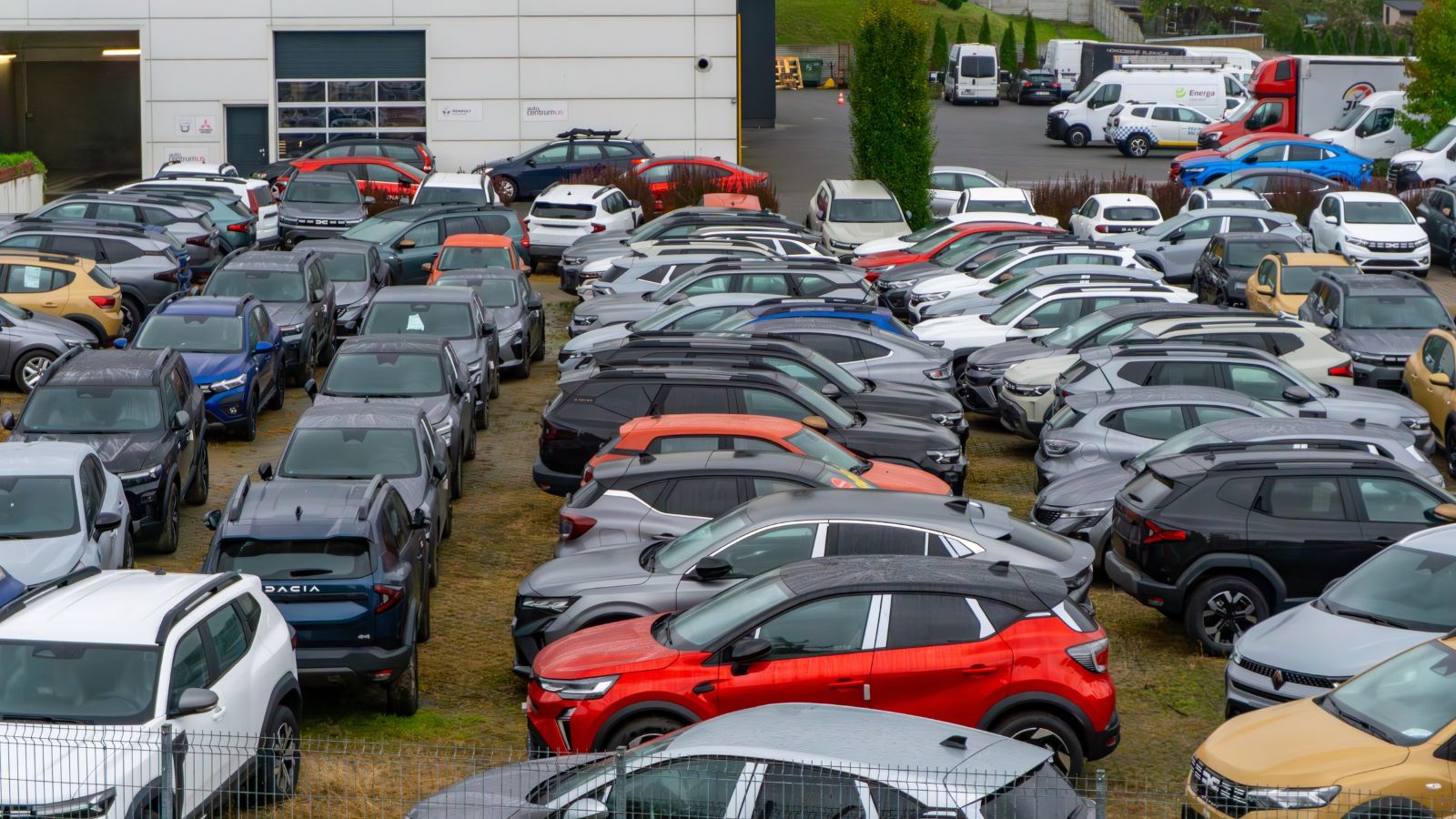
Canadian used-vehicle values are edging lower, but the relief remains modest for households searching for reliable transportation. Canadian Black Book’s October 20, 2026, report recorded a 0.27% weekly decline in wholesale values, alongside an average dealership asking price of $37,900.
Those numbers describe different stages of the market. The wholesale change covers the week ending October 17; the retail figure is a 14-day moving average of advertised prices, not completed purchases. Together, they suggest easing conditions rather than a sudden clearance sale. For a commuter replacing an ageing car, or a family needing a larger SUV, the important question is how much of that improvement reaches the final bill.
The Weekly Decline Is Slowing, Not Accelerating
The latest wholesale decrease was smaller than the previous week’s 0.35% drop. That represents an easing of 0.08 percentage points, not a rebound in values. Canadian Black Book also puts the average decline for the corresponding week in 2017–2019 at 0.28%, almost identical to the latest result. The historical comparison offers useful perspective: another negative week does not, by itself, establish that the market is experiencing an exceptional collapse.
The dollar effect on an individual vehicle can also be less dramatic than the headline suggests. As a simple illustration, a 0.27% reduction applied to a hypothetical $30,000 wholesale valuation would equal $81. That is not a promised dealership discount, nor an estimate for any specific model. It shows the scale of one week’s movement. Repeated declines could eventually add up, but projecting the same rate across an entire year would assume a consistency that weekly market data cannot guarantee. The immediate message is continued depreciation at a gentler pace.
The $37,900 Average Is Not a Typical Purchase Receipt
Canadian Black Book’s retail measure draws on approximately 165,000 vehicles advertised on Canadian dealership lots. Its preceding report, published October 14, placed the 14-day average at $38,100. The latest reading is $200 lower, a decrease of approximately 0.52%. That calculation compares two published averages; it does not mean every dealer reduced every vehicle by $200, or that purchasers actually saved that amount when completing their transactions.
The composition of advertised inventory matters, too. Imagine a dealership adding several older compact cars while selling a group of expensive pickups. Its average asking price could fall even without reductions on the remaining vehicles. A national average also cannot reveal whether a particular low-mileage SUV is competitively priced in a particular city. CARFAX Canada makes a related distinction in its valuation tool, which uses actual prices paid for comparable vehicles rather than asking prices alone. For shoppers, the practical benchmark is a set of genuinely comparable vehicles, not an expectation of finding every suitable car near the national average.
Vans and Compact SUVs Are Losing More Ground
The overall decline conceals meaningful differences between vehicle categories. Full-size vans fell 0.90% in the latest wholesale report, while compact crossovers and SUVs declined 0.55%. Sporty cars lost 0.59%. Other categories moved upward: subcompact luxury crossovers and SUVs gained 0.13%, and small pickups rose 0.11%. These contrasting movements show why a broad market headline cannot describe the experience of every buyer or seller.
For a contractor considering a replacement van, the relevant comparison is with similar vans, not with the market as a whole. A household searching for a compact SUV faces another set of vehicles and prices. Even within those categories, mileage, condition and equipment require attention before two listings can be treated as equivalent. The numbers provide a reason to investigate a segment more closely, rather than a reason to assume every advertised example should receive the same discount. A rising category is not proof that every vehicle in it is a good investment, just as a falling one does not automatically make every listing a bargain.
The Market Has Retreated Without Returning to 2019
A longer view helps explain why falling values can coexist with expensive shopping experiences. Canadian Black Book’s separate Used Vehicle Retention Index stood at 127.5 in September 2026, down 7.6% from a year earlier. The index reached 165.0 in March 2022 and stood at 108.3 in September 2019. On that measure, September’s level was approximately 23% below the peak but still about 18% above its pre-pandemic comparison.
This index is not an average retail price. It tracks wholesale values for two- to six-year-old vehicles relative to their original manufacturer’s suggested retail prices, with adjustments including age, mileage, condition and seasonality. Consequently, an 18% difference in the index should not be translated into an identical increase in a household’s replacement-car bill. What the series establishes is that the wholesale market has fallen substantially without fully returning to its earlier benchmark. A buyer remembering a much cheaper purchase years ago and a dealer observing current depreciation can therefore be describing different, equally relevant parts of the market’s history.
Dealers Still Want Well-Kept Vehicles
Plentiful auction inventory does not necessarily eliminate competition for desirable stock. Canadian Black Book’s recent commentary describes inventory at high levels while noting continued demand for high-quality vehicles in both Canada and the United States. It also says some supply receives priority access through upstream channels, before reaching conventional auction sales. An apparently well-stocked market can therefore still leave a dealer competing for particular vehicles rather than choosing freely from an interchangeable pool.
Condition helps explain why a cheaper wholesale market need not translate immediately into identical retail reductions. Consider two otherwise similar SUVs, one ready for sale and another requiring tires, brakes and cosmetic repairs. Their acquisition prices alone would not describe the cost of preparing them for customers. Canadian Black Book has also identified longer ownership cycles as a constraint on the supply of late-model used vehicles. For households, the implication is practical: an attractive advertised price needs to be assessed alongside maintenance records and upcoming work. Saving money on the purchase is less valuable if the difference disappears into immediate repairs.
Lower Prices Have Not Solved the Affordability Problem
The October figures fit within a broader period of price pressure. AutoTrader’s second-quarter 2026 review reported a 2.6% decline in average used-vehicle prices and estimated that used sales were down 2.5% from a year earlier. The company also found that purchasing activity differed by credit profile: prime customers bought more vehicles in the first half, while subprime customers bought fewer. AutoTrader interpreted that divide as evidence that affordability pressures were weighing unevenly on consumers.
A small improvement in vehicle pricing cannot resolve every part of a household’s transportation budget. Insurance, fuel, maintenance and borrowing costs still have to fit alongside housing and other expenses. The Financial Consumer Agency of Canada therefore advises buyers to evaluate the complete cost rather than concentrating only on a payment or interest rate. For someone replacing a vehicle unexpectedly, the ability to wait for another market decline may be limited. The more meaningful question is whether the available car and financing arrangement are sustainable, not whether the national average has improved slightly since the previous report.
A Falling Market Can Also Reduce Trade-In Buying Power
Lower used-vehicle values benefit some shoppers while creating a complication for people selling or trading an existing vehicle. The Financial Consumer Agency of Canada describes negative equity as owing more on a car loan than the vehicle is worth. A cheaper replacement does not automatically eliminate that shortfall. Depending on the transaction, an owner may need to cover the difference with cash or borrowing, potentially carrying old debt into the next purchase.
A simplified example shows the issue. Suppose a driver owes $25,000 on a vehicle and receives a $22,000 trade-in offer. That leaves a $3,000 gap before the next vehicle’s cost is considered. A $500 reduction on the replacement would help, but it would not erase the outstanding debt. These are illustrative figures, not estimates of current average loans or trade-in offers. The practical comparison is the whole transaction: replacement price, trade-in allowance, loan payout and any additional borrowing. A falling market looks different to a first-time buyer with cash than to an owner who must sell a financed vehicle before moving on.
Financing Can Matter More Than a Small Discount
The effect of a $200 price reduction becomes clearer when financing enters the picture. In an illustrative calculation, borrowing $37,900 at a fixed annual rate of 8%, with monthly payments over 60 months, produces a payment of about $768 and approximately $8,209 in interest. The example excludes taxes, fees and any down payment; 8% is an assumed rate, not a claim about the current market average. Reducing the principal by $200 would lower that monthly payment by only about $4.
Extending the same hypothetical loan to 84 months lowers the payment to approximately $591, but raises total interest to about $11,720. That is roughly $3,512 more interest in exchange for a smaller monthly obligation. The Financial Consumer Agency of Canada warns that longer terms can make payments look easier while increasing the overall cost. It also recommends comparing offers from multiple lenders and dealerships. For buyers, the financing agreement can therefore be more consequential than a modest movement in national used-vehicle asking prices.
The Advertised Price and Final Bill Need Separate Checks
Taxes can make the final purchase substantially larger than the advertised amount. For a straightforward Ontario dealership purchase at $37,900, with no trade-in or applicable tax relief, 13% HST would add $4,927. The resulting total would be $42,827 before licensing and any genuinely optional purchases. That is an illustrative Ontario calculation, not a national after-tax average. Applicable taxes and transaction details must be checked for the location and circumstances of an actual purchase.
There is also an important distinction between legitimate additional costs and hidden mandatory fees. Ontario’s vehicle-sales regulator, OMVIC, says dealer advertisements generally must include mandatory charges, with HST and licensing allowed separately when properly disclosed. An administration fee is not ordinarily something a dealer can simply add above its advertised price. Optional products chosen by the buyer are a different matter. For a household comparing two vehicles, a written breakdown makes the comparison more useful than headline prices alone. A modest apparent saving can disappear when the offers include different products or conditions.
Vehicle History Matters More Than Catching the Perfect Week
Canada’s Office of Consumer Affairs recommends checking a used vehicle’s maintenance and repair history, looking for safety recalls, arranging an independent mechanical inspection and taking a test drive. Those steps remain important in a declining market. As an illustration, a vehicle advertised $1,000 below a comparable alternative is not necessarily better value if an inspection identifies $2,000 of immediate work. The amounts are hypothetical, but the comparison captures why condition belongs beside price in the buying decision.
The latest figures offer a useful starting point, not a forecast of the cheapest possible purchase date. Buyers can compare similar vehicles locally, obtain a written total and assess the financing before deciding whether waiting has practical value. Sellers can seek current appraisals rather than relying on an earlier market peak. The encouraging development is that values and advertised prices are moving lower. The limit is equally important: neither a national average nor a weekly percentage establishes the right price for a specific car. Meaningful relief is measured in a manageable total cost and a vehicle that can reliably do the required job.