






















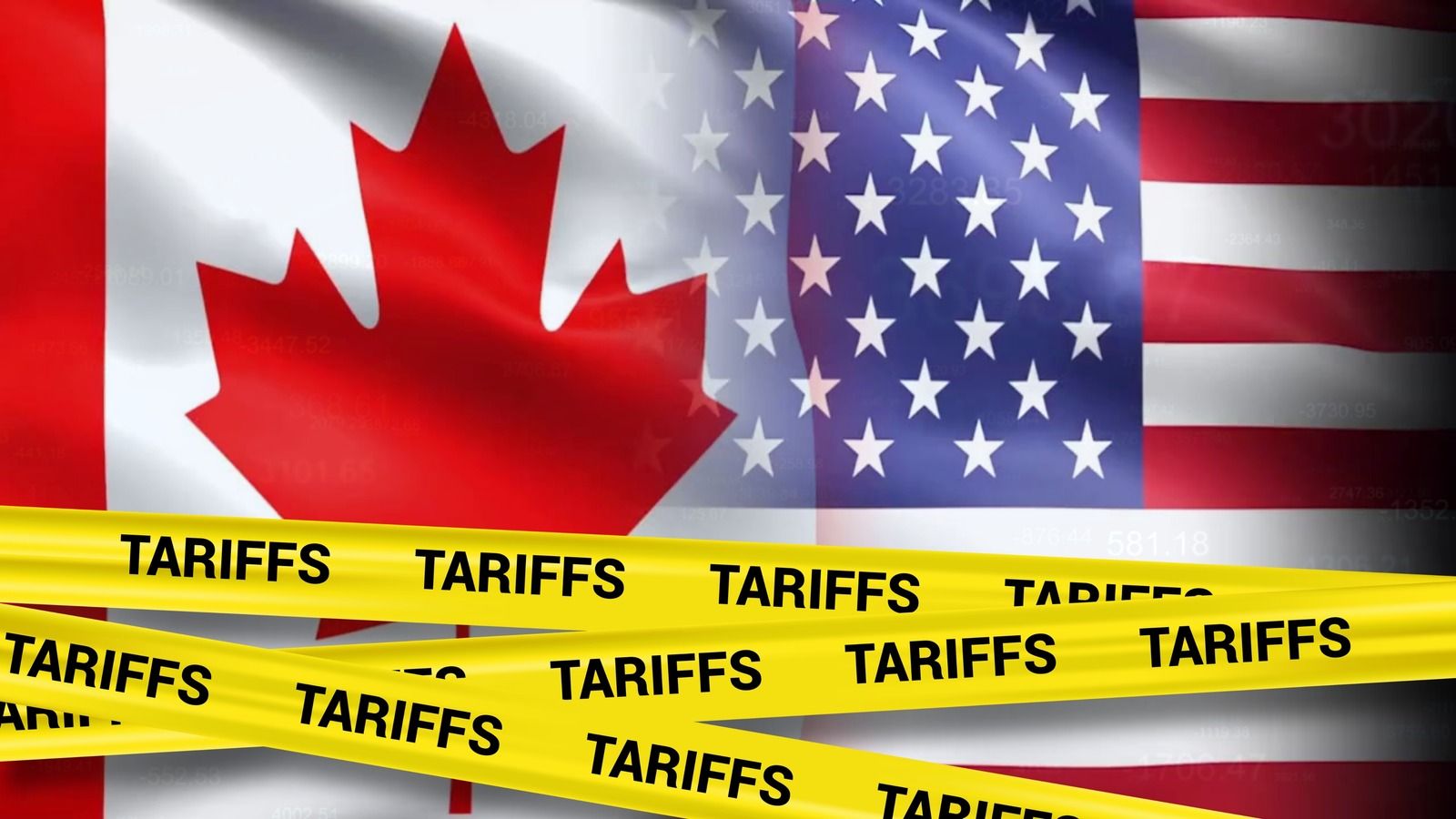
The battle over President Donald Trump’s tariffs on Canada is becoming a major test of political power in Washington, just as the United States approaches its November 3 midterm elections. Senior Senate Democrats are promising to challenge the administration’s trade restrictions, arguing that American businesses and households are paying an increasingly heavy price.
Senator Ron Wyden has identified Canadian tariffs as a priority, while Democratic leader Chuck Schumer is backing legislation aimed at dismantling key parts of Trump’s trade agenda.
For Canadian automakers, however, the political momentum comes with an important warning. Even substantial Democratic election gains would not automatically remove existing automotive duties, prevent threatened increases in 2027, or resolve the uncertainty surrounding North America’s deeply connected vehicle industry.
Wyden Makes Canada’s Tariffs a Democratic Priority
Senator Ron Wyden of Oregon, the ranking Democrat on the Senate Finance Committee, has placed Trump’s Canadian tariffs near the centre of his party’s trade agenda. Speaking ahead of the November 3 elections, Wyden identified repealing those duties as an obvious priority, arguing that they were increasing prices and damaging communities on both sides of the border. His position carries particular weight because the Finance Committee plays a central role in congressional oversight of taxes and international trade.
Wyden’s intervention comes alongside a broader Democratic effort led by Senate Minority Leader Chuck Schumer. On September 14, Schumer introduced the End Trump’s Tariff Tax Act, formally designated S. 5390, with Wyden among its original supporters. The legislation would eliminate specified tariffs, repeal certain presidential tariff authorities, and provide refunds to affected importers. However, the proposal remains legislation rather than an enacted change to U.S. trade policy. For manufacturers making decisions about their production schedules, that distinction is critical: congressional opposition does not immediately translate into lower costs at the border.
Democratic Election Gains Would Face a Presidential Veto
The November 3 midterm elections could significantly change the political environment surrounding Trump’s tariff policies. Republicans currently hold a 53–47 majority in the Senate and a narrow 218–214 advantage in the House of Representatives. Democrats would need a net gain of four seats in each chamber to take control. Winning either chamber would give them greater influence over the legislative agenda, although capturing both would offer considerably more opportunities to advance tariff-related bills.
There is still a major constitutional obstacle. Trump retains the authority to veto legislation passed by Congress, and overriding that veto requires a two-thirds vote in both chambers. Even a successful Democratic election would be unlikely to produce those overwhelming majorities. Trade experts interviewed by Reuters have consequently warned that repeal efforts could generate considerable political attention without producing immediate legal changes. For Canadian automakers, a Democratic victory might create stronger pressure for negotiations, but it would not guarantee the removal of duties affecting vehicles, components, or industrial materials.
Trump’s 50% Canadian Tariffs Have a Complicated Legal Foundation
The latest dispute involves Section 338 of the Tariff Act of 1930, a rarely used provision that allows the U.S. president to impose additional duties in response to certain forms of discrimination against American commerce. In July 2026, Trump invoked that authority to announce 50% tariffs on selected Canadian imports, citing disagreements involving Canada’s treatment of American vehicles, dairy products, and alcoholic beverages. The measures took effect on August 22 after a short postponement.
Importantly, the Section 338 tariffs do not apply uniformly to everything Canada exports. They cover specified products identified through U.S. customs classifications, including categories of manufactured goods and industrial materials. Unlike many other tariff measures, the additional duties can apply even when products satisfy the Canada-United States-Mexico Agreement’s rules of origin. Subsequent presidential actions in September and October changed which products were covered, adding further complications for importers. The result is a system in which eligibility for preferential trade treatment does not necessarily prevent substantial additional duties.
Automotive Tariffs Operate Under a Different Law
One of the most important distinctions for the automotive industry concerns Section 232 of the Trade Expansion Act of 1962. The United States has applied separate 25% automotive tariffs under that national-security-related authority since 2025. For qualifying Canadian-built vehicles, the duty applies to their non-U.S. content when the appropriate content determination has been approved. Automotive parts meeting CUSMA requirements are currently exempt from the corresponding Section 232 parts tariffs.
This creates a significant limitation for Schumer’s proposed legislation. His bill specifically targets other tariff authorities, including Section 338, Section 122, and duties arising from designated forced-labour investigations under Section 301. It does not directly repeal the Section 232 automotive tariff framework. Consequently, even if the legislation eventually became law, it would not automatically eliminate the existing 25% automotive duties. A Canadian plant producing vehicles for American dealerships would still have to evaluate its exposure under the separate automotive rules. Resolving that problem would require additional policy changes, negotiated exemptions, or separate legislative action.
Trump’s Threatened 50% Auto Tariffs Could Arrive in 2027
The automotive industry’s concerns extend beyond the tariffs already in place. On August 24, Trump threatened to increase duties on Canadian cars, trucks, automotive parts, and steel to 50%, beginning January 1, 2027. The announcement came after negotiations collapsed over disagreements that included tariff treatment for medium- and heavy-duty vehicles. The proposed increase would represent a substantial escalation from the existing 25% automotive rate, although its implementation and detailed exemptions remain uncertain.
There has been some movement toward a possible compromise. Reuters reported on October 26 that American and Canadian officials were discussing potential relief from Section 232 tariffs, with U.S. Commerce Secretary Howard Lutnick and Canada’s Dominic LeBlanc involved. However, a Canadian government official reported only limited progress on October 28. For automakers, the approaching January deadline creates a difficult planning environment. Companies must consider the financial consequences of a threatened increase without knowing whether negotiations will produce relief, a postponement, or another round of restrictions.
North America’s Automotive Supply Chain Makes Tariffs Especially Disruptive
Canada’s automotive industry is deeply connected to the United States, making trade restrictions considerably more complicated than a tax on finished imports. According to the Canadian government, more than 90% of Canadian-made vehicles and approximately 60% of Canadian-made automotive parts are exported to the American market. Canada produced more than 1.2 million passenger vehicles in 2025, with manufacturers including Honda, Toyota, General Motors, and Stellantis operating major assembly facilities in Ontario.
The industry also depends on components moving between countries at different stages of production. Under CUSMA, qualifying passenger vehicles must generally meet a 75% North American regional value-content requirement, alongside other rules involving labour and materials. A component produced in one country may become part of a larger assembly manufactured elsewhere before reaching a final vehicle plant. This means tariff uncertainty can affect suppliers well beyond the location of final assembly. For a parts producer supplying factories in both Michigan and Ontario, changing trade rules can complicate contracts, pricing, transportation, and investment decisions simultaneously.
Canadian Automotive Employment Is Exposed to U.S. Decisions
The dependence on American demand extends directly into Canadian employment. Statistics Canada reported in May 2026 that U.S. demand accounted for approximately 76.4% of payroll jobs in Canada’s automobile and light-duty motor vehicle manufacturing industry in 2024. That represented roughly 27,000 jobs associated with U.S.-bound production within that specific industry category. The broader Canadian automotive sector supports substantially more employment, including approximately 125,000 direct jobs and more than 500,000 jobs across related economic activities.
Recent trade figures underline the industry’s vulnerability. Statistics Canada found that Canadian motor vehicle exports to the United States declined 9.6% in 2025, although production disruptions, retooling, and semiconductor shortages also contributed. Tariffs should therefore not be treated as the sole explanation for weaker performance. The larger economic danger is cumulative. In October, Canada’s Parliamentary Budget Officer estimated that Canada-U.S. trade measures introduced since early 2025 could reduce Canadian real GDP by 1.4% after five years, compared with a pre-tariff baseline. That forecast concerns the wider economy, not automotive manufacturing alone.
American Consumers and Manufacturers Also Face Higher Costs
Tariffs are often presented as charges imposed on foreign producers, but the immediate legal responsibility generally falls on the importer bringing goods into the United States. The final economic burden can then be divided among suppliers, manufacturers, retailers, and consumers through pricing adjustments. Research published by the Federal Reserve Bank of New York in October 2026 found that approximately 90% of the tariffs examined were reflected in higher U.S. import prices, illustrating how trade restrictions can transmit costs into the domestic economy.
Automotive manufacturing makes that process especially visible. American-built vehicles can contain imported steel, electronics, and other components, so producing a car in the United States does not eliminate exposure to international trade costs. Higher imported-material prices can affect domestic production expenses, while more expensive imported vehicles may also reduce competitive pressure on locally produced alternatives. These effects do not necessarily appear immediately or uniformly. Families shopping for a new vehicle might encounter higher prices, reduced incentives, or fewer affordable choices as manufacturers adjust production and pricing strategies over time.
Maine’s Tariff Exemptions Reveal the Limits of Political Pressure
Republican Senator Susan Collins of Maine has provided a revealing example of how political pressure can produce targeted tariff relief without resolving a broader trade dispute. After she raised concerns about costs facing local businesses, the White House announced exclusions for selected Canadian imports, effective October 30. The changes covered products including certain packing crates, plywood, refrigeration equipment, and machinery. Maine’s wild blueberry growers offered a particularly practical example: some depend on specialized Canadian harvesting boxes designed to work with their processing equipment.
However, the exemptions were limited. The administration simultaneously added other Canadian products, including certain carpets and valves, to its tariff list. Collins argued that businesses needed relief where suitable American alternatives were unavailable, while Wyden questioned the timing of the changes immediately before the elections. The episode demonstrates how individual industries can obtain exceptions without changing the underlying policy. Automotive manufacturers could seek similar relief, but Maine’s experience provides no guarantee that Washington will grant it.
Congressional Oversight Could Change the Debate Without Ending Tariffs
A Democratic victory in either chamber would create opportunities to challenge Trump’s trade agenda even if legislation repealing tariffs remained blocked. Committee hearings could examine how exemptions are awarded, whether smaller companies receive fair treatment, and how manufacturers are absorbing additional costs. Democrats could also question the administration about investment commitments made by foreign trading partners, including Japan and South Korea. Such scrutiny would make previously obscure trade decisions more visible to the public.
Yet hearings and investigations cannot independently erase customs duties. The legal authority used for the Canadian Section 338 tariffs also presents procedural difficulties for lawmakers seeking rapid repeal votes. The White House, meanwhile, argues that its policies are designed to protect American workers, farmers, and manufacturers while encouraging domestic investment. The result could be a prolonged confrontation between Congress and the administration. For a Canadian parts supplier trying to price a contract, greater transparency would be welcome, but a hearing in Washington would not substitute for a legally enforceable change to tariff rates.
CUSMA’s Uncertain Future Adds Another Layer of Risk
Beyond the immediate tariff fight, North America’s trade agreement faces its own unresolved questions. The Canada-United States-Mexico Agreement entered into force on July 1, 2020, and underwent its first joint review on July 1, 2026. At that meeting, the United States declined to extend the agreement for another 16-year term. That decision did not terminate CUSMA. The agreement remains in force, but annual reviews are now required unless all three countries agree to an extension.
Without an extension, the agreement is currently scheduled to expire on July 1, 2036. The United States has already launched consultations ahead of its 2027 review, with written submissions due January 12. Automotive rules are especially important because qualifying vehicles generally must satisfy a 75% North American regional-content requirement, among other conditions. Manufacturers contemplating new factories or product lines must therefore evaluate two separate uncertainties: tariffs imposed outside CUSMA and the longer-term future of the trade agreement itself.
Meaningful Relief Will Depend on Negotiations and Enforceable Changes
Canada has already demonstrated that it is willing to retaliate. On September 8, Ottawa introduced additional counter-tariffs covering approximately $27.6 billion in American products, targeting industries such as steel, aluminum, agricultural equipment, and electronics. Existing Canadian countermeasures on American vehicles also remain in place. These restrictions give Ottawa leverage, but they create additional costs for businesses that depend on materials and equipment moving in both directions across the border.
Canada has also introduced domestic measures to support automotive manufacturing, including a $3-billion funding commitment and conditional tariff-remission arrangements for eligible producers. Those steps may help protect investment and production, but they cannot independently change American import duties. Ultimately, the clearest relief would come from an implemented bilateral agreement, revised presidential tariff actions, or legislation capable of overcoming a veto. Until then, automotive companies will continue watching the January 2027 deadline, congressional developments, and CUSMA negotiations. An election can change the political conversation; only enforceable policy changes can provide the certainty manufacturers need.