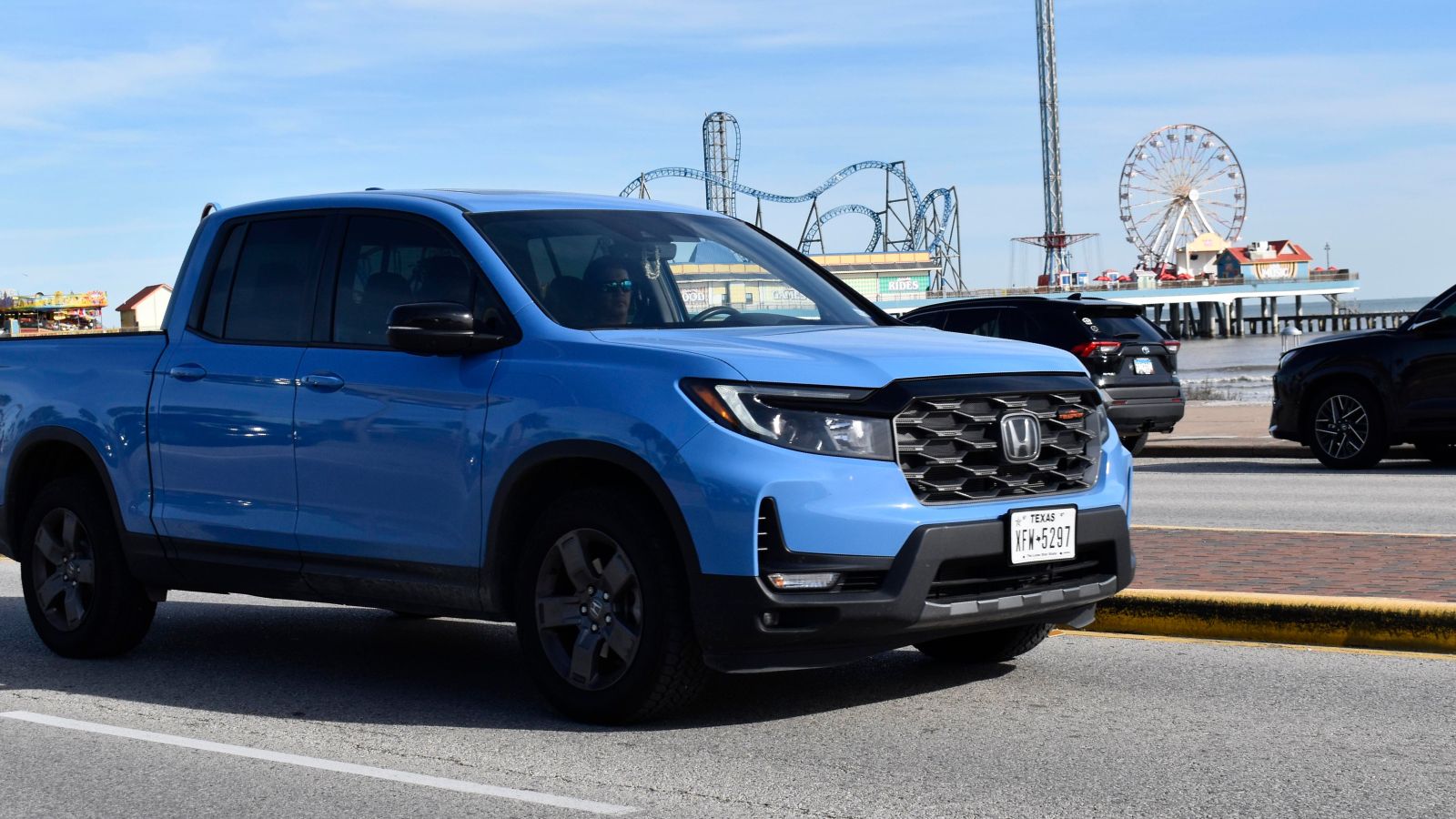
Honda Ridgeline owners have been hearing about rear-view camera wiring for years, but a major U.S. investigation into whether an earlier repair could itself fail has now reached its endpoint. The National Highway Traffic Safety Administration has closed its engineering analysis covering 129,092 model-year 2017–2019 Ridgeline pickups without seeking additional action.
That conclusion does not mean the original defect never existed. Honda previously recalled the trucks because repeated tailgate movement could damage wiring and knock out the rear-view camera. Regulators later questioned whether replacement harnesses were durable enough, prompting a deeper investigation. Canada has its own history with the issue, including separate recalls covering 2017–2019 and 2020–2024 Ridgelines. The result is a useful reminder that an investigation closing and a safety recall being completed are two very different things.
NHTSA Found No Basis for More Action
The latest decision concerns NHTSA engineering analysis EA25003, an investigation focused on 2017–2019 Honda Ridgelines and a population listed at 129,092 vehicles. Regulators were not reconsidering whether the original rear-view camera problem existed. Instead, they were examining whether the wiring harness installed as the remedy for an earlier recall could suffer a similar durability failure after enough use. The investigation record is listed as closed in September 2026, while the closure was publicly reported on September 22.
NHTSA ultimately concluded that additional action was not supported by the evidence gathered during the engineering analysis. According to the agency’s findings reported by Reuters, inspections and testing did not validate the concern that repaired harnesses were failing because of the durability issue under investigation. Many of the reported camera or wiring problems instead involved other failure modes that could not be connected to the suspected defect. That distinction was central to closing the case.
The Original Problem Was Hidden in the Tailgate
The issue started with a component most owners would rarely think about: the wiring harness running through the Ridgeline’s tailgate. Every time the tailgate was opened or closed, that harness had to flex. Honda determined that the original protective arrangement could leave the wiring vulnerable to fatigue. NHTSA’s 2022 recall filing said the corrugated tubing did not provide enough protection in some vehicles and that a zip tie could be insufficiently tightened to keep the protective components properly positioned.
Over thousands of tailgate movements, the result could be damaged or broken internal wiring. When electrical connectivity to the camera was interrupted, the rear-view camera image could become intermittent or disappear completely when the transmission was shifted into reverse. Honda’s original U.S. recall, 22V-867, covered 117,445 potentially affected 2017–2019 Ridgelines. The remedy called for replacing the tailgate camera wiring harness with an improved version that used longer protective tubing and better-secured components.
Earlier Complaints Had Already Triggered a Federal Investigation
The 2022 recall did not appear out of nowhere. NHTSA’s Office of Defects Investigation opened a preliminary evaluation in February 2022 after receiving complaints involving rear-view camera failures on 2017 and 2018 Ridgelines. By the time that investigation closed, ODI reported receiving 107 consumer complaints alleging that the rear-view camera image failed to appear while the vehicle was in reverse. Honda had also supplied a much larger volume of manufacturer complaint information during the investigation.
Honda filed the 2017–2019 recall in November 2022, leading NHTSA to close that initial preliminary evaluation the next month. The federal recall record listed 117,445 potentially involved vehicles and estimated that approximately 7% could contain the defect. Those figures should not be confused with the later 129,092-vehicle engineering-analysis population. They come from different regulatory records created at different stages of the case. What remained consistent was the underlying concern: repetitive tailgate movement could eventually damage wiring needed for the camera.
Reports After the Repair Put the Remedy Under Scrutiny
A recall normally aims to close the chapter on a defect, but regulators can take another look when reports suggest the repair itself may not be holding up. That happened here. NHTSA opened Recall Query RQ24011 in June 2024 specifically to assess the long-term suitability of the remedy used in recall 22V-867. The concern became more significant because replacement components used for the older trucks shared a supplier and important materials with components involved in a separate recall affecting newer Ridgelines.
By February 2025, Honda had identified 14 reports involving alleged rear-view camera harness failures in vehicles that had received the original recall remedy. NHTSA’s opening summary for EA25003 listed one report directly received by ODI and 13 manufacturer reports. At that stage, the investigation summary listed no crashes, fires, injuries or fatalities associated with those 14 incidents. Regulators nevertheless upgraded the matter to a more detailed engineering analysis because repaired vehicles needed additional examination before durability concerns could reasonably be dismissed.
Physical Testing Changed the Direction of the Case
The engineering analysis went beyond simply counting owner complaints. NHTSA’s Vehicle Research and Test Center surveyed owners, inspected selected Ridgelines and carried out durability testing on the wiring harness. That work was meant to answer a difficult question: were replacement harnesses actually degrading in the same way feared by investigators, or were reported camera failures being caused by unrelated problems?
The results supported the second explanation more often than the first. NHTSA said its work found no rear-view camera failures caused by the type of harness damage being studied. Testing also indicated the repaired component was not expected to fail within a reasonable vehicle service life. Regulators determined that most reports examined during the investigation involved other camera or harness failure modes that could not be linked to the durability concern that had triggered the engineering analysis. With the suspected pattern not reproduced through inspections and testing, NHTSA closed the investigation without requiring Honda to launch another remedy campaign for those repaired 2017–2019 trucks.
Newer Ridgelines Had a Separate 187,290-Vehicle U.S. Recall
The closure should not be confused with another Honda Ridgeline camera campaign covering newer trucks. In May 2024, Honda recalled 187,290 model-year 2020–2024 Ridgelines in the United States under campaign 24V-321. Those vehicles could also lose their rear-view camera image because of tailgate-harness damage, but Honda’s defect filing described a different failure mechanism from the one involved in the original 2017–2019 campaign.
For the newer trucks, Honda reported that the harness’s protective woven material could allow water and road salt to penetrate. In cold environments, repeated freezing and thawing of salty water, combined with flexing as the tailgate was opened and closed, could cause cracks in wire insulation to grow until electrical wires eventually fatigued and broke. Honda’s solution was to replace the affected harness with one supplied by a different source and designed with improved material properties. U.S. owners were later told replacement parts had become available for the free repair.
Canada Recalled 2017–2019 Ridgelines for the Same Basic Risk
Canadian Ridgeline owners were not outside the scope of the earlier wiring concern. Transport Canada recall 2022-669 covers certain 2017, 2018 and 2019 Honda Ridgelines. Its description closely follows the underlying problem identified in the United States: repeated movement of the tailgate could fatigue and damage the rear-view camera wiring harness, potentially leaving the centre display without a camera image when the truck was shifted into reverse.
Honda Canada’s original owner notice explained that broken internal wiring could cause the rear-view camera to display a blank screen and increase the risk of a backing collision or injury. Parts availability initially complicated the campaign. Owners experiencing a camera problem were given priority while additional service parts were being produced. By August 2023, Honda Canada advised affected owners that sufficient replacement parts had become available and instructed them to schedule the harness replacement. The recall repair was to be performed without charge, with Honda estimating the service itself would generally require less than two hours.
Canada Later Added a Recall for 2020–2024 Trucks
Canada subsequently issued Transport Canada recall 2024-265 covering certain 2020 through 2024 Ridgelines. Once again, the potential consequence was loss of the camera image while backing up, but Honda Canada’s detailed owner notice specifically described a supplier-related problem aggravated by freezing temperatures. Damage could develop as the tailgate was repeatedly opened and closed, allowing water into the harness and ultimately causing wires to break.
The potential symptoms went beyond a blank rear-view camera. Honda Canada advised that damaged wiring could also interfere with the tailgate locking mechanism or security alarm. Replacement of the tailgate harness with an improved part was the prescribed repair. Honda’s November 2024 notice said service parts were available and directed affected Canadian owners to arrange dealership appointments. For a Canadian pickup exposed to wet winter roads, repeated freeze-thaw cycles and road salt, the technical explanation is particularly relevant. It also shows why the newer recall should not simply be treated as a continuation of the exact 2017–2019 defect.
Rear-View Cameras Are Considered Safety Equipment for a Reason
A backup camera may feel like a convenience feature until it disappears when a vehicle is already moving in reverse. Both Canadian and U.S. safety regulations recognize rear visibility as an important crash-prevention function. Transport Canada says backup cameras are required by regulation on passenger cars, SUVs, light pickup trucks and minivans under Canada’s rear-visibility requirements. U.S. Federal Motor Vehicle Safety Standard No. 111 similarly requires qualifying light vehicles to provide a compliant rear-view image.
The technology is still intended to supplement rather than replace basic observation. Transport Canada advises drivers to use mirrors, look over their shoulder and check the display while reversing. Rain, dirt, darkness and glare can reduce camera effectiveness even when the system is working correctly. A completely blank screen, however, removes an expected layer of rear visibility, which explains why both countries treated the Ridgeline harness failures as safety concerns rather than routine infotainment problems.
What the Closure Means for Ridgeline Owners
For owners, the most important point is that closing EA25003 does not cancel an existing recall or make an outstanding recall repair unnecessary. NHTSA says safety recalls do not expire, and an unrepaired campaign can still appear when a U.S. vehicle’s VIN is checked through the federal recall database. The engineering-analysis closure means regulators did not find sufficient evidence to require further action over the durability of the earlier 2017–2019 recall remedy.
Canadian owners should make the same distinction. Honda Canada provides a VIN-based recall checker that identifies outstanding safety campaigns, and its guidance directs owners receiving a recall notice to arrange the repair through a dealer at no charge. A 2017–2019 or 2020–2024 Ridgeline with an outstanding Canadian tailgate-harness campaign still needs the prescribed repair regardless of what happened to the separate U.S. investigation. For anyone noticing an intermittent or blank camera image, confirming recall status by VIN remains more useful than relying only on model year or headlines about the federal probe being closed.