


























A car purchase can feel manageable the moment a salesperson turns a five-figure price into one tidy weekly or monthly payment. That relief is exactly why one common mistake matters so much: negotiating from the payment instead of the total deal. Once the conversation centres on “What payment works?”, the dealership gains room to adjust the loan term, interest rate, trade-in allowance, down payment and optional products while keeping the headline number familiar.
The vehicle may still fit the household budget, but the route used to reach that payment can quietly add thousands of dollars or extend the debt for years. These 12 points explain how payment-first shopping shifts control across the transaction—and how buyers can keep the price, financing and extras visible from beginning to end.
The Payment Question Changes the Entire Negotiation

The mistake often begins with an ordinary question: “What monthly payment are you hoping for?” It sounds like budgeting help, and sometimes it is. Yet answering with a ceiling gives the seller a target rather than forcing the vehicle’s price to stand on its own. A buyer who says $650 a month has revealed the number that makes the deal feel acceptable, even before the selling price, interest rate or term has been settled.
That number can become an anchor for everything that follows. Negotiation research has repeatedly found that opening numbers influence later outcomes, while Canadian consumer guidance tells car shoppers to examine total cost rather than payments alone. Consider a vehicle that could be financed for $605 a month. If the buyer has already volunteered a $650 ceiling, there is roughly $45 of monthly room—more than $3,700 across 84 payments—that can absorb a higher price, accessories or borrowing costs without crossing the stated limit. The payment may look right while the deal underneath it changes substantially.
A Comfortable Payment Can Hide a More Expensive Vehicle
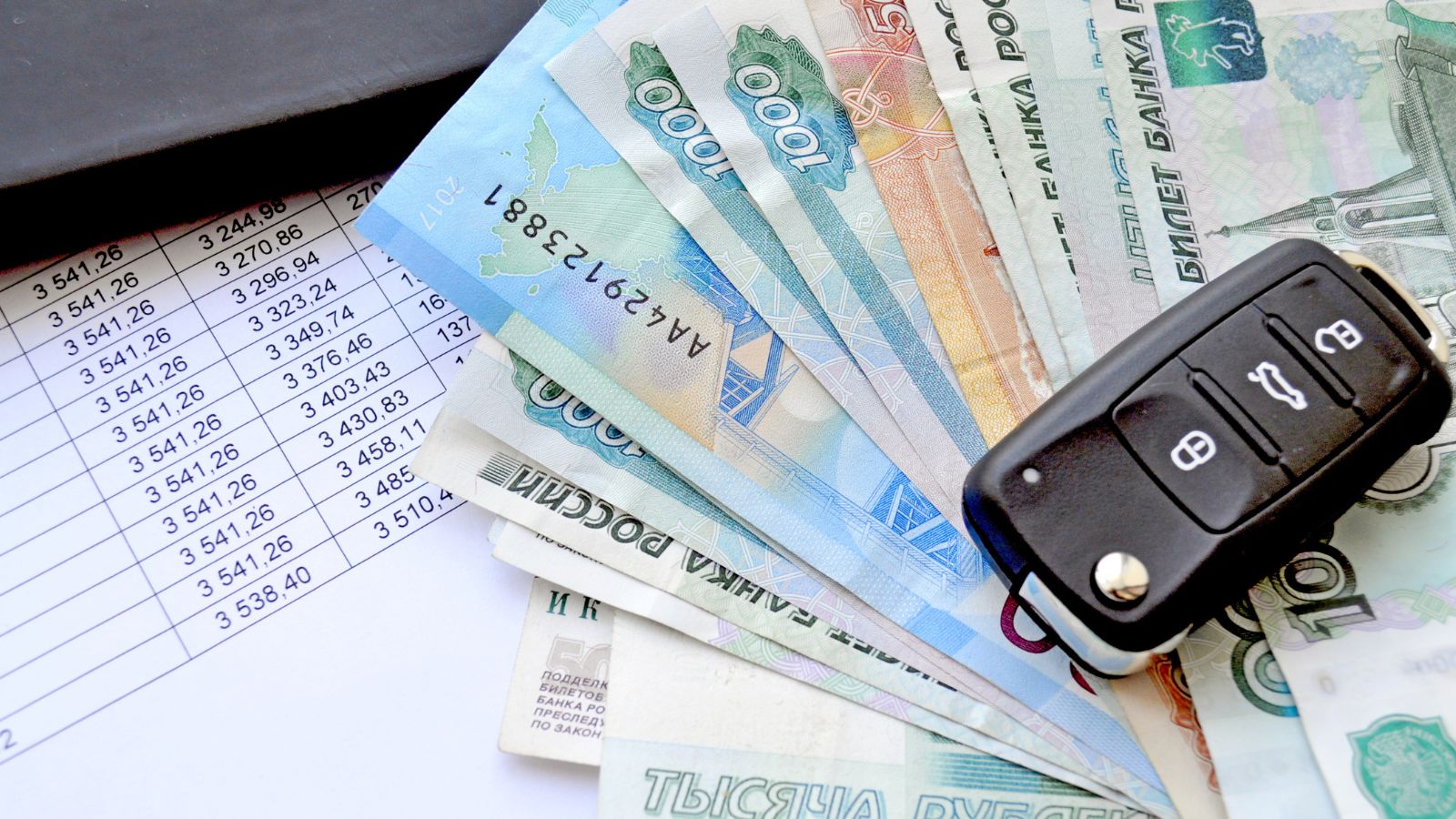
Monthly-payment shopping reverses the usual affordability test. Instead of asking whether a specific vehicle is worth its full price, the transaction becomes an exercise in making the payment fit. That gives the dealership several mathematical levers. A higher-priced trim, an extra package or a smaller discount may all survive the negotiation as long as another part of the financing structure is adjusted to hold the payment near the buyer’s target.
The difference can be surprisingly hard to feel in monthly terms. Adding $4,000 to an 84-month loan at 7 percent raises the payment by about $60, but it increases the total repaid by more than $5,000. A shopper focused on the vehicle’s complete price is likely to challenge that increase directly. A payment-focused shopper may hear only that the upgraded model costs “about $14 more a week.” Both descriptions can be mathematically accurate, but only one keeps the full commitment visible. Dealers do not need to conceal the price for payment framing to weaken the buyer’s ability to judge it.
The Loan Term Becomes the Easiest Lever

Loan length is the fastest way to lower a payment without lowering the amount borrowed. Stretching repayment across six, seven or eight years spreads the same principal over more instalments, which can make an expensive vehicle appear to fit a modest budget. Financial Consumer Agency of Canada guidance warns that longer terms reduce regular payments but increase total interest and can leave borrowers in debt after their needs have changed.
An illustrative $40,000 loan at 7 percent costs about $958 a month over 48 months and about $604 over 84 months. The longer schedule looks easier by roughly $354 each month, yet total interest rises from about $5,977 to about $10,711. The buyer saves nothing on the vehicle; the obligation is simply rearranged and extended by three years. When the payment is the main negotiating point, the term can quietly move until the number works. When the total price and maximum acceptable term are set first, that lever becomes far harder to use.
The Interest Rate Can Slip Into the Background
A buyer can negotiate the vehicle price aggressively and still lose ground through financing. Dealers may have access to multiple lenders, which can be convenient, but the Financial Consumer Agency of Canada notes that a dealer does not have to present the lowest available rate. A payment-first conversation makes that distinction easier to overlook because a slightly higher rate can be offset with a longer term, a larger down payment or a cheaper-looking payment schedule.
On a $35,000, five-year loan, increasing the rate from 6 percent to 8 percent raises the payment by only about $33 a month. Across the full term, however, the total interest rises by roughly $1,982. That is a meaningful price difference for borrowing the same amount to buy the same vehicle. The strongest comparison therefore includes the annual percentage rate, term, amount financed, payment frequency and total borrowing cost. When those figures are written side by side, the rate must compete openly. When only the payment is discussed, it can become one more hidden adjustment.
The Trade-In Can Be Blended Into the New Deal

A trade-in introduces a second negotiation with its own price, debt balance and tax consequences. Combining it immediately with the new vehicle can make the transaction harder to read. A generous-looking trade allowance may be paired with a weaker discount on the replacement vehicle, while a strong vehicle price may come with a disappointing trade value. The monthly payment can remain attractive in either case, masking where value was gained or lost.
Suppose one dealer discounts a new car by $2,000 but offers $3,000 less for the trade than another dealer. The payment presentation can still be arranged to look competitive by changing the term or cash down. That is why trade value, remaining loan balance and new-vehicle price should appear as separate figures. Ontario’s regulator specifically tells buyers to check that both the trade-in value and any outstanding balance are listed on the bill of sale. Keeping the transactions separate does not eliminate negotiation; it prevents one number from being used to distract from another.
A Down Payment Can Create a False Sense of Affordability

Cash down reduces the amount financed, which can be sensible when it fits the buyer’s broader finances. The problem appears when a large down payment is used mainly to force an otherwise unaffordable vehicle into a chosen monthly number. The payment falls, but the vehicle has not become cheaper. Part of its cost has simply been paid earlier and may disappear from the buyer’s mental comparison.
Imagine two offers on the same car. One requires $2,000 down and the other $7,000 down, yet both advertise a payment near $600. The second offer consumes an extra $5,000 immediately. If a shopper compares only the monthly figures, those deals can look almost identical even though the total cash commitment is not. A proper comparison adds the down payment, all scheduled payments, fees and any final amount due. Buyers should also avoid draining emergency savings merely to reach a showroom payment target. A truly affordable deal should survive when every dollar paid—today and later—is counted.
Add-Ons Become “Only a Few Dollars More”

Optional products are easier to sell when their prices are translated into small payment increases. Extended warranties, protection packages, rustproofing, theft products and other extras can each sound harmless when described as several dollars per week. Once financed, however, the buyer pays both the product price and interest, often for the full loan term. The monthly framing can also make several separate add-ons feel like one modest adjustment.
A $3,000 package financed for 72 months at 7 percent adds about $51 a month and costs roughly $3,683 by the final payment. A $5,000 bundle financed for 84 months at the same rate adds about $75 a month but results in approximately $6,339 repaid. Those figures do not automatically make every add-on poor value; some buyers may want particular coverage. They do show why each product needs its own cash price, explanation and decision. Ontario guidance states that optional extras should only be charged when the buyer agreed to them, and the bill of sale should itemize them.
Fees Are Harder to Challenge Inside a Payment
Mandatory fees and dealer charges are most visible when shoppers negotiate an all-in or out-the-door price. They become less noticeable when folded into financing, especially across a long term. A $700 charge spread over 84 months at 7 percent adds only about $11 to the monthly payment. That small change may receive little attention even though the buyer will repay roughly $887 for the charge after interest.
Canadian rules and protections vary by jurisdiction, but the general principle is consistent: the advertised price should be compared carefully with the final contract, and every charge should be understood before signing. In Ontario, dealer advertisements must include the fees the dealer intends to collect, apart from HST and licensing, and the bill of sale must itemize the charges. Federally, the Competition Bureau describes drip pricing as advertising an unattainable price before adding mandatory non-government charges. A payment-first negotiation can weaken those protections in practice if the buyer stops checking the actual price line.
Negative Equity Can Be Rolled Forward Quietly

A buyer who owes more on a trade-in than it is worth has negative equity. That shortfall does not vanish when a dealer says the old loan will be “paid off.” It may be added to the amount borrowed for the next vehicle, increasing both the new principal and the interest paid. Because the added debt is spread across a fresh term, the monthly increase may look smaller than the underlying problem.
Ontario’s regulator gives an illustrative example of a driver who owes $16,192 on a trade worth $7,000. The $9,192 shortfall is added to a $35,000 replacement, producing borrowing of $44,192 before considering further costs. The buyer is now financing nearly $45,000 for a vehicle priced at $35,000. Federal guidance also warns that trading while underwater can create a larger loan and more interest. Payment-first shopping makes this rollover easier to accept because the question becomes whether the new payment works, not whether old debt is being attached to a rapidly depreciating asset.
Comparison Shopping Stops Being Apples to Apples

A monthly payment is not a complete unit of price. Two identical payments can represent different vehicle prices, rates, loan lengths, down payments, trade values and add-ons. Without those inputs, shoppers cannot reliably tell which offer is cheaper. This is why a dealer can appear to “beat” another payment while requiring more cash upfront or extending the loan by a year or two.
Consider two offers at $700 a month. One lasts 60 months and totals $42,000 in scheduled payments; the other lasts 84 months and totals $58,800. Taxes, down payments and fees could widen the difference further. The payment itself does not reveal any of that. Canadian guidance recommends obtaining quotes from multiple dealers and lenders and comparing the rate, schedule, financing fees, amount financed and term. A written all-in price and a written financing quote create a common basis for comparison. Without them, the buyer is comparing carefully designed payment stories rather than complete deals.
Signing Before Financing Is Final Removes Leverage

Pressure to secure a vehicle before every financing detail is written down creates another form of dealer control. Once a buyer has signed a binding sales agreement or paid a deposit, walking away may be difficult. The Financial Consumer Agency of Canada says most provinces and territories do not provide a general cooling-off period for car loans and leases, while Ontario’s regulator emphasizes that a bill of sale is a contract, not a placeholder.
The risk is easy to picture: a buyer is verbally told that financing should be near 8 percent, signs to hold the vehicle, and later learns that approval came at 18 percent with a longer term. OMVIC used that scenario in a 2026 compliance warning and stated that key financing details must be disclosed before signing in Ontario. The lesson reaches beyond one province. Interest rate, payment, term, amount financed, total cost of borrowing, deposits and conditions should all be final and written. A signature given too early replaces the buyer’s strongest leverage—the ability to leave—with a contractual dispute.
The Better Order Keeps Every Lever Visible

The safer sequence is simple: choose a realistic total budget, research the vehicle’s market price, negotiate the selling price, value the trade separately, compare financing, review extras and then read the final contract. A financing quote or preapproval from a bank or credit union can provide a benchmark, while dealer financing can still win if it offers better terms. The goal is not to avoid dealers; it is to make every offer compete on the same complete set of numbers.
A buyer can still use a monthly payment as a budget check at the end. It simply should not be the opening bid. Ask for the all-in price, then record the down payment, trade allowance, trade debt, annual percentage rate, term, amount financed, payment schedule, total borrowing cost and optional products. Recalculate the deal whenever one figure changes. If a $50,000 loan at 7 percent moves from 72 to 84 months, the payment drops by about $98, but total interest rises by roughly $2,013. That trade-off is clear only when the entire structure remains visible—and that is how control returns to the buyer.
22 Things Canadians Do to Their Cars in Spring That Mechanics Hate

Spring brings relief to many Canadian drivers after months of snow, freezing temperatures, and icy roads that put serious strain on vehicles. As temperatures rise across the country, drivers begin washing cars, switching tires, and preparing vehicles for warmer weather and upcoming road trips. However, mechanics across Canada notice the same mistakes every spring when drivers attempt to recover from winter damage. Road salt, potholes, and harsh winter driving conditions often leave vehicles with hidden problems that drivers ignore. Some spring habits even create new mechanical issues that could have been avoided with proper maintenance. Here are 22 things Canadians do to their cars in spring that mechanics hate.