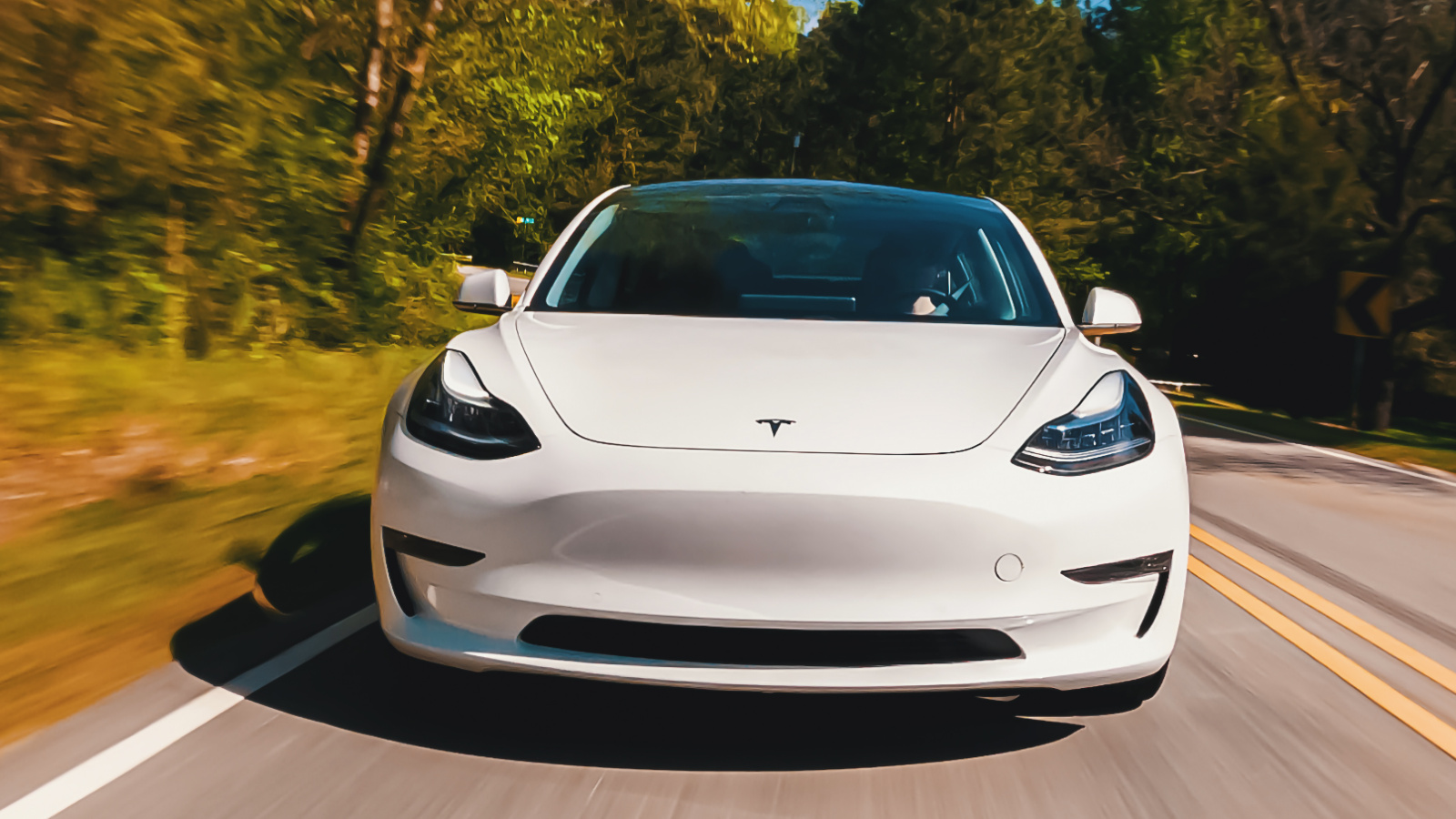
A larger touchscreen is easy to notice. A missing country name takes a closer look. Tesla’s latest Model 3 upgrade announcement promises improvements to the electric sedan while specifically naming the United States, Puerto Rico and Mexico. Canada is not on that list.
The changes include a 16-inch centre display, quicker acceleration for the Premium all-wheel-drive version, and additional power and range for the Performance model. For Canadians considering an order, the question is not simply whether the updates are appealing, but which specifications their own cars would receive. The announcement leaves that question open; it does not establish that Canada has been permanently excluded.
Three Named Markets, One Important Omission
Tesla announced the changes on the evening of October 1, 2026, in North America. Its regional account identified the U.S., Puerto Rico and Mexico when describing the larger touchscreen becoming standard across the Model 3 range. Those named markets matter. Describing the release simply as a North American upgrade would erase a distinction the company itself made, particularly for Canadian customers comparing coverage with the vehicle available through their local ordering page.
The same announcement did not give Canada a launch date, explain its omission or promise that the changes would arrive everywhere simultaneously. That is a gap in the information, not evidence of a permanent exclusion or a deliberate snub. A Canadian buyer can reasonably ask whether the same package is coming, but the wording does not settle the answer. The confirmed story is narrower: Tesla has announced these upgrades for specific markets, while Canadian timing remains unaddressed in that announcement.
A Bigger Screen at the Centre of Daily Driving
The most visible change is the move from a 15.4-inch centre touchscreen to a 16-inch unit, an increase of 0.6 inches in the diagonal measurement. That is an incremental enlargement rather than an entirely different cabin concept. Its significance comes from what the screen does: Tesla’s owner’s manual describes it as the interface for many vehicle functions, including cabin heating and air conditioning, along with navigation, entertainment and vehicle information. It is not merely a display for selecting music.
For a driver setting up a route before leaving home, that central role makes even a modest hardware revision worth examining. But a larger panel does not, by itself, establish quicker software, better visibility in sunlight or safer operation. Those benefits would require separate specifications or testing. Tesla’s manual also warns against using the touchscreen in ways that distract from driving. The confirmed improvement here is its size; the experience should be judged in the car rather than inferred from the extra fraction of an inch.
The Premium AWD Gets a Quicker Sprint
The Model 3 Premium AWD receives one of the most consequential changes on paper: Tesla now claims a 0–60 mph time of 3.8 seconds, down from 4.2 seconds. The reduction is four-tenths of a second, or about 9.5 per cent of the previous elapsed time. Its U.S. range listing remains 346 miles. For someone comparing trims, that offers a sharper acceleration specification without moving to the dedicated Performance version, although it does not make the two cars equivalent.
Two qualifications keep the numbers in perspective. First, this is Tesla’s advertised result, not a new independent road-test measurement. Second, 60 mph is approximately 96.6 km/h, so 3.8 seconds must not be relabelled as a 0–100 km/h time. The announcement also does not identify the engineering changes responsible for the improvement. It is therefore premature to attribute the quicker sprint to a particular battery, motor or software revision, or to promise it for cars already delivered.
More Power and a Darker Cabin for the Performance
The Model 3 Performance receives an advertised peak output of 528 horsepower, compared with the 510 hp listed when the updated version launched in 2024. That is an increase of 18 hp, approximately 3.5 per cent. Yet Tesla still advertises 2.9 seconds to 60 mph, with the initial rollout excluded from its timing. The extra power should therefore not be described as delivering a newly improved standing-start result: higher peak output has not changed that headline acceleration claim.
Inside, the Performance model also gains a black headliner, the trim covering the cabin’s overhead surfaces. This is the sort of change a buyer may notice on every journey, even when extra horsepower is irrelevant to an ordinary commute. Tesla assigns this cabin update specifically to the Performance trim in the announcement. The model’s established equipment—such as adaptive damping and ventilated sport seats—remains part of its broader identity, rather than something that should all be portrayed as newly introduced this week.
The Range Increase Is Useful, but Modest
The Performance model’s U.S. EPA-estimated range rises from 309 to 316 miles. That adds seven miles, approximately 11 kilometres, representing an improvement of about 2.3 per cent. It is a welcome increase, but not a transformation of the car’s long-distance capability. Nor does converting the American figure into kilometres make it a confirmed rating for a Canadian-specification vehicle. The market, trim and testing basis still need to match before the numbers can support a meaningful comparison.
Cold-weather context matters, too. Natural Resources Canada notes that electric vehicles can lose 25 to 30 per cent of their range in extreme cold. That is general EV guidance, not a test result for this upgraded Model 3. Tesla also identifies speed, temperature, wind and cabin climate control among the factors affecting energy consumption. For a winter journey, the extra rated distance should be treated as a modest improvement—not a guaranteed buffer that removes the need to plan charging stops and an arrival reserve.
Canadian Specifications Need Their Own Check
Tesla’s separate Canadian Model 3 Performance marketing page retrieved for this comparison on October 4, 2026, still displayed 510 hp and a 0–100 km/h time of 3.1 seconds. The U.S. Model 3 page displayed the updated 528 hp figure and a 2.9-second 0–60 mph claim. That difference shows how the model was being advertised on those pages, but it does not establish the hardware fitted to every vehicle awaiting delivery. Marketing pages can also lag behind product changes.
Nor does the announcement suddenly make Canada’s Model 3 obsolete. Tesla’s Canadian material already describes features such as an 8-inch rear touchscreen, ventilated front seats and acoustic glass. A customer satisfied with those amenities may assign less importance to the extra 0.6 inches of front-screen size than another buyer would. For someone with a deposit paid, the decisive information is the specification attached to the actual order—not a screenshot from another market or an assumption that every webpage updates simultaneously.
Unchanged U.S. Prices Are Not Canadian Price Promises
The upgrades arrived without an announced U.S. price increase. The American starting prices reported with the release were US$38,630 for the rear-wheel-drive Model 3, US$49,130 for Premium AWD and US$56,630 for Performance. Those are U.S. market figures, not Canadian quotes. Tesla’s American pricing notes also distinguish advertised vehicle prices, which include destination and order fees, from taxes and other applicable charges. The numbers should not be presented as interchangeable with a Canadian purchase price.
For buyers in the named markets, the important distinction is that the larger screen is not reserved for the most expensive version. Someone primarily interested in the display does not need the Performance trim to receive that announced upgrade, whereas the black headliner is specifically associated with Performance. For Canadian shoppers, however, neither unchanged American pricing nor a currency conversion establishes what a future local package might cost. A Canadian configuration and price confirmation would be needed before describing these improvements as included at no additional charge.
Korea’s Package Shows Why Market Labels Matter
Canada is not the only reason to read the geographic details carefully. In a separate October 1 announcement, Tesla Korea described Model 3 changes for deliveries beginning in October 2026, including a 16-inch display, black headliner, a Zen Grey seat-colour option and vehicle-to-load capability. Known as V2L, the latter allows energy from a vehicle’s battery to power external devices. Tesla’s announcement for the U.S., Puerto Rico and Mexico did not promise that capability or the Zen Grey interior.
For someone who values the ability to use an EV as an external power source, that difference could matter more than the larger screen. But it also illustrates why combining announcements from several countries into one supposed worldwide specification can mislead. A feature confirmed in Korea does not automatically belong to the American package, much less an unannounced Canadian one. Each market’s release needs to be read separately, with trim restrictions checked rather than assuming every photographed feature comes with every Model 3.
An Upgrade Announcement Is Not a Retrofit Promise
The words “upgrade” and “software update” can sound interchangeable in a Tesla discussion, but they are not the same thing. Tesla distributes over-the-air software updates that can introduce new features. A 16-inch screen and a black headliner, however, are physical components. Neither appears in an older cabin simply because its software is current, and this announcement does not include a retrofit offer for those parts. Existing owners have a different question from people ordering a new car.
The acceleration and power claims remain less clear. Tesla has not specified whether revised hardware, software or a combination explains the results, or whether any improvement can reach earlier vehicles. Existing owners therefore should not assume a future download will provide the Premium AWD’s advertised 3.8-second sprint or the Performance model’s 528 hp. A separate statement of eligibility would be needed. Until then, this is a change to the advertised new-car offering, not a promised upgrade for every Model 3 already on the road.
What Would Settle the Canadian Question
For Canadian buyers, the next useful development would be a market-specific announcement or clear confirmation attached to an actual vehicle order. Tesla’s own feature-availability guidance says functions can depend on market region, vehicle configuration, purchased options and software version. That makes a precise question—whether a particular car has the 16-inch screen or revised performance specification—more productive than asking whether it is simply the “new” Model 3. The answer needs to describe the vehicle being purchased.
The omission should not turn an ordinary purchasing decision into a race against an assumed deadline. Someone who values the new hardware can seek written confirmation before treating it as included; someone satisfied with an available car can assess that car on its documented merits. Neither needs to assume Canada will never receive the changes. The announcement reviewed here names the U.S., Puerto Rico and Mexico. Until Tesla clearly addresses Canadian availability, the important distinction remains the same: unannounced does not mean ruled out.