

















Tesla is taking its Full Self-Driving technology somewhere prospective customers may not expect to encounter a sales pitch: the charging station. A sign spotted at a Tesla Supercharger in Mississauga, Ontario, invited visitors to “Experience Full Self-Driving (Supervised),” putting the company’s advanced driver-assistance software rather than the vehicle itself at the centre of the demonstration.
The approach comes as Tesla pushes FSD more aggressively across its business. Adoption among new North American deliveries has risen sharply, according to the company, and Canadian owners can subscribe monthly. Yet the demonstrations arrive amid an unresolved debate over what the technology can safely do, how closely drivers must monitor it and how Tesla’s safety statistics should be interpreted.
A Supercharger Is Becoming More Than a Place to Plug In
The new approach was publicly spotted at Tesla’s North Service Road Supercharger in Mississauga, where signage promoted an opportunity to experience Full Self-Driving (Supervised). That is subtly different from the company’s conventional demo-drive strategy. Tesla has previously used locations away from traditional stores for self-serve test drives, but in this case the software itself is being presented as the attraction.
There is an obvious logic to the setting. A Supercharger attracts people who already own or are interested in electric vehicles, including Tesla owners who may not currently pay for FSD. Instead of persuading someone to visit a showroom specifically to learn about the technology, Tesla can put an FSD demonstration in front of drivers while they are already interacting with the brand. The confirmed Ontario sighting does not, by itself, establish that every Supercharger will receive similar demonstrations, and Tesla has not publicly detailed the scale of the Ontario rollout. It nevertheless shows FSD moving deeper into Tesla’s everyday retail and charging experience.
Tesla Has a Strong Financial Reason to Get More People Behind the Wheel
FSD is increasingly becoming a recurring software product rather than simply an expensive option selected when buying a car. Tesla’s Canadian website currently lists Full Self-Driving (Supervised) at $99 per month, while qualifying buyers of new Model S, Model 3, Model X, Model Y and Cybertruck vehicles receive a 30-day trial. Existing eligible owners can subscribe through the Tesla app or their vehicle touchscreen.
The timing of the Supercharger promotion is notable because Tesla reported a record FSD attach rate in North America during the third quarter of 2026. Its October 21 quarterly update said more than 75% of new vehicle deliveries in the region included an FSD subscription, an increase of nearly 20 percentage points from the previous quarter. Tesla also reported record net new subscriptions. Demonstrations therefore serve two audiences at once: shoppers deciding whether Tesla technology is worth paying for and current owners who already have the necessary vehicle but have not maintained an FSD subscription. A short drive can make software that is difficult to explain on a specification sheet feel much more tangible.
What Full Self-Driving Can Do — and What the Name Does Not Mean
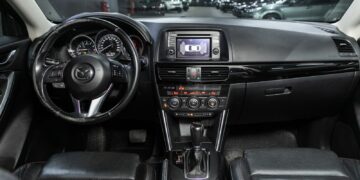
Tesla says FSD (Supervised) can control many of the tasks normally performed by a driver. Depending on the vehicle, hardware and software version, it can follow a navigation route, steer, change lanes, negotiate intersections, make left and right turns, navigate roundabouts and enter or exit highways. Tesla also bundles related capabilities such as Autopark and, on compatible vehicles, Actually Smart Summon.
What it cannot currently do in a privately owned Canadian Tesla is relieve the person behind the wheel of responsibility. Tesla repeatedly describes the product as requiring “active driver supervision” and warns that it does not make a vehicle autonomous. The company also identifies FSD (Supervised) as an SAE Level 2 advanced driver-assistance system in regulatory materials. That distinction matters because Level 2 technology can simultaneously handle steering and speed, creating an experience that may feel highly automated, while the human is still expected to continuously monitor the road and intervene immediately. Tesla’s own owner documentation warns that intervention may be required around construction, complicated intersections, poor visibility, narrow roads and other challenging conditions.
Ontario Still Treats the Human as the Driver
Ontario’s rules draw a clear line between driver assistance and true automated driving. The province describes Level 1 and Level 2 systems as advanced driver-assistance technologies and says motorists using them must remain in control of their vehicles. Normal traffic laws continue to apply, and the person driving remains responsible for incidents or collisions rather than transferring that responsibility to the software.
That is different from Ontario’s Automated Vehicle Pilot Program, which deals with higher levels of automation and has been extended until October 13, 2027. Driverless testing of Level 4 and Level 5 vehicles requires specific provincial approval and comes with additional conditions involving oversight, liability, operating areas and interaction with emergency responders. Transport Canada similarly tells consumers that fully self-driving vehicles are not commercially available to ordinary Canadian buyers and distinguishes them from currently available driver-assistance systems. For someone trying FSD after encountering a Supercharger demonstration, the practical rule is therefore straightforward: the car may perform much of the physical driving, but the licensed motorist remains legally and operationally responsible for what happens.
Tesla’s Safety Numbers Are Impressive — but They Need Context
Tesla has made safety a central part of its FSD pitch. Its current Vehicle Safety Report says vehicles using FSD (Supervised) experience roughly seven times fewer major collisions and seven times fewer minor collisions than its estimated U.S. average, along with five times fewer off-highway collisions. Tesla’s public counter had recorded more than 15 billion miles of FSD use by late October 2026, giving the company a very large real-world dataset compared with most automated-driving research programs.
The methodology, however, matters. Tesla classifies a collision as involving FSD if the feature was active at any point during the five seconds before the event, which helps prevent a last-second disengagement from automatically moving a crash into the “manual” category. Tesla compares FSD performance with manually driven Teslas and constructs broader U.S. comparisons using federal crash and mileage data. The company itself acknowledges that differences in reporting systems and assumptions can affect those comparisons. Separately, traffic-safety researchers interviewed by Reuters this month questioned whether other Tesla evidence submitted to European regulators was sufficient to establish the broader safety conclusions the company was drawing from it. That does not disprove Tesla’s North American telemetry, but it reinforces why company-generated safety figures should be presented as Tesla’s findings rather than as an independently settled verdict.
U.S. Regulators Are Still Investigating Important Failure Modes
The debate is not purely academic. The U.S. National Highway Traffic Safety Administration has multiple active investigations involving FSD. One probe, opened in October 2025, covers an estimated 2.88 million Tesla vehicles and examines reports of traffic-law violations while FSD was operating, including vehicles allegedly proceeding through red lights and entering lanes carrying traffic in the opposite direction. NHTSA emphasized that the investigation is evaluating the scope and potential safety consequences; opening a probe does not itself establish that a defect exists.
A separate investigation became more serious in March 2026 when NHTSA upgraded its review of roughly 3.2 million FSD-equipped Teslas to an engineering analysis. That examination focuses on situations where glare, fog, dust or similar conditions reduce camera visibility. Regulators identified nine potentially relevant incidents in their review, including a fatal crash and crashes involving injuries, and said some vehicles received little warning before impact that camera performance had degraded. The U.S. investigations do not constitute findings against FSD use in Canada, but they are directly relevant to the broader safety discussion surrounding a system that relies heavily on cameras and continuous human supervision.
The Hard Part May Be Keeping a Human Engaged
One of the central challenges with partially automated driving is psychological rather than mechanical. A system can become capable enough that the driver begins trusting it, yet still require the person to immediately recognize the rare moment when intervention is necessary. Research conducted by the University of Windsor helps illustrate that problem. In a study involving 30 Ontario drivers, researchers found that participants using partial automation spent less time looking toward the forward roadway and more time looking at the vehicle’s touchscreen than when driving manually.
Other research has produced similar warnings. A 2025 Insurance Institute for Highway Safety and MIT AgeLab study followed 14 people using Tesla Autopilot for a month. As participants became familiar with the system’s attention reminders, they learned how to respond to warnings more efficiently, but they also increasingly performed non-driving activities and looked away from the roadway. A 2026 follow-up analyzing Tesla Autopilot alerts concluded that the warnings did not eliminate unwanted driver behaviour. FSD has evolved considerably from the older Autopilot versions used in these studies, so the findings are not a direct performance test of today’s FSD. They do demonstrate why supervision remains one of the most difficult human-factors problems surrounding Level 2 automation.
The Demonstrations Could Help Tesla — and Educate Drivers About the Limits
Giving people controlled opportunities to experience FSD could actually address part of that problem if the demonstrations emphasize both capability and responsibility. Tesla’s Canadian self-serve demo program already provides FSD on its demo vehicles. Participants must be at least 21 with a valid licence for self-serve drives, and Tesla provides instructions for engaging and disengaging the system. The company repeatedly tells participants that FSD requires active supervision and that the vehicle is not autonomous.
Moving the experience toward Superchargers gives Tesla an unusually relevant audience. Some visitors will already own compatible vehicles and can decide whether a monthly subscription is worthwhile; others may simply be curious about how modern driver assistance performs in real traffic. For Tesla, every successful demonstration can turn an abstract software feature into something a customer has personally experienced. For Ontario drivers, however, the most important demonstration may be of the system’s boundaries as much as its abilities. FSD can now perform driving tasks that would have seemed extraordinary only a few years ago, but neither Tesla nor Canadian transportation authorities say the driver can stop paying attention. As the demonstrations expand, that distinction will be just as important as the technology being showcased.