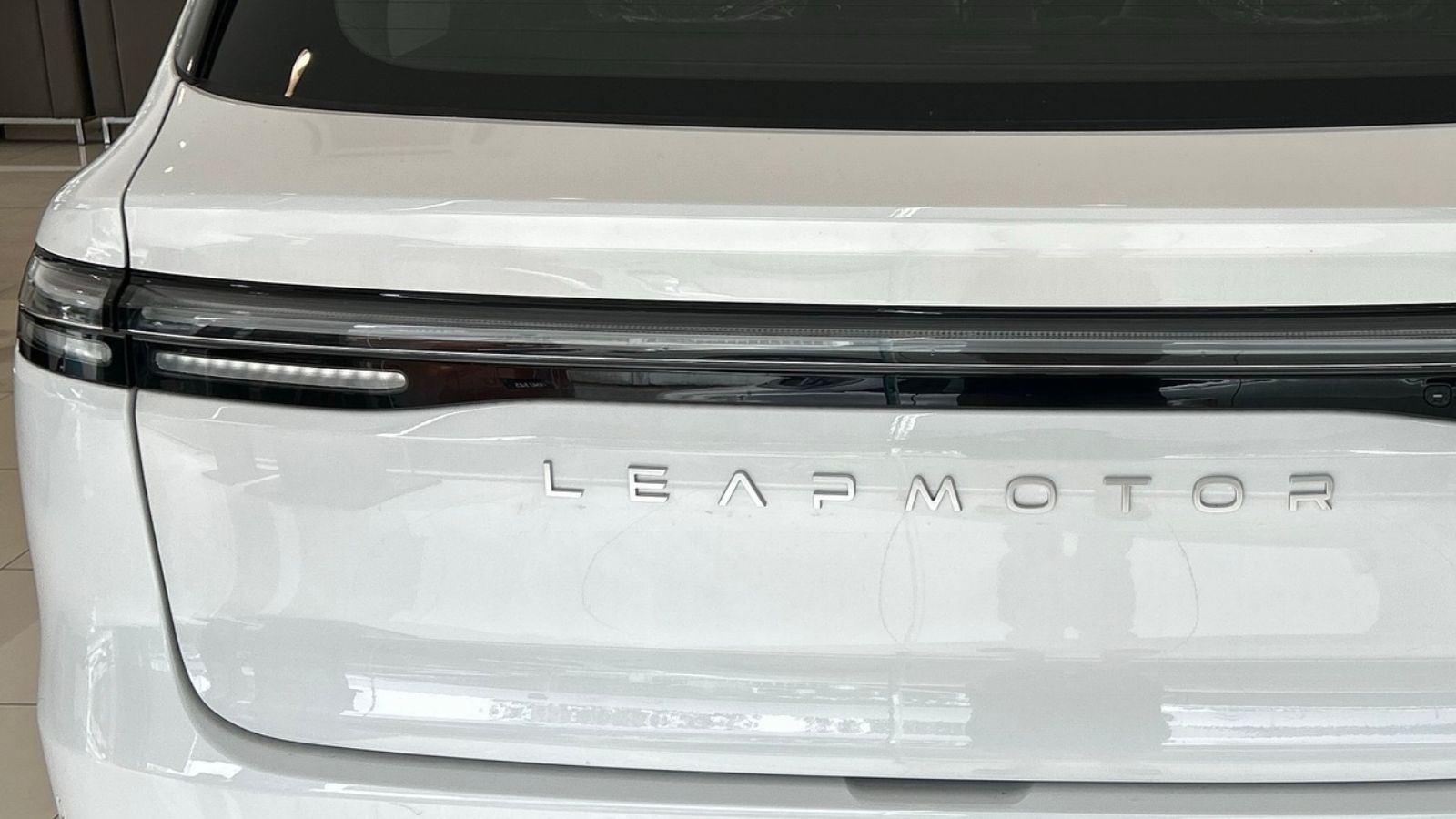
The race to make electric vehicles genuinely affordable has pushed another SUV below a significant psychological barrier. Stellantis-backed Leapmotor has priced its new B03X from AU$29,990 drive-away in Australia, positioning the compact electric crossover below every other battery-electric SUV currently offered there.
The headline price comes with an important qualification: it is a promotional Australian offer, not a Canadian or U.S. price, and applies under specified conditions through December 31, 2026. Still, the B03X illustrates how quickly the lower end of the EV market is changing. Buyers are getting more range, faster charging and increasingly sophisticated cabin technology at prices that recently belonged mainly to gasoline-powered small cars and SUVs—and Leapmotor has the global reach of Stellantis helping it compete.
The $29,990 Price Resets the Bottom of the Electric-SUV Market
Leapmotor says the B03X Style will arrive in Australian dealerships in November with a regular manufacturer’s suggested retail price of AU$26,990 before on-road costs. More attention will inevitably go to the introductory AU$29,990 drive-away offer, which includes registration, compulsory third-party insurance, stamp duty and dealer delivery. The higher Design LR version is being offered at AU$33,990 drive-away, giving buyers two relatively inexpensive points of entry into the electric-SUV market.
There are conditions behind the number. The offer applies to new B03X models finished in standard Acorn Brown that are purchased and delivered between October 1 and December 31, 2026, or while stocks last. Other paint colours cost an additional AU$990, and government, fleet and rental buyers are excluded. Those details prevent the $29,990 figure from being treated as an indefinite nationwide sticker price. Even with the caveat, however, independent Australian automotive publications confirm that the B03X takes the title of the country’s least expensive new battery-electric SUV at launch.
The Cheapest Version Still Has 292 Kilometres of Rated Range
The entry-level B03X Style uses a 39.8-kWh lithium-iron-phosphate battery and a front-mounted electric motor producing 130 kW and 200 Nm of torque. Leapmotor quotes up to 292 kilometres of driving range using the WLTP test cycle. It is not designed to compete with expensive long-range EVs capable of travelling 500 kilometres or more between charges. Instead, its numbers position it as an urban and suburban vehicle that could cover several days of ordinary commuting for many owners before needing to be plugged in.
Range figures require context. WLTP is a standardized laboratory procedure intended to make vehicles easier to compare, while actual distance varies with temperature, speed, terrain, climate-control use and driving style. A 292-kilometre rating therefore should not be read as a guarantee that every trip will deliver exactly that distance. The more meaningful achievement is the combination of a sub-AU$30,000 drive-away price and a battery large enough to make the vehicle more than a short-distance neighbourhood runabout.
Another $4,000 Buys Considerably More Range
Leapmotor has given the more expensive Design LR a straightforward selling point. At AU$33,990 drive-away, it carries a 53-kWh LFP battery and increases claimed WLTP range to 382 kilometres—90 kilometres more than the Style. Its electric motor is also stronger at 145 kW, although Leapmotor quotes the same 8.6-second 0-to-100-km/h acceleration time and 160-km/h top speed for both versions. The price difference between the promotional drive-away figures is AU$4,000.
The additional money also buys more equipment. Design LR models receive 18-inch alloy wheels, heated front seats, a heated steering wheel, a 12-speaker audio system, front parking sensors and a 360-degree camera with an integrated dashcam function. For someone regularly travelling outside a city, the larger battery may be more consequential than the luxury features. An extra 90 kilometres of laboratory-rated range provides a larger buffer between charging stops. That does not automatically make the Design LR the better purchase, but the relatively modest price step gives buyers a genuine range-versus-cost decision rather than forcing a jump into a substantially more expensive vehicle.
Charging Speeds Are Competitive for an Entry-Level EV
Both versions include an 11-kW onboard AC charger, meaning owners with suitable home or public AC equipment can charge considerably faster than from a basic household outlet. The Style accepts DC fast charging at up to 100 kW, while the larger-battery Design LR raises the peak to 133 kW. Leapmotor claims either battery can move from 30 to 80 per cent charge in approximately 16 minutes under optimal conditions. Actual charging times can vary significantly according to battery temperature, charger output and environmental conditions.
That 16-minute claim is important in the affordable EV segment because low purchase prices have sometimes been paired with relatively modest charging capability. The B03X also provides vehicle-to-load functionality rated at up to 3.3 kW, allowing its battery to power compatible external equipment. A camping trip, for example, could involve running small appliances without a separate generator. None of those features eliminates the need for reliable charging infrastructure, but they make the B03X less dependent on the assumption that an inexpensive electric vehicle must also accept major compromises in everyday usability.
It Is Small Outside but Designed to Use Its Space Aggressively
The B03X measures 4,270 millimetres long and 1,810 millimetres wide, with a 2,605-millimetre wheelbase. That makes it compact enough for crowded urban streets and parking spaces, but Leapmotor has clearly tried to prevent the interior from feeling equally small. The company claims as much as 1,315 litres of cargo capacity with the seating configured appropriately, along with 33 separate storage areas throughout the cabin. Roof rails and a dedicated rear storage compartment called the Leap Box add further utility.
Its flexible seating is another part of the pitch. The rear seats use a 60:40 split and the so-called Leap Flex arrangement is intended to make it easier to alternate between passengers and cargo. Independent reviewers who drove overseas-specification vehicles before the Australian pricing announcement also highlighted rear-seat room and cabin space as strengths. For a household considering the B03X as a second vehicle, that practicality could matter more than outright acceleration. The vehicle is inexpensive by EV standards, but Leapmotor is trying to package it as a genuine small SUV rather than merely a tall city car with an electric drivetrain.
The Equipment List Is Surprisingly Long for the Price
Every Australian B03X includes a 14.6-inch central touchscreen and an 8.8-inch digital instrument display. Wireless Apple CarPlay and Android Auto, satellite navigation, wireless phone charging and over-the-air software updates are standard. The infotainment system uses a Qualcomm Snapdragon 8155 processor, while Leapmotor’s connected services allow functions such as checking vehicle status and managing charging through a smartphone. That is a substantial technology package for a model carrying a promotional drive-away price below AU$30,000.
Driver-assistance equipment is similarly extensive on paper. Leapmotor lists seven airbags and 21 assistance functions, including adaptive cruise control, lane centring, autonomous emergency braking, blind-spot detection, cross-traffic alerts and driver-attention monitoring. The company labels the suite LEAP Pilot Level 2, which still requires the driver to remain responsible for the vehicle. One distinction is particularly important: as of the Australian pricing announcement, the B03X had not received an independent ANCAP safety rating. Its long list of safety equipment therefore should not be presented as equivalent to a completed five-star crash-test assessment.
Leapmotor Is Putting a Long Warranty Behind an Unfamiliar Badge
Price is only one concern when buyers encounter a relatively unfamiliar vehicle brand. Leapmotor Australia is supporting the B03X with a six-year or 150,000-kilometre vehicle warranty and an eight-year or 160,000-kilometre high-voltage battery warranty, whichever relevant limit arrives first. The company is also advertising eight years of roadside assistance and eight years of capped-price servicing. Scheduled maintenance intervals are listed at 12 months or 20,000 kilometres.
Those commitments matter because low purchase prices can lose their appeal if servicing, parts or warranty support become difficult later. Leapmotor is still a young name compared with Toyota, Hyundai or Ford, so buyers do not have decades of local resale and reliability history to consult. Warranty length cannot answer those questions in advance, but it provides some protection during the early ownership years. Stellantis’s involvement also distinguishes Leapmotor from a small independent importer attempting to establish its own infrastructure from scratch. The challenge will be proving that the ownership experience, parts availability and dealer support can keep pace as the number of Leapmotor vehicles on the road grows.
Stellantis Is Much More Than a Name Attached to the Project
Calling Leapmotor “Stellantis-backed” is accurate, but the relationship deserves explanation. Stellantis invested about €1.5 billion in the Chinese automaker beginning in 2023 and is now its largest shareholder with an approximately 21 per cent stake. The companies also created Leapmotor International, a separate joint venture owned 51 per cent by Stellantis and 49 per cent by Leapmotor. That business controls Leapmotor vehicle sales and manufacturing outside Greater China.
The arrangement gives the Chinese company something new automotive brands often lack: access to an established international automaker’s distribution, logistics, service and manufacturing expertise. Stellantis said in May 2026 that Leapmotor International had already expanded across Europe, South America, Asia-Pacific, the Middle East and Africa, while entering Mexico in April. The partners are also exploring deeper manufacturing and purchasing cooperation in Europe. The B03X therefore is not simply another inexpensive Chinese EV being exported independently. It is part of a broader strategy in which Leapmotor provides cost-focused EV engineering while Stellantis supplies much of the global commercial machinery needed to sell it.
BYD and Other Chinese Brands Now Have Another Price Problem
The B03X arrives in an Australian market where EV prices are already being pushed downward. The BYD Atto 2, previously described as the country’s least expensive electric SUV, starts at AU$31,990 before on-road costs. Leapmotor’s B03X Style has a lower AU$26,990 MSRP before on-road costs and, during its introductory campaign, a AU$29,990 drive-away price. The Chery E5 sits higher again, with recent pricing around AU$37,990 drive-away.
Leapmotor does not have the cheapest electric vehicle of every body style. BYD is currently advertising its Dolphin Essential hatchback at a promotional AU$28,888 drive-away, slightly below the B03X. The important distinction is that the Dolphin is a hatchback while the Leapmotor is marketed as a small SUV, one of the most popular vehicle formats in Australia. The competitive pressure is becoming difficult for established manufacturers to ignore. Instead of debating whether an affordable EV can cost less than AU$40,000, Chinese brands are increasingly competing over how far below that threshold they can go while retaining useful range, equipment and warranties.
Australian EV Demand Is Rising at the Same Time Prices Are Falling
The timing of Leapmotor’s announcement is notable because Australia’s EV market is expanding rapidly. The Australian Automotive Dealer Association reported 108,778 total new-vehicle sales for September 2026 when the major industry datasets were combined. Battery-electric vehicles outsold both petrol and diesel vehicles for the second consecutive month, while BEVs accounted for 19 per cent of year-to-date new-vehicle sales. Industry analysis put September’s BEV share alone at approximately 24.2 per cent, more than double its share during September 2025.
SUVs are particularly important to that shift. The AADA says SUVs represented roughly 65 per cent of Australia’s new-vehicle market through September. That helps explain why manufacturers are fighting so aggressively over affordable electric crossovers rather than concentrating only on traditional compact cars. A sub-AU$30,000 SUV arrives where consumer demand and manufacturer competition are intersecting. Whether the B03X itself becomes a high-volume seller remains unknown, but its pricing forces rivals to defend vehicles that looked unusually inexpensive only months earlier. That is exactly how a price war begins to affect mainstream consumers rather than remaining an industry talking point.
Leapmotor Is No Longer Operating at Start-Up Volumes
Leapmotor’s rapid growth makes the aggressive pricing easier to take seriously. The company reported 105,656 global vehicle deliveries in September 2026, 59 per cent more than a year earlier and its third consecutive month above 100,000 units. Third-quarter deliveries reached a record 310,052 vehicles, up more than 78 per cent year over year. Those figures include Leapmotor’s broader new-energy vehicle business and should not be confused with B03X sales alone.
International distribution is expanding alongside production. By September, Leapmotor said it had surpassed 1,000 sales and service locations across Europe. That scale matters in the automotive business because development costs, parts purchasing, software and manufacturing investments can be distributed across more vehicles. Stellantis and Leapmotor have also publicly discussed using joint purchasing to improve EV affordability. None of that guarantees that today’s exceptionally low pricing will produce strong profits or long-term market leadership. It does show that Leapmotor is attempting to combine start-up-style pricing aggression with increasingly large manufacturing volumes and the international infrastructure of one of the world’s major automotive groups.
Low Price Does Not Automatically Mean the B03X Has No Compromises
Early road tests provide useful balance to the specifications. CarExpert described the B03X as spacious, quiet and comfortable, praising its cabin packaging and overall value. At the same time, its reviewer criticized the intrusive speed-warning system, limited steering feedback and reliance on the touchscreen for basic functions. Auto Express reached a more mixed conclusion, highlighting impressive interior space while criticizing infotainment responsiveness and aspects of the driver-assistance and driving experience.
Those observations come from pre-launch or international-specification vehicles and should not be treated as a definitive verdict on every Australian B03X delivered in November. They do illustrate why an unusually low price is only the beginning of a vehicle comparison. Ride quality, software usability, actual highway efficiency, insurance costs, resale value and long-term reliability will become clearer after owners accumulate kilometres. Independent safety testing is another outstanding question. The B03X offers a remarkable amount of equipment for its price on paper, but the strongest case for it will ultimately depend on whether those specifications translate into a polished and dependable ownership experience.
Canadian Buyers Should Not Read $29,990 as a Canadian Price
For Canadians, the most important qualification is geographic. The AU$29,990 B03X announcement applies to Australia, and no equivalent Canadian retail price or confirmed B03X launch was included in the announcement. Stellantis and Leapmotor have been moving closer to North America: Leapmotor International entered Mexico in April 2026, and Reuters reported earlier this year that the companies were in preliminary discussions about potentially producing Leapmotor electric vehicles at Stellantis’s plant in Brampton, Ontario.
Those discussions were described as early-stage, with no final manufacturing decision announced in the report. They also did not establish that the B03X specifically would be sold or built in Canada. That distinction matters because Australia’s pricing cannot simply be converted into Canadian dollars and treated as an expected showroom price. Taxes, tariffs, transportation, regulatory requirements, equipment and local market strategy could all change the calculation. What the B03X does provide Canadian observers is a useful preview of the global pressure developing at the inexpensive end of the EV market—and of what a Stellantis-Leapmotor partnership may eventually be capable of bringing to additional markets.