

























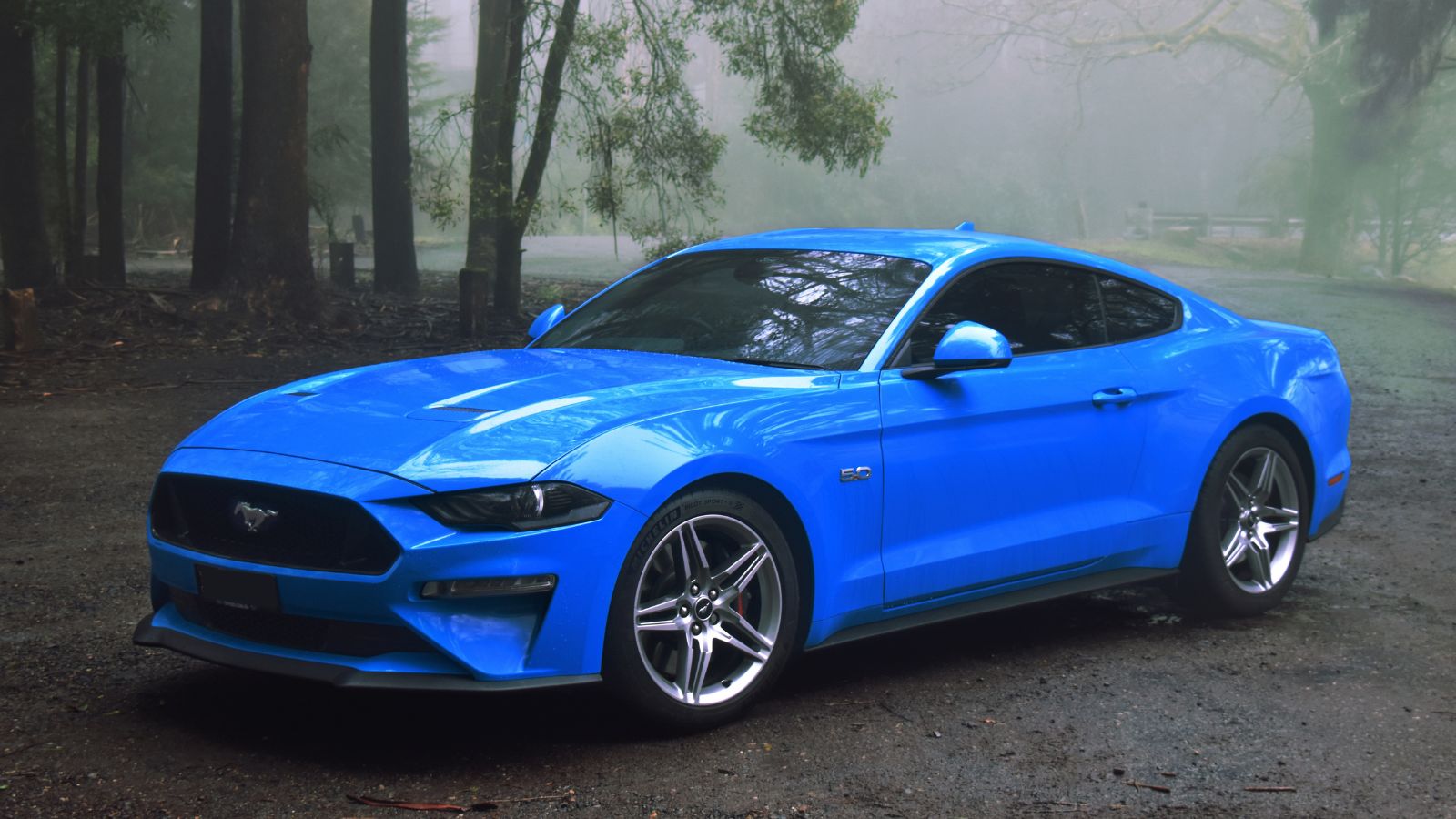
Ford has taken one of its most extreme modern Mustangs and removed the roof without taking away the power. The new Mustang Dark Horse SC convertible produces 795 horsepower and 660 lb-ft of torque from a supercharged 5.2-litre V8, making it the most powerful open-air Mustang Ford has ever built.
The debut also ends a long absence for a truly high-performance Mustang convertible. Rather than turning the Dark Horse SC coupe into an identical roofless track machine, Ford has given the convertible a more road-focused personality, pairing enormous power with specially calibrated suspension and grand-touring ambitions. Orders are scheduled to open in fall 2026, with vehicles expected to reach dealerships beginning in spring 2027.
The Convertible Keeps the Full 795 Horsepower
The headline figure is significant because Ford did not reduce the engine output for the convertible. Its supercharged 5.2-litre cross-plane-crank V8 produces the same 795 horsepower and 660 lb-ft of torque as the Dark Horse SC coupe. Those ratings are achieved on premium fuel, and Ford lists peak power at 7,200 rpm and peak torque at 4,600 rpm. Power goes to the rear wheels through a seven-speed Tremec dual-clutch transmission.
That puts the new convertible in territory that would have been associated with exotic cars not long ago. For perspective, the regular 2026 Mustang Dark Horse uses a naturally aspirated 5.0-litre V8 producing 500 horsepower. Even the Mustang GT, with its available active-valve performance exhaust, reaches 486 horsepower. The Dark Horse SC therefore adds more than 300 horsepower over a conventional GT, fundamentally changing what a factory Mustang convertible can represent.
Ford Has Surpassed Its Previous Supercharged Drop-Top
High-performance Mustang convertibles are not new, but the Dark Horse SC moves the formula considerably further. Ford describes the new model as its first new high-performance Mustang convertible in more than a decade. The 2014 Shelby GT500 convertible, one of the last obvious predecessors, produced 662 horsepower and 631 lb-ft from a supercharged 5.8-litre V8. At the time, those numbers were extraordinary for a four-seat, rear-wheel-drive convertible.
The new car produces 133 more horsepower than that GT500 while using a smaller-displacement 5.2-litre engine. The differences extend well beyond engine output. The older GT500 used a six-speed manual gearbox and belonged to a generation of Mustang with a solid rear axle. The Dark Horse SC arrives with a rapid-shifting dual-clutch transmission, modern independent rear suspension and electronically controlled dampers. It illustrates how dramatically Ford’s definition of a top-level open-air Mustang has changed in roughly a dozen years.
Ford Started With a Convertible Chassis, Not a Cut-Down Coupe
Turning a car with nearly 800 horsepower into a convertible involves more than replacing a fixed roof with fabric. Ford based the Dark Horse SC convertible on the existing Mustang GT convertible architecture, which was already designed around the structural demands of an open-top body. Engineers then incorporated performance hardware appropriate for the far more powerful SC, including a lightweight magnesium tower-to-tower brace in the engine compartment.
That approach matters because convertibles traditionally face challenges with body rigidity after losing the structural contribution of a fixed roof. Ford says the underlying Mustang GT convertible structure was sufficiently rigid for the new car’s intended role without requiring the sort of extensive additional reinforcement that might have been necessary for a dedicated track-focused convertible. The result is deliberately different from simply recreating every characteristic of the Dark Horse SC coupe. The goal was an exceptionally fast open-air road car rather than a roofless lap-time special.
MagneRide Is Tuned for the Road Instead of Lap Records
The Dark Horse SC name might suggest that every version is intended primarily for racetrack use, but Ford has drawn a clear distinction between the coupe and convertible. The open-top model receives a specially calibrated version of the next-generation MagneRide damping system. Ford says the suspension is designed to deliver a smoother cruising experience while maintaining a planted response when the driver accelerates or tackles a bend.
That decision gives the convertible a more recognizable grand-touring mission. The coupe was developed with greater emphasis on lap times, while chief engineer Arie Groeneveld described the convertible’s objective as creating an ultimate top-down grand-touring machine. That is an important distinction with 795 horsepower available. Instead of making the suspension relentlessly aggressive to chase incremental track performance, Ford has attempted to preserve the ability to cover long distances comfortably. A scenic highway or weekend road trip is therefore as central to the car’s purpose as outright acceleration.
The Coupe’s Hardest-Core Track Package Is Left Behind
One of the clearest indications of Ford’s strategy is what buyers cannot order. The Dark Horse SC coupe is available with a Track Pack that moves it considerably closer to Ford’s racing-derived machinery. In Canada, Ford lists that package with 20-inch carbon-fibre wheels, Michelin Pilot Sport Cup 2 R tires, Brembo carbon-ceramic brakes and a specialized MagneRide calibration. Ford says the coupe’s aerodynamic package can generate 620 pounds of downforce at 180 mph in Track Pack specification.
The convertible does not receive that package. Reports from the vehicle’s launch confirm that the carbon-fibre wheels and GTD-derived carbon-ceramic braking setup are not being offered on the open-top model. That may sound like a limitation on a car wearing a serious performance badge, but it reinforces its intended role. Ford is effectively separating two customers: those chasing maximum circuit capability have the coupe, while buyers prioritizing immense power and open-air road driving have the convertible.
Aerodynamics Had to Change With the Roof
Although much of the Dark Horse SC’s aggressive appearance carries into the convertible, Ford could not simply transfer every aerodynamic component unchanged. Removing the fixed roof changes airflow and alters the packaging around the rear deck, so engineers made targeted revisions. The convertible receives changes around the trailing edge of the hood scoop as well as a revised rear-wing arrangement designed to work with the different decklid.
The overall visual identity remains unmistakably Dark Horse SC. The car retains its heavily vented front end, enlarged openings, muscular fenders, prominent side treatments and substantial rear wing. Ford has also introduced Precision Purple Metallic for the convertible, giving the launch car a particularly distinctive appearance. The paint can shift visually as lighting changes, while the cabin can be configured with Black Onyx or Space Gray interior treatments. With the roof lowered, those interior colours become a much more visible part of the car’s exterior personality than they would in the coupe.
Open-Air Sound Is Part of the Engineering Brief
The roof itself is central to Ford’s pitch. Operation requires a handle and the touch of a button, opening the cabin directly to the sound produced by the supercharged V8. That matters in a vehicle whose character depends as much on mechanical drama as its performance statistics. With no fixed roof isolating occupants, the engine, active exhaust and supercharger become a more prominent part of the driving experience.
Ford’s own engineering team has also emphasized balancing performance with comfort inside the car. Dark Horse SC seating is designed to provide substantial lateral support during hard cornering while remaining suitable for longer journeys. Engineers considered factors ranging from bolstering to headroom for drivers wearing helmets. For the convertible specifically, Black Onyx and Space Gray interiors have been confirmed. The combination reflects Ford’s broader strategy for this version: retain enough genuine performance engineering to justify the SC badge, but make the car approachable enough for extended road use rather than treating every outing like a qualifying lap.
A Seven-Speed Dual-Clutch Replaces the Old Manual Formula
Drivers hoping that an extreme Mustang convertible automatically means a manual transmission will find a major departure from past models. The Dark Horse SC uses a seven-speed Tremec dual-clutch transmission rather than a traditional three-pedal gearbox. The same transmission architecture is employed in the coupe, with power sent rearward through a lightweight carbon-fibre driveshaft. Ford also uses a 3.73 Torsen differential in the Dark Horse SC specification.
The contrast with the 2014 Shelby GT500 is striking. That 662-horsepower convertible used a Tremec six-speed manual transmission, putting considerably more responsibility for managing its supercharged V8 directly in the driver’s hands. The modern SC prioritizes extremely quick gear changes and the ability to keep its engine delivering power with minimal interruption. Purists may still prefer the engagement of the older manual arrangement, but almost 800 horsepower makes the dual-clutch setup understandable. Ford is positioning this Mustang closer to contemporary high-performance machinery than to a nostalgic recreation of an earlier muscle car.
Canadian Buyers Will Have to Wait for the Final Price
The most important unanswered question for Canadian customers is cost. Ford has confirmed that Dark Horse SC convertible orders will open in fall 2026, with vehicles beginning to arrive at dealerships in spring 2027. Canadian automotive coverage is reporting that same order-and-delivery schedule. However, Ford has not yet announced final pricing for the convertible, meaning any Canadian dollar figure circulating before the official release should be treated as an estimate rather than confirmed MSRP.
The existing Dark Horse SC coupe provides some indication of how seriously Ford now positions the badge. It sits far above the conventional Mustang range and incorporates technology developed through Ford Racing programs, including components and engineering lessons connected to the Mustang GTD and GT3 projects. The convertible will sacrifice some of the coupe’s most expensive track equipment, but that does not necessarily mean it will be inexpensive. Canadian customers considering an order this fall will need to watch for final pricing, equipment packages and Canada-specific configuration details.
Ford Is Pushing Mustang Into a More Expensive Performance Class
Ford is not presenting the Dark Horse SC convertible merely as another muscle-car derivative. During the vehicle’s introduction, company representatives pointed toward cars such as the Porsche 911 Cabriolet, Mercedes-AMG SL and Chevrolet Corvette Z06 when discussing the competitive landscape. Those vehicles approach the open-air performance experience differently, but the comparison demonstrates the territory Ford wants the new Mustang to occupy.
That is a notable evolution for a nameplate historically built around making V8 performance relatively attainable. A 795-horsepower Mustang convertible is now being positioned against premium sports cars based not only on straight-line output but also suspension technology, braking, chassis engineering and overall experience. Whether buyers accept that move will depend heavily on the still-unannounced price. What Ford has already established, however, is the performance benchmark: no previous factory Mustang convertible has combined this much power with an open roof. When Canadian ordering begins this fall, that distinction will be one of the car’s strongest selling points.