
























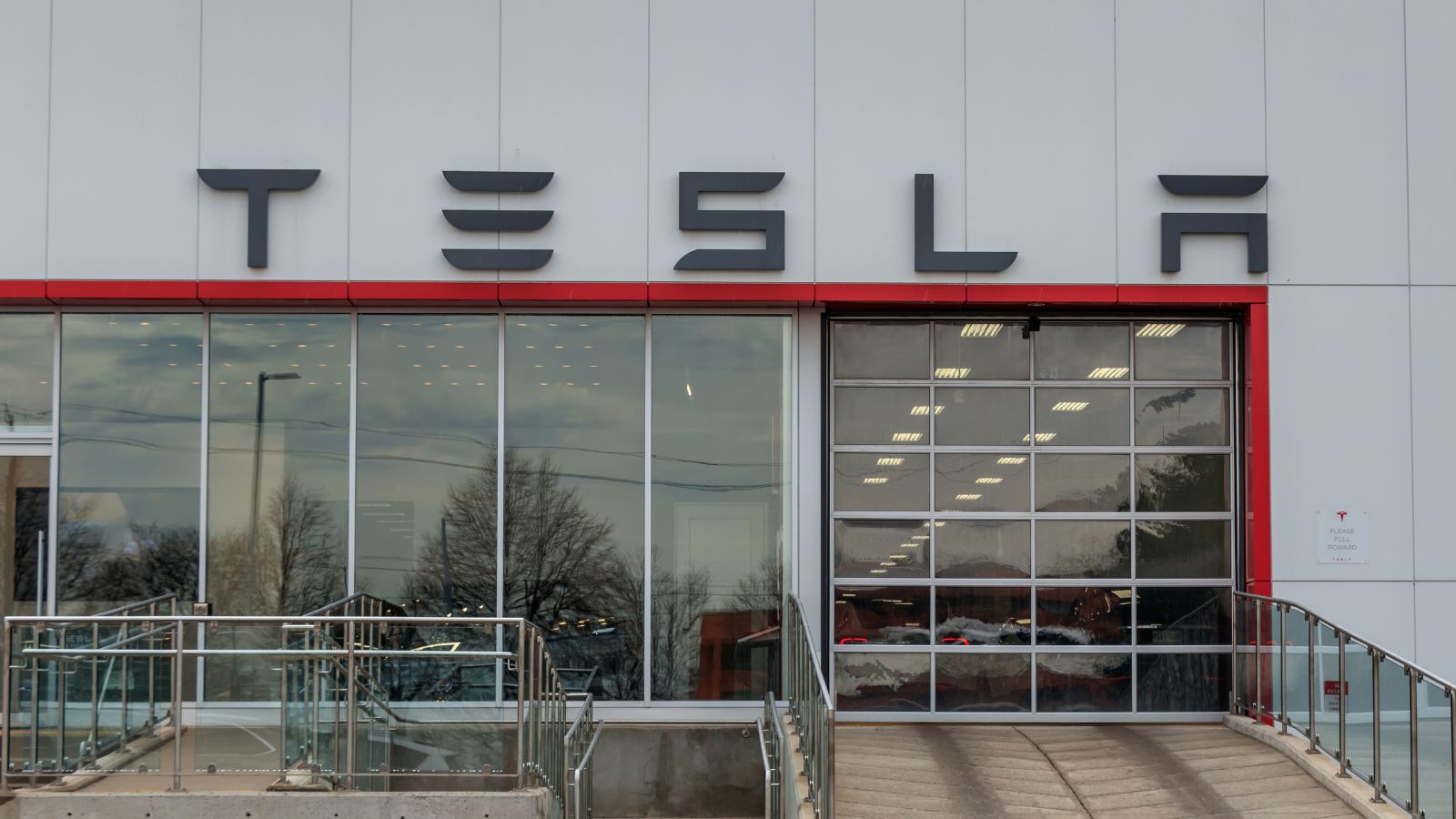
Elon Musk’s latest praise for China arrives at an unusually important moment for the global auto industry. In an interview with Chinese state broadcaster CCTV, the Tesla chief described President Xi Jinping as a “great leader” and called Tesla’s Shanghai factory a “gem,” emphasizing the strength of its workforce and manufacturing operation. The comments come as Tesla depends heavily on China both as a market and a production base, while facing increasingly capable Chinese competitors.
For Canada, the timing is notable for another reason. Ottawa has removed the 100% surtax that had effectively shut the door on most China-made EV imports and replaced it with a controlled quota system. That does not amount to unrestricted access, but it has reopened a supply route that includes vehicles produced at Tesla’s own Shanghai plant.
Musk’s Praise of Xi Was unusually Direct
Musk made the remarks during an interview with CCTV reported by Reuters on September 23. He called Xi a “great leader” and said, in his assessment, China had experienced substantial prosperity during Xi’s tenure. Musk pointed to infrastructure, new construction and what he described as improvements visible in everyday life. Those comments represent Musk’s own characterization of China’s development rather than an independent assessment of Xi’s record.
The timing gave the interview an additional diplomatic dimension. Reuters reported that Musk was expected to be among American executives attending a White House state dinner for Xi, who was scheduled to meet President Donald Trump in their second summit of 2026. That puts Musk in an unusual position: he leads one of America’s most prominent technology companies while running a manufacturing operation in China that remains central to Tesla’s global vehicle business. His comments therefore carry significance beyond the usual corporate praise offered to an important overseas market.
Shanghai Has Become One of Tesla’s Most Important Industrial Assets
Musk’s description of the Shanghai operation as a “gem” reflects the factory’s scale. Tesla’s latest reported manufacturing data puts Shanghai’s installed annual Model 3 and Model Y capacity above 950,000 vehicles, higher than the listed capacity of any of the company’s other individual vehicle plants. The facility is also Tesla’s major export centre, serving customers across Europe, the Asia-Pacific region and Canada.
The importance of China extends well beyond assembly lines. Tesla reported $20.962 billion in 2025 revenue from sales located in China, compared with $20.944 billion a year earlier. Tesla has said international manufacturing reduces transportation costs, limits exposure to some tariffs and helps make vehicles more affordable in local markets. Reuters has also reported that the Shanghai operation draws more than 95% of components for its China-made vehicles locally from a network exceeding 400 suppliers. That combination of scale and localization helps explain why Musk continues to speak so positively about the plant.
Calling Shanghai a ‘Gem’ Does Not Mean Tesla Has an Easy Ride in China
Shanghai may be extraordinarily productive, but Tesla is operating in one of the world’s toughest EV markets. China-made Model 3 and Model Y sales, including exports, reached 86,166 vehicles in August, up 3.6% from a year earlier. That marked a tenth consecutive month of year-over-year growth, although the increase slowed sharply from July’s 38% gain and August volumes were down 7.9% from July.
Competition inside China is particularly intense. Reuters reported that Tesla’s share of the country’s battery-electric vehicle market was 6.6% in the second quarter of 2026, down from a peak above 15% in 2020. Domestic companies are introducing lower-priced vehicles, advanced driver-assistance features and new models at a rapid pace. BYD, Geely, Xiaomi, Xpeng and others have turned China into both a giant EV market and a development laboratory. Shanghai therefore matters to Tesla not merely because it is efficient, but because the factory sits inside the competitive ecosystem challenging Tesla most aggressively.
Canada Has Replaced a 100% Surtax With a 49,000-Vehicle Quota
Canada’s policy toward China-built EVs changed fundamentally on March 1, 2026. Ottawa repealed the 100% surtax imposed on Chinese-origin electric vehicles and established an initial annual quota allowing 49,000 vehicles to enter at Canada’s 6.1% most-favoured-nation tariff rate. The federal government says that initial volume represents less than 3% of Canada’s new-vehicle market.
The quota is designed to expand gradually rather than immediately opening the market without limits. Government documents state that the 49,000-unit amount will grow by 6.5% annually. A growing share will also be reserved for lower-priced vehicles: the portion with a free-on-board value of C$35,000 or less rises from 10% in the second quota year to 50% by the fifth. That structure means Canada has moved away from a near-prohibitive tariff wall, but it has retained substantial control over how quickly China-origin EV imports can expand.
The Door Is Open, but Importers Still Face Tight Rules
Canada’s second quota period began September 1 and runs through February 28, 2027. Global Affairs Canada has made 24,500 vehicles available during that period, plus whatever went unused during the first six months. Access remains first-come, first-served. Every covered shipment requires an import permit, and vehicles covered by the rules cannot simply enter Canada without one.
The program is also already producing measurable trade flows. Global Affairs Canada’s utilization report, updated September 18, showed 15,763 vehicles used against the 49,000-unit first-year quota, leaving 33,237 available. Of that total, 15,603 vehicles entered during the March-through-August period and another 160 had been recorded during September. The government data identify tariff classifications and vehicle values rather than manufacturers, so those figures should not be treated as a brand-by-brand sales table. Still, they show that reopening the China supply channel is no longer theoretical; thousands of vehicles have already moved through it.
Tesla Was Positioned to Take Advantage Before Many Chinese Brands
One of the more unusual consequences of Canada’s policy is that an American company can benefit substantially from expanded access for China-made vehicles. Reuters reported in January that Tesla was positioned to be an early beneficiary because its Shanghai plant had already been prepared to produce vehicles for Canada. Tesla had previously supplied Canada from China before the 100% surtax disrupted that route in 2024.
That manufacturing flexibility now matters again. Reuters reported in September that Shanghai-produced Model 3 and Model Y vehicles are being exported to Canada alongside other international markets. Tesla also begins with advantages that a new market entrant would have to build: an established Canadian brand, stores, service infrastructure and vehicles already familiar to buyers. The Canadian quota applies according to where a vehicle originates, rather than the nationality of the corporation selling it. A Tesla substantially manufactured in Shanghai therefore falls under the same China-origin import framework governing competing EVs produced there.
The EV Concession Was Part of a Much Larger Canada-China Trade Deal
Ottawa did not change its EV policy in isolation. The quota emerged from a broader Canada-China arrangement designed to ease several trade disputes at once. In exchange for expanded access for China-origin EVs and other Canadian measures, China lowered its combined tariff on Canadian canola seed from 84.8% to 14.9% and suspended additional tariffs affecting products including canola meal, lobster, crab and peas through the end of 2026.
Federal briefing documents put the scale of those agricultural interests into perspective. Ottawa described the canola-seed market involved as approximately C$4 billion annually and other affected agricultural and seafood exports as roughly C$2.6 billion. Canada also reported renewed access for products including beef and animal genetics. Those figures explain why the EV decision reaches well beyond car dealerships. The policy is part of a trade bargain connecting Canadian farmers and seafood exporters with an auto market increasingly shaped by Chinese manufacturing scale and technology.
Lower Import Tariffs Do Not Automatically Mean a Federal EV Rebate
There is an important distinction between allowing a vehicle into Canada and subsidizing its purchase. Canada’s Electric Vehicle Affordability Program provides incentives of up to C$5,000 for qualifying battery-electric and fuel-cell vehicles in 2026, but the federal rules generally require eligible imported vehicles to be made in countries that have free-trade agreements with Canada. Canadian-made vehicles receive separate treatment under the program.
As a result, quota access and consumer-incentive eligibility operate as separate policy levers. A qualifying China-origin EV can enter under the 6.1% quota regime without automatically becoming eligible for the federal purchase incentive. That matters when comparing advertised prices because a vehicle carrying a lower sticker price can still face a different effective cost after incentives are considered. Ottawa’s longer-term quota design does place growing emphasis on vehicles valued at C$35,000 or less at the import stage, but that threshold is an import valuation measure and should not be confused with the final retail price paid by a Canadian customer.
Canada and the United States Are Now Taking Different Paths on China-Made EVs
Canada’s controlled reopening stands in contrast to the barriers facing Chinese vehicle makers in the United States. Existing U.S. Section 301 tariffs on Chinese products range as high as 100%, with the electric-vehicle tariff having been raised to 100% in 2024. The U.S. Commerce Department has also adopted connected-vehicle restrictions covering certain Chinese-linked software and manufacturers beginning with model-year 2027 vehicles, with additional hardware restrictions taking effect later.
Those restrictions remain politically relevant. Days before Xi’s September visit, Reuters reported that six auto-industry groups representing major manufacturers urged the Trump administration to maintain strong barriers against Chinese automakers. Canada has chosen a different mechanism: restricted volumes, import permits and a 6.1% tariff rather than a blanket reopening. That distinction could become increasingly important to automakers deciding which plants supply which North American customers, although future investment and sourcing decisions will depend on company strategy as well as changing trade rules.
Canada Is Becoming a Real-World Test of China’s Global EV Expansion
For Canadian consumers and automakers, the most important numbers over the coming months will be practical ones: how quickly the remaining quota is used, which manufacturers actually import vehicles, how those vehicles are priced, and whether Chinese companies make the Canadian investments Ottawa has said it wants to encourage. The first-year quota remains limited relative to the overall Canadian vehicle market, and permits remain a meaningful constraint rather than a formality.
For Tesla, the experiment is particularly interesting because Shanghai connects both sides of the story. Musk is publicly praising the Chinese leadership and the plant that became Tesla’s biggest manufacturing hub just as Canada is making China-origin vehicles commercially viable again. At the same time, that same Chinese industrial ecosystem is producing some of Tesla’s strongest competitors. Canada’s new rules therefore do more than open space for Chinese brands: they expose Canadian buyers more directly to an increasingly global competition between Tesla, China’s domestic EV champions and established automakers trying to keep pace.