



















• About
  • Contact
AutoIgloo
  • News & Trends
    Got a Car in Ontario? These 16 Insurance Changes Could Blindside Drivers

    Alberta Projects $300 Auto Insurance Savings for Most Drivers — but 310,000 Face Higher Bills

    Trump’s 50% Canada Tariffs Face New U.S. Lawsuit Over Trade Rules That Include American-Made Cars

    Major Automakers Push Washington to Ban Chinese Cars Permanently as Canada Opens Its EV Market

    Trump’s 50% Tariff Expansion Takes Effect, Adding Canadian Auto-Related Products to the List

    Auto Giants Back Trump’s Lower Fuel-Economy Rules in New Court Fight — With Vehicle Costs at Stake

    Nissan Looks to Build More Hybrid Hardware in U.S. as Tariffs Reshape North American Auto Production

    Nissan Unveils Twin-Turbo Frontier Pickup With a Four-Inch Lift as Truck Competition Intensifies

    Tesla Drops Its Factory Wrap Program After Never Bringing the Service to Canada

    Tesla Reports More Than 27 Billion Kilometres Driven Using Full Self-Driving as Scrutiny Continues

    Trump Pushes New Canada Auto Duties to Aug. 22 as Three-Day Tariff Pause Takes Effect

    Canadian Factory Orders Hit Lowest Level in Over a Year as Trump Tariffs Push Manufacturing Into Contraction

  • Car Reviews
    Mitsubishi Outlander Review: Is It Still the Underrated Family SUV?

    Mitsubishi Outlander Review: Is It Still the Underrated Family SUV?

    19 Cars With Windshields That Crack Constantly on Canadian Highways

    Subaru Forester vs Toyota RAV4: Which SUV Is Better for Canadian Winters?

    20 Cars Canadians Should Avoid If They Hate Expensive Windshield Replacements

    Hyundai Tucson vs Kia Sportage: Which Compact SUV Is the Better Everyday Buy?

    BYD, CATL and Xiaomi Are in the Mix for Xi’s Washington Trip as Canada and U.S. Split on Chinese EV Access

    Toyota RAV4 Plug-In Hybrid vs Regular Hybrid: Which One Should Canadians Buy?

    17 Vehicles That Are Quietly Getting Crushed by Insurance Costs in Canada

    Honda CR-V Hybrid Review: The Family SUV That Plays It Safe

    2026 Toyota RAV4 vs Honda CR-V: Which SUV Makes More Sense for Canadians?

    2026 Toyota RAV4 vs Honda CR-V: Which SUV Makes More Sense for Canadians?

  • Buying Guides
    Mitsubishi Outlander Review: Is It Still the Underrated Family SUV?

    Mitsubishi Outlander Review: Is It Still the Underrated Family SUV?

    16 Used SUVs That Suddenly Don’t Look Like Smart Buys in Canada

    Nissan Rogue vs Honda CR-V: Which SUV Feels Better After the Test Drive?

    19 Cars With Windshields That Crack Constantly on Canadian Highways

    Subaru Forester vs Toyota RAV4: Which SUV Is Better for Canadian Winters?

    Mazda CX-5 vs Mazda CX-50: Which One Feels More Premium for the Money?

    Mazda CX-5 vs Mazda CX-50: Which One Feels More Premium for the Money?

    17 Vehicles That Are Quietly Getting Crushed by Insurance Costs in Canada

    Honda CR-V Hybrid Review: The Family SUV That Plays It Safe

    18 Cars With Parts Prices So Wild They’re Becoming Hard to Own in Canada

    Is the New Toyota RAV4 Still the Safest Bet in Canada?

  • Comparisons
    19 Cars With Windshields That Crack Constantly on Canadian Highways

    Subaru Forester vs Toyota RAV4: Which SUV Is Better for Canadian Winters?

    21 Vehicles With the Best Real-World Fuel Economy in Canada (Not Just the Sticker)

    Toyota Corolla Cross vs Honda HR-V: Which Small SUV Is Less Compromised?

    20 Cars Canadians Should Avoid If They Hate Expensive Windshield Replacements

    Hyundai Tucson vs Kia Sportage: Which Compact SUV Is the Better Everyday Buy?

    BYD, CATL and Xiaomi Are in the Mix for Xi’s Washington Trip as Canada and U.S. Split on Chinese EV Access

    Toyota RAV4 Plug-In Hybrid vs Regular Hybrid: Which One Should Canadians Buy?

    Honda Asked Suppliers for 30% Parts Cost Cuts as $9.4-Billion Savings Drive Hits Global Supply Chain

    Why Some Buyers Are Choosing Older Hondas Over Newer SUVs

    25 EV Charging Mistakes Canadians Make in March (That Wreck Range)

    Why Some Canadians Are Choosing Hybrids Over Full EVs Again

  • EVs & Hybrids
    BYD, CATL and Xiaomi Are in the Mix for Xi’s Washington Trip as Canada and U.S. Split on Chinese EV Access

    Toyota RAV4 Plug-In Hybrid vs Regular Hybrid: Which One Should Canadians Buy?

    Geely Auto’s Core Profit Jumps 46% as Chinese EV Expansion Accelerates — With Canada Now Opening to Geely-Owned Lotus

    Geely Confirms Canadian Vehicle Sales for 2027 as Chinese Automakers Challenge Established Brands

    18 Cars That Will Feel Dated Fast as New Chinese EVs Arrive

    12 EVs Now Price Below $41,000 in Canada—Fiat 500e Falls Under $30,000 With Rebate

    The Used EV Question Canadians Should Ask Before Buying One

    The Used EV Question Canadians Should Ask Before Buying One

    Why Some EV Owners Are Getting Sticker Shock From Home Charging Setups

    Why Some EV Owners Are Getting Sticker Shock From Home Charging Setups

    20 Signs Your Car Battery Is About to Leave You Stranded

    Canadian Auto Jobs Become a Central Fault Line as Ottawa Reveals Why It Rejected U.S. Vehicle Terms

  • More
    • Pricing & Deals
    • Winter Driving
    • Ownership & Maintenance
No Result
View All Result
AutoIgloo
No Result
View All Result

Home » News & Trends

Major Automakers Push Washington to Ban Chinese Cars Permanently as Canada Opens Its EV Market

Nate Brewer by Nate Brewer
November 3, 2026
Reading Time: 7 mins read
A A
Photo Credit: Shutterstock

Photo Credit: Shutterstock

465
SHARES
1.5k
VIEWS
Share on FacebookShare on Twitter

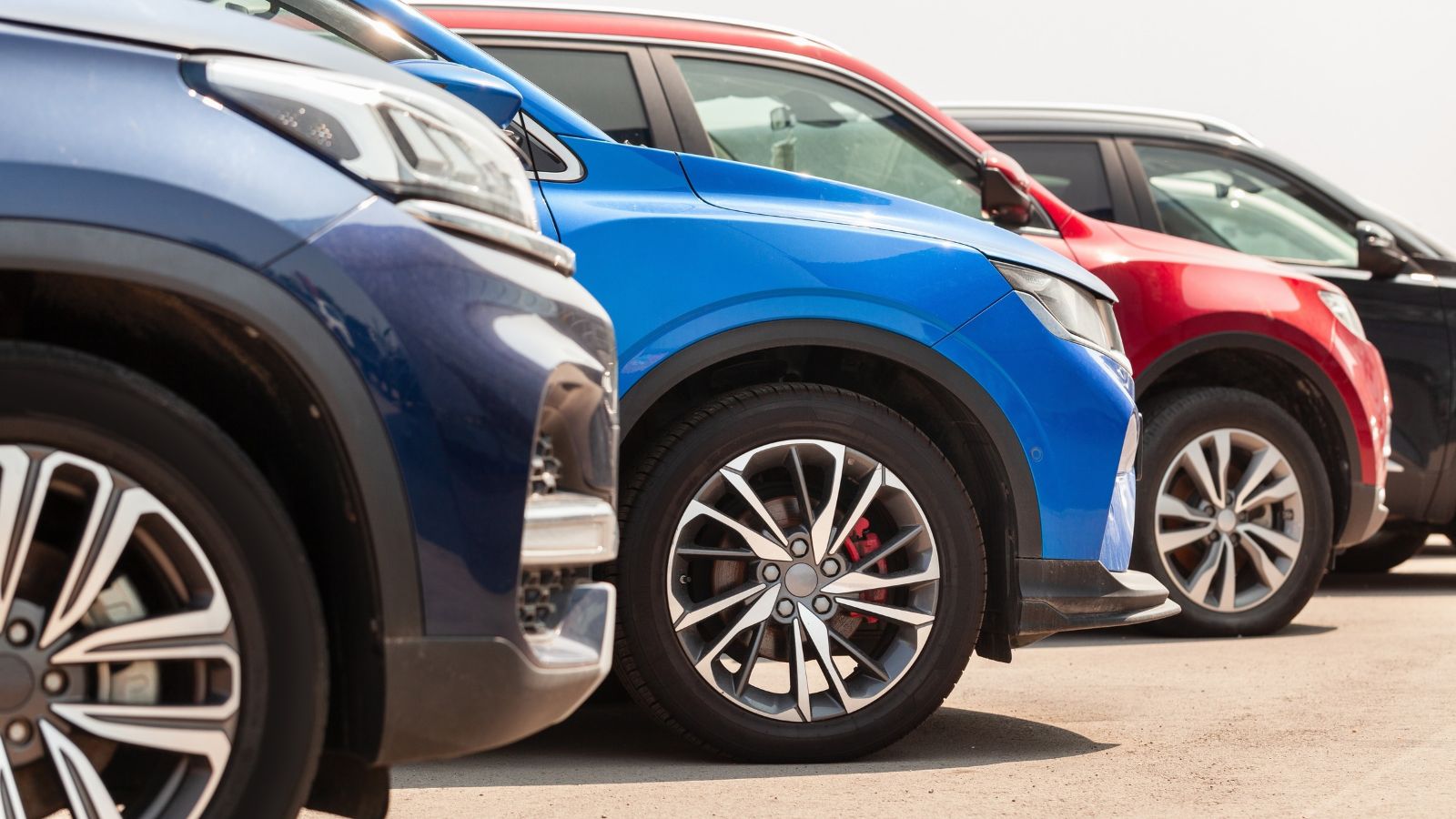
Two neighbouring auto markets are drawing sharply different lines around Chinese electric vehicles. In Washington, major carmakers want Congress to turn existing restrictions into a lasting ban, arguing that connected-car technology and state-backed competition pose risks to American drivers and factories.

In Ottawa, Prime Minister Mark Carney’s government has moved in the opposite direction, permitting a capped number of Chinese-built EVs to enter Canada at a much lower tariff than before. The contrast is no longer theoretical: Canada’s quota began in March, while the U.S. industry renewed its call for legislation on November 2. With midterm elections in the United States and North American trade rules under review, a decision about which cars can be sold could ripple across assembly plants, dealerships and household budgets.

Automakers Unite Behind a Permanent Chinese Vehicle Ban

Automakers that usually compete for customers are speaking with a shared voice on Chinese vehicles. On November 2, the Alliance for Automotive Innovation urged U.S. lawmakers to approve a permanent ban when Congress reconvenes after the midterm elections. Its membership includes General Motors, Ford, Toyota, Honda, Volkswagen, Hyundai and Stellantis, making this a coordinated industry position rather than a complaint from one domestic brand.

Alliance chief John Bozzella warned that Chinese imports could expose Americans to surveillance and undermine manufacturers that have invested heavily in U.S. communities. The requested legislation would reach beyond finished cars to connected-vehicle software and hardware, potentially shaping who can build vehicles in the country at all. For a worker in a Michigan assembly plant or a supplier in Ohio, the argument centres on whether long-term factory investments can withstand a new wave of competitors. For shoppers, the same restriction could narrow the brands available in showrooms.

Congress Faces a Narrow Window to Make the Ban Permanent

Congress has an unusually tight timetable. In July, the Senate Commerce Committee advanced the bipartisan Connected Vehicle Security Act of 2026. By November, Reuters reported that the House counterpart had more than 100 co-sponsors. Those figures demonstrate political traction, but committee approval and sponsorship do not make a proposal law. Both chambers still need to complete the legislative process before a permanent statutory prohibition can take effect.

Supporters postponed a push for faster consideration in September, aiming to revisit the effort after the November elections. Automakers are pressing for action before the current congressional session ends in December, amid concern that a changed political balance could disrupt the timetable. The distinction matters because Washington already has executive-branch rules limiting Chinese connected vehicles; the industry wants Congress to make restrictions harder to reverse. Until lawmakers act, calling the proposed permanent ban an enacted prohibition would misstate where the debate stands.

Existing U.S. Restrictions Already Make Chinese Cars Difficult to Sell

Washington’s barrier to Chinese cars did not begin with this week’s lobbying. In January 2025, the U.S. Commerce Department finalized a rule targeting connected vehicles, software and communications hardware associated with China or Russia. The department said the technology could expose driver information or enable unauthorized access. The rule applies to specified components and covered manufacturers, rather than treating every vehicle assembled in China as automatically subject to the same ban.

Key provisions take effect in stages. Restrictions on covered software and sales by connected-vehicle manufacturers tied to China or Russia begin with model-year 2027 vehicles; prohibitions on specified connectivity hardware follow for model-year 2030. U.S. tariffs on Chinese electric vehicles also exceed 100%, adding another commercial obstacle. These are separate tools: tariffs raise the cost of imports, while technology rules can bar certain transactions. A congressional statute would reinforce the legal basis of the restrictions and potentially limit future administrations’ room to change course.

Trump’s Openness to Chinese Factories Complicates the Debate

President Donald Trump has not consistently described the same absolute barrier the industry wants. In a September 11 interview on Fox News, he said he would be comfortable with Chinese car companies opening American plants, provided they hire American workers. He drew a line at building vehicles in Mexico and sending them north. His comments created a notable difference between a president focused on domestic production and automakers seeking to prevent Chinese companies from gaining a U.S. foothold.

Just a week later, six automotive trade organizations wrote to the White House urging it to keep Chinese manufacturers out of U.S. sales, imports and production. Their coalition included groups representing automakers, suppliers and dealers. Supporters of a factory-based approach could argue that local assembly creates jobs; critics counter that Chinese brands might displace investment or market share held by existing manufacturers. The administration would also have to contend with Commerce Department restrictions covering certain companies even if their vehicles were assembled on American soil. That makes a presidential invitation different from a practical path to a U.S. showroom.

Canada Opens Its Market With a 49,000-Vehicle Import Quota

Canada, meanwhile, changed its policy through a January 16 arrangement reached during Mark Carney’s visit to Beijing. Ottawa agreed to admit up to 49,000 electric vehicles originating in China each year at a 6.1% most-favoured-nation tariff. The quota took effect March 1, replacing the 100% surtax that Canada had applied since October 2024. Federal officials estimate that the initial quota represents less than 3% of Canada’s new-vehicle market.

That limited access is a crucial distinction. Importers require shipment-specific permits, and the quota is administered on a first-come, first-served basis. The September-to-February portion of the first quota year was set at 24,500 vehicles plus unused earlier capacity. The rules concern vehicles manufactured in China, not simply Chinese-owned badges; the country of production matters. For Canadian buyers, the agreement may eventually expand showroom choices, but it does not mean unlimited imports or that every Chinese EV available abroad can immediately be sold and registered in Canada.

Cheaper Electric Vehicles Are Central to Ottawa’s Strategy

Affordability is a central justification for Canada’s opening. Ottawa’s arrangement calls for the annual Chinese-origin EV quota to grow by 6.5%, with an increasing share reserved for vehicles valued at C$35,000 or less at the free-on-board import stage. That cheaper-vehicle share begins at 10% in the second quota year and reaches 50% in the fifth. The government says the policy could give Canadian households access to more affordable electric transportation while encouraging investment in the domestic supply chain.

However, a C$35,000 import value is not the same as a C$35,000 sticker price. Shipping, duties, provincial taxes, dealer margins and equipment can affect what a family pays. Nor does a tariff concession eliminate safety requirements: imported vehicles must still satisfy Canadian standards and administrative rules. Shoppers may also weigh battery warranties, winter range, charging compatibility and parts availability. Lower barriers create the possibility of cheaper choices, but whether those choices materialize depends on which manufacturers enter and how effectively they support their cars.

Canadian Auto Workers Fear the Cost of More Competition

The most immediate Canadian concern is not what happens in a showroom but what happens on a factory floor. Unifor, which represents workers across the auto sector, condemned Ottawa’s January agreement. National president Lana Payne warned that subsidized Chinese competition could threaten Canadian assembly and parts jobs. The Canadian Vehicle Manufacturers’ Association and its U.S. counterpart, representing Ford, General Motors and Stellantis, likewise said the import quota could weaken the integrated North American supply chain.

Ottawa argues that managed imports may also attract Chinese investment, joint ventures and new EV-related employment in Canada. That is a stated objective, not a guaranteed outcome. Electric Mobility Canada welcomed the prospect of greater choice and investment, underscoring how differently stakeholders view the same policy. A parts worker in Windsor could reasonably worry about another source of imported vehicles, while a family comparing EV prices may welcome additional competition. The debate turns on whether Canada can capture enough manufacturing value to offset pressure on established plants.

North American Trade Negotiations Could Become Another Battleground

The divide could become even more consequential in talks over the Canada-United States-Mexico Agreement, known in Canada as CUSMA. The three countries held their first formal joint review in July 2026, but Washington declined to extend the agreement in its existing form. That did not cancel the deal: it remains in force while the partners continue reviewing it. Automotive rules of origin are among the matters under discussion, making decisions about Chinese investment and components especially sensitive.

Honda has urged the three governments to coordinate their response to Chinese automakers. In October, an American Honda executive argued that U.S. restrictions alone would be insufficient if Canada and Mexico took different approaches. Honda operates factories in both countries that feed American dealerships. Yet a Chinese-built EV admitted to Canada under Ottawa’s quota does not automatically qualify for tariff preferences or permission to enter the United States. The real issue is how investment, components and production rules will interact across a deeply connected industry.

China’s Rapid Global Expansion Is Raising the Stakes

The urgency in Washington is sharpened by how quickly China’s vehicles are spreading overseas. According to European vehicle-logistics data based on Eurostat, the European Union imported 1,105,239 passenger cars from China in the first eight months of 2026. That already exceeded the 1,011,563 imported during all of 2025. The figures cover multiple powertrains and vehicles built in China, not exclusively Chinese-branded electric cars, but they show the size of the export push that worries North American manufacturers.

The International Energy Agency found that Chinese automakers accounted for about 60% of worldwide electric-car sales in 2025. It also reported that China produced nearly three-quarters of the world’s electric cars that year, supported by extensive battery manufacturing and large-scale supply chains. Chinese firms are increasingly competing on technology, features and price, not merely on low manufacturing costs. For Western manufacturers, keeping rivals out may offer breathing room, but it does not remove the pressure to build more compelling, affordable vehicles themselves.

The Next Decisions Could Reshape the North American Auto Industry

Canada’s decision is part of a wider trade bargain, not simply an experiment in selling cheaper cars. In return for concessions that included the new EV quota, China reduced its combined tariff on Canadian canola seed to 14.9% from nearly 85%, effective March 1. It also suspended certain duties on Canadian canola meal, peas, lobster and crab through the end of 2026. Ottawa sees the arrangement as a way to diversify export markets while building closer ties in clean technology.

The next tests will be practical. U.S. lawmakers must decide whether to make connected-vehicle restrictions permanent. Canadian regulators and importers must translate tariff quotas into compliant vehicles that can actually be supported and sold. Governments will also have to judge whether promised industrial investment and cheaper options are materializing. For workers, the stakes include where future vehicles and batteries are built. For consumers, the question is whether protection, competition and security can be balanced without making the transition to electric driving more expensive.


Recommended.

Canadian Zach Robichon Wins WEC GT3 at Austin as Aston Martin Ends Two-Year Victory Drought

Canadian Zach Robichon Wins WEC GT3 at Austin as Aston Martin Ends Two-Year Victory Drought

September 7, 2026
16 Cars That Are a Nightmare to Repair Because Parts Are Backordered

Toyota Recalls 7,846 RAV4 Plug-in Hybrids in Canada Over Risk of Sudden Power Loss

October 8, 2026

Trending.

PBO Warns U.S. Tariff War Threatens Up to 185,000 Canadian Jobs, With Auto Manufacturing Among Hardest Hit

PBO Warns U.S. Tariff War Threatens Up to 185,000 Canadian Jobs, With Auto Manufacturing Among Hardest Hit

October 21, 2026
10 Reasons the Canadian Car Market Feels Different Heading Into Summer

Canadian Auto Sales Rise 3.4% for a Fourth Straight Month—but 2026 Still Trails Last Year

October 3, 2026
Canada’s Ballard Puts a 250,000-Mile Performance Guarantee Behind Hydrogen Buses

Canada’s Ballard Puts a 250,000-Mile Performance Guarantee Behind Hydrogen Buses

October 2, 2026
22 Ways Canadians Accidentally Void Their Vehicle Warranty

B.C. Drivers Vote Today on the Future of ICBC Insurance as Parties Clash Over Private Competition and No-Fault Coverage

October 24, 2026
15 Vehicles Canadians May Want to Avoid Before May Long Weekend

Tesla Buyers in Canada Are Reporting Fresh Model Y Delivery Delays as Some Orders Slip Into October and November 2.

September 27, 2026
  • About
  • Contact
  • Privacy Policy
  • Disclaimer
  • Editorial Policies
  • Terms and Conditions
A Revir Media Group Website

2026 Autoigloo - © All rights reserved

No Result
View All Result
  • News & Trends
  • Car Reviews
  • Buying Guides
  • Comparisons
  • EVs & Hybrids
  • More
    • Pricing & Deals
    • Winter Driving
    • Ownership & Maintenance

2026 Autoigloo - © All rights reserved

This website uses cookies. By continuing to use this website you are giving consent to cookies being used. Visit our Privacy and Cookie Policy.




