





















• About
  • Contact
AutoIgloo
  • News & Trends
    Canada-U.S. Auto Tariff Talks Go Down to the Wire With 50% Duties Three Days Away

    Magna, Linamar and Martinrea Shares Sink as Trump Threatens Canadian Auto Supply Chain

    15 “Tech Add-Ons” That Sound Cool but Can Void Coverage or Spike Your Premium

    New Home EV Charger Launches in Canada With 11.5-kW Charging Without Requiring a Bigger Electrical Panel

    Canadian Collision Repair Values Fall Again as 60,000-Order Study Shows Shop Efficiency Slipping

    Canadian Auto Dealers Warn Trump’s Tariff Threat Killed the Relief Industry Was Counting On

    BYD’s New Canadian Page Touts Five-Minute Charging That Still Works at -30°C

    BYD’s New Canadian Page Touts Five-Minute Charging That Still Works at -30°C

    BYD Quietly Adds Canada to Its Global Website With a ‘Coming Soon’ Page as U.S. Auto Fight Deepens

    BYD Quietly Adds Canada to Its Global Website With a ‘Coming Soon’ Page as U.S. Auto Fight Deepens

    19 Things That Can Make Your Car Insurance Claim Get Denied

    Canada Will Unveil New U.S. Retaliation Today as Auto Trade Fight Moves Into Its Next Phase

  • Car Reviews
    18 Things That Can Make a Car Unsafe for Winter Road Trips

    Why Some Drivers Are Avoiding Vehicles With Complex Infotainment Systems

    21 Cars Canadians Are Starting to Regret Buying

    Why Some Drivers Regret Buying Big Wheels and Low-Profile Tires

    17 Vehicles That Are Quietly Getting Crushed by Insurance Costs in Canada

    Why So Many Drivers Are Nervous About Chinese-Made EV Batteries

    20 Used SUVs Canadians Should Think Twice About Buying

    20 Used SUVs Canadians Should Think Twice About Buying

    15 Vehicles That Are Starting to Feel Like a Bad Deal Around May Long Weekend

    15 Vehicles That Are Starting to Feel Like a Bad Deal Around May Long Weekend

    15 Vehicles That Are Starting to Scare Off Canadian Buyers

    15 Vehicles That Are Starting to Scare Off Canadian Buyers

  • Buying Guides
    25 EV Charging Mistakes Canadians Make in March (That Wreck Range)

    Why Some Canadians Are Choosing Hybrids Over Full EVs Again

    22 Signs a Car Has Been in a Serious Crash Even if the Report Looks Clean

    21 Things That Make a Used Car Listing Seem Suspicious

    23 Features That Are Making New Cars Harder (and Pricier) to Repair in Canada

    Why Some Buyers Regret Choosing the Cheapest Trim Level

    18 Things That Can Make a Car Unsafe for Winter Road Trips

    Why Some Drivers Are Avoiding Vehicles With Complex Infotainment Systems

    22 Things Canadians Should Know Before Buying a Diesel Vehicle

    22 Things Canadians Should Know Before Buying a Diesel Vehicle

    15 Ways a Low Monthly Payment Can Fool Canadian Car Buyers

    The Car Buying Mistake That Gives Dealers More Control

  • Comparisons
    25 EV Charging Mistakes Canadians Make in March (That Wreck Range)

    Why Some Canadians Are Choosing Hybrids Over Full EVs Again

    21 Used Car Features That Can Become Expensive Problems Later

    Why Some Canadians Are Choosing Front-Wheel Drive Over All-Wheel Drive

    Canada’s Auto Fight Gets Uglier as BYD Threatens to Sue Trump Administration

    Tesla Vs. BYD: Are Chinese EV’s Actually Better for Canadians?

    17 Vehicles That Are Quietly Getting Crushed by Insurance Costs in Canada

    Why So Many Drivers Are Nervous About Chinese-Made EV Batteries

    20 Used SUVs Canadians Should Think Twice About Buying

    20 Used SUVs Canadians Should Think Twice About Buying

    16 Cars That Are a Nightmare to Repair Because Parts Are Backordered

    23 Cars Canadians Love That Have One Deal-Breaker Flaw

  • EVs & Hybrids
    20 Signs Your Car Battery Is About to Leave You Stranded

    Canadian Auto Jobs Become a Central Fault Line as Ottawa Reveals Why It Rejected U.S. Vehicle Terms

    25 EV Charging Mistakes Canadians Make in March (That Wreck Range)

    Why Some Canadians Are Choosing Hybrids Over Full EVs Again

    The EV Charging Habit That Can Annoy Everyone Around You

    Canada Is Missing an EV-Battery Export Opening as EU Lithium Demand Heads for a 9-to-12-Fold Jump: Report

    16 Used-EV Surprises Canadians Don’t See Coming Until After They Buy

    The EV Charging Habit That Can Annoy Everyone Around You

    17 SUVs That Are Losing Their Appeal Fast in Canada

    GM Canada Says EV Sales Jumped More Than 30% as CUSMA Uncertainty Hangs Over Showrooms

    9 Auto Brands Canadians Are Watching Much More Closely Right Now

    Toyota Canada Says Electrified Vehicles Are Now Nearly 70% of Its Q2 Sales

  • More
    • Pricing & Deals
    • Winter Driving
    • Ownership & Maintenance
No Result
View All Result
AutoIgloo
  • News & Trends
    Canada-U.S. Auto Tariff Talks Go Down to the Wire With 50% Duties Three Days Away

    Magna, Linamar and Martinrea Shares Sink as Trump Threatens Canadian Auto Supply Chain

    15 “Tech Add-Ons” That Sound Cool but Can Void Coverage or Spike Your Premium

    New Home EV Charger Launches in Canada With 11.5-kW Charging Without Requiring a Bigger Electrical Panel

    Canadian Collision Repair Values Fall Again as 60,000-Order Study Shows Shop Efficiency Slipping

    Canadian Auto Dealers Warn Trump’s Tariff Threat Killed the Relief Industry Was Counting On

    BYD’s New Canadian Page Touts Five-Minute Charging That Still Works at -30°C

    BYD’s New Canadian Page Touts Five-Minute Charging That Still Works at -30°C

    BYD Quietly Adds Canada to Its Global Website With a ‘Coming Soon’ Page as U.S. Auto Fight Deepens

    BYD Quietly Adds Canada to Its Global Website With a ‘Coming Soon’ Page as U.S. Auto Fight Deepens

    19 Things That Can Make Your Car Insurance Claim Get Denied

    Canada Will Unveil New U.S. Retaliation Today as Auto Trade Fight Moves Into Its Next Phase

  • Car Reviews
    18 Things That Can Make a Car Unsafe for Winter Road Trips

    Why Some Drivers Are Avoiding Vehicles With Complex Infotainment Systems

    21 Cars Canadians Are Starting to Regret Buying

    Why Some Drivers Regret Buying Big Wheels and Low-Profile Tires

    17 Vehicles That Are Quietly Getting Crushed by Insurance Costs in Canada

    Why So Many Drivers Are Nervous About Chinese-Made EV Batteries

    20 Used SUVs Canadians Should Think Twice About Buying

    20 Used SUVs Canadians Should Think Twice About Buying

    15 Vehicles That Are Starting to Feel Like a Bad Deal Around May Long Weekend

    15 Vehicles That Are Starting to Feel Like a Bad Deal Around May Long Weekend

    15 Vehicles That Are Starting to Scare Off Canadian Buyers

    15 Vehicles That Are Starting to Scare Off Canadian Buyers

  • Buying Guides
    25 EV Charging Mistakes Canadians Make in March (That Wreck Range)

    Why Some Canadians Are Choosing Hybrids Over Full EVs Again

    22 Signs a Car Has Been in a Serious Crash Even if the Report Looks Clean

    21 Things That Make a Used Car Listing Seem Suspicious

    23 Features That Are Making New Cars Harder (and Pricier) to Repair in Canada

    Why Some Buyers Regret Choosing the Cheapest Trim Level

    18 Things That Can Make a Car Unsafe for Winter Road Trips

    Why Some Drivers Are Avoiding Vehicles With Complex Infotainment Systems

    22 Things Canadians Should Know Before Buying a Diesel Vehicle

    22 Things Canadians Should Know Before Buying a Diesel Vehicle

    15 Ways a Low Monthly Payment Can Fool Canadian Car Buyers

    The Car Buying Mistake That Gives Dealers More Control

  • Comparisons
    25 EV Charging Mistakes Canadians Make in March (That Wreck Range)

    Why Some Canadians Are Choosing Hybrids Over Full EVs Again

    21 Used Car Features That Can Become Expensive Problems Later

    Why Some Canadians Are Choosing Front-Wheel Drive Over All-Wheel Drive

    Canada’s Auto Fight Gets Uglier as BYD Threatens to Sue Trump Administration

    Tesla Vs. BYD: Are Chinese EV’s Actually Better for Canadians?

    17 Vehicles That Are Quietly Getting Crushed by Insurance Costs in Canada

    Why So Many Drivers Are Nervous About Chinese-Made EV Batteries

    20 Used SUVs Canadians Should Think Twice About Buying

    20 Used SUVs Canadians Should Think Twice About Buying

    16 Cars That Are a Nightmare to Repair Because Parts Are Backordered

    23 Cars Canadians Love That Have One Deal-Breaker Flaw

  • EVs & Hybrids
    20 Signs Your Car Battery Is About to Leave You Stranded

    Canadian Auto Jobs Become a Central Fault Line as Ottawa Reveals Why It Rejected U.S. Vehicle Terms

    25 EV Charging Mistakes Canadians Make in March (That Wreck Range)

    Why Some Canadians Are Choosing Hybrids Over Full EVs Again

    The EV Charging Habit That Can Annoy Everyone Around You

    Canada Is Missing an EV-Battery Export Opening as EU Lithium Demand Heads for a 9-to-12-Fold Jump: Report

    16 Used-EV Surprises Canadians Don’t See Coming Until After They Buy

    The EV Charging Habit That Can Annoy Everyone Around You

    17 SUVs That Are Losing Their Appeal Fast in Canada

    GM Canada Says EV Sales Jumped More Than 30% as CUSMA Uncertainty Hangs Over Showrooms

    9 Auto Brands Canadians Are Watching Much More Closely Right Now

    Toyota Canada Says Electrified Vehicles Are Now Nearly 70% of Its Q2 Sales

  • More
    • Pricing & Deals
    • Winter Driving
    • Ownership & Maintenance
No Result
View All Result
AutoIgloo
No Result
View All Result

Home » News & Trends

Magna, Linamar and Martinrea Shares Sink as Trump Threatens Canadian Auto Supply Chain

Nate Brewer by Nate Brewer
August 25, 2026
Reading Time: 5 mins read
A A
Photo Credit: Shutterstock

Photo Credit: Shutterstock

465
SHARES
1.5k
VIEWS
Share on FacebookShare on Twitter

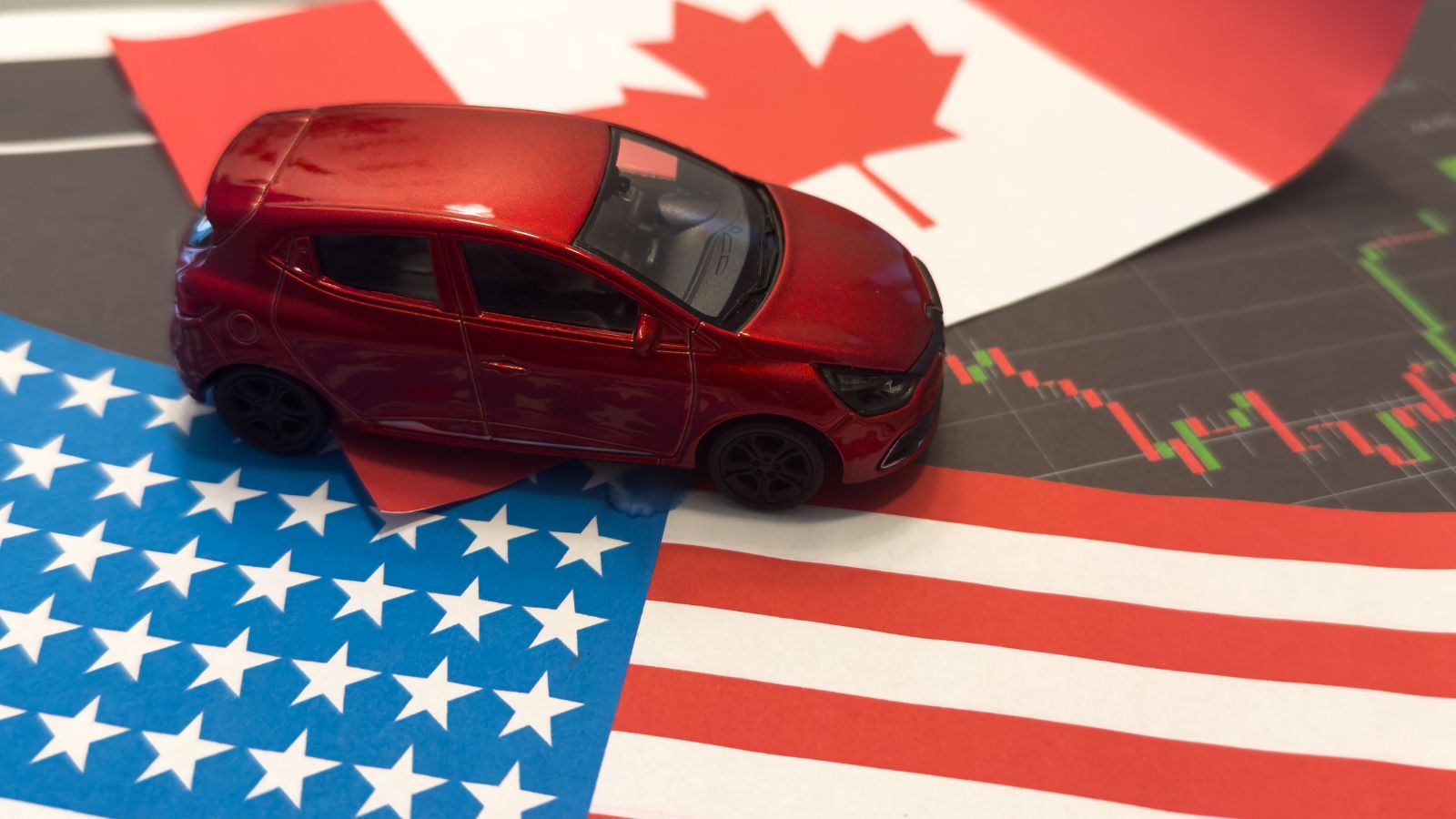
A fresh escalation in the Canada-U.S. trade fight has landed directly on some of the country’s best-known automotive suppliers. Shares of Magna International, Linamar and Martinrea International fell after U.S. President Donald Trump threatened to raise tariffs on Canadian-made cars, trucks and automotive parts to 50% beginning January 1, 2027. The market reaction reflects more than concern about another border tax. Canada’s automotive industry was built around production systems in which vehicles, components and raw materials move repeatedly between Canadian and American factories. A tariff broad enough to catch those flows could force manufacturers to revisit sourcing, pricing and future investment decisions. For suppliers, that uncertainty arrives even though their underlying businesses entered the dispute with billions of dollars in annual sales and, in several cases, improving cash generation.

Investors Are Pricing in a Much Bigger Auto Shock

The reaction in Canadian auto-parts stocks was sharp. Magna shares fell about 4%, Linamar dropped roughly 4.9% and Martinrea slid approximately 6.3% as investors digested Trump’s threat. The declines were significantly larger than the movement of the broader Canadian market, illustrating how directly the proposed policy touches companies embedded in North American vehicle manufacturing. The threatened measure would cover Canadian-made vehicles as well as parts beginning January 1, giving companies several months to prepare but little certainty about what the final rules might contain.

That distinction matters. The market is responding to a threatened future tariff, not to a 50% duty already being collected on every Canadian automotive shipment. Negotiations could restart, implementation details could change, or exemptions could emerge before January. Still, suppliers cannot simply dismiss the announcement. Programs for engines, structural components, castings and other parts are planned years ahead, while vehicle makers continually decide where future products will be assembled. Even temporary uncertainty can therefore affect capital allocation long before a tariff reaches the border.

Canada’s Auto Industry Functions Like a Cross-Border Factory

The scale of the exposure becomes clearer when trade flows are examined. Canada exported C$46.4 billion worth of automobiles and light trucks to the United States in 2024, representing more than 93% of the value of its global vehicle exports. Canadian auto-parts exports to the U.S. were worth another C$35.2 billion, nearly 89% of the country’s worldwide parts exports. These are not marginal markets that suppliers can easily replace with buyers elsewhere.

The integration also runs in both directions. Statistics Canada found that Canadian manufacturers shipped C$324 billion of goods to the United States in 2024 and that more than one-quarter of the value of those shipments reflected imported U.S. content. That helps explain why an auto tariff does not stop neatly at the border. A Canadian-made component can contain American material, return to a U.S. assembly plant and ultimately be installed in a vehicle sold on either side. Breaking that cycle can impose costs on Canadian suppliers while simultaneously making production more complicated for their American customers.

The Three Suppliers Have Very Different Financial Cushions

Magna is by far the largest of the three companies. It generated about US$42 billion in sales during 2025, with adjusted EBIT of roughly US$2.4 billion and free cash flow of US$1.9 billion. Its enormous global footprint provides diversification, but its size also means that changes affecting North American assembly programs can ripple through a large collection of stamping, seating, powertrain, body and electronics operations.

Linamar reported C$10.2 billion of 2025 sales and record normalized net earnings of C$622.1 million, while generating C$937.2 million of free cash flow. Its Mobility operations alone generated more than C$7.7 billion of annual sales. Martinrea is smaller, with 2025 sales of approximately C$4.82 billion, adjusted operating income of C$268.1 million and record free cash flow of C$199 million on the company’s stated measure. Those numbers show why all three can withstand ordinary automotive volatility. A lasting trade barrier, however, is different because it can change which factories are economically attractive rather than merely changing how many vehicles customers build.

A 50% Parts Tariff Would Change the Existing Equation

Canadian automotive manufacturers were already operating with tariffs before Trump’s latest threat, but the existing system contains important distinctions. Canadian CUSMA-compliant vehicles have faced a 25% U.S. tariff applied to their non-U.S. content. For qualifying Canadian auto parts, the U.S. government had not been collecting that same 25% charge while it developed a mechanism to isolate non-U.S. content. That treatment provided suppliers with an important degree of protection inside the integrated continental system.

The newly threatened 50% tariff is alarming partly because it raises uncertainty over whether those protections would survive. A straightforward 50% charge on parts would be dramatically different from taxing only specified non-U.S. content. Suppliers generally operate in a business where winning contracts depends on fractions of a dollar, production efficiency and long-term customer agreements. A border charge measured in tens of percentage points cannot simply be absorbed indefinitely. The decisive details will therefore include exactly which products are covered, how origin is calculated and whether American content continues receiving preferential treatment.

Earlier Tariff Defences May Not Be Enough

Canadian suppliers had spent much of 2025 and 2026 demonstrating that tariffs did not automatically translate into an equivalent hit to profits. Magna finished 2025 with adjusted EBIT higher despite softer overall sales and tariff headwinds. Linamar produced record normalized earnings despite a modest decline in company-wide sales. Martinrea increased its adjusted operating margin to 5.6% and generated record free cash flow on its disclosed measure. Those results reflected cost control, customer negotiations, operational improvements and diversified programs.

A new 50% threat changes the risk investors are evaluating. Cost-recovery agreements can help when an automaker accepts responsibility for a tariff, but they cannot guarantee that the underlying production program remains in Canada several years later. Vehicle manufacturers constantly allocate new models, refreshes and component sourcing among factories. If Canadian production becomes structurally more expensive than comparable U.S. production, the longer-term question moves from who reimburses this quarter’s tariff bill to where the next contract is awarded. That is a far more consequential issue for supplier valuations.

The Employment Stakes Extend Well Beyond Three Stocks

Canadian automotive exposure is unusually concentrated in employment as well as exports. Statistics Canada calculated that U.S. demand supported roughly 27,000 jobs in Canadian automobile and light-duty vehicle manufacturing in 2024. That represented 76.4% of payroll employment in the industry. Motor-vehicle-parts employment had already fallen 9.3% during 2025, underscoring that the supplier sector entered the latest confrontation after a period of adjustment rather than uninterrupted expansion.

The human impact is particularly visible in Ontario communities built around auto manufacturing. A change in assembly volumes affects far more than workers inside one vehicle plant. Tool-and-die shops, metal stampers, transportation companies, plastics firms, engineering contractors and restaurants around industrial districts all depend to varying degrees on production activity. Statistics Canada estimates U.S. demand supported about 694,000 Canadian manufacturing jobs overall in 2024. That is why investors are treating the automotive threat as more than a problem for three listed companies. It potentially reaches a much broader network of manufacturers whose businesses were designed around predictable access to the American market.

January 1 Is Now the Date the Industry Has to Watch

There is still a considerable gap between a presidential threat and a fully defined tariff regime. Trump has set January 1, 2027 as the prospective start date, while Canadian officials are simultaneously preparing retaliation after broader bilateral negotiations collapsed. Prime Minister Mark Carney has said Canada will match Washington’s latest tariffs dollar for dollar, with a new package of countermeasures scheduled to begin September 8. Trade Minister Dominic LeBlanc said further details could be announced as Ottawa determines how to protect exposed sectors.

That leaves auto suppliers in an uncomfortable position. They cannot plan on the assumption that the 50% measure will disappear, yet immediately relocating complex manufacturing operations would be costly and premature. Investors will consequently be watching for three things: the legal text behind any automotive tariff, the treatment of U.S. content inside Canadian components and evidence that Washington and Ottawa have reopened negotiations. Until those questions are answered, Magna, Linamar and Martinrea are likely to remain financial-market proxies for the health of the cross-border automotive system itself.


Recommended.

17 Dealer Add-Ons That Make Canadians Feel Played at Signing

Canadian Auto Sales Reach 173,000 in July as Dealer Lots Hold Roughly 169,000 Vehicles

August 20, 2026
27 Things Canadian Drivers Should Do Before Pothole Season Destroys Their Suspension

27 Things Canadian Drivers Should Do Before Pothole Season Destroys Their Suspension

March 18, 2026

Trending.

⁠$28 Billion in Canadian Goods Face 50% Trump Tariffs at Midnight as Deal Still Isn’t Final

Canada-U.S. Trade Deal Fell Apart After Washington Left Ontario-Built Ford and GM Trucks Out of Auto Tariff Relief

August 23, 2026
Quebec’s BRP Prepares 2027 Vehicle Reveal Tonight as Canadian Manufacturer Pushes New Can-Am Lineup

Quebec’s BRP Prepares 2027 Vehicle Reveal Tonight as Canadian Manufacturer Pushes New Can-Am Lineup

August 17, 2026
Mexico Pushes U.S. to Cut Auto Tariff From 25% to 5%–10% — and Give Canadian Parts More Room

Ottawa’s Chinese-EV Quota Opens Canada to 6.1% Tariffs Instead of the Former 100% Surtax

August 22, 2026
Doug Ford Says U.S. ‘Wasn’t Budging’ on 25% Auto Tariffs as Ontario Puts ‘Every Single Tool’ on the Table

Doug Ford Says U.S. ‘Wasn’t Budging’ on 25% Auto Tariffs as Ontario Puts ‘Every Single Tool’ on the Table

August 23, 2026
19 Things That Can Make Your Car Insurance Claim Get Denied

Foreign Insurer Can Apply to Enter Canada’s Auto-Insurance Market Starting Today

August 17, 2026
  • About
  • Contact
  • Privacy Policy
  • Disclaimer
  • Editorial Policies
  • Terms and Conditions
A Revir Media Group Website

2026 Autoigloo - © All rights reserved

No Result
View All Result
  • News & Trends
  • Car Reviews
  • Buying Guides
  • Comparisons
  • EVs & Hybrids
  • More
    • Pricing & Deals
    • Winter Driving
    • Ownership & Maintenance

2026 Autoigloo - © All rights reserved

This website uses cookies. By continuing to use this website you are giving consent to cookies being used. Visit our Privacy and Cookie Policy.

