





















Lucid’s reputation has been built around cutting-edge electric powertrains, long driving ranges and software-heavy luxury vehicles, but its latest safety campaign shows how that same electronic complexity can create unexpected risks. Lucid USA is recalling 27,185 Air sedans in the United States after determining that certain exterior-lighting circuits may not have sufficient overcurrent protection, allowing components to overheat.
The recall covers Air sedans from the 2022 through 2026 model years. Federal safety regulators have taken the unusual step of advising affected owners to park outside and away from structures until the remedy has been installed. Lucid says the defect can be corrected remotely with an over-the-air software update, meaning most owners will not need a traditional service-centre repair.
Why 27,185 Lucid Air Sedans Are Being Recalled
The recall reaches across virtually the entire lifespan of the Lucid Air in the U.S. market, covering certain vehicles from model years 2022 through 2026. The affected cars were manufactured between October 11, 2021, and July 27, 2026. According to the federal recall information, the problem involves low-voltage circuits associated with exterior lighting rather than the Air’s high-voltage propulsion battery. That distinction matters because early descriptions of an electric-vehicle fire recall can easily create the impression that the traction battery itself is at fault.
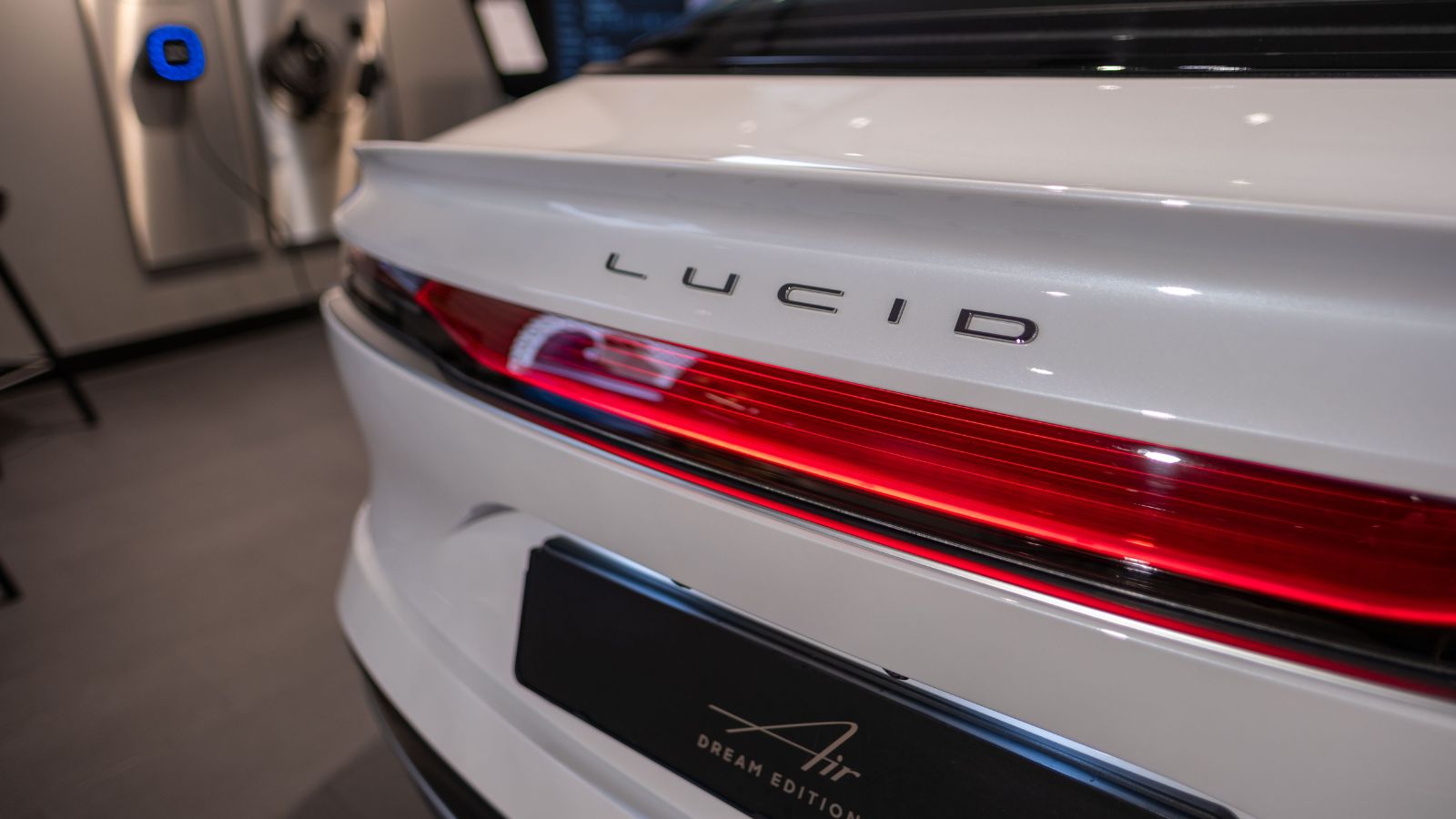
The National Highway Traffic Safety Administration says insufficient overcurrent protection can allow an exterior-lighting circuit to overheat. The result could be smoke or, in more serious circumstances, a fire. Lighting equipment could also stop functioning correctly. That creates a second safety concern: malfunctioning front lights or the centre high-mounted brake lamp could reduce visibility to other motorists, increasing the possibility of a crash even when no fire occurs.
The Problem Comes Down to Electronic Circuit Protection
Modern vehicles increasingly use electronic fuses, or eFuses, rather than relying exclusively on conventional sacrificial fuses. The basic principle is similar: when electrical current exceeds a safe level, protection systems are supposed to interrupt the circuit before wires or electronic components become dangerously hot. Lucid determined that its existing software strategy did not provide sufficient protection on certain exterior-lighting circuits under some fault conditions.
The issue was not simply that excessive current could occur. Lucid’s investigation determined that software could allow a faulted circuit to remain energized or retry under circumstances where shutting it down would provide greater protection. The revised software lowers the applicable eFuse amperage threshold and changes the retry behaviour of affected circuits. That is why Lucid can address the defect through code rather than replacing thousands of physical lighting assemblies, wiring harnesses or battery components.
Three Fires Helped Lead Investigators to the Defect
Lucid’s internal chronology shows that the problem emerged gradually rather than through one dramatic event. The company identified three fire incidents involving front-lighting areas over several years. One occurred in June 2023 involving a Lucid-owned 2023 Air. Investigators could not establish a definitive cause in that case, although a front lighting component could not be ruled out. Other incidents later gave Lucid more reason to examine whether electrical protection around exterior lighting needed greater scrutiny.
Investigators also identified four incidents between October 2025 and April 2026 in which customers reported smoke associated with overheating in the centre high-mounted stop-lamp circuit. Lucid found another 33 warranty reports involving damage to wiring associated with that lamp that could have been related to the same condition. By May 2026, the company’s Product Safety Working Group had opened a formal safety review, eventually leading executives to determine in August that a safety-related defect existed.
Most Cars Had Already Received the Fix Before the Recall Announcement
There is an unusual twist to this recall: Lucid began distributing the remedy before formally determining that a safety recall was necessary. Software version 2.10.0 was released over the air in July 2026 as engineers continued evaluating the lighting-circuit issue. The update modifies electronic protection thresholds and prevents certain faulted circuits from repeatedly re-energizing during the same operating cycle.
By the time Lucid prepared its recall documentation, 20,719 of the 27,185 affected vehicles had already received the remedy software. That left 6,466 vehicles still needing the update, or slightly less than one-quarter of the recall population. Lucid says the update is provided free of charge. Vehicles produced or held in company inventory after the cutoff are supposed to receive version 2.10.0 or newer before delivery, meaning the immediate focus is largely on Air sedans already in customer hands that have not yet installed the latest software.
The Park-Outside Warning Makes This Recall More Serious
Perhaps the most attention-grabbing language in the recall is NHTSA’s instruction that owners park affected vehicles outdoors and away from structures until the remedy is completed. Such advice is intended to reduce the consequences if an unattended vehicle experiences an electrical overheating event. A fire inside an attached garage, for example, can create considerably greater risk than one involving a vehicle parked in an open area away from buildings.
The warning should not be confused with a “do not drive” order. The recall documentation does not instruct Lucid Air owners to stop operating their vehicles altogether. Owners can instead check whether the newest software has been installed and follow the parking precaution until the remedy is complete. Warning signs associated with the defect can include smoke, a burning smell or lighting-system fault notifications. Anyone experiencing those symptoms should treat them seriously rather than assuming the problem is merely a cosmetic lighting failure.
It Is Much Larger Than Lucid’s Previous Air Recalls
The size of the campaign makes it particularly significant for a relatively young automaker. Lucid’s previous major Air recall in January 2026 involved 10,816 sedans whose rearview-camera image could fail to appear under certain software conditions. That campaign was also resolved through an over-the-air update. The new 27,185-vehicle recall is roughly two and a half times larger, making it the biggest U.S. safety recall campaign yet involving the Air.
Another Air campaign announced earlier in 2026 affected 2,039 rear-wheel-drive vehicles because an inverter could suffer internal damage and potentially cause a loss of propulsion. Compared with those earlier actions, the new lighting recall is unusually broad because it spans five model years rather than a narrow configuration or specific drivetrain. The scale demonstrates one benefit and one vulnerability of software-defined cars: a software issue can affect thousands of vehicles, but the same connectivity can sometimes allow the repair to reach owners without a workshop visit.
The Recall Arrives During a Critical Period for Lucid
The timing is particularly sensitive because Lucid is trying to increase deliveries while tightening costs and improving execution. During the second quarter of 2026, the company produced 4,774 vehicles and delivered 3,953, representing year-over-year increases of 24% and 19%, respectively. Quarterly revenue reached about $405 million, up 56% from the same period in 2025, while Lucid ended June with approximately $3 billion of total liquidity.
Chief executive Silvio Napoli has simultaneously launched what Lucid describes as an operational reset. The company says it has identified roughly $1.4 billion in potential 2026 cash-flow improvements and is concentrating management attention on cash and costs, customers and quality, and organizational accountability. That context gives the recall importance beyond the technical repair itself. Luxury-car customers paying premium prices generally expect not only sophisticated engineering but strong service and quality control. Completing the campaign quickly and transparently will therefore be an important test of Lucid’s broader effort to strengthen customer confidence.