

























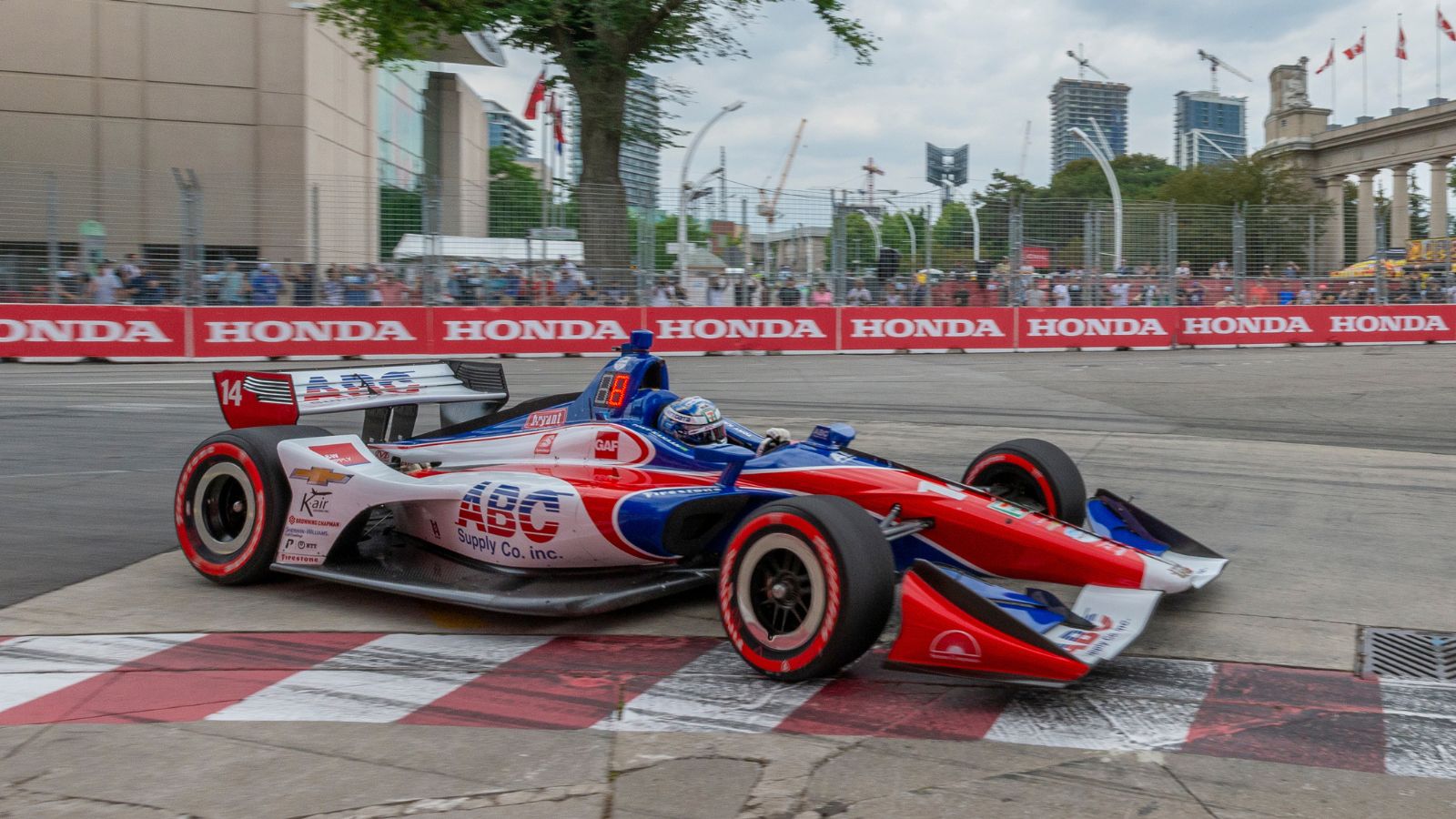
For nearly four decades, the sound of Indy cars in Ontario was tied to Toronto’s Exhibition Place. That changes today. On Friday, August 14, the Ontario Honda Dealers Indy begins its first weekend in Markham, where downtown streets have been transformed into a 12-turn, 3.52-kilometre temporary racing circuit.
The gates opened this morning, support categories are beginning their first sessions, and the NTT IndyCar Series is scheduled to make its first official laps of the new course this afternoon. The main 90-lap race comes Sunday. What was once one of Toronto’s signature summer traditions has effectively become a new York Region sporting experiment—one backed by a five-year commitment, provincial funding and expectations of well over 100,000 visitors.
Nearly 40 Years of Toronto Racing Give Way to a New Home
The relocation represents one of the biggest changes in the Canadian race’s history. Open-wheel cars first competed around Exhibition Place in 1986, when Bobby Rahal won the inaugural event. The Toronto venue eventually hosted 39 races and became one of the most recognizable street stops in North American motorsport. Its combination of narrow concrete-lined sections, changing pavement and the backdrop of the Princes’ Gates gave the event a visual identity that lasted through the CART, Champ Car and IndyCar eras.
The final Toronto running came in July 2025, when Pato O’Ward won for Arrow McLaren. Markham now inherits that history rather than starting an entirely separate event. Green Savoree remains the promoter, Ontario Honda Dealers remains the title sponsor and IndyCar remains the headline attraction. What changes is almost everything surrounding the cars: the streets, sightlines, neighbourhood, transportation patterns and track characteristics. Even longtime competitors arrive without years of setup notes telling them precisely what to expect.
Markham’s 3.52-km Layout Creates a Completely Different Challenge
The new Streets of Markham course is substantially more than a renamed Toronto track. Designed under the leadership of veteran circuit designer Tony Cotman, it measures 3.52 kilometres, or 2.19 miles, and contains 12 turns. The temporary circuit occupies the eastern portion of Markham’s downtown area near Kennedy Road, Enterprise Boulevard, the Unionville GO rail corridor and Highway 407. The Markham Pan Am Centre and York University’s Markham campus form part of the surrounding urban landscape.
Several design details could have a direct effect on the racing. IndyCar has highlighted a tight section nicknamed “The Loop,” a long sweeping run toward Turn 10 and a double-sided pit lane in which teams service cars from both sides. That pit configuration has precedents at Detroit and the new Arlington circuit, but it remains unusual. Unlike Toronto, where teams accumulated decades of information, Markham forces engineers to learn braking zones, bumps, tire behaviour and passing opportunities essentially from scratch.
Toronto’s Loss Has Become a Five-Year Commitment for Markham
The change initially arrived against an unusual backdrop at Exhibition Place. Toronto spent much of 2026 preparing for and hosting FIFA World Cup activity around BMO Field, creating conflicts around a site that traditionally accommodated the Indy circuit. Reporting when the relocation was announced identified World Cup use of Exhibition Place as an important factor in making the familiar Toronto location unavailable for the 2026 race.
Instead of shifting the event for only one season, organizers and Markham agreed to establish a new home. Markham says the race will be held there annually for five years beginning in 2026. That makes the transition much more consequential. The city has not simply filled a hole in the calendar; it has committed downtown streets and municipal resources to creating another long-running Ontario motorsport destination. For Toronto fans accustomed to travelling to Lake Shore Boulevard, the centre of gravity for Canada’s only IndyCar weekend has moved northeast.
Opening Day Gives Fans Their First Look Before IndyCar Practice
Friday is more than a ceremonial opening. Gates opened at 8:30 a.m. ET, followed by practice for USF2000, USF Pro 2000 and Radical Cup Canada. Qualifying sessions for the junior categories are also part of the daytime schedule. The NTT IndyCar Series has an autograph session at the Pan Am Centre before its first Markham practice, scheduled to begin at 3:05 p.m. ET and run until 4:30 p.m. NASCAR Canada follows with practice and qualifying later in the afternoon.
The opening day also preserves a tradition carried over from Toronto. Free Fan Friday provides general admission courtesy of the Ontario Honda Dealers Association, with visitors encouraged to make a voluntary donation to Make-A-Wish Canada. Organizers say the initiative has raised more than $1.1 million since 2010. That combination of accessibility and charity helped distinguish the Toronto weekend, and maintaining it gives the new venue a connection to the event’s older identity even while almost everything visible beyond the barriers has changed.
Sunday’s 90-Lap Race Will Be the Real Test of the Circuit
Practice can show where cars are fast, but Sunday will reveal whether the new layout produces the racing organizers envisioned. IndyCar lists the Markham feature at 90 laps and 197.1 miles. Drivers are scheduled for a warmup Sunday morning before introductions and the start of the inaugural Ontario Honda Dealers Indy at Markham shortly after noon. Before that comes Saturday qualifying, when teams will discover just how costly a small mistake can be on an unfamiliar street circuit.
Street racing typically leaves drivers little margin for experimentation. There are no generous grass runoffs beyond many corners; concrete walls can turn a slight misjudgment into suspension damage or a red flag. Markham adds another layer because no competitor possesses a history of race-day data from the course. Engineers must learn quickly how tire degradation changes, where overtaking is realistic and whether cautions alter fuel strategy. The team that adapts fastest may gain an advantage that simply did not exist after decades of accumulated Toronto experience.
A Championship Fight Adds Stakes to Markham’s Debut
Markham is arriving at a significant point in the 2026 championship. Alex Palou enters the weekend leading the standings with 510 points after 13 races, 110 ahead of Kyle Kirkwood. David Malukas sits third, followed by Christian Lundgaard and defending Toronto winner Pato O’Ward. Palou has already won six times this season, making the inaugural Markham race another opportunity for rivals to prevent his advantage from becoming effectively insurmountable.
Street-course history gives some of those challengers reason for optimism. IndyCar notes that five of Kirkwood’s six career series victories have come on temporary street circuits. O’Ward, meanwhile, has finished inside the top five at each of the first four street races of the 2026 season. Palou has hardly struggled in the same environment, however, winning three of those four events. With every driver facing the Markham layout for the first time, the championship leaders cannot rely on the normal separation between veterans who understand a circuit and newcomers still learning it.
Markham Is Betting on More Than a Weekend of Racing
The municipal case for hosting IndyCar extends well beyond motorsport enthusiasts. When the deal was announced, Markham said the three-day festival was expected to attract more than 140,000 attendees and generate tens of millions of dollars in economic activity through tourism, hospitality and event services. More recent local reporting has put anticipated attendance even higher as the inaugural weekend approaches, underscoring the scale of the crowds the city is preparing to absorb.
The province has also put public money behind the event. Ontario announced a $1.5-million investment to support the 2026 race, framing major sporting events as tools for tourism and economic growth. For restaurants, hotels and other businesses around Markham and York Region, the weekend therefore becomes an early test of whether the promised spillover materializes. Attendance alone will not determine success. Organizers and governments will also be watching spending, visitor experience and whether people return once the novelty of seeing IndyCar on these streets for the first time has faded.
Turning City Streets Into a Racetrack Has Disrupted Everyday Markham
The spectacle requires a temporary takeover of roads normally used by residents, commuters and businesses. Track construction began weeks before race weekend, with lane restrictions and closures increasing through late July and early August. Full race-period closures affect sections around Kennedy Road, Enterprise Boulevard, University Boulevard, YMCA Boulevard, South Unionville Avenue and other streets in the Markham Centre area. Some teardown work is scheduled to continue after the weekend as barriers and temporary racing infrastructure are removed.
Noise is another unavoidable part of hosting a street race. Markham has warned residents that sound from August 14 through 16 can reach levels comparable with a rock concert during racing hours, with additional intermittent noise from testing and support categories. Those inconveniences illustrate the bargain cities make when hosting motorsport in an active urban district. Fans see fences, grandstands and race cars; nearby residents experience altered commutes, restricted access and days of engine noise. How well Markham manages that relationship could influence public support during the remaining years of the agreement.
Transit Could Be One of Markham’s Biggest Advantages
The new circuit was deliberately positioned near major transportation infrastructure. Unionville GO Station sits beside the event area, while Highway 407, Highway 404 and York Region transit routes provide additional regional access. GO Transit has adjusted Stouffville Line service for the weekend and is promoting combined race-admission and transportation packages. The agency describes Unionville GO as being only steps from the grounds, potentially allowing a large portion of the crowd to arrive without searching for parking near closed streets.
That accessibility matters because moving an established event out of central Toronto creates a new challenge: convincing spectators that reaching Markham will remain manageable. The city is supplementing public transit with parking locations and shuttle service, including shuttles scheduled approximately every 15 minutes from designated lots. There are also disruptions elsewhere on the GO network during the weekend because of planned construction, meaning visitors are being advised to check schedules. A successful transportation operation could become one of the strongest arguments for the Markham location over the longer term.
Markham Now Has to Build a Tradition Toronto Already Had
History cannot simply be transported by truck with the concrete barriers. Toronto accumulated memorable winners, rivalries and generations of spectators over nearly four decades. Scott Dixon won there four times, while Will Power and Josef Newgarden are among the active drivers with multiple Toronto victories. Canadian racers including Paul Tracy, Greg Moore, Jacques Villeneuve, Alex Tagliani, James Hinchcliffe and Robert Wickens also became closely associated with the Ontario event at different points in its history.
Markham does have one particularly fitting connection: Hinchcliffe, the former IndyCar race winner who is now a television analyst, grew up in Markham and publicly welcomed the race’s move to his former hometown. But creating a lasting identity will require more than local connections. It will require compelling races, workable transportation, tolerable disruption for residents and enough commercial success to keep organizers invested. Today marks the beginning of that experiment. Toronto supplied the tradition. Starting this weekend, Markham has five years to prove it can create one of its own.