






















A new hybrid sedan from Chinese automaker Geely is making an ambitious promise: up to 1,880 kilometres of combined driving range using gasoline and a fully charged battery. The vehicle, unveiled on November 3, 2026, introduces an unusual powertrain capable of operating on methanol, gasoline, or electricity, potentially offering drivers greater flexibility than conventional hybrids.
The timing is particularly interesting for Canada. Geely has confirmed plans to begin selling vehicles in the country in 2027, as changes to Canadian trade policy create new opportunities for Chinese automakers. Although the company has not confirmed whether this specific sedan will reach Canadian dealerships, its technology raises important questions about fuel efficiency, affordability, winter performance, and the future of hybrid vehicles.
Geely Introduces a Hybrid That Can Run on Three Energy Sources
Geely officially introduced the Xingyao 6 EF on November 3, positioning the sedan as a major development in its long-running efforts to make methanol a practical automotive fuel. The company describes it as the world’s first production methanol-hybrid passenger vehicle, combining a gasoline-compatible combustion engine with an electric propulsion system. Unlike conventional hybrids that rely on gasoline and electricity, the new model can also operate using methanol, an alcohol-based fuel that can be produced from several different feedstocks. Geely’s approach is designed to give drivers more flexibility when choosing how to power their vehicles, particularly in regions where charging stations or alternative fuel supplies are limited. The launch also reflects the company’s broader strategy of developing several powertrain technologies rather than concentrating exclusively on battery-electric vehicles.
What makes the announcement especially relevant is the growing interest in vehicles that can handle daily commuting without consuming much liquid fuel while remaining practical for longer journeys. A traditional hybrid typically uses its battery to improve gasoline efficiency, while a plug-in hybrid can travel meaningful distances on electricity before relying on its combustion engine. Geely’s system adds another option by allowing the combustion engine to operate on methanol or gasoline. The technology is not entirely new in concept, but combining these capabilities in a mass-produced family sedan represents an important development. For Canadian motorists who regularly travel between urban centres and rural communities, that flexibility could eventually become attractive. However, the company’s latest announcement is a technology milestone, not confirmation that the Xingyao 6 EF will be sold in Canada.
The Claimed 1,880-Km Range Comes With an Important Distinction
The most attention-grabbing specification is Geely’s claimed 1,880-kilometre combined driving range. According to the company, that figure applies when the vehicle has a full gasoline tank and a fully charged battery under China’s Light-Duty Vehicle Test Cycle, commonly known as CLTC. When the same vehicle operates with a full tank of methanol and a charged battery, the claimed combined range falls to approximately 1,250 kilometres. Geely also advertises up to 230 kilometres of electric-only range for appropriately equipped versions. These figures illustrate the different capabilities of the powertrain, but they should not be interpreted as three separate distances that can simply be added together. The headline figure already represents combined operation using stored electricity and liquid fuel, making the distinction between the available energy sources essential.
Canadian drivers should also recognize that Chinese laboratory range figures are not directly comparable with official Canadian vehicle ratings. Natural Resources Canada uses a five-cycle testing methodology designed to account for city driving, highway conditions, cold temperatures, air-conditioning use, and more demanding acceleration. The CLTC testing procedure uses a different driving profile, meaning a vehicle’s published range can change substantially when evaluated under another standard. Real-world results also depend on factors such as highway speed, temperature, passenger load, and driving habits. A family travelling through Ontario during winter could experience different energy consumption from a driver commuting through a Chinese city under mild conditions. Geely has not published an independently verified Canadian driving-range figure for the Xingyao 6 EF. Until comparable testing becomes available, the 1,880-kilometre number is best understood as a manufacturer-reported laboratory result rather than a guaranteed distance between stops.
How the Methanol-Gasoline Hybrid System Actually Works
At the centre of the Xingyao 6 EF is a 1.5-litre combustion engine paired with an electric motor and rechargeable battery. Geely says the engine produces up to 93 kilowatts and achieves a thermal efficiency of 48.15%, a figure the automaker describes as exceptional for a production methanol engine. Thermal efficiency measures how effectively an engine converts fuel energy into useful mechanical work, making it an important indicator of potential efficiency improvements. The engine also incorporates a high-pressure direct-injection system operating at 350 bar, together with specialized ignition technology. These components are intended to improve combustion performance across different fuel mixtures. The system is more complicated than a conventional gasoline hybrid, but that additional engineering allows it to use liquid fuels that normally require different combustion and fuel-system characteristics.
One particularly unusual feature is the vehicle’s ability to mix methanol and gasoline in the same fuel tank. Geely says the system can accommodate any mixture ratio between the two fuels, eliminating the need for separate liquid-fuel tanks. A methanol concentration sensor monitors the fuel mixture and communicates with the engine control unit, which adjusts fuel injection and ignition settings accordingly. That means a driver could theoretically refuel with gasoline when methanol is unavailable without changing vehicles or relying entirely on battery power. However, methanol is not a direct substitute for gasoline in ordinary vehicles. Its chemical properties create additional requirements for fuel-system materials, corrosion resistance, and engine calibration. Geely has engineered the Xingyao 6 EF specifically for that purpose. The flexibility therefore comes from specialized technology built into the vehicle rather than from a fuel that can safely be used in any existing gasoline-powered car.
Cold-Weather Performance Could Be a Major Selling Point in Canada
Winter driving presents one of the most important tests for any electrified vehicle entering the Canadian market. Geely says its new methanol-hybrid engine can start reliably in temperatures approaching minus 40 degrees Celsius, thanks partly to its high-pressure injection and ignition systems. That claim is particularly relevant in provinces where prolonged freezing temperatures can affect vehicle performance and energy consumption. The Canadian Automobile Association demonstrated the importance of winter range in February 2025, when it tested electric vehicles along a route between Ottawa and Mont-Tremblant. The vehicles travelled between 14% and 39% less distance than their official published ranges under the test conditions. Those findings help explain why some Canadian consumers continue to consider hybrids alongside fully electric vehicles when evaluating transportation options.
Geely’s strategy attempts to address those concerns by retaining a combustion engine capable of supplying power when electric driving becomes less practical. The ability to operate on gasoline could be particularly useful on long trips where charging facilities are limited or cold weather increases energy demands. Nevertheless, a successful cold start at minus 40 degrees does not establish that the vehicle will achieve its advertised efficiency or range at that temperature. Cabin heating, winter tires, road conditions, and battery temperature still affect energy consumption, even in hybrid vehicles. The company’s cold-start performance claim has not been independently validated through a published Canadian winter test. If Geely eventually brings this powertrain to Canada, cold-weather reliability and real-world range would likely become important measures of its competitiveness, especially for drivers in the Prairies, northern Ontario, Quebec, and other colder regions.
A Family Sedan Designed to Combine Affordability With Technology
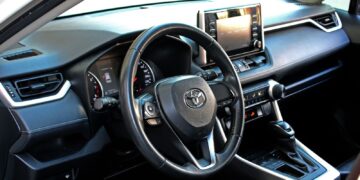
Beyond the powertrain, the Xingyao 6 EF is designed to compete as a practical and relatively affordable family sedan. The vehicle measures approximately 4,806 millimetres long, with a 2,756-millimetre wheelbase, placing it in the mainstream passenger-car segment. Geely reports a 609-litre trunk and a cabin equipped with its Flyme Auto infotainment system. Available technology includes a 14.6-inch central touchscreen, digital instrumentation, smartphone connectivity, and driver-assistance features, although equipment varies between versions. The vehicle also uses lithium iron phosphate battery technology, which has become increasingly common in lower-cost electrified vehicles. These specifications suggest Geely is attempting to make its unusual powertrain accessible in a vehicle intended for ordinary household transportation rather than limiting it to an expensive demonstration model.
Pricing reinforces that approach. In China, Geely announced three versions with official starting prices ranging from 86,800 to 106,800 yuan, alongside limited-time promotional prices between 76,800 and 96,800 yuan. The entry-level model offers a claimed 130 kilometres of electric range, while higher versions advertise up to 230 kilometres under CLTC testing. These are Chinese-market prices, however, and should not be treated as an indication of what a Canadian model would cost. Shipping expenses, import duties, regulatory compliance, equipment differences, and dealership costs could all influence Canadian pricing. Geely has not confirmed the Xingyao 6 EF for Canada or announced a Canadian manufacturer’s suggested retail price.
Methanol Could Reduce Driving Costs, but Fuel Availability Remains a Challenge
One of Geely’s central arguments for methanol is the possibility of reducing operating costs compared with conventional gasoline driving. The company advertises methanol-related fuel costs as low as approximately 0.20 yuan per kilometre under specified Chinese pricing assumptions. Such savings could be attractive to high-mileage drivers, including taxi operators and delivery services, where even modest differences in fuel expenses accumulate over thousands of kilometres. Geely has spent years developing methanol-powered transportation technology and supporting infrastructure in China, giving it experience beyond laboratory demonstrations. The new sedan brings that approach into a vehicle aimed at private households. However, actual savings would depend heavily on local methanol prices, electricity rates, driving patterns, and how often owners charge their batteries.
Canada presents a different situation. Although methanol is produced and used industrially, ordinary motorists do not have access to an established nationwide network of public methanol pumps comparable to gasoline stations. Natural Resources Canada’s public alternative-fuelling station locator identifies several alternative fuel categories but does not include methanol as a standard public refuelling option. That infrastructure gap could complicate any attempt to introduce methanol-powered passenger cars on a large scale. Geely’s ability to switch to gasoline would reduce that concern considerably, but it would also change the vehicle’s operating economics. A Canadian version relying primarily on gasoline and electricity might provide range flexibility without delivering the same methanol-related savings advertised in China.
The Environmental Benefits Depend on How Methanol Is Produced
Methanol is often promoted as a potential lower-carbon transportation fuel, but its environmental impact depends heavily on how it is manufactured. According to the International Renewable Energy Agency, most conventional methanol production has historically relied on natural gas or coal. Those processes can generate substantial greenhouse gas emissions, particularly when coal is used as the feedstock. Renewable methanol offers another possibility because it can be produced from biomass, certain waste streams, or captured carbon dioxide combined with hydrogen made using renewable electricity. A 2026 peer-reviewed life-cycle assessment published in ACS Sustainable Chemistry & Engineering found substantial differences in carbon emissions between fossil-based and renewable methanol production pathways. These findings demonstrate why the source of the fuel matters as much as the technology used to burn it.
Geely has emphasized its long-term investment in methanol research, which the company says began in 2005. The automaker is also exploring technologies intended to capture and reuse carbon in methanol production. However, those initiatives should not be confused with proof that every litre of methanol consumed by the Xingyao 6 EF is carbon-neutral. Burning methanol releases carbon dioxide, while emissions associated with producing and transporting the fuel also need to be considered. The vehicle’s overall environmental performance would therefore depend on its electricity supply, methanol source, fuel consumption, and driving conditions. For Canadian buyers, verified life-cycle emissions data would be necessary before comparing the technology’s environmental benefits with established gasoline hybrids, plug-in hybrids, and battery-electric vehicles.
Geely’s Canadian Expansion Is Confirmed, but Its First Models Remain Undisclosed
Geely’s announcement comes less than a month after the automaker confirmed its plans to enter Canada’s passenger-vehicle market. On October 9, 2026, the company announced that it had established a Canadian team and was developing local retail and service operations ahead of its planned commercial launch in 2027. Bryan Wu, managing director of Geely Auto Canada, described Canada as an important step in the company’s international expansion and emphasized the importance of building long-term relationships with Canadian consumers. The company has not yet identified its first Canadian models, dealership locations, or vehicle prices. That distinction is important because the newly introduced methanol hybrid has not been confirmed for Canadian sale. The announcement demonstrates Geely’s technological capabilities, but not necessarily its immediate product strategy for Canada.
The expansion also follows a significant change in Canadian trade policy. On March 1, 2026, Canada implemented a new arrangement allowing an initial annual quota of 49,000 Chinese electric vehicles to enter at a 6.1% most-favoured-nation tariff rate, replacing the previous 100% surtax within the new quota system. The policy creates opportunities for Chinese manufacturers, although specific vehicles must still satisfy applicable import requirements and Canadian safety standards. Geely enters this environment with considerable global scale: the group reported more than 3.02 million vehicle sales in 2025 and 310,183 sales in October 2026 alone. Nevertheless, convincing Canadians to consider a new automotive brand will require more than impressive range estimates. Competitive prices, accessible servicing, parts availability, warranty support, and demonstrated reliability will ultimately determine whether Geely can establish a lasting presence in the Canadian market.