


















• About
  • Contact
AutoIgloo
  • News & Trends
    15 Used Vehicles That Canadians Are Finally Getting a Break On

    Older Tesla Owners Get 30% Insurance Discount for Self-Driving Miles in Three U.S. States — Not Canada

    Canadian Auto-Parts Factory Sales Jump 6.2% as Manufacturing Defies Expectations for a Drop

    Washington Opens New CUSMA Auto-Parts Dispute Over Alleged Union Firings at Mexican Factory

    Honda Civic vs Toyota Corolla: Which Compact Car Is Still the Smarter Buy?

    Canada-Made Honda Civic Reaches $32,544 With Fees After Another $650 Price Increase

    19 Signs a Used SUV That Looks Like a Deal Probably Isn’t

    Eby Promises to Freeze B.C. Car Insurance Through 2030 as Conservatives Challenge No-Fault System

    Ford’s New Low-Cost EV Pickup Gets $38,690 Canadian Price — and Apple Maps Built In Without a Phone

    Ford Expands Canadian Water-Pump Lawsuit to Owners With Engine Failures Through September 2026

    BYD Opens 10,000th Ultra-Fast Charging Station, Doubling Network in Under Five Months

    BYD Says It Won’t Sell Passenger Cars in the U.S. for Now as Canada Prepares to Welcome the Chinese Automaker

  • Car Reviews
    Honda Asked Suppliers for 30% Parts Cost Cuts as $9.4-Billion Savings Drive Hits Global Supply Chain

    Why Some Buyers Are Choosing Older Hondas Over Newer SUVs

    18 Things That Can Make a Car Unsafe for Winter Road Trips

    Why Some Drivers Are Avoiding Vehicles With Complex Infotainment Systems

    21 Cars Canadians Are Starting to Regret Buying

    Why Some Drivers Regret Buying Big Wheels and Low-Profile Tires

    17 Vehicles That Are Quietly Getting Crushed by Insurance Costs in Canada

    Why So Many Drivers Are Nervous About Chinese-Made EV Batteries

    20 Used SUVs Canadians Should Think Twice About Buying

    20 Used SUVs Canadians Should Think Twice About Buying

    15 Vehicles That Are Starting to Feel Like a Bad Deal Around May Long Weekend

    15 Vehicles That Are Starting to Feel Like a Bad Deal Around May Long Weekend

  • Buying Guides
    18 Things That Can Make a Car Harder to Park Than Expected

    Why Some Buyers Regret Choosing the Sport Package

    The Traffic Stop Mistake That Can Turn a Warning Into a Ticket

    20 Things Canadians Should Check Before Buying a Vehicle With a Loan Still Owing

    The Dealership Fee That Buyers Should Always Ask About

    The Dealership Fee That Buyers Should Always Ask About

    23 Features That Are Making New Cars Harder (and Pricier) to Repair in Canada

    Why Some Canadians Are Avoiding Cars With Expensive Windshields

    18 Red Flags a Used Vehicle May Be a Money Pit

    The Car Buying Mistake That Makes Negotiating Almost Impossible

    Why Some Canadians Are Regretting Buying Vehicles With No Spare Tire

    Why Some Canadians Are Regretting Buying Vehicles With No Spare Tire

  • Comparisons
    Honda Asked Suppliers for 30% Parts Cost Cuts as $9.4-Billion Savings Drive Hits Global Supply Chain

    Why Some Buyers Are Choosing Older Hondas Over Newer SUVs

    25 EV Charging Mistakes Canadians Make in March (That Wreck Range)

    Why Some Canadians Are Choosing Hybrids Over Full EVs Again

    21 Used Car Features That Can Become Expensive Problems Later

    Why Some Canadians Are Choosing Front-Wheel Drive Over All-Wheel Drive

    Canada’s Auto Fight Gets Uglier as BYD Threatens to Sue Trump Administration

    Tesla Vs. BYD: Are Chinese EV’s Actually Better for Canadians?

    17 Vehicles That Are Quietly Getting Crushed by Insurance Costs in Canada

    Why So Many Drivers Are Nervous About Chinese-Made EV Batteries

    20 Used SUVs Canadians Should Think Twice About Buying

    20 Used SUVs Canadians Should Think Twice About Buying

  • EVs & Hybrids
    18 Cars That Will Feel Dated Fast as New Chinese EVs Arrive

    12 EVs Now Price Below $41,000 in Canada—Fiat 500e Falls Under $30,000 With Rebate

    The Used EV Question Canadians Should Ask Before Buying One

    The Used EV Question Canadians Should Ask Before Buying One

    Why Some EV Owners Are Getting Sticker Shock From Home Charging Setups

    Why Some EV Owners Are Getting Sticker Shock From Home Charging Setups

    20 Signs Your Car Battery Is About to Leave You Stranded

    Canadian Auto Jobs Become a Central Fault Line as Ottawa Reveals Why It Rejected U.S. Vehicle Terms

    25 EV Charging Mistakes Canadians Make in March (That Wreck Range)

    Why Some Canadians Are Choosing Hybrids Over Full EVs Again

    The EV Charging Habit That Can Annoy Everyone Around You

    Canada Is Missing an EV-Battery Export Opening as EU Lithium Demand Heads for a 9-to-12-Fold Jump: Report

  • More
    • Pricing & Deals
    • Winter Driving
    • Ownership & Maintenance
No Result
View All Result
AutoIgloo
  • News & Trends
    15 Used Vehicles That Canadians Are Finally Getting a Break On

    Older Tesla Owners Get 30% Insurance Discount for Self-Driving Miles in Three U.S. States — Not Canada

    Canadian Auto-Parts Factory Sales Jump 6.2% as Manufacturing Defies Expectations for a Drop

    Washington Opens New CUSMA Auto-Parts Dispute Over Alleged Union Firings at Mexican Factory

    Honda Civic vs Toyota Corolla: Which Compact Car Is Still the Smarter Buy?

    Canada-Made Honda Civic Reaches $32,544 With Fees After Another $650 Price Increase

    19 Signs a Used SUV That Looks Like a Deal Probably Isn’t

    Eby Promises to Freeze B.C. Car Insurance Through 2030 as Conservatives Challenge No-Fault System

    Ford’s New Low-Cost EV Pickup Gets $38,690 Canadian Price — and Apple Maps Built In Without a Phone

    Ford Expands Canadian Water-Pump Lawsuit to Owners With Engine Failures Through September 2026

    BYD Opens 10,000th Ultra-Fast Charging Station, Doubling Network in Under Five Months

    BYD Says It Won’t Sell Passenger Cars in the U.S. for Now as Canada Prepares to Welcome the Chinese Automaker

  • Car Reviews
    Honda Asked Suppliers for 30% Parts Cost Cuts as $9.4-Billion Savings Drive Hits Global Supply Chain

    Why Some Buyers Are Choosing Older Hondas Over Newer SUVs

    18 Things That Can Make a Car Unsafe for Winter Road Trips

    Why Some Drivers Are Avoiding Vehicles With Complex Infotainment Systems

    21 Cars Canadians Are Starting to Regret Buying

    Why Some Drivers Regret Buying Big Wheels and Low-Profile Tires

    17 Vehicles That Are Quietly Getting Crushed by Insurance Costs in Canada

    Why So Many Drivers Are Nervous About Chinese-Made EV Batteries

    20 Used SUVs Canadians Should Think Twice About Buying

    20 Used SUVs Canadians Should Think Twice About Buying

    15 Vehicles That Are Starting to Feel Like a Bad Deal Around May Long Weekend

    15 Vehicles That Are Starting to Feel Like a Bad Deal Around May Long Weekend

  • Buying Guides
    18 Things That Can Make a Car Harder to Park Than Expected

    Why Some Buyers Regret Choosing the Sport Package

    The Traffic Stop Mistake That Can Turn a Warning Into a Ticket

    20 Things Canadians Should Check Before Buying a Vehicle With a Loan Still Owing

    The Dealership Fee That Buyers Should Always Ask About

    The Dealership Fee That Buyers Should Always Ask About

    23 Features That Are Making New Cars Harder (and Pricier) to Repair in Canada

    Why Some Canadians Are Avoiding Cars With Expensive Windshields

    18 Red Flags a Used Vehicle May Be a Money Pit

    The Car Buying Mistake That Makes Negotiating Almost Impossible

    Why Some Canadians Are Regretting Buying Vehicles With No Spare Tire

    Why Some Canadians Are Regretting Buying Vehicles With No Spare Tire

  • Comparisons
    Honda Asked Suppliers for 30% Parts Cost Cuts as $9.4-Billion Savings Drive Hits Global Supply Chain

    Why Some Buyers Are Choosing Older Hondas Over Newer SUVs

    25 EV Charging Mistakes Canadians Make in March (That Wreck Range)

    Why Some Canadians Are Choosing Hybrids Over Full EVs Again

    21 Used Car Features That Can Become Expensive Problems Later

    Why Some Canadians Are Choosing Front-Wheel Drive Over All-Wheel Drive

    Canada’s Auto Fight Gets Uglier as BYD Threatens to Sue Trump Administration

    Tesla Vs. BYD: Are Chinese EV’s Actually Better for Canadians?

    17 Vehicles That Are Quietly Getting Crushed by Insurance Costs in Canada

    Why So Many Drivers Are Nervous About Chinese-Made EV Batteries

    20 Used SUVs Canadians Should Think Twice About Buying

    20 Used SUVs Canadians Should Think Twice About Buying

  • EVs & Hybrids
    18 Cars That Will Feel Dated Fast as New Chinese EVs Arrive

    12 EVs Now Price Below $41,000 in Canada—Fiat 500e Falls Under $30,000 With Rebate

    The Used EV Question Canadians Should Ask Before Buying One

    The Used EV Question Canadians Should Ask Before Buying One

    Why Some EV Owners Are Getting Sticker Shock From Home Charging Setups

    Why Some EV Owners Are Getting Sticker Shock From Home Charging Setups

    20 Signs Your Car Battery Is About to Leave You Stranded

    Canadian Auto Jobs Become a Central Fault Line as Ottawa Reveals Why It Rejected U.S. Vehicle Terms

    25 EV Charging Mistakes Canadians Make in March (That Wreck Range)

    Why Some Canadians Are Choosing Hybrids Over Full EVs Again

    The EV Charging Habit That Can Annoy Everyone Around You

    Canada Is Missing an EV-Battery Export Opening as EU Lithium Demand Heads for a 9-to-12-Fold Jump: Report

  • More
    • Pricing & Deals
    • Winter Driving
    • Ownership & Maintenance
No Result
View All Result
AutoIgloo
No Result
View All Result

Home » News & Trends

Four Toyota Plants Shut Down After Floods Cut Parts Deliveries

Nate Brewer by Nate Brewer
September 30, 2026
Reading Time: 5 mins read
A A
Photo Credit: Shutterstock

Photo Credit: Shutterstock

470
SHARES
1.5k
VIEWS
Share on FacebookShare on Twitter

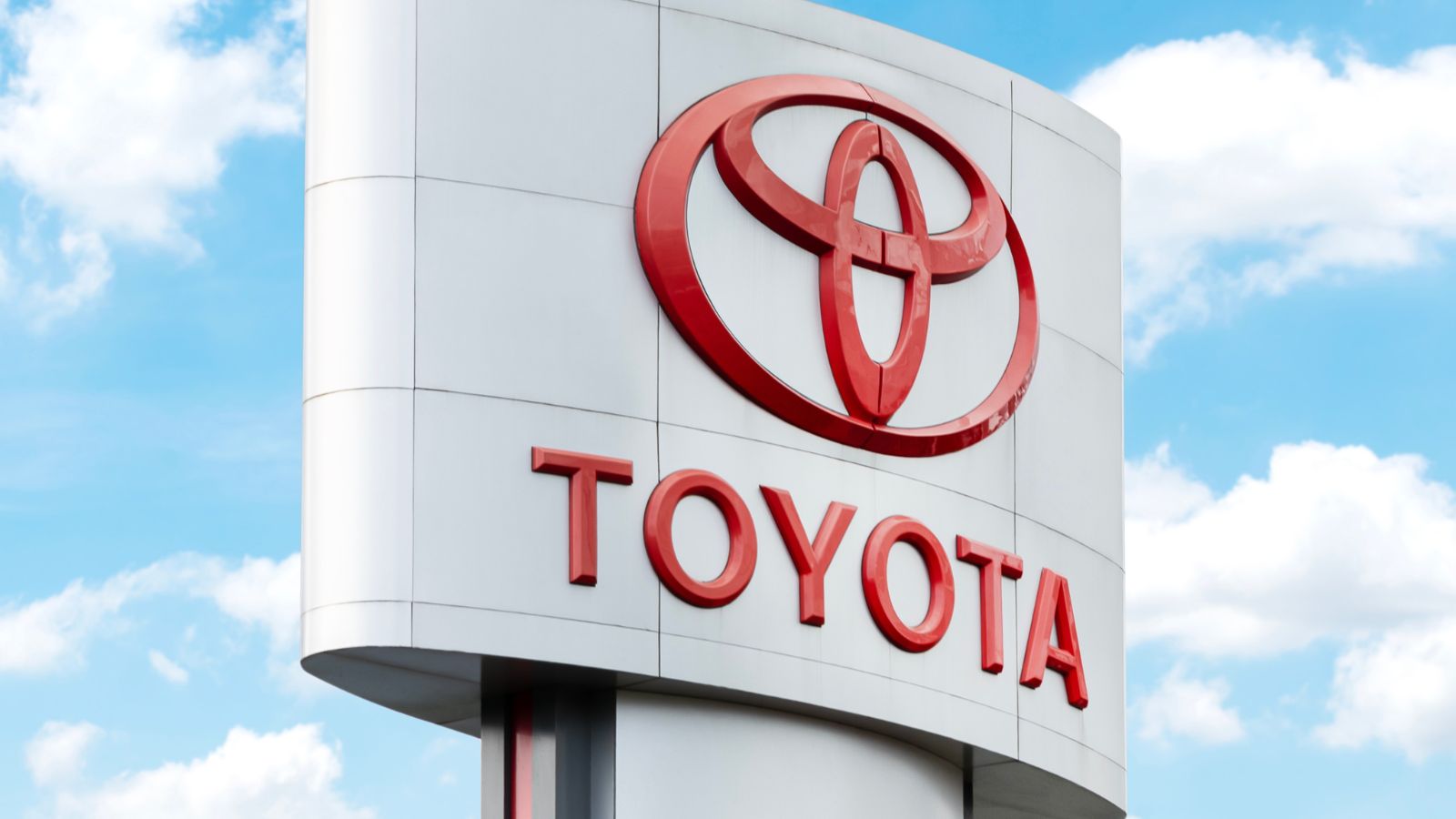
Floodwater does not have to enter an assembly line to stop vehicle production. In Thailand, severe flooding has disrupted the flow of components to Toyota, prompting temporary production suspensions at four manufacturing sites as the country struggles with widespread transportation and infrastructure problems. The interruption covers Toyota Motor Thailand’s three main plants and a Toyota Auto Works facility, with the automaker working alongside suppliers to restore deliveries. The shutdown comes at a sensitive time for Thailand’s auto sector, where factories serve both domestic buyers and major export markets. With Bangkok receiving roughly a month’s worth of September rainfall in only three days and authorities still watching the threat from additional rain, Toyota’s challenge is increasingly about logistics: getting the right parts, people and transport routes functioning together again.

Parts Deliveries Became the Immediate Breaking Point

Toyota’s shutdown was triggered by a problem outside the final assembly process: components were no longer reaching factories reliably because of the flooding. Toyota Motor Thailand suspended operations at its three production plants, while another manufacturing facility operated by Toyota Auto Works was also affected. The company said it was coordinating with suppliers in an effort to restore deliveries and restart production as quickly as conditions allowed. Reports did not identify major physical damage to Toyota’s assembly plants as the reason for the stoppage. Instead, the immediate constraint was the disrupted movement of parts through a region coping with flooded roads, transportation difficulties and workers struggling to reach their jobs. That distinction matters. A modern vehicle factory can have equipment, workers and unfinished vehicles ready for production, but a shortage of required components can still prevent an assembly line from continuing normally.

The three Toyota Motor Thailand factories are Samrong, Gateway and Ban Pho. Toyota’s latest corporate information lists annual production capacity at 240,000 vehicles for Samrong, 300,000 for Gateway and 230,000 for Ban Pho, giving the three facilities combined nameplate capacity of about 770,000 vehicles per year. Samrong and Ban Pho primarily handle commercial vehicles, while Gateway is focused on passenger vehicles. Toyota Auto Works forms another piece of the company’s Thai manufacturing network. Toyota’s global production information shows that the wider operation in Thailand builds vehicles ranging from the Camry and Corolla family to the Hilux, Fortuner, Yaris models and electrified vehicles. Not every model or line will necessarily be affected to the same degree, and nameplate capacity is not the same as actual daily output, but temporarily stopping all three main Toyota Motor Thailand plants gives the disruption considerably more significance than an isolated production-line pause.

Thailand’s Toyota Network Is Too Large to Treat as a Minor Disruption

Thailand has spent decades developing into one of Southeast Asia’s most important vehicle-production centres, and Toyota is deeply embedded in that manufacturing ecosystem. The scale is visible not only in Toyota’s factory footprint but also in the country’s broader production statistics. The Federation of Thai Industries reported that Thailand built 124,646 vehicles in August 2026, up 10.93% from a year earlier. Production during the first eight months of the year reached 959,711 vehicles. Particularly important for understanding a disruption such as Toyota’s is the export component: 83,612 vehicles produced in August were intended for overseas markets, equal to 67.08% of the country’s total output that month. That means manufacturing interruptions in Thailand can become relevant well beyond Thai showrooms if they persist long enough to affect shipping schedules or inventories.

Pickups are especially important to that industrial network. Thailand produced 73,273 one-ton pickup trucks in August alone, accounting for nearly 59% of all vehicle production during the month, according to the Federation of Thai Industries. Toyota’s Thai manufacturing operations include several versions of the Hilux alongside the Fortuner, giving the company a substantial presence in precisely the vehicle category around which Thailand has built much of its automotive expertise. At the same time, the country’s industry is changing rapidly as hybrid and battery-electric production grows. Thailand produced 13,126 battery-electric passenger vehicles in August, a 77.38% year-over-year increase, while hybrid passenger-vehicle production rose 51.54%. Toyota’s current Thai lineup similarly spans conventional, hybrid and battery-electric models. The flood interruption therefore arrives as factories and suppliers are already managing an increasingly diverse mix of powertrains, components and export requirements.

Flooding Has Strained Transport and Communities Across the Region

The factory shutdowns are one part of a much larger emergency. Bangkok was declared a disaster-affected area after roughly 320 millimetres, or 12.6 inches, of rain fell over three days late in September. Reuters reported that the amount was approximately what the capital normally receives during the entire month of September. By September 30, authorities said flooding had affected 44 of Thailand’s 77 provinces, while the government spokesperson cited Health Ministry figures putting the death toll at 40. Earlier government disaster-management figures from September 28 showed how quickly the emergency had expanded: Bangkok and 27 provinces had already recorded 576,449 affected households and almost 1.8 million affected residents. Samut Prakan, where Toyota has significant operations, was among the provinces reporting particularly large numbers of affected households.

Transportation problems illustrate why manufacturers can remain vulnerable even when their own factory buildings are intact. Thai Airways temporarily stopped accepting inbound and outbound cargo through October 6 after flooding prevented many employees from reaching work. At Bangkok’s Suvarnabhumi Airport, about half of the airline’s workforce was unable to report at one stage, contributing to cancelled flights and thousands of delayed bags even though the airport itself remained open. Railway services on Thailand’s Eastern Line were also being restored gradually as conditions improved, with some trains operating shortened routes while track conditions farther east continued to be assessed. For an automaker, the relevance is straightforward: factories depend on a network of suppliers, warehouses, trucking routes and employees extending far beyond their gates. The Toyota stoppages show how flooding can interrupt that network at multiple points without necessarily damaging the final assembly machinery itself.

The Restart Clock Depends on Suppliers, Safety and the Weather

Toyota has not tied the affected factories to a fixed public restart date in the initial reporting. Instead, the company said it was working with suppliers to restore parts deliveries and intended to resume production as soon as possible. Additional reporting on Toyota Motor Thailand’s position indicated that operations would restart when necessary parts were secured and conditions were considered safe. That leaves the timetable dependent on more than receding water outside a factory. Supplier facilities must be able to operate, workers need access to workplaces, components must move through the transport network, and disrupted inventories have to reach the correct production lines. Thai authorities were working to drain floodwater in Bangkok and hoped to restore more normal conditions within several days, but the weather remained an important uncertainty. Thailand’s weather agency was forecasting another period of heavy rainfall from October 5 through October 8.

Toyota has faced a remarkably similar supply-chain problem in Thailand before. During the catastrophic 2011 floods, Toyota said its Samrong, Gateway and Ban Pho plants initially escaped direct physical damage, yet supplier delays still forced all three factories to stop production. The halt was repeatedly extended as the company assessed parts availability, and shortages eventually contributed to production adjustments at Toyota facilities outside Thailand. The 2026 situation should not automatically be assumed to follow the same path; no comparable global production disruption had been announced in the initial reports on the current shutdown. Still, the earlier episode explains why Toyota is closely coordinating with suppliers rather than focusing only on conditions at its own plants. For customers, dealers, factory employees and parts makers, the next meaningful development will be evidence that component flows are stable enough for production to restart—not simply that floodwater has begun to recede.


Recommended.

Tesla Opens New Quebec Supercharger After Nearly a Year on the Construction List

Tesla Raises Cybertruck Prices $5,000 in the U.S. While Canadian Prices Stay Put

August 25, 2026
Chinese EV and Plug-In Hybrid Exports Surge 155% as Canada Opens a 49,000-Vehicle Low-Tariff Door

Canadian Dealer Snapshot Shows 283,010 Vehicles for Sale — but Just 735 Are Classified as EVs

September 27, 2026

Trending.

Chinese EV Price Pressure Gets a New Benchmark as Voyah Opens $63,420 Luxury MPV Orders

Europe’s EV Share Jumps to 30.5% as Electric-Car Sales Blow Past Forecasts

September 17, 2026
GM Readies New Gas and Duramax Engines for Silverado HD and Sierra HD Ahead of November Production

GM’s New V8s Put Canadian Auto Jobs Back in Focus at St. Catharines Plant

September 19, 2026
Canada’s Auto Industry Says Tariff Fight Has Already Cost the Sector More Than $100 Billion

Trump’s 50% Canada Auto-Tariff Threat Is Now Forcing Automakers to Plan Around a January 1 Deadline

September 27, 2026
Canada’s Ballard Puts a 250,000-Mile Performance Guarantee Behind Hydrogen Buses

Canada’s Ballard Puts a 250,000-Mile Performance Guarantee Behind Hydrogen Buses

October 2, 2026
Volvo Starts Scoring How Drivers Brake and Corner for Insurance Discounts — Canada Is Left Out of First Rolloutv

Volvo Plans 13 New Models by 2030 as EV and Hybrid Battle Intensifies

September 17, 2026
  • About
  • Contact
  • Privacy Policy
  • Disclaimer
  • Editorial Policies
  • Terms and Conditions
A Revir Media Group Website

2026 Autoigloo - © All rights reserved

No Result
View All Result
  • News & Trends
  • Car Reviews
  • Buying Guides
  • Comparisons
  • EVs & Hybrids
  • More
    • Pricing & Deals
    • Winter Driving
    • Ownership & Maintenance

2026 Autoigloo - © All rights reserved

This website uses cookies. By continuing to use this website you are giving consent to cookies being used. Visit our Privacy and Cookie Policy.


