
























A small Canadian critical-materials company has recruited an executive with an unusually direct view of what automakers want from their suppliers. Scandium Canada appointed Simon Thibault as president and chief executive officer on August 24, 2026, after he spent several years working on electric-vehicle critical-material sourcing inside General Motors’ global purchasing and supply-chain organization.
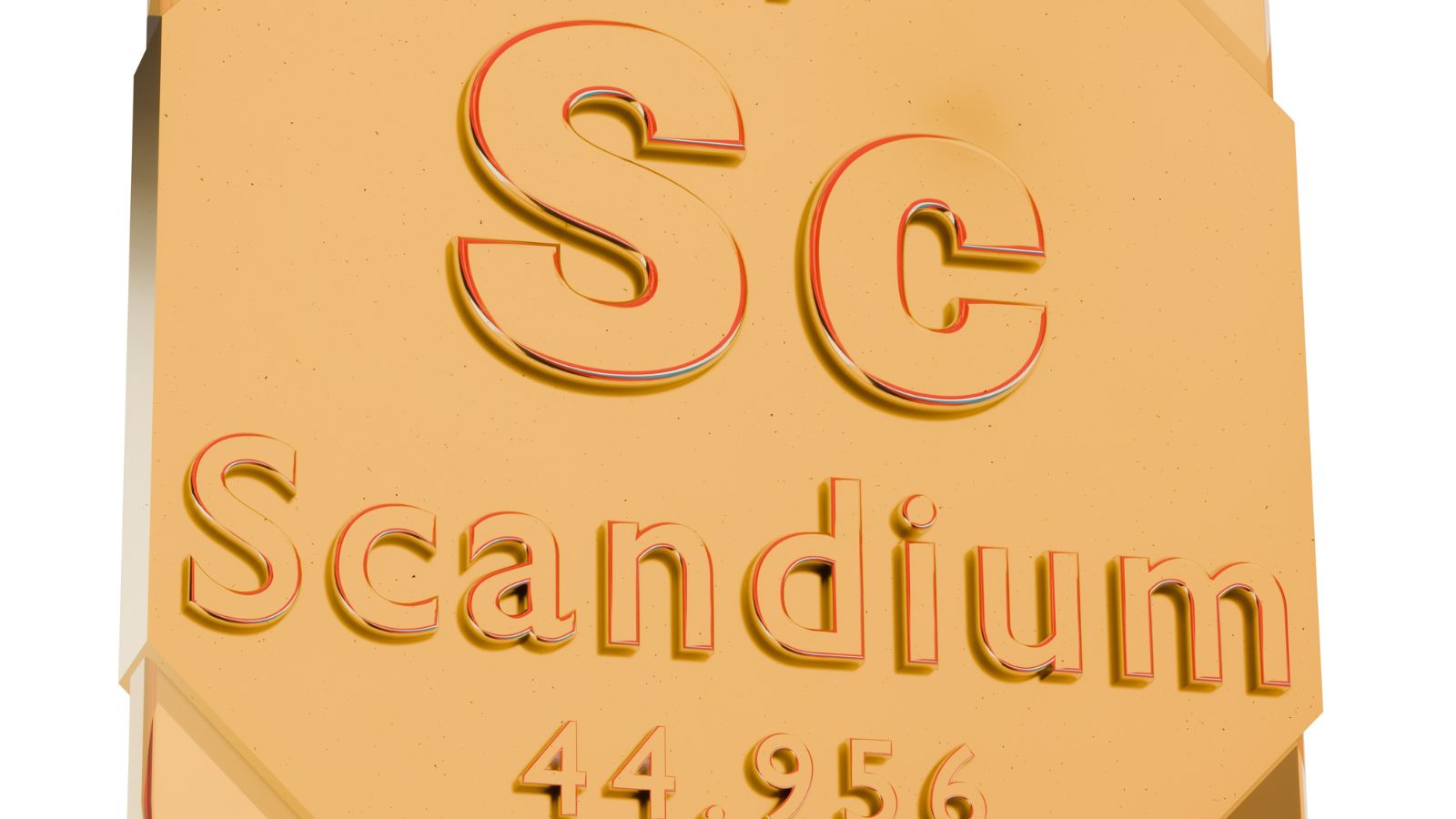
The move comes as Scandium Canada tries to bridge two very different businesses: developing the Crater Lake mineral project in northern Quebec and convincing manufacturers to use aluminum-scandium alloys in commercial products. That combination makes the leadership change significant beyond the executive suite. Scandium remains a niche material with supply constraints, but its ability to improve certain aluminum alloys has attracted interest across automotive, aerospace, defence and advanced manufacturing — precisely the industries now paying closer attention to where strategically important materials come from.
A Planned Succession With a Different Kind of CEO
Scandium Canada says Thibault’s appointment resulted from a planned succession rather than an abrupt change in direction. He became CEO of the publicly traded company and president of Scalium+, its wholly owned advanced-alloys subsidiary, effective August 24. Guy Bourassa, who had led Scandium Canada since 2024, is remaining on the board and becoming a strategic adviser to management, with particular responsibility for continuing work connected to Crater Lake. That structure gives Thibault control of day-to-day strategy without removing the executive who helped move the mining project through its recent development stages.
The timing is notable because Scandium Canada is no longer dealing with a single challenge. It must advance a mineral deposit through engineering, metallurgical testing and permitting while simultaneously persuading industrial customers to qualify unfamiliar alloys. Those are different disciplines with different timelines. A mine can take years to reach production, while manufacturers may spend lengthy periods testing a new material before allowing it into safety-critical components. Hiring someone who has sat on the purchasing side of a major automaker suggests that customer qualification is becoming increasingly important to the company’s strategy.
Thibault Brings the Buyer’s Perspective From General Motors
Thibault joined Scandium Canada after serving since 2023 as GM’s EV Critical Materials Leader within the automaker’s Global Purchasing and Supply Chain organization. According to Scandium Canada, his work included sourcing materials for GM’s electric-vehicle and energy-storage programs and supporting development of a more resilient North American supply chain. His approximately 20-year career also includes experience at Nemaska Lithium, Investissement Québec and Propulsion Québec, giving him exposure to mining, battery materials, industrial policy and automotive manufacturing rather than just one part of the materials chain.
That background matters because promising metallurgy does not automatically create an automotive market. Large manufacturers need consistent specifications, predictable volumes, quality systems, competitive economics and confidence that a supplier can continue operating throughout a vehicle program. A component may pass laboratory testing and still never reach a production line if those commercial requirements are unresolved. Thibault has effectively moved from the side asking critical-material suppliers those questions to the side responsible for answering them. For a junior resource company seeking automotive customers, that change in perspective could prove as important as another exploration result.
Crater Lake Is Entering a More Demanding Development Stage
The underlying asset is Scandium Canada’s Crater Lake project in Nunavik. An April 2025 mineral-resource estimate for its TG Zone reported 16.3 million tonnes of indicated resources grading 277.9 grams per tonne of scandium oxide and another 20.9 million tonnes of inferred resources grading 271.7 grams per tonne. Those figures are substantial for a specialized commodity, but they should not be confused with proven mineable reserves. The technical disclosure explicitly states that mineral resources do not yet have demonstrated economic viability, making the engineering work now underway particularly important.
Field activity has continued in 2026. By August 5, Scandium Canada said it had completed 19 bulk-sample holes totalling roughly 3,400 metres along the TG Zone. Extension drilling then began with a goal of testing at least another 200 metres of strike length beyond a zone currently described as approximately 700 metres long. Meanwhile, engineering firm Norda Stelo has been leading a pre-feasibility study, with the final report targeted for the end of August. The next milestones therefore concern much more than how much scandium might be underground: recovery, processing, costs and project economics increasingly move to the foreground.
Scandium’s Automotive Opportunity Is Really an Aluminum Story
Scandium is not being pitched to automakers primarily as another battery ingredient. Its more distinctive opportunity comes from what small additions can do to aluminum. Decades of materials research show that scandium can promote formation of Al3Sc particles that refine grain structure and provide strengthening effects. Peer-reviewed work has also found that scandium additions can improve weld characteristics in some high-strength aluminum systems. These properties help explain why aluminum-scandium alloys have long attracted attention in weight-sensitive applications, even though scandium’s cost and limited supply have restricted widespread adoption.
The automotive relevance is straightforward: manufacturers continually look for ways to cut mass while preserving structural performance, manufacturability and durability. Scandium Canada has started exploring one particularly ambitious application with the University of Windsor’s Centre for Hybrid Automotive Research and Green Energy. A memorandum of understanding announced in July covers research into aluminum-scandium wire for electric-vehicle traction-motor windings. It remains an exploratory program rather than evidence of an approved production component. Still, it illustrates where the company wants its materials strategy to go — beyond simply selling a mineral and toward solving specific engineering problems inside electric vehicles.
Commercial Products Are Arriving Before the Mine
One unusual element of Scandium Canada’s strategy is that it is attempting to establish downstream applications while Crater Lake remains in development. Through Scalium+, the company is working on proprietary aluminum-scandium alloys in forms such as wire, powder and sheet. Management says it has customers and an active qualification pipeline, although qualification should not be interpreted as guaranteed large-scale orders. This approach effectively reverses the traditional junior-mining sequence in which a company develops a deposit first and worries about end markets later.
A tangible example arrived in August through Quebec-based Ferreol Skis. Scandium Canada announced that thin sheets of its Scalium alloy would be incorporated throughout Ferreol’s 2026–27 ski collection. Skis are obviously a much smaller market than automobiles, but they offer a practical proving ground: equipment has to be light, strong, repeatedly flexed and manufactured consistently. Commercial use in sporting goods does not establish automotive readiness, yet it provides something laboratory coupons cannot — real manufactured products placed in customers’ hands. For a specialty material still trying to create broader demand, those early applications can help demonstrate manufacturability while more demanding industrial qualification programs continue.
Supply Security Is Becoming Part of the Product
Scandium’s strategic appeal is amplified by the unusual structure of its global supply chain. The U.S. Geological Survey says the United States remains completely import-reliant for scandium and notes that China has specifically identified scandium in export-control measures. USGS also cautions that available data are insufficient for the same quantitative risk assessment applied to more established commodities. In other words, scandium is strategically interesting partly because its market remains small, opaque and vulnerable — characteristics that can make manufacturers reluctant to design around it without confidence in future supply.
Canada is trying to change that calculation. The federal government classifies scandium as a critical mineral and in March announced up to C$6.9 million through Natural Resources Canada’s Global Partnerships Initiative for Crater Lake. The initiative lists Germany’s Gränges as a research partner and Estonia’s NPM Silmet as a potential offtake partner. Scandium Canada separately reported roughly C$15 million in cash in April alongside the federal funding, earmarking its program around alloy qualification, pre-feasibility work and drilling. The strategic objective is increasingly clear: connect a Canadian resource with processing expertise, international partners and actual manufacturers before asking customers to rely on it.
The Hardest Tests Still Come After the Leadership Change
Thibault inherits meaningful progress, but also the risks that make critical-mineral development difficult. Pending drilling results have to support geological assumptions. Engineering must demonstrate that scandium can be recovered economically. A pre-feasibility study is only one stage before construction decisions, financing, permitting and eventual production. On the commercial side, promising alloys still have to survive customer qualification and compete against established materials whose supply chains, tooling and engineering standards are already embedded in factories. Scandium’s technical advantages matter only if they justify its cost and can be delivered reliably at industrial scale.
Community relationships will also remain central. The Taasipitaakin Trust, controlled by the Naskapi Nation of Kawawachikamach, invested C$334,000 in Scandium Canada in 2025 and said it held 5% of the company afterward. Importantly, the Nation stated that investment should not be treated as automatic consent for a future mine; consultation, negotiations and an eventual impact-and-benefit framework remain relevant. That distinction captures the larger challenge facing the new CEO. Creating a secure Canadian scandium supply chain requires more than finding ore. It requires proving the economics, winning customers and building durable relationships with the people connected to the land where development may occur.