






















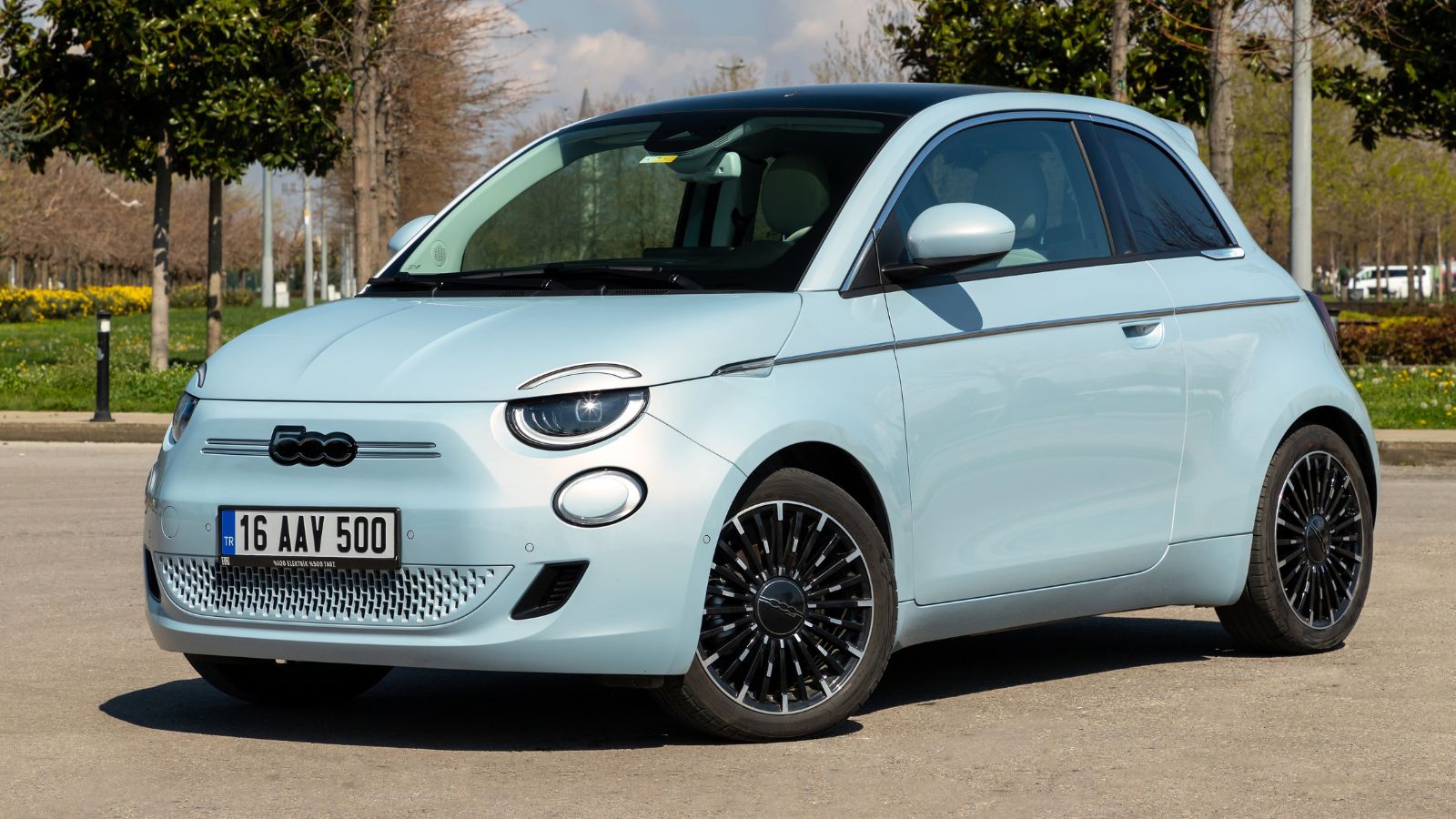
Canada’s electric vehicle market is entering a potentially important affordability window, with the 2026 Fiat 500e dropping below the $30,000 mark in a new November price comparison. Manufacturer discounts and federal incentives have pushed the compact electric hatchback to an estimated $29,865 before sales taxes, making it one of the most accessible new electric vehicles available to Canadian shoppers.
The timing is particularly significant. Ottawa’s Electric Vehicle Affordability Program currently provides up to $5,000 toward eligible battery-electric vehicles, but that incentive will fall to $4,000 on January 1, 2027. With automakers competing for budget-conscious buyers and year-end discounts becoming increasingly important, the latest comparison highlights both the opportunities and the trade-offs facing Canadians considering their first electric vehicle.
How the Fiat 500e Drops Below $30,000
The headline price begins with the 2026 Fiat 500e Pop, which has a base manufacturer’s suggested retail price of $39,995. Once freight and applicable charges are included, a representative selling price is approximately $42,290. Fiat’s $8,000 manufacturer cash discount brings that figure down to $34,290, before the federal incentive is considered. The November comparison then accounts for the $5,000 government rebate, producing an estimated Ontario pre-tax-equivalent price of $29,865. Fiat Canada’s own advertised calculations support that figure, although estimates differ between provinces because of tax treatment.
That distinction matters for households calculating their budgets. The federal rebate is applied after taxes, meaning the advertised $29,865 is not necessarily the amount a buyer pays to drive the vehicle home. Using the $34,290 discounted selling price, Ontario’s 13% HST and the $5,000 rebate produces an illustrative total of approximately $33,748, before any additional licensing or dealership charges. The Fiat has become genuinely more affordable, but the difference between an advertised comparison price and a final purchase invoice deserves attention.
Fiat’s $8,000 Discount Is Doing Much of the Work
The federal rebate receives considerable attention, but Fiat’s manufacturer discount is the larger contributor to the 500e’s current affordability. The $8,000 cash incentive represents a substantial reduction from the vehicle’s regular selling price, helping explain why the small Italian-designed hatchback can compete against electric vehicles with lower starting MSRPs. Canadian dealership listings confirm that the discount remains available on qualifying 2026 models in November, with some published offers running from November 3 through November 30, 2026.
For shoppers, however, a manufacturer promotion and a government incentive operate differently. The federal program has published eligibility rules, while automakers can change discounts based on inventory, model year and financing arrangements. A dealer might also advertise promotional financing that cannot be combined with every cash discount. These details make the actual purchase agreement more important than a promotional banner. Someone purchasing a discounted 500e for cash could face different economics from a customer choosing a longer-term financing arrangement. The strongest deal is ultimately the one that delivers the lowest total ownership cost, not simply the largest advertised discount.
The $5,000 Federal EV Rebate Is About to Shrink
The federal Electric Vehicle Affordability Program provides eligible Canadians with up to $5,000 toward a new battery-electric vehicle purchased in 2026. Beginning January 1, 2027, that maximum falls to $4,000, effectively reducing the government’s contribution by $1,000. Further reductions are already scheduled, with the maximum declining to $3,000 in 2028 and eventually reaching $2,000 in 2030 and 2031. For a household comparing two similarly priced vehicles, losing part of the incentive could make a meaningful difference to the final financing requirement.
There is an important detail concerning the deadline. Transport Canada determines the applicable incentive according to when the dealership submits the buyer’s eligibility assessment, rather than simply when the vehicle is delivered. An assessment submitted in December 2026 can preserve the higher incentive for an eligible delivery in early 2027, provided the approval remains valid. The normal validity period is 90 days. This gives some customers flexibility, although it also makes proper dealership paperwork essential. A signed order alone should not be mistaken for confirmation that the larger rebate has been secured.
Not Every Electric Vehicle Qualifies for the Federal Incentive
Canada’s revamped rebate program is more targeted than a universal electric vehicle subsidy. Eligible vehicles generally must have a final transaction value of $50,000 or less and be manufactured in Canada or a country with which Canada has a free-trade agreement. Canadian-made electric vehicles are exempt from the $50,000 price ceiling. Importantly, the government evaluates the final qualifying transaction value, not simply the manufacturer’s advertised MSRP. Certain accessories, discounts and dealership charges can affect that calculation, potentially changing whether a particular purchase qualifies.
The program also places limits on who can receive assistance. Individual buyers are generally entitled to one EVAP incentive during the program’s five-year lifespan. Cash purchases and financed purchases can qualify, while leases must last at least 12 months. A 48-month lease qualifies for the full applicable incentive, but shorter eligible leases receive a reduced amount. The 2026 Fiat 500e Pop appears on Transport Canada’s eligible-vehicle list, providing a useful starting point for shoppers. However, the final transaction and customer must still meet program requirements, and the dealership must complete the eligibility process before applying the incentive.
Nissan, Kia and Chevrolet Are Challenging Fiat on Affordability
The Fiat 500e may lead November’s discounted price comparison, but competing automakers are bringing increasingly affordable electric vehicles to Canadian showrooms. The 2027 Nissan Leaf S starts at $34,998 before destination charges and incentives, making it Canada’s lowest-priced new EV by base MSRP according to Nissan. In the November comparison, its estimated Ontario pre-tax-equivalent cost is $33,541 after the federal incentive. Kia’s 2027 EV3 Light FWD, meanwhile, begins at $36,995 MSRP and reaches approximately $35,022 in the same comparison. These models offer alternatives for Canadians looking beyond the smallest urban hatchbacks.
The competition continues with the 2026 Kia EV4 sedan, starting at $38,995 MSRP, and the returning 2027 Chevrolet Bolt LT, beginning at $39,999. The latest EV price comparison places the EV4 at approximately $37,022 after the federal incentive, although Chevrolet’s offers can change the Bolt’s effective selling price. These alternatives illustrate an important development: buyers no longer have to consider only expensive SUVs or luxury-branded vehicles when exploring electric transportation. Fiat’s advantage is its heavily discounted price, while competitors may offer greater driving range, additional seating flexibility or more practical cargo space.
The Fiat’s 227-Kilometre Range Is Its Biggest Compromise
Affordability comes with an important limitation. The 2026 Fiat 500e has an official estimated driving range of 227 kilometres, considerably less than many competing electric vehicles. The 2027 Nissan Leaf S offers an estimated 341 kilometres, while the entry-level Kia EV3 provides up to 356 kilometres. That difference becomes significant for commuters travelling long distances, families regularly visiting relatives outside their city or drivers who cannot reliably recharge at home. For someone driving approximately 40 kilometres daily, however, the Fiat’s range may be more than adequate for routine transportation.
Canadian winter conditions introduce another consideration. Testing conducted by the Canadian Automobile Association in February 2025 found that electric vehicles travelled between 14% and 39% less than their official range ratings in sub-zero temperatures. The Fiat 500e was not among the vehicles tested, so those percentages should not be treated as a direct measurement of its winter performance. Nevertheless, they demonstrate why range should be evaluated conservatively in Canada. A vehicle suited to short urban trips in September may require more careful charging plans during a particularly cold January.
The 500e Still Offers Modern Technology and Practical Charging
Despite its relatively low discounted price, the 2026 Fiat 500e is not a stripped-down electric vehicle. The Pop model features a 42-kWh battery, a 117-horsepower electric motor and front-wheel drive. Its standard equipment includes a 10.25-inch Uconnect touchscreen with navigation, a wireless phone-charging pad and heated front seats. The compact design accommodates four occupants, although its small proportions naturally limit passenger and cargo flexibility. For an individual commuting downtown or a couple seeking a second household vehicle, those trade-offs may be acceptable.
Charging capability also helps determine whether the Fiat makes sense. According to Fiat Canada, the vehicle can recharge from empty to full in approximately six hours using a suitable Level 2 charger. At a compatible DC fast charger, the manufacturer estimates a 20% to 80% recharge can take as little as 35 minutes under ideal conditions. Those times make home charging particularly attractive, but public charging requires more planning. Charger availability, weather, battery temperature and station performance can all affect the experience. The 500e is therefore best understood as an efficient urban vehicle that can handle occasional longer trips, rather than a direct replacement for every long-distance family car.
Provincial Rebates Can Make the Deal Even Better
The federal incentive is only one component of Canada’s electric vehicle affordability picture. Québec’s Roulez vert program provides up to $2,000 toward an eligible new fully electric vehicle registered in 2026, potentially increasing the combined government assistance to $7,000. However, that provincial program is scheduled to end on December 31, 2026. The registration date matters for determining Québec’s eligibility, creating a separate deadline from the federal government’s eligibility-assessment rules. A buyer could therefore qualify for one incentive level while missing another if paperwork and vehicle delivery are not coordinated.
Manitoba also offers a substantial provincial incentive, with its extended Electric Vehicle Rebate Program providing $4,000 toward qualifying new EV purchases. Combined with the federal program, eligible purchasers could potentially receive $9,000 in government support, although the programs have separate application procedures and eligibility requirements. Manitoba’s eligible-vehicle list includes the 2026 Fiat 500e Pop and Icona trims. Meanwhile, British Columbia’s passenger-vehicle purchase rebate remains paused. These differences mean the most affordable EV in one province may not offer precisely the same value elsewhere. Canadians comparing advertised prices should examine provincial rebates, sales taxes, available dealership inventory and application deadlines before committing to a purchase.
Lower Purchase Prices Are Only Part of the Ownership Equation
For many Canadian households, the biggest financial advantage of electric vehicle ownership emerges after the purchase. The Fiat 500e’s relatively small battery makes routine home charging manageable for drivers with access to suitable electrical infrastructure. At an illustrative electricity rate of 15 cents per kilowatt-hour, supplying 42 kWh of energy would cost approximately $6.30, before charging losses and other electricity charges. Actual costs depend on provincial electricity rates, charging efficiency and the amount of energy needed. Public fast charging can be considerably more expensive than residential charging, potentially reducing the savings for drivers who depend heavily on commercial stations.
Other ownership expenses also deserve attention. Installing a home Level 2 charger can require an upfront investment, particularly where electrical upgrades are necessary. Insurance premiums, winter tires, financing costs and eventual resale value can also influence whether an inexpensive EV represents good value. Fiat lists a basic vehicle warranty of three years or 60,000 kilometres and powertrain coverage of five years or 100,000 kilometres. For households considering long-term ownership, these details matter alongside electricity savings. An affordable purchase price is attractive, but dependable charging access and predictable expenses ultimately determine whether the vehicle fits comfortably into a household budget.
Canada’s EV Market Is Growing as the Rebate Deadline Approaches
The Fiat’s latest pricing arrives while Canada’s broader electric vehicle market is recovering momentum. Statistics Canada reported 22,716 new zero-emission vehicles sold in August 2026, representing 13% of all new vehicle sales that month. That compared with an 8.8% share in August 2025. The figures include both battery-electric and plug-in hybrid vehicles, but they demonstrate growing interest in electrified transportation. Ottawa has also committed $2.275 billion to its current EV affordability program, with Transport Canada reporting approximately $1.87 billion in funding remaining as of November 1, 2026.
The coming reduction in federal incentives could create additional urgency among buyers who have already decided to switch. However, purchasing before the deadline will not automatically guarantee the best deal. Manufacturer discounts may change, inventory can vary between dealerships, and vehicles with longer driving ranges may deliver better value for households with demanding transportation needs. The Fiat 500e’s estimated sub-$30,000 comparison price nevertheless marks an important affordability milestone. It demonstrates how manufacturers and governments can combine incentives to make electric transportation more accessible. For Canadian shoppers, the opportunity is real, but careful comparison remains essential before committing to a vehicle that will serve their needs for years.