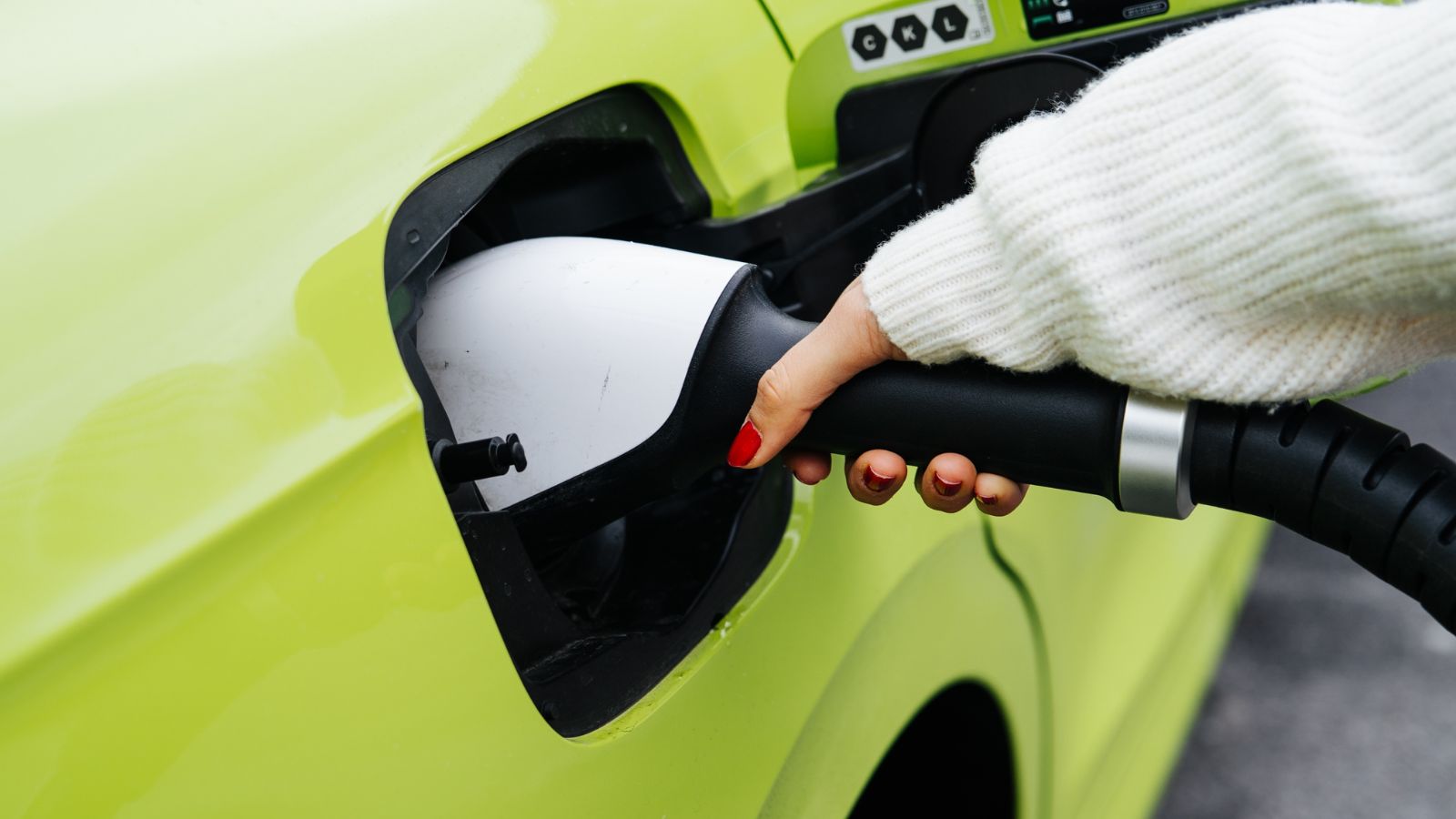
A 15-minute charging stop can look very different depending on the electric vehicle at the plug. In the Canadian Automobile Association’s 2026 EV Circuit, 22 EVs drove the same 230-kilometre Ontario route before taking part in a standardized fast-charging session. The result most likely to catch shoppers’ attention was the spread: vehicles added an average of 110 kilometres of displayed range in 15 minutes, but individual results ran from just 58 kilometres to 178.
That gap matters because it turns charging speed from a specification-sheet detail into a practical road-trip issue. CAA’s test also showed major differences in energy use and charging cost, while its earlier winter testing demonstrated how much temperature can change the experience. The broader message is that advertised range alone tells only part of the EV ownership story.
CAA Put 22 EVs Through the Same 230-Kilometre Route
CAA conducted the 2026 EV Circuit on September 16, sending 22 electric vehicles from Blue Mountain to Vaughan, Ontario. The route covered 230 kilometres and mixed city streets, rural roads and highways. Every vehicle completed the drive without needing to stop for electricity, including the model with the shortest advertised range in the group. Across the fleet, the vehicles used about 40 per cent of their battery charge on average before reaching the end of the route.
That matters because the test was designed around a trip ordinary Canadian drivers might recognize rather than a laboratory maximum-range exercise. A family heading home from cottage country, for example, is more likely to care whether a vehicle can cover a few hundred mixed kilometres comfortably than whether it can reproduce a brochure number under controlled conditions. CAA also kept the route and operating settings consistent and said its automotive and business-intelligence teams validated the data, giving the comparisons a common real-world baseline.
Fifteen Minutes Added 110 Kilometres on Average
After the drive, the vehicles took part in a standardized 15-minute charging session. Across the vehicles that completed the charging test, CAA found an average gain of 110 kilometres of displayed driving range. Almost two-thirds added at least 100 kilometres during that quarter-hour stop. For a highway trip, that is enough in many cases to turn a coffee-and-washroom break into a meaningful extension of the next driving leg rather than a long wait built around the car.
The average, however, hides the most important detail. Individual results stretched from 58 kilometres at the low end to 178 kilometres at the high end, a difference of 120 kilometres from the same amount of clock time. CAA measured displayed range, meaning the number shown by the vehicle after charging, rather than driving every model another full leg to verify the added distance on the road. Even with that limitation, the spread gives shoppers a useful picture of how differently EVs can behave at a fast charger.
Lucid Produced Both the Best and the Lowest Result
The widest contrast came from two vehicles wearing the same brand badge. The 2026 Lucid Gravity added 178 kilometres of displayed range in 15 minutes, the strongest result in CAA’s test. The 2024 Lucid Air added 58 kilometres, the lowest completed result. Between them were vehicles such as the Hyundai IONIQ 5 at 136 kilometres, Mercedes-Benz CLA with EQ Technology at 135, Cadillac LYRIQ at 131 and Nissan LEAF at 126.
Those figures should not be read as a permanent ranking of each model’s maximum charging ability. CAA specifically noted that not every vehicle was driven down to the ideal battery level for its fastest possible charging rate, so charging rates varied. The Polestar 4 also encountered a complication and did not complete the charging test. In other words, this was a snapshot of a common road-trip situation, not a laboratory contest in which every battery started at the same state of charge and temperature. That caveat is especially important when one manufacturer appears at both extremes.
Energy Efficiency Changed the Meaning of Every Kilowatt-Hour
Charging power is only one part of how much useful distance an EV gains. CAA measured energy consumption ranging from 11.43 kWh per 100 kilometres for the Toyota bZ to 28.91 kWh per 100 kilometres for the Lucid Gravity. The Tesla Model Y, Tesla Model 3, Kia EV4 and Nissan LEAF were also among the lowest-consuming vehicles in the group. At the other end were large, heavy vehicles including the GMC HUMMER EV SUV and Tesla Cybertruck, both above 23 kWh per 100 kilometres in the circuit.
That difference helps explain why shoppers should look beyond a charger’s peak kilowatt rating. A more efficient vehicle needs less electricity to travel the same distance, so each kilowatt-hour delivered can translate into more kilometres. CAA described the group’s overall energy use as roughly equivalent to two litres of gasoline per 100 kilometres, compared with roughly eight to 10 litres per 100 kilometres for an average Canadian passenger vehicle. The comparison is about energy efficiency, not identical fuel costs, but it shows why consumption matters alongside battery size.
Battery State and Temperature Can Rewrite the Charging Result
Fast charging is not a flat-rate process where a vehicle accepts its maximum power from the first minute to the last. CAA’s complete-results data warns that some vehicles did not reach an ideal level of discharge before the charging test. Natural Resources Canada likewise notes that charging time can vary with the vehicle, battery, charger, temperature and battery state. That means two stops at the same charger can produce different results even in the same EV if one begins with a warmer battery or a lower state of charge.
The broader charging industry uses similar assumptions when describing ideal fast-charging performance. The International Energy Agency says a 15-minute session at a 150-kW charger can add almost 180 kilometres of mixed-driving range under an example that begins at 10 per cent state of charge with a roughly 67-kWh battery and 400-kilometre on-road range. That is strikingly close to the top of CAA’s real-world result, but the assumptions matter. Arriving with a battery already well above half full can result in substantially different charging performance.
September Results Looked Very Different From CAA’s Winter Test
CAA said the EVs in its September 2026 circuit used about 40 per cent less energy, on average, than the vehicles evaluated in its February 2025 winter test. The September group also added about 15 per cent more displayed range during the charging session. CAA cautioned that the two groups contained different vehicles and were tested under different conditions, so the percentages are not a model-for-model seasonal comparison. Still, the contrast reinforces how strongly cold weather can affect both energy consumption and charging.
The winter test provides the sharper Canadian context. In temperatures that ranged roughly from -7 C to -15 C, the vehicles that completed CAA’s winter range run travelled 14 to 39 per cent less than their official ranges. In the accompanying 15-minute charging test, results ranged from 19 kilometres for the Toyota bZ4X to 205 kilometres for the Tesla Model 3, with an average near 100 kilometres. For drivers planning January road trips, those figures make battery preconditioning and realistic charging-stop planning more than technical footnotes.
Public Fast-Charging Cost Varied Almost as Much as Performance
CAA also tested what the charging stop cost. It reported an average price of $13.45 for the 15-minute session at the public fast chargers used in the circuit. To make vehicle-to-vehicle comparisons more useful, its complete-results table also calculated cost per 100 kilometres of displayed range added. That normalized figure ran from $7.28 for the Tesla Model 3 and $8.23 for the Model Y to $24.39 for the GMC HUMMER EV SUV. The Chevrolet Silverado EV and Rivian R1T were also among the higher-cost results.
There are important qualifications. All vehicles used Tesla charging stations for a more consistent charging experience, and CAA noted that Tesla vehicles receive preferred pricing there. The Lucid Gravity’s charging session was free, so CAA did not publish a comparable cost figure for it. CAA also described the test as a higher-cost road-trip scenario using premium public fast charging at full capacity, not a proxy for what most owners pay to power an EV over an entire year. That distinction matters when comparing EV operating costs with gasoline.
Most EV Charging Still Happens Away From Premium Fast Chargers
The price of a road-trip fast charge can dominate attention because it is visible and immediate, but it is not how most EV owners replenish their batteries. CAA says public fast charging typically accounts for only about eight to 18 per cent of charging among EV drivers in its national research, with most charging taking place in lower-cost settings such as home or work. The International Energy Agency similarly describes home charging as the preferred option where it is available because it is generally more convenient and affordable.
That helps explain why a $13 or $20 highway stop should not be treated as the everyday energy bill for an EV. The IEA says public fast charging can carry a substantial markup over residential electricity, while home charging has generally preserved a running-cost advantage compared with comparable gasoline vehicles in major EV markets. Natural Resources Canada classifies Level 2 charging as the common home and destination option, while Level 3 DC fast charging is aimed at dedicated public stations and highway corridors. For many households, the economics depend heavily on where the vehicle spends the night.
Canada’s Charging Network Is Growing as ZEV Registrations Rise
CAA’s test arrives as Canadian zero-emission vehicle registrations are showing year-over-year growth again. Statistics Canada reported 58,811 new ZEV registrations in the second quarter of 2026, up 26.7 per cent from the same quarter a year earlier. ZEVs represented 10.7 per cent of all new motor-vehicle registrations in that quarter, marking a third consecutive quarter above the one-in-10 level. The ZEV category includes battery-electric vehicles and plug-in hybrids, so it is broader than the battery-electric models evaluated in CAA’s circuit.
Charging infrastructure is expanding as well. Transport Canada’s EV dashboard, updated in August with infrastructure data through March 31, 2026, counted 39,220 public light-duty charging ports nationwide. Of those, 8,479 were Level 3 fast chargers and 30,741 were Level 2. The national ratio was about 27 light-duty EVs for every public charger. Federal programs continue to support additional installations, including projects aimed at adding charging capacity and improving access as the number of electrified vehicles on Canadian roads increases.
Advertised Range Is Becoming Only One Part of the Buying Decision
The clearest lesson from CAA’s circuit is that EV ownership cannot be reduced to one brochure number. Every one of the 22 vehicles completed the same 230-kilometre route without charging, yet the 15-minute range gain still varied by more than threefold. That is the kind of difference that becomes noticeable on a long trip, where one vehicle may be ready to leave before lunch is finished while another may need a longer stop to build the same driving buffer.
For buyers, the useful comparison is therefore broader than “How far does it go on a full battery?” Natural Resources Canada publishes model-specific energy-consumption and range information, while CAA’s testing adds a real-world view of short fast-charging stops and seasonal performance. A practical comparison includes consumption in kWh/100 km, charging performance at different battery levels, winter behaviour, access to home charging and typical public-charging costs. As CAA’s 58-to-178-kilometre spread demonstrates, how quickly an EV can put useful kilometres back into its battery may matter almost as much as how far it can travel when completely full.