


















• About
  • Contact
AutoIgloo
  • News & Trends
    Quebec Transit Operator Unveils 3-Megawatt EV Charging System With 40 Overhead Chargers

    Quebec Transit Operator Unveils 3-Megawatt EV Charging System With 40 Overhead Chargers

    Audi Deepens China Alliance With Four New Models as Canada Debates How Far to Open Its EV Market

    Audi CEO Faces Union Backlash After Appearing With Trump to Tout $4-Billion U.S. Auto Factory

    Mazda CX-5 vs Acura RDX: How Close Can Mainstream Get to Luxury?

    Mazda Brings Google Gemini to Canadian CX-5 SUVs as AI Moves Into Everyday Driving

    Canadian Auto-Parts Factory Sales Jump 6.2% as Manufacturing Defies Expectations for a Drop

    Canadian Auto and Parts Wholesalers Help Push September Sales Up 0.5%, StatCan Reports

    BYD, CATL and Xiaomi Are in the Mix for Xi’s Washington Trip as Canada and U.S. Split on Chinese EV Access

    Toyota RAV4 Plug-In Hybrid vs Regular Hybrid: Which One Should Canadians Buy?

    17 Vehicles That Are Quietly Getting Crushed by Insurance Costs in Canada

    Honda CR-V Hybrid Review: The Family SUV That Plays It Safe

  • Car Reviews
    Mitsubishi Outlander Review: Is It Still the Underrated Family SUV?

    Mitsubishi Outlander Review: Is It Still the Underrated Family SUV?

    19 Cars With Windshields That Crack Constantly on Canadian Highways

    Subaru Forester vs Toyota RAV4: Which SUV Is Better for Canadian Winters?

    20 Cars Canadians Should Avoid If They Hate Expensive Windshield Replacements

    Hyundai Tucson vs Kia Sportage: Which Compact SUV Is the Better Everyday Buy?

    BYD, CATL and Xiaomi Are in the Mix for Xi’s Washington Trip as Canada and U.S. Split on Chinese EV Access

    Toyota RAV4 Plug-In Hybrid vs Regular Hybrid: Which One Should Canadians Buy?

    17 Vehicles That Are Quietly Getting Crushed by Insurance Costs in Canada

    Honda CR-V Hybrid Review: The Family SUV That Plays It Safe

    2026 Toyota RAV4 vs Honda CR-V: Which SUV Makes More Sense for Canadians?

    2026 Toyota RAV4 vs Honda CR-V: Which SUV Makes More Sense for Canadians?

  • Buying Guides
    Mitsubishi Outlander Review: Is It Still the Underrated Family SUV?

    Mitsubishi Outlander Review: Is It Still the Underrated Family SUV?

    16 Used SUVs That Suddenly Don’t Look Like Smart Buys in Canada

    Nissan Rogue vs Honda CR-V: Which SUV Feels Better After the Test Drive?

    19 Cars With Windshields That Crack Constantly on Canadian Highways

    Subaru Forester vs Toyota RAV4: Which SUV Is Better for Canadian Winters?

    Mazda CX-5 vs Mazda CX-50: Which One Feels More Premium for the Money?

    Mazda CX-5 vs Mazda CX-50: Which One Feels More Premium for the Money?

    17 Vehicles That Are Quietly Getting Crushed by Insurance Costs in Canada

    Honda CR-V Hybrid Review: The Family SUV That Plays It Safe

    18 Cars With Parts Prices So Wild They’re Becoming Hard to Own in Canada

    Is the New Toyota RAV4 Still the Safest Bet in Canada?

  • Comparisons
    19 Cars With Windshields That Crack Constantly on Canadian Highways

    Subaru Forester vs Toyota RAV4: Which SUV Is Better for Canadian Winters?

    21 Vehicles With the Best Real-World Fuel Economy in Canada (Not Just the Sticker)

    Toyota Corolla Cross vs Honda HR-V: Which Small SUV Is Less Compromised?

    20 Cars Canadians Should Avoid If They Hate Expensive Windshield Replacements

    Hyundai Tucson vs Kia Sportage: Which Compact SUV Is the Better Everyday Buy?

    BYD, CATL and Xiaomi Are in the Mix for Xi’s Washington Trip as Canada and U.S. Split on Chinese EV Access

    Toyota RAV4 Plug-In Hybrid vs Regular Hybrid: Which One Should Canadians Buy?

    Honda Asked Suppliers for 30% Parts Cost Cuts as $9.4-Billion Savings Drive Hits Global Supply Chain

    Why Some Buyers Are Choosing Older Hondas Over Newer SUVs

    25 EV Charging Mistakes Canadians Make in March (That Wreck Range)

    Why Some Canadians Are Choosing Hybrids Over Full EVs Again

  • EVs & Hybrids
    BYD, CATL and Xiaomi Are in the Mix for Xi’s Washington Trip as Canada and U.S. Split on Chinese EV Access

    Toyota RAV4 Plug-In Hybrid vs Regular Hybrid: Which One Should Canadians Buy?

    Geely Auto’s Core Profit Jumps 46% as Chinese EV Expansion Accelerates — With Canada Now Opening to Geely-Owned Lotus

    Geely Confirms Canadian Vehicle Sales for 2027 as Chinese Automakers Challenge Established Brands

    18 Cars That Will Feel Dated Fast as New Chinese EVs Arrive

    12 EVs Now Price Below $41,000 in Canada—Fiat 500e Falls Under $30,000 With Rebate

    The Used EV Question Canadians Should Ask Before Buying One

    The Used EV Question Canadians Should Ask Before Buying One

    Why Some EV Owners Are Getting Sticker Shock From Home Charging Setups

    Why Some EV Owners Are Getting Sticker Shock From Home Charging Setups

    20 Signs Your Car Battery Is About to Leave You Stranded

    Canadian Auto Jobs Become a Central Fault Line as Ottawa Reveals Why It Rejected U.S. Vehicle Terms

  • More
    • Pricing & Deals
    • Winter Driving
    • Ownership & Maintenance
No Result
View All Result
AutoIgloo
No Result
View All Result

Home » News & Trends

Audi CEO Faces Union Backlash After Appearing With Trump to Tout $4-Billion U.S. Auto Factory

Nate Brewer by Nate Brewer
October 26, 2026
Reading Time: 7 mins read
A A
Photo Credit: Shutterstock

Photo Credit: Shutterstock

465
SHARES
1.5k
VIEWS
Share on FacebookShare on Twitter

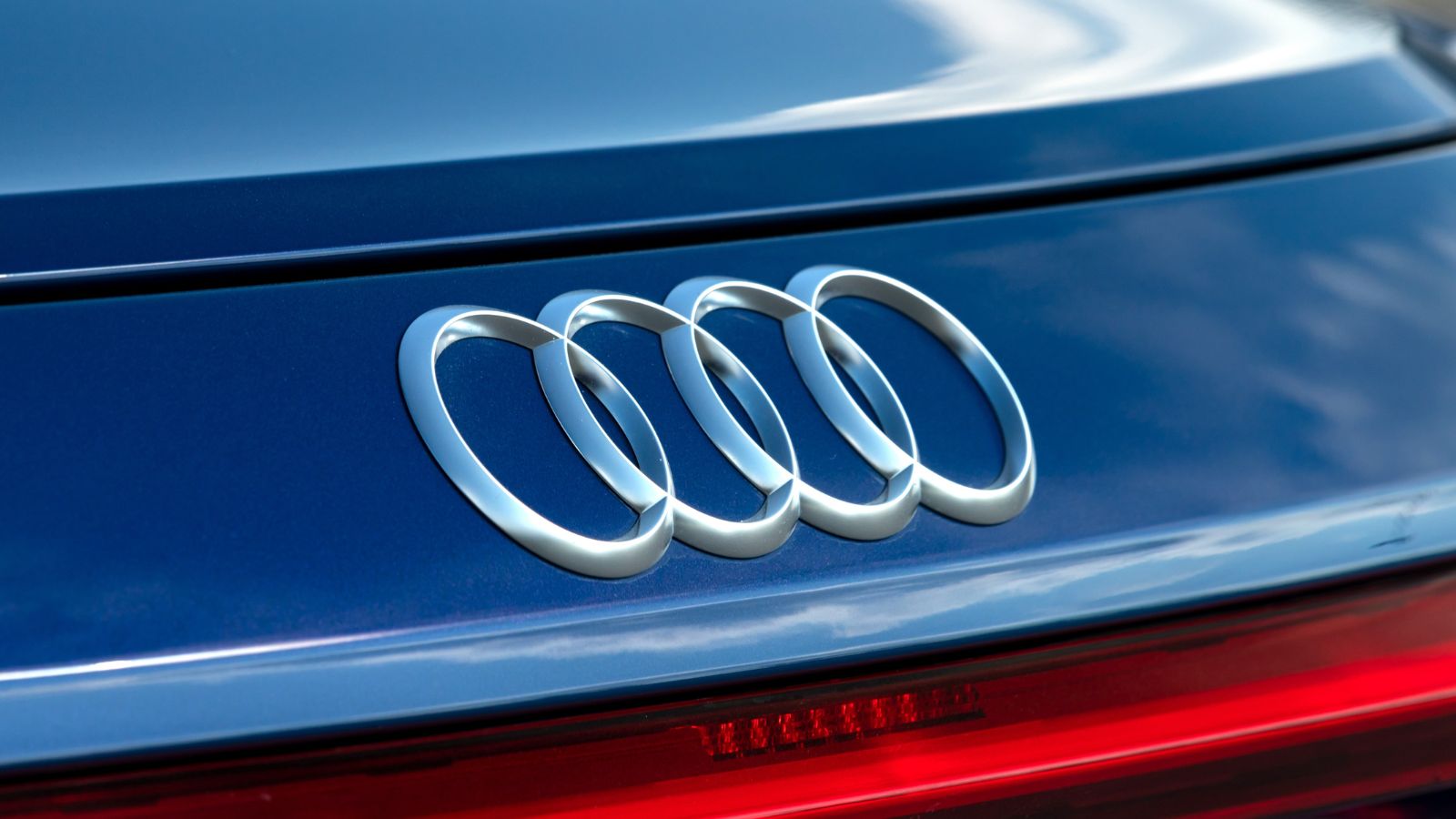
Audi’s plan to build its first U.S. factory should have been a straightforward industrial announcement: billions of dollars in investment, thousands of jobs and a long-sought answer to the tariff problem squeezing the German luxury brand. Instead, CEO Gernot Döllner’s decision to unveil the project alongside President Donald Trump at a Georgia campaign rally turned the factory into a political controversy inside Volkswagen’s home country.

The backlash now places two legitimate Audi priorities in direct tension. Management wants a stronger, more profitable U.S. manufacturing base. German labour leaders want assurances that the expansion will not come at the expense of existing plants and employees — and they are questioning why the company’s chief executive appeared at a partisan event only days before U.S. midterm elections.

The Georgia Announcement Became More Than a Factory Story

Döllner appeared with Trump on October 24 at a campaign rally in Perry, Georgia, where the president promoted Audi’s proposed U.S. investment as evidence that his trade policies were bringing manufacturing into the country. Trump described the project as a $4.2-billion commitment near Macon, while Audi’s own announcement put the planned investment at around $4 billion. Döllner told the crowd that Audi intended to produce its largest and most premium SUVs in Georgia and framed the project as a long-term commitment to the American market.

The setting immediately changed how the announcement was received in Germany. This was not a neutral economic-development event or a conventional corporate news conference. Trump was campaigning for Republican candidates less than two weeks before the November 3 midterm elections. Audi’s chief executive was therefore standing on the same stage where a sitting president was trying to mobilize voters. That distinction is central to the dispute: labour leaders have not rejected the need for an American strategy, but they argue that tying the announcement so visibly to an election rally blurred the line between business advocacy and political participation.

IG Metall Says Döllner Crossed Audi’s Neutrality Line

The strongest criticism came from Christiane Benner, president of IG Metall and deputy chair of Volkswagen’s supervisory board. She described Döllner’s appearance as “deeply embarrassing” and politically unacceptable, arguing that it violated Audi’s own standards on political neutrality. The union’s objection is unusually specific because Audi has published guidelines governing political lobbying. Those rules state that, in the final three months before elections, the company should not hold publicly effective appointments with parties or politicians who are standing for election, or sponsor corresponding events.

There is, however, an important qualification. Reuters reported that Audi’s management board had approved an exception before Döllner went on stage, according to a person familiar with the matter. That means the controversy is not simply a case of a CEO ignoring a written rule without internal review. It is also a dispute over whether management should have permitted an exception at all. Labour representatives were reportedly involved in discussions beforehand, with works-council leader Daniela Cavallo raising reservations. The result is a governance argument as much as a political one: Audi may have found a procedural route for the appearance, but influential employee representatives still believe the decision violated the spirit of the company’s neutrality commitments.

The $4-Billion Plant Is Large, but It Is Not Yet Final

On its face, the Georgia project would be one of the most consequential manufacturing investments in Audi’s history. The company says it plans to spend around $4 billion, create approximately 4,500 jobs and build a plant capable of producing as many as 200,000 vehicles annually. Construction is scheduled to begin in 2027, with production expected to start in the early 2030s. Audi has selected the Middle Georgia Mega Site and says the factory would focus on premium SUVs tailored to North American customers.

Yet the public rollout was more definitive than the corporate approval process. Volkswagen has explicitly said that the decision to build the plant remains subject to approval by the relevant committees. IG Metall has made the same point, emphasizing that the final vote belongs to Volkswagen’s supervisory board. That distinction matters because this is not a routine spending decision. Volkswagen’s supervisory board has 20 members, with half representing shareholders and half representing employees under Germany’s co-determination system. Benner herself sits in the room as deputy chair. In other words, some of the people now criticizing how the project was announced will also be involved in the governance structure that assesses whether the investment should proceed.

Audi Has a Strong Business Case for Building in America

Behind the political drama is a problem Audi has been trying to solve for years: it sells heavily into the United States without having its own U.S. assembly plant. That leaves the company unusually exposed when trade rules change. Audi says the new Georgia factory would give North America a larger role in its global production network alongside Europe and China, while improving local sourcing, reducing trade and currency risks and creating a production base closer to American customers.

The commercial pressure is visible in Audi’s recent numbers. In the first half of 2026, the brand delivered 82,187 vehicles in North America excluding Mexico, down from 98,712 a year earlier. Audi said U.S. tariffs were among the factors weighing on the business. Worldwide Audi-brand deliveries fell just over 7 percent during the same period, while the broader Audi Group reported revenue of €29.2 billion and an operating margin of 3.8 percent. The company has also developed the Q9 flagship SUV specifically with U.S. customer preferences in mind. From that perspective, localizing large-SUV production is not merely a response to Trump. It fits Audi’s wider attempt to grow in a market where it sees substantial room to improve its position.

Tariffs Have Made the Existing Model Much More Expensive

The strongest financial argument for U.S. production is the tariff bill. Audi reported that U.S. tariffs reduced its 2025 operating result by approximately €1.2 billion. For a company that generated €3.37 billion in operating profit that year, the hit was significant. Volkswagen’s broader 2025 accounts also show how trade barriers have become a major structural cost, with increased U.S. import tariffs weighing on the group’s earnings. Audi’s exposure is particularly acute because its U.S.-bound vehicles have largely been imported from Europe and Mexico rather than assembled domestically.

That makes the Georgia plan easier to understand even for union leaders who dislike the circumstances of its announcement. A local plant can reduce tariff exposure, shorten parts of the supply chain and make pricing less vulnerable to sudden trade-policy shifts. Audi’s own statement says U.S. manufacturing would help reduce both trade and currency risks. The company is therefore making a familiar automotive calculation: when a market is large enough and import costs become high enough, local production can turn from a strategic option into an economic necessity. The argument now is not whether Audi needs a more durable American footprint, but how aggressively it should build one — and how the company balances that investment against commitments to existing European sites.

German Workers Are Watching Billions Flow Abroad While Jobs Shrink at Home

For Audi employees in Germany, the timing is difficult to separate from the broader restructuring underway across the company. In March 2025, Audi reached an agreement with its works council to reduce up to 7,500 jobs in indirect functions by 2029. The same agreement extended employment protection at German sites through the end of 2033 and committed roughly €8 billion of investment to the company’s home plants through 2029. Management presented the package as a compromise: lower costs and a leaner organization in exchange for longer-term security and continued investment.

Workers have nevertheless lived through a series of unsettling changes. Audi closed its Brussels factory in February 2025 after agreeing a social plan for roughly 3,000 employees. At Volkswagen Group level, the restructuring has grown far larger, with the company pursuing a sweeping Future Plan that includes major workforce reductions and a smaller production footprint. Against that backdrop, a $4-billion factory announcement in Georgia can look very different depending on where someone is standing. To U.S. officials, it represents new factories and jobs. To an Audi employee in Germany, it can raise a more personal question: why is new capacity being funded abroad while established European operations are being asked to become smaller and cheaper?

Neckarsulm Turns the Debate Into a Question of Job Security

The anxiety is especially visible at Audi’s Neckarsulm plant in southwestern Germany. About 15,000 people work at the site, which builds models including the A5, A6 and A8. Volkswagen’s restructuring plan has left Neckarsulm among four German plants without guaranteed competitive follow-on utilization in the next decade. Döllner told employees in October that the site needs a viable long-term industrial perspective and warned that tradition alone cannot secure its future.

Workers were already protesting months before the Georgia announcement. About 6,000 people joined a demonstration in July, according to the works council, as employees demanded clarity about the plant’s future. Audi has also been reducing capacity there; the company said earlier this year that Neckarsulm was operating at annual capacity of about 225,000 vehicles, roughly 75,000 below previous levels. These facts explain why the U.S. investment is so sensitive. The argument is not simply nationalist resistance to overseas expansion. Many labour representatives accept that Audi needs a stronger U.S. position. Their demand is that management demonstrate the same urgency in securing products, investment and utilization for German factories that it is showing in creating a new American one.

The Factory Decision Now Moves Back Into Volkswagen’s Power Structure

The next phase will be less theatrical than the Georgia rally but potentially more important. Volkswagen’s supervisory board must still consider the investment, and employee representatives have substantial influence because half of the board’s seats are held by labour representatives. Benner’s dual role — union president and deputy supervisory-board chair — makes her criticism especially consequential. Lower Saxony premier Olaf Lies, who also sits on the board, has said a campaign rally was the wrong place to announce an investment of this scale and stressed that the final decision has not yet been made.

That does not mean the Georgia project is likely to disappear. Volkswagen leadership has publicly described North America as a key growth market, and Audi has laid out a clear strategic case for local manufacturing. The more immediate risk is that a project intended to demonstrate confidence has deepened mistrust between management and labour at a sensitive moment. Döllner now has to defend two decisions at once: why Audi should commit billions of dollars to U.S. production, and why its CEO chose a partisan campaign stage to help unveil it. The first argument may be relatively easy to make on business grounds. The second is likely to remain the more contentious one inside Germany.


Recommended.

15 Ways a Low Monthly Payment Can Fool Canadian Car Buyers

15 Ways a Low Monthly Payment Can Fool Canadian Car Buyers

May 7, 2026
Vancouver’s Ballard Backs Hydrogen-Bus Fuel Cells With 250,000-Mile Performance Guarantee

Vancouver’s Ballard Backs Hydrogen-Bus Fuel Cells With 250,000-Mile Performance Guarantee

October 3, 2026

Trending.

Canada’s Auto Industry Says Tariff Fight Has Already Cost the Sector More Than $100 Billion

Trump’s 50% Canada Auto-Tariff Threat Is Now Forcing Automakers to Plan Around a January 1 Deadline

September 27, 2026
Canada’s Ballard Puts a 250,000-Mile Performance Guarantee Behind Hydrogen Buses

Canada’s Ballard Puts a 250,000-Mile Performance Guarantee Behind Hydrogen Buses

October 2, 2026
15 Vehicles Canadians May Want to Avoid Before May Long Weekend

Tesla Buyers in Canada Are Reporting Fresh Model Y Delivery Delays as Some Orders Slip Into October and November 2.

September 27, 2026
10 Reasons the Canadian Car Market Feels Different Heading Into Summer

Canadian Auto Sales Rise 3.4% for a Fourth Straight Month—but 2026 Still Trails Last Year

October 3, 2026
PBO Warns U.S. Tariff War Threatens Up to 185,000 Canadian Jobs, With Auto Manufacturing Among Hardest Hit

PBO Warns U.S. Tariff War Threatens Up to 185,000 Canadian Jobs, With Auto Manufacturing Among Hardest Hit

October 21, 2026
  • About
  • Contact
  • Privacy Policy
  • Disclaimer
  • Editorial Policies
  • Terms and Conditions
A Revir Media Group Website

2026 Autoigloo - © All rights reserved

No Result
View All Result
  • News & Trends
  • Car Reviews
  • Buying Guides
  • Comparisons
  • EVs & Hybrids
  • More
    • Pricing & Deals
    • Winter Driving
    • Ownership & Maintenance

2026 Autoigloo - © All rights reserved

This website uses cookies. By continuing to use this website you are giving consent to cookies being used. Visit our Privacy and Cookie Policy.




