


























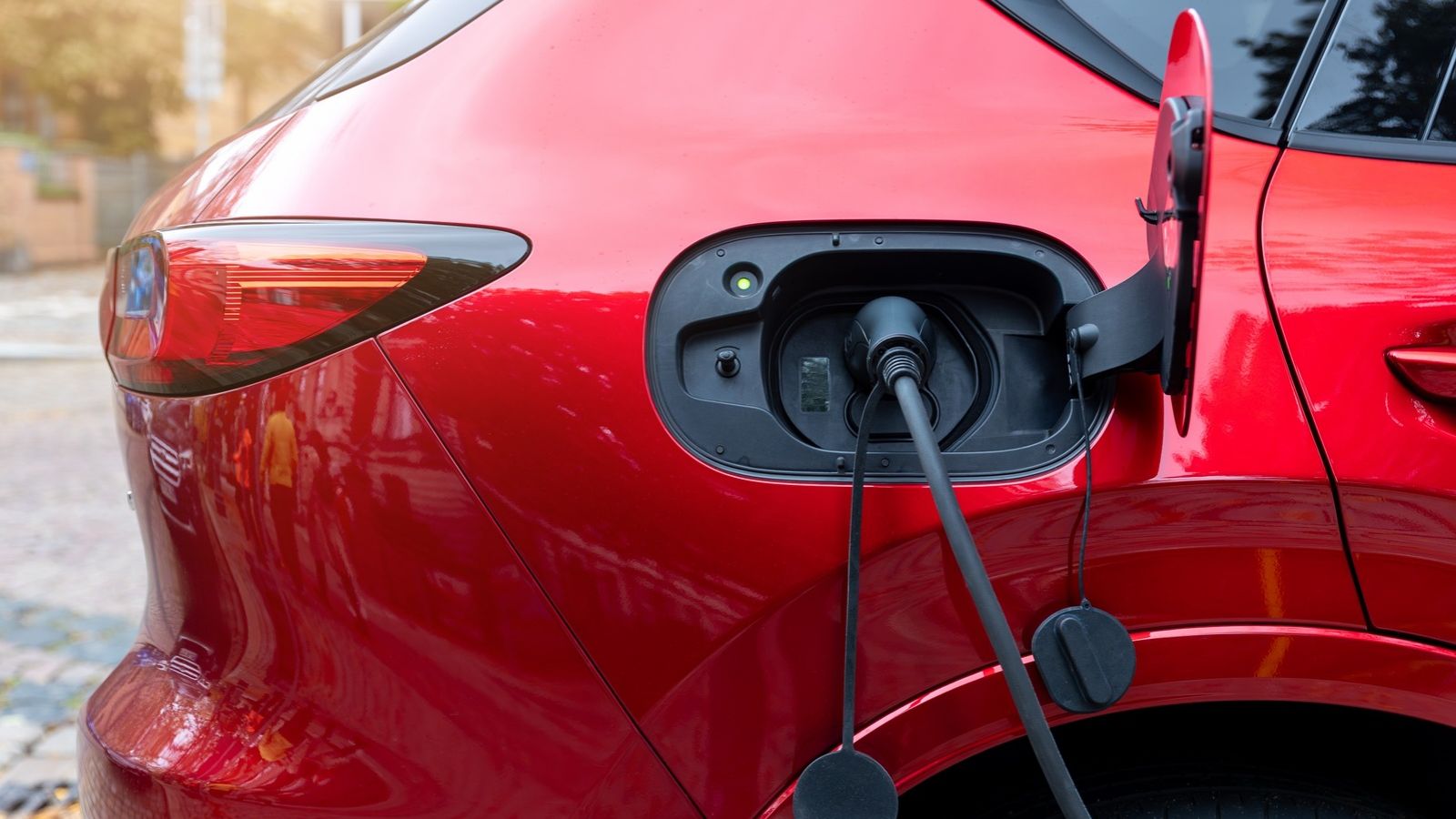
Canada’s electric-vehicle market is gaining momentum again, but the recovery is moving much faster than the broader automotive industry. Statistics Canada reports that 22,716 new zero-emission vehicles were sold in August 2026, a 55.1% increase from a year earlier. Total new motor vehicle sales reached 174,611, up 4.9%.
Released on October 15, the figures show a substantial shift in the vehicles Canadians are purchasing. They also arrive after a difficult comparison year, making the rebound more complicated than one large percentage suggests. For households weighing purchase prices, charging arrangements and winter driving, the central question remains practical: whether an electrified vehicle fits both the budget and everyday life.
Zero-Emission Vehicles Capture a Larger Share of Canadian Purchases
Zero-emission vehicles accounted for 13.0% of Canada’s new motor vehicle sales in August, compared with 8.8% a year earlier. That is a gain of 4.2 percentage points, not merely a 4.2% increase. Put another way, roughly 13 of every 100 new vehicles sold belonged to the ZEV category, up from fewer than nine. The change shows that plug-in models were gaining ground within the market, rather than simply rising alongside all vehicle purchases.
The growth rate nevertheless should not be confused with dominance. The remaining 87% of sales fell outside the ZEV category, meaning most new vehicles sold were still not plug-in models. Nor does a 13% share of one month’s purchases describe the entire fleet already travelling on Canadian roads. New sales add vehicles gradually to a much larger existing population. The August result therefore marks a meaningful change in buying patterns, but not an overnight transformation of the country’s transportation system or the vehicles parked in Canadian driveways.
Plug-In Hybrids Are Included in the Zero-Emission Total
The ZEV label requires careful reading. Statistics Canada includes both battery-electric vehicles and plug-in hybrid electric vehicles because each can operate without tailpipe emissions. Conventional hybrids, which cannot be charged from an external electricity source, are not part of that category. Consequently, the headline increase should not be presented as a 55.1% jump in fully electric vehicle sales alone. The published August summary does not separate the two plug-in technologies.
For households, the distinction changes the ownership experience. A battery-electric vehicle relies on stored electricity, while a plug-in hybrid combines a rechargeable battery with a combustion engine. A driver might use the latter’s electric capability for local errands and gasoline for longer journeys, depending on the vehicle’s range and charging habits. That flexibility also means its actual emissions depend partly on how it is used. “Zero-emission” in this statistical context describes the potential for driving without exhaust emissions; it is not a claim that producing the electricity, or every kilometre driven, creates no environmental impact.
A Difficult 2025 Makes the Rebound Look More Dramatic
The comparison year helps explain why August’s growth looks so dramatic. Statistics Canada’s original August 2025 release reported that ZEV sales had fallen 37.0% from August 2024. The broader new-vehicle market had increased only 0.5%. This means the latest jump is measured against a period when plug-in purchases were already depressed, rather than against an exceptionally strong month. A large rebound and a difficult recent history can therefore both be true.
The mathematics illustrates the point. In a hypothetical market starting at 100 sales, a 37% decline leaves 63. A subsequent 55.1% increase raises that figure to about 98, not 155. This example is not a reconstruction of Canada’s revised vehicle totals; it shows why percentage losses and gains do not cancel symmetrically. Statistics Canada can revise earlier observations, so figures from successive releases should not be combined as though every historical estimate remained unchanged. August’s improvement is substantial, but the comparison alone cannot establish a new sales record or prove that the earlier downturn has been fully reversed.
Federal Rebates Have Returned With Important Conditions
Federal purchase support is again part of the Canadian market. The Electric Vehicle Affordability Program began covering qualifying transactions on February 16, 2026. For 2026, it offers up to C$5,000 for eligible battery-electric and hydrogen fuel-cell vehicles, and up to C$2,500 for eligible plug-in hybrids. The assistance is applied through participating sellers at the point of sale, with shorter eligible leases receiving proportionately smaller amounts. For a household comparing two vehicles, that difference can materially change the initial purchase calculation.
Eligibility, however, is narrower than simply buying something labelled electric. Vehicles generally must have a final transaction value of C$50,000 or less and be manufactured in Canada or a country with a Canadian free-trade agreement. Canadian-made vehicles are exempt from the price cap. These conditions make manufacturing location and transaction details important, not just the badge on the hood. The program provides relevant context for August’s recovery, but Statistics Canada’s sales release does not measure how many additional purchases it caused. Rebates may help explain demand without being a proven explanation for the entire increase.
Stronger Sales Do Not Necessarily Mean Cheaper Vehicles
The overall market’s recovery does not automatically translate into cheaper vehicles. National new-vehicle sales revenue increased 8.8% in August, faster than the 4.9% rise in units sold. Nova Scotia’s Department of Finance, analysing the Statistics Canada data, put the national average value per new vehicle at C$56,661. That figure covers the wider new-vehicle market, not ZEVs alone, and should not be mistaken for the price of a typical electric car or the amount every buyer paid.
An average can change because manufacturers charge more, because customers select different equipment, or because the mix of inexpensive and costly vehicles shifts. It therefore cannot establish that every model became more expensive. For a household considering replacement transportation, the relevant comparison remains the actual deal on comparable vehicles, including financing and ownership expenses. A market can record higher sales while many families still find a new vehicle difficult to afford. August’s stronger ZEV demand is evidence that more purchases were completed, not proof that the affordability problem has disappeared for Canadian motorists.
Provincial Results Reveal an Uneven Recovery
National growth is not being repeated at the same pace everywhere. A separate Statistics Canada release covering registrations in April through June 2026 showed ZEV increases of 46.6% in Ontario, 31.5% in British Columbia and 12.5% in Quebec compared with a year earlier. New Brunswick moved in the opposite direction, recording a 16.6% decline. These are second-quarter registration figures, not provincial breakdowns of August sales, but they demonstrate why a single national headline cannot describe every local market.
Across Canada, that quarterly release counted 58,811 new ZEV registrations, up 26.7% and representing 10.7% of all new registrations. It was the second consecutive quarter of year-over-year ZEV growth, providing context that extends beyond August alone. Even so, a faster percentage increase does not necessarily mean a province recorded more registrations than a larger market with slower growth. For dealerships and charging providers, the implication is practical: expansion plans need local evidence. A national recovery may support investment, while the appropriate scale and location still depend on the customers being served.
Import Changes Add Another Layer to the Competition
Changes to vehicle imports provide another part of the competitive backdrop. Canada introduced an initial annual quota of 49,000 China-built electric vehicles eligible for a 6.1% most-favoured-nation tariff, effective March 1, 2026. Global Affairs Canada administers the arrangement through import rules and permits. This creates a defined opening for qualifying Chinese-made vehicles rather than unlimited access to the Canadian market, and it potentially broadens the range of products competing for buyers.
Import treatment and purchase incentives are separate questions. A vehicle can be permitted into Canada without automatically qualifying for the federal affordability rebate. Likewise, a trade-policy change is not evidence that imported vehicles caused August’s increase. The headline sales release does not identify individual manufacturers or measure the contribution of this quota. For an automaker, the commercial opportunity still depends on the vehicles available, regulatory compliance, pricing and customer support. For buyers, the meaningful outcome would be additional competitive choices. Whether those choices materially change national purchasing patterns requires evidence beyond the existence of an import allowance.
Home Charging Can Change the Entire Ownership Experience
Charging access can make two otherwise similar households experience electric ownership very differently. Natural Resources Canada reports that more than 80% of EV owners charge at home. For someone with a suitable parking space and electrical connection, charging can become an overnight routine rather than a separate stop during the day. That convenience helps explain why the practical appeal of an EV depends on more than its advertised range or the availability of a purchase rebate.
Consider the contrast with an apartment resident whose building has no charger. That person may need to rely on workplace facilities or public stations, making location, availability and charging time part of the ownership calculation. Federal research identifies existing multi-unit buildings as an important infrastructure challenge because installing equipment can require retrofits. This is an illustrative contrast, not a profile of particular August buyers. As sales grow, the relevant infrastructure question is therefore not only how many chargers exist nationally, but whether dependable charging is available where new owners actually park, work and travel.
Winter Performance Remains a Practical Test for Canadian Buyers
A summer sales rebound does not remove the questions Canadian drivers face when temperatures fall. In February 2025, the Canadian Automobile Association published results from a winter test involving 14 EVs driven in temperatures ranging from minus 7 to minus 15 degrees Celsius. The vehicles travelled between 14% and 39% less than their official range figures. The wide spread was as important as the overall reduction: different vehicles responded differently to the same general winter challenge.
Those results describe the tested vehicles and conditions, not a universal penalty that can be applied to every EV sold in 2026. They nevertheless provide a useful reminder that a family’s longest winter journey may matter more than an annual-average range rating. CAA also tested fast charging and found substantial differences between vehicles. For dealers, explaining such limitations clearly can help align expectations with actual use. For the broader market, sustained adoption will depend partly on whether the vehicles purchased during stronger sales months remain convenient and dependable when everyday driving conditions become more demanding.
Sustained Growth Will Matter More Than One Strong Headline
The strength of the headline rests on recorded purchases rather than expressions of interest. Statistics Canada’s monthly sales program collects consolidated dealer results from manufacturers and importers, measuring both vehicle numbers and sales values. The agency describes it as a census of known active manufacturers and importers, not a consumer opinion poll. That makes the results valuable evidence of completed market activity, although the figures remain subject to revision and do not explain every buyer’s motivation.
The next test is whether the improvement persists across successive months and a wider range of customers. Encouraging quarterly results and a strong August can support a recovery narrative without guaranteeing the same growth through winter or into 2027. Affordability, appropriate vehicles and dependable charging remain practical conditions for continued adoption. For manufacturers, higher demand creates an opportunity to earn repeat business; for households, satisfaction will be measured over years of ownership rather than on delivery day. Canada’s ZEV market has regained momentum, but turning that rebound into lasting growth requires more than a striking year-over-year comparison.