Canada’s automotive rankings have delivered an interesting result: two popular Tesla electric vehicles are sharing top honours with one of the country’s most familiar gasoline and hybrid cars.
The Tesla Model 3, Tesla Model Y and Honda Civic have each earned 4.5 out of five stars in the 2027 edition of Le Guide de l’auto, the highest rating awarded by the publication. The results follow an evaluation of approximately 300 vehicles available in Quebec, considering safety, efficiency, expected reliability and driving enjoyment.
The recognition arrives as Honda introduces its updated 2027 Civic and Tesla navigates changing prices and import restrictions in Canada. It also highlights an important shift in consumer expectations: the best vehicle is no longer defined by one type of engine.
The ratings belong to the 2027 guide edition and do not necessarily mean every vehicle evaluated is a 2027 model-year vehicle.
Canada’s 2027 Automotive Ratings Put Three Familiar Names at the Top
The 61st edition of Le Guide de l’auto, a long-established Quebec automotive publication, has identified its highest-rated vehicles for 2027. Its editorial team evaluated approximately 300 new models sold in the Quebec market, considering safety ratings, fuel or energy consumption, predicted reliability, driving characteristics and overall impressions. The strongest performers received 4.5 stars out of five, the highest score awarded in this edition. Tesla’s Model 3 and Model Y were among those recognized, alongside the Honda Civic and a diverse selection of other vehicles.
The results are particularly interesting because the three vehicles serve different needs. The Model 3 is an electric sedan emphasizing technology and efficiency, while the Model Y provides the additional practicality of a crossover. The Civic remains a conventional compact-car choice with gasoline and hybrid powertrains. Their shared rating does not establish a single overall winner or replace independent crash-test results. Instead, it shows that vehicles with different designs, prices and ownership requirements can deliver similarly strong experiences.
Tesla Model 3 Earns Praise for Technology, Performance and Value
The Tesla Model 3 remains one of the most recognizable electric sedans available to Canadian motorists. In its 2027 assessment, Le Guide de l’auto highlighted the Model 3’s competitive pricing, generous standard equipment, driving characteristics and technology. The publication had previously praised improvements to manufacturing quality following the sedan’s substantial 2024 redesign. Its strengths also include electric efficiency and access to Tesla’s Supercharger network, although reviewers have raised concerns about depreciation and the placement of essential controls within the touchscreen interface.
Independent testing provides additional support for its efficiency credentials. During the Canadian Automobile Association’s September 2026 EV Circuit, the Model 3 consumed 11.85 kilowatt-hours per 100 kilometres over a standardized route. It also recorded the lowest cost among the participating vehicles for 100 kilometres of range added during a public fast-charging session, at C$7.28. Those results reflect specific testing conditions and Tesla’s preferred Supercharger pricing, rather than guaranteed costs for every owner. Nevertheless, they help explain the sedan’s strong showing among Canadian automotive reviewers.
Tesla Model Y’s Latest Improvements Strengthen Its Family Appeal
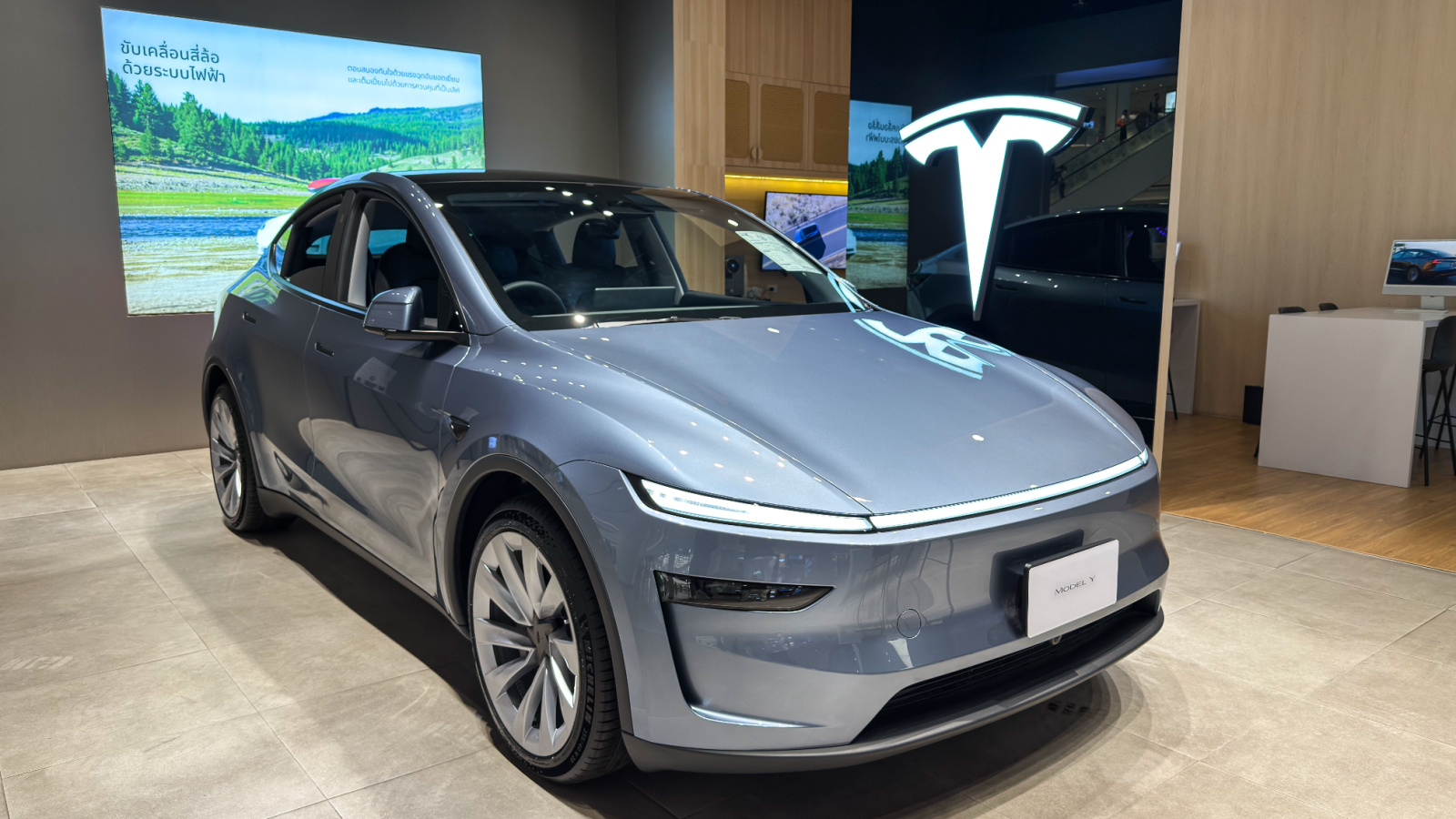
The Tesla Model Y also earned a place among the highest-rated vehicles, with reviewers emphasizing improvements made during its latest update. For the 2026 model year, Tesla revised the crossover’s exterior styling, improved cabin sound insulation, adjusted its suspension and addressed aspects of manufacturing quality. Le Guide de l’auto described the refreshed vehicle as feeling more solid and reassuring than early examples introduced in 2021. That matters for families who prioritize a quiet cabin, comfortable daily transportation and confidence about long-term ownership.
The Model Y offers greater cargo flexibility than the Model 3 while retaining the advantages of an electric drivetrain. Canadian specifications published by Le Guide de l’auto list estimated driving ranges of approximately 463 kilometres for a rear-wheel-drive version and up to 542 kilometres for an all-wheel-drive configuration, depending on equipment. CAA’s September testing also recorded energy consumption of 11.81 kWh per 100 kilometres for the tested Model Y. The figures suggest impressive efficiency for a crossover, although winter temperatures, highway speeds and charging habits can substantially affect real-world results.
Tesla’s Canadian Model 3 Orders Face an Unexpected Restriction
The recognition comes at an awkward moment for Canadians considering Tesla’s more affordable electric sedan. On October 13, Le Guide de l’auto reported that Tesla had suspended Canadian orders for its lower-priced Model 3 Premium rear-wheel-drive and all-wheel-drive versions. The Chinese-built configurations carried advertised starting prices of C$39,490 and C$49,990, respectively, before applicable additional charges. Tesla said demand had exhausted its available import allocation, with orders potentially reopening if additional permits were granted or when the next quota year begins in March 2027.
The situation is connected to Canada’s revised trade arrangement with China. Beginning March 1, 2026, Canada permitted an initial annual quota of 49,000 qualifying Chinese-made electric vehicles at the normal 6.1% tariff. Importantly, Tesla’s suspension did not mean the entire national quota had been filled. Federal figures still showed substantial unused capacity in early October. The distinction matters because an attractive advertised price is of little use when the desired configuration cannot currently be ordered. Availability may influence purchasing decisions as much as the review score.
Honda Civic’s Recognition Highlights Its Canadian Manufacturing Legacy
The Honda Civic’s presence among the highest-rated vehicles brings a distinctly Canadian dimension to the rankings. Honda manufactures the gasoline and hybrid versions of the Civic sedan at its Alliston, Ontario, assembly operations. The hatchback, by contrast, is assembled in Greensburg, Indiana. Honda says approximately 2.3 million Civics have been sold in Canada since the nameplate arrived in 1973, and the model has been the country’s best-selling passenger car in 26 of the past 28 years.
Reviewers emphasized the Civic’s solid construction, enjoyable handling, reliability expectations and resale value. These qualities help explain why the car remains popular despite becoming more expensive over successive generations. The 2027 Civic sedan begins at a manufacturer’s suggested retail price of C$29,090, excluding applicable additional charges. For a first-time buyer, a young household or someone replacing an aging commuter car, the Civic offers a familiar ownership proposition. Its presence alongside Tesla’s electric models shows that innovation does not necessarily require abandoning established engineering or manufacturing strengths.
Honda Adds a More Upscale Civic Without Requiring a Hybrid Upgrade
Honda is introducing meaningful equipment changes for the 2027 Civic, beginning with a new Sport-L trim. Positioned between the entry-level LX and the Sport Hybrid, the Sport-L adds features previously concentrated in higher-priced versions. They include leather upholstery, power-adjustable front seats, heated rear seats and revised interior trim. Hatchback buyers also receive additional conveniences, including dual-zone automatic climate control and a heated steering wheel. The new trim is expected to join Canadian dealerships before the end of 2026.
The pricing creates an interesting choice. The Civic Sport-L sedan carries an MSRP of C$33,550, compared with C$34,850 for the Sport Hybrid sedan. That relatively small difference could encourage buyers to compare equipment with long-term fuel savings rather than choosing solely on purchase price. Meanwhile, the top Sport Touring Hybrid gains Honda’s S+ Shift technology, which simulates gear changes and enhanced engine sounds. Honda has not extended that feature across the entire range. The updates demonstrate how automakers are competing through comfort, driving experience and equipment as well as powertrain technology.
The Civic Hybrid Offers an Alternative Path to Lower Running Costs
One of the Civic’s strongest arguments is its hybrid powertrain, which improves fuel economy without requiring external charging. Honda rates the 2027 Civic Sport Hybrid sedan at a combined 4.9 litres per 100 kilometres, compared with 6.7 litres for the gasoline-powered LX. The hybrid also produces 200 combined horsepower and 232 pound-feet of torque, versus 150 horsepower and 133 pound-feet for the conventional gasoline version. That combination gives buyers stronger acceleration and lower rated fuel consumption rather than forcing a compromise between the two.
The financial difference becomes more apparent over longer ownership periods. Based on the official combined ratings, a motorist travelling 20,000 kilometres annually could use approximately 360 fewer litres of gasoline with the hybrid than with the LX. Actual savings would depend on driving conditions, fuel prices and individual habits. The hybrid sedan also costs C$5,760 more at MSRP than the entry-level LX. Buyers therefore need to weigh fuel savings against the upfront premium, equipment differences and expected ownership period. For Canadians unable to install a home charger, the hybrid provides a practical form of electrification.
Kia EV4 Emerges as Another Highly Rated Electric Sedan
Tesla is not the only electric vehicle manufacturer receiving recognition. The Kia EV4 also earned 4.5 stars in the 2027 guide, reflecting the arrival of a more affordable competitor in Canada’s electric sedan market. Kia introduced the 2026 EV4 with a starting MSRP of C$38,995 and an estimated driving range of 391 kilometres for the standard-range model. A longer-range Wind configuration offers a manufacturer-estimated 552 kilometres. The vehicle uses a dedicated electric platform and includes a North American Charging Standard connector.
The EV4 also performed well in independent Canadian testing. CAA’s September 2026 EV Circuit recorded energy consumption of 11.89 kWh per 100 kilometres, putting it close to the Model 3 and Model Y under the event’s standardized conditions. The tested EV4 recorded C$10.25 per 100 kilometres of range added during its public fast-charging session. Le Guide de l’auto praised its competitive pricing, driving behaviour and warranty, while identifying some compromises in trunk access and headroom. The result reinforces an important point: Canadian electric-car buyers have increasingly credible alternatives to Tesla.
Larger Electric SUVs and Luxury Cars Also Receive Top Marks
The highest-rated electric vehicles extend beyond compact sedans and crossovers. Kia’s EV9, a three-row electric SUV, was recognized for its combination of family practicality and value. Kia’s Canadian specifications list an estimated maximum range of 491 kilometres for the 2026 Wind rear-wheel-drive version, with different ranges across the lineup. The EV9 also provides seating and cargo configurations suited to larger families, distinguishing it from smaller electric crossovers. Its recognition demonstrates that electric vehicles can compete in categories traditionally dominated by gasoline-powered family SUVs.
Luxury electric vehicles also featured prominently. Both the Lucid Air sedan and Lucid Gravity SUV appeared among the guide’s highest-rated selections, reflecting their technology, performance and refinement. During CAA’s September road test, the Lucid Gravity added 178 kilometres of displayed range in a standardized 15-minute charging session, the largest gain among participating vehicles. The Lucid Air recorded a much smaller gain during that particular test, illustrating how charging results depend on circumstances as well as a vehicle’s underlying capabilities. These comparisons underline the importance of examining real-world performance rather than relying exclusively on advertised range.
Toyota, Subaru and Sports Cars Show That EVs Do Not Dominate Every Category
Despite the strong showing from electric vehicles, the guide’s highest-rated selections include a substantial number of gasoline and hybrid models. Toyota was particularly well represented, with the Corolla, Camry, Corolla Cross, RAV4 and Land Cruiser receiving recognition. Reviewers emphasized qualities such as fuel efficiency, everyday practicality, established reliability and suitability for different driving needs. The Subaru Crosstrek also appeared among the top-rated vehicles, highlighting the appeal of a versatile compact crossover for buyers who value all-weather capability.
Enthusiast-oriented vehicles were not overlooked. The Mazda MX-5, Ford Mustang, Chevrolet Corvette, Porsche 911 and Volkswagen Golf GTI/Golf R were among the highest-scoring choices. Their appeal is rooted more heavily in driving engagement, handling and performance than maximum efficiency. These results demonstrate why a broad automotive evaluation produces multiple standouts rather than one universal recommendation. A driver choosing a Corolla Hybrid and someone shopping for a Porsche 911 may have very different priorities, yet both can reasonably expect excellence within the type of vehicle they seek.
Independent Safety Tests Provide Important Context for the Ratings
Safety is one component of the guide’s evaluations, but its 4.5-star score should not be confused with a government crash-test rating. Independent organizations use different methodologies to evaluate crash protection, injury risk and accident-avoidance technology. The U.S.-based Insurance Institute for Highway Safety, for example, identifies the 2027 Tesla Model Y as a Top Safety Pick+, its higher safety award. The Model Y received Good ratings in the institute’s updated small-overlap frontal, moderate-overlap frontal and side-impact evaluations.
Not every individual assessment was perfect. The same Model Y evaluation assigned a Marginal rating for seat-belt reminders, demonstrating why detailed results can be more informative than a single award. The institute has also evaluated the Model 3, with tests covering multiple model years under specific conditions. For Canadian buyers, an important step is verifying that a published crash-test result applies to the precise vehicle generation, body style and equipment being considered. Advanced driver-assistance features should also not be mistaken for fully autonomous driving capability. High ratings are valuable evidence, but they do not remove the driver’s responsibilities.
Government Incentives Can Change Which Electric Vehicle Offers the Best Value
Canada’s 2026 Electric Vehicle Affordability Program adds another factor to the purchase equation. Under the program, qualifying battery-electric vehicles can receive incentives of up to C$5,000, while eligible plug-in hybrids can receive up to C$2,500. For most vehicles, the final transaction value must not exceed C$50,000, although qualifying Canadian-made EVs are exempt from that price ceiling. Vehicles must also meet manufacturing-origin requirements, including production in Canada or a country with which Canada has a free-trade agreement.
Those rules create meaningful differences between vehicles that receive similar editorial ratings. Transport Canada’s published eligibility list includes specified Tesla Model Y rear-wheel-drive configurations and several Kia EV4 trims. Chinese-built Model 3 versions do not qualify simply because Canada allows them to enter under its reduced-tariff import quota. The conventional Honda Civic Hybrid does not qualify for a plug-in incentive either. Because eligibility depends on the exact vehicle and transaction, comparing advertised starting prices alone can produce a misleading result. Buyers need to examine the purchase agreement, available incentives and additional ownership costs.
Canada’s Growing Electrified Vehicle Market Gives the Rankings Wider Significance
The ratings arrive as Canadian buyers continue adopting electrified vehicles, although growth varies by region and powertrain. Statistics Canada reported 58,811 new zero-emission vehicle registrations in the second quarter of 2026, an increase of 26.7% from the same period in 2025. Zero-emission vehicles represented 10.7% of new registrations, compared with 8.6% one year earlier. This category includes battery-electric vehicles and qualifying plug-in hybrids, so it should not be interpreted as a measure of fully electric sales alone. Ontario posted a 46.6% year-over-year increase, while Quebec and British Columbia also recorded growth.
For consumers, the latest ratings offer a useful starting point rather than a final purchasing decision. Tesla’s Model 3 combines electric efficiency and technology, the Model Y provides additional family practicality, and Honda’s Civic offers proven compact-car appeal with efficient hybrid options. Each carries different considerations involving purchase price, insurance, maintenance, charging and availability. Their shared recognition in the 2027 guide suggests that Canada’s strongest vehicles are increasingly defined by how effectively they meet real ownership needs, rather than whether they rely on gasoline, electricity or a combination of both.