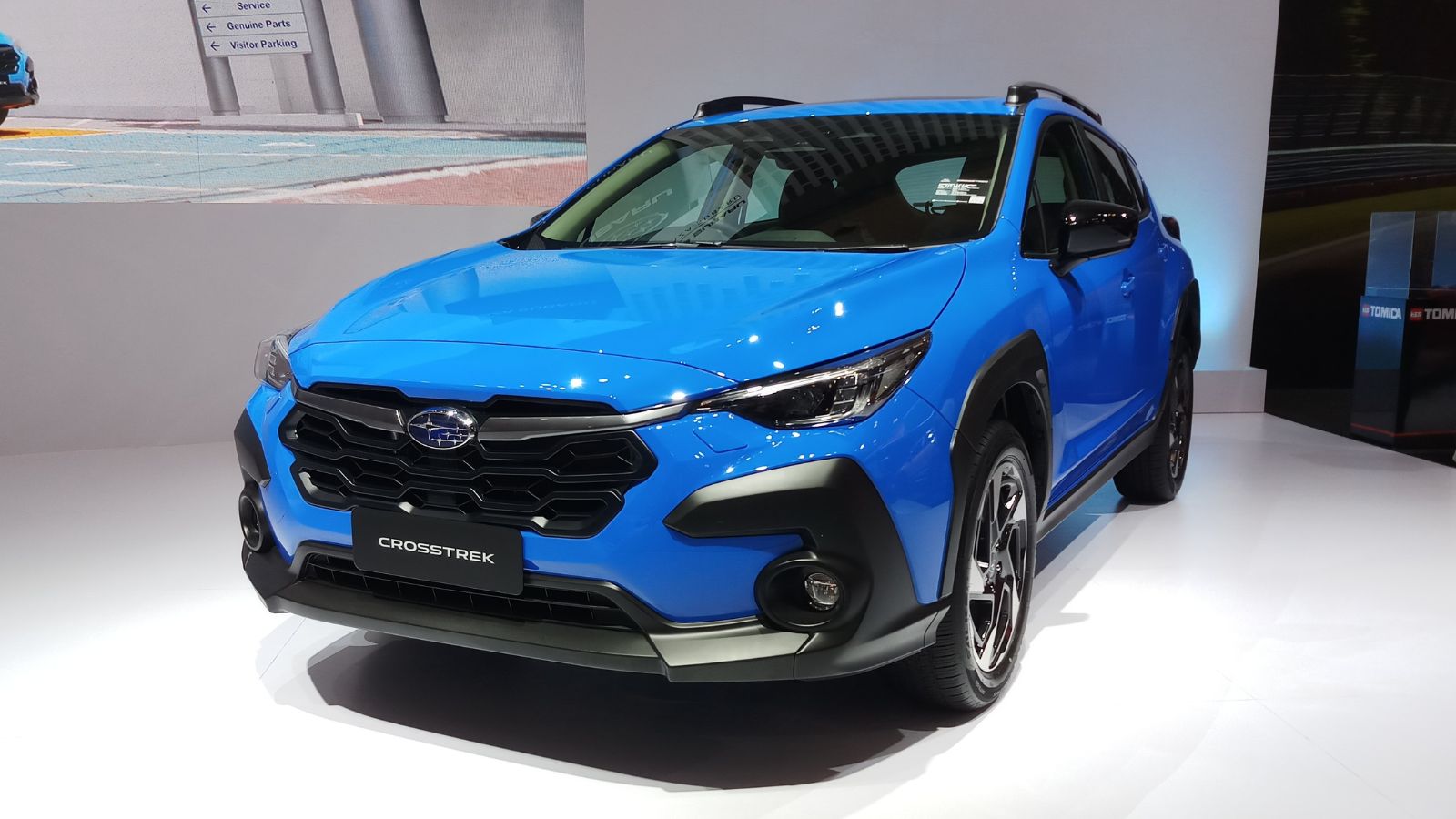
A compact SUV that can travel up to 1,000 kilometres without stopping for gasoline is an appealing prospect for Canadians facing long commutes, unpredictable fuel prices and demanding winter conditions.
Subaru Canada has announced pricing for the 2027 Crosstrek lineup, introducing a more affordable Hybrid Onyx version starting at $36,995 before fees and taxes. Revealed on October 13, 2026, the new model combines a 194-horsepower hybrid powertrain with standard all-wheel drive and a claimed driving range of up to 1,000 kilometres.
The announcement gives Canadian buyers a lower-priced alternative to the existing Hybrid Limited while preserving the rugged character that has helped make the Crosstrek one of Subaru’s most popular vehicles. However, the advertised range, actual purchase price and expected fuel savings deserve a closer look.
A New Hybrid Onyx Makes Electrification More Affordable
Subaru’s biggest change for the 2027 Crosstrek is the introduction of the Hybrid Onyx, a new trim that brings its gasoline-electric powertrain to a lower price point. Previously, Canadians seeking the latest Crosstrek hybrid system had to purchase the 2026 e-BOXER Hybrid Limited, which carried a manufacturer’s suggested retail price of $40,595. The new Hybrid Onyx starts at $36,995, lowering the entry price for a hybrid Crosstrek by $3,600. The comparison involves different equipment levels, but it represents a meaningful expansion of choice.
The Hybrid Onyx is based on Subaru’s gasoline-powered Onyx, priced at $35,395 for 2027. That puts the hybrid upgrade at just $1,600 more before fees and taxes. For shoppers already considering an Onyx, the relatively modest premium may make improved fuel efficiency easier to justify. The hybrid also introduces a 12.3-inch digital instrument cluster and a more powerful drivetrain, rather than simply replacing the gasoline engine with an efficiency-focused alternative. Subaru is effectively positioning hybrid technology as an attainable option instead of reserving it exclusively for buyers selecting a premium model.
The $36,995 Starting Price Does Not Include Every Expense
The advertised $36,995 figure is the Hybrid Onyx’s MSRP, not the final amount a customer should expect to pay. Subaru’s official announcement lists an estimated vehicle price of $40,056 after accounting for freight, pre-delivery inspection, air-conditioning charges and specified maximum dealer and other fees. Taxes, licensing, registration and insurance remain additional expenses. Subaru’s online pricing page also displays a slightly different freight-and-fees-inclusive figure of $39,985, illustrating why the complete dealership quotation matters more than the headline number.
The broader 2027 Crosstrek lineup begins at $30,695 for the gasoline-powered Convenience trim. Touring starts at $33,895, followed by Onyx at $35,395, Hybrid Onyx at $36,995, gasoline Limited at $38,495 and Hybrid Limited at $40,495. These figures are all before applicable fees and taxes. The price ladder gives buyers several ways to balance equipment against operating expenses. Someone primarily concerned with affordability may prefer a gasoline version, while a household planning to keep the vehicle for years might consider whether the hybrid’s fuel savings justify its additional upfront cost.
The 1,000-Kilometre Range Starts With a 63-Litre Fuel Tank
Subaru’s most attention-grabbing claim is that the 2027 Crosstrek Hybrid can travel up to 1,000 kilometres on one tank of gasoline. Both the Hybrid Onyx and Hybrid Limited use a 63-litre fuel tank, supported by an electric motor and battery system designed to reduce fuel consumption. The appeal is easy to understand. A family planning a lengthy highway trip or a commuter regularly travelling between communities could potentially spend less time searching for a filling station.
However, the 1,000-kilometre figure is an estimated maximum, not a guaranteed result. Subaru’s engineering specifications list fuel consumption of 6.5 litres per 100 kilometres in both city and highway driving. At that consumption rate, a simple calculation using the full 63-litre tank produces approximately 970 kilometres, demonstrating how actual range depends on fuel use and testing assumptions. Subaru bases its advertised estimate on Natural Resources Canada fuel-economy guidelines and cautions that real-world results vary. Driving speed, temperatures, road conditions and accessory use can affect consumption, while drivers should not plan journeys around completely draining the fuel tank.
Fuel Savings Could Be Most Noticeable in City Driving
The Crosstrek Hybrid’s strongest efficiency advantage appears during urban driving. Subaru lists the gasoline-powered 2027 Crosstrek at 9.0 litres per 100 kilometres in the city and 7.1 litres on the highway. The hybrid’s published rating of 6.5 litres in both conditions represents a particularly noticeable reduction in city consumption. At those ratings, a motorist travelling 15,000 kilometres entirely in comparable urban conditions would use approximately 375 fewer litres of gasoline annually. That is a hypothetical comparison based on laboratory ratings, not a forecast for an individual driver.
Independent testing offers an important reality check. In January 2026, AutoTrader.ca reviewed the Crosstrek Hybrid Limited and recorded fuel consumption no better than 8.2 litres per 100 kilometres during a winter test involving city streets, backroads and highways. Snowfall and winter tires were among the factors affecting the results. The test involved the earlier model year rather than the newly announced Hybrid Onyx, but both use the same fundamental hybrid system. It illustrates why official figures should be treated as standardized comparisons rather than promises about everyday driving.
The Hybrid Powertrain Produces 194 Horsepower Without Plugging In
Under the hood, the Crosstrek Hybrid combines a 2.5-litre Subaru Boxer gasoline engine with electric motor-generator technology and a 1.1-kWh lithium-ion battery. The series-parallel hybrid system produces a combined 194 horsepower, compared with 180 horsepower in the conventional gasoline models. It also uses Subaru’s Hybrid Lineartronic continuously variable transmission. The electric components can assist the gasoline engine and provide limited electric-only operation under suitable conditions, helping the vehicle manage power more efficiently during different driving situations.
Unlike a plug-in hybrid, the Crosstrek does not require an external charging station. Its battery is replenished through the gasoline engine and regenerative braking, which recovers some energy that would otherwise be lost when slowing down. This arrangement makes the system relatively straightforward for drivers accustomed to traditional gasoline vehicles. There is no home charger to install and no need to schedule charging stops during longer journeys. However, the small battery is not intended to deliver substantial electric-only driving range. The system’s primary purpose is to reduce gasoline consumption while supporting everyday performance.
Standard All-Wheel Drive Keeps Subaru’s Winter-Ready Character
One feature Subaru has refused to sacrifice for improved efficiency is its Symmetrical Full-Time All-Wheel Drive system. Every 2027 Crosstrek includes all-wheel drive, including both hybrid trims. Subaru emphasizes that the hybrid retains a mechanical connection for delivering power to all four wheels. That distinguishes its approach from some competing hybrid systems that use a separate electric motor to power the rear axle. For Canadians facing icy neighbourhood streets, snow-covered highways and gravel cottage roads, predictable traction remains an important consideration.
The Crosstrek also maintains 220 millimetres of ground clearance, while the Hybrid Onyx includes dual-function X-MODE and Hill Descent Control. Drivers can select settings intended for snow and dirt or deeper snow and mud, allowing the vehicle to adjust its powertrain and traction-control responses to challenging surfaces. These systems can help manage difficult conditions, but they do not eliminate the need for appropriate tires or cautious driving. All-wheel drive helps a vehicle move when traction is limited; it cannot overcome the laws of physics when stopping on slippery pavement. The hybrid’s appeal lies in combining these familiar capabilities with lower rated fuel consumption.
A More Modern Cabin Comes With a Small Cargo Trade-Off
The Hybrid Onyx brings technology normally associated with more expensive trims into a relatively accessible package. The most distinctive addition is a 12.3-inch digital instrument cluster that can display driving information and navigation functions. An 11.6-inch central touchscreen supports wireless Apple CarPlay and Android Auto, while a wireless smartphone charger, heated front seats and MySubaru connected-service capability add everyday convenience. The Hybrid Onyx also includes distinctive 18-inch aluminum wheels, helping separate it visually from the gasoline-powered version.
The electrified drivetrain does come with a packaging compromise. Subaru’s specifications list 527 litres of cargo space behind the rear seats in the hybrid, compared with 564 litres in gasoline-powered models. Folding the rear seats expands hybrid cargo capacity to 1,433 litres, versus 1,549 litres for gasoline versions. The difference is unlikely to matter for every grocery trip, but families carrying camping equipment, sports gear or bulky luggage may notice it. The Crosstrek retains a five-passenger layout, split-folding rear seatbacks and roof rails, allowing owners to adapt the vehicle to different activities despite the slightly smaller cargo compartment.
Driver-Assistance Technology Adds Another Layer of Practicality
Safety remains a central part of Subaru’s positioning for the Crosstrek. The entire 2027 lineup comes with EyeSight Driver Assist Technology, which uses cameras to monitor traffic conditions and provide assistance through features such as adaptive cruise control, pre-collision braking, lane-centering support and emergency stopping assistance. The system includes an additional wide-angle camera intended to improve its ability to identify potential hazards ahead. These features are designed to help drivers respond to changing conditions rather than replace their responsibility for controlling the vehicle.
The Hybrid Onyx also benefits from equipment available on higher Crosstrek trims. DriverFocus monitors signs of driver distraction or fatigue, while Subaru Rear/Side Vehicle Detection provides blind-spot alerts, lane-change assistance and rear cross-traffic warnings. Reverse Automatic Braking can intervene when sensors detect an obstacle behind the vehicle under appropriate conditions. Such equipment can be especially useful in crowded parking lots or during lengthy highway journeys. Subaru cautions that its driver-assistance systems have limitations involving weather, visibility and road conditions. Their presence adds reassurance, but safe driving still depends on attention, appropriate speed and vehicle maintenance.
Buyers Can Still Choose a More Luxurious Hybrid Limited
The Hybrid Onyx is not replacing Subaru’s more expensive Hybrid Limited. The 2027 Hybrid Limited starts at $40,495 MSRP, approximately $3,500 above the new entry-level hybrid. It combines the same 194-horsepower gasoline-electric drivetrain with additional comfort and convenience equipment, including leather seating surfaces, navigation functionality and a premium Harman Kardon audio system with 10 speakers. The Hybrid Limited also retains the 12.3-inch digital instrument cluster, allowing customers to select the more luxurious version without changing the underlying hybrid performance.
Not every model-year change represents an equipment improvement, however. Subaru has removed the surround-view 360-degree camera previously offered on the Hybrid Limited. The gasoline-powered Limited also loses that feature for 2027. Other changes include an improved wireless charging pad, replacement of e-BOXER exterior badging with simpler HYBRID lettering and removal of the SUBARU badge from the tailgate. Sand Dune Pearl remains available on selected trims for an additional $300 MSRP. These adjustments may seem minor compared with the introduction of an entirely new hybrid trim, but they are relevant to buyers comparing remaining 2026 inventory with incoming 2027 vehicles.
The Crosstrek Hybrid Does Not Qualify for Federal EV Purchase Rebates
Although the Crosstrek Hybrid uses electric propulsion technology, it is not the same type of vehicle as a battery-electric or plug-in hybrid model. That distinction matters when considering government incentives. Canada’s Electric Vehicle Affordability Program offers up to $5,000 in 2026 for eligible battery-electric and hydrogen fuel-cell vehicles and up to $2,500 for qualifying plug-in hybrids. Conventional hybrids that cannot be connected to an external charger, including the Crosstrek Hybrid, are outside those federal incentive categories.
Consequently, buyers should not deduct a federal EV purchase rebate from the Crosstrek Hybrid’s advertised MSRP when estimating affordability. Its value proposition instead depends on fuel savings, equipment, driving characteristics and long-term ownership considerations. For example, the $1,600 difference between the gasoline Onyx and Hybrid Onyx could potentially be recovered through reduced fuel purchases over several years, but the timing would depend on mileage, actual consumption and gasoline prices. Maintenance costs, financing terms and eventual resale value can also influence the overall calculation. The lower hybrid entry price is attractive, but buyers still need to compare complete ownership costs rather than focusing exclusively on fuel economy.
Strong Canadian Sales Give Subaru Another Opportunity to Grow
The more affordable Crosstrek Hybrid arrives as Subaru Canada reports encouraging sales results. In September 2026, the company sold 7,468 vehicles, an increase of 46.4% compared with September 2025 and its strongest September on record. The Crosstrek and Forester both established September sales records, while the brand’s third-quarter volume rose 35% year over year. The Crosstrek had already sold 3,143 units in July, its best July performance, demonstrating its established popularity among Canadian buyers.
Those results provide a promising backdrop for the Hybrid Onyx, although they do not guarantee that the new model will achieve similar success. Subaru must still persuade customers that the additional hybrid equipment and improved efficiency justify the price premium over a gasoline Crosstrek. The manufacturer distributes vehicles through 96 authorized dealerships across Canada, providing an established retail network for the updated lineup. For consumers, the most important development is greater choice: a lower-priced hybrid with standard all-wheel drive, useful technology and the potential for fewer refuelling stops. The 1,000-kilometre claim may attract attention, but everyday fuel economy, ownership costs and real-world practicality will determine whether the new Crosstrek delivers lasting value.