

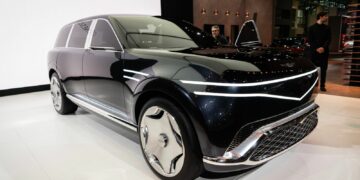





















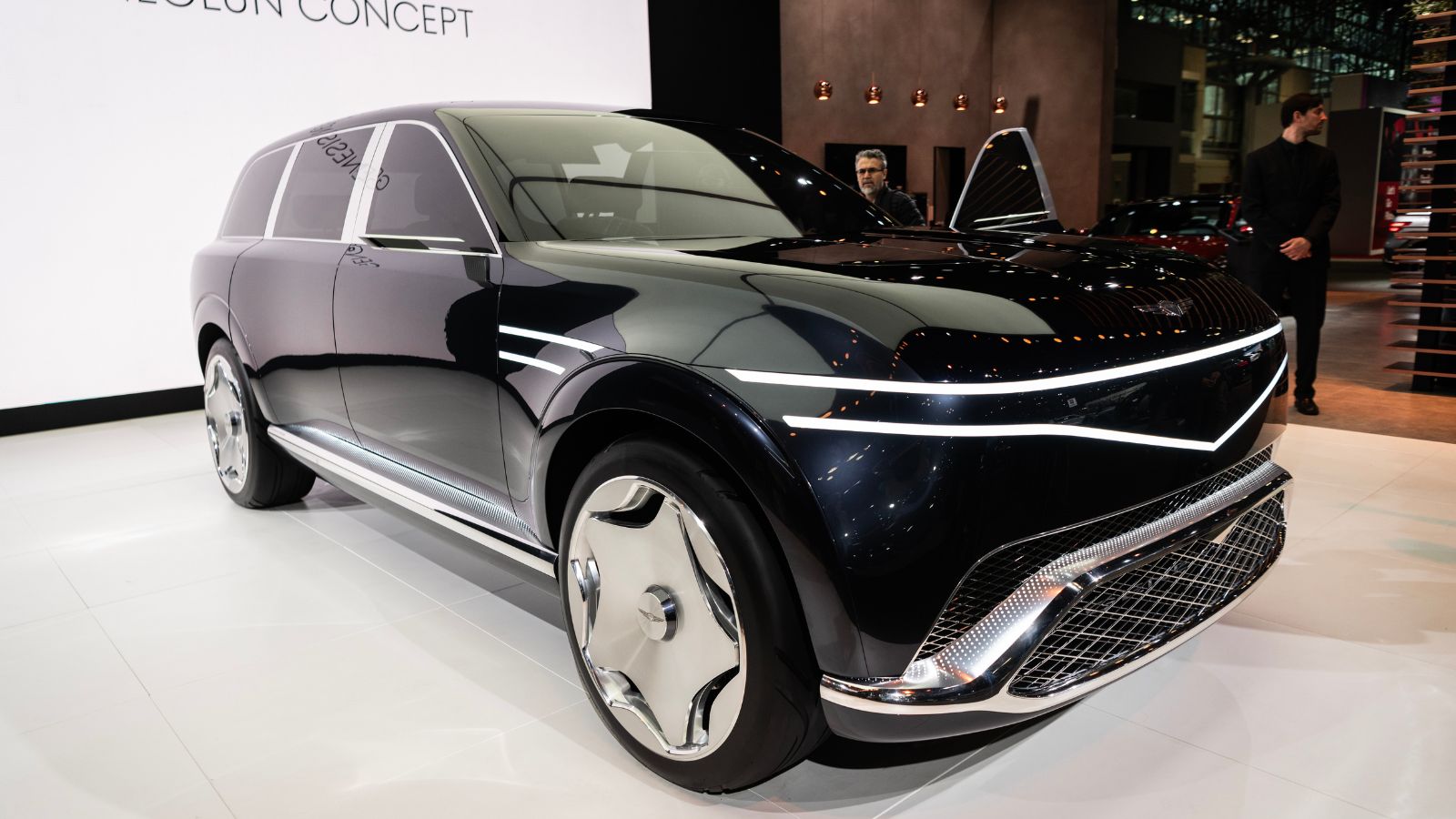
Genesis is giving its upcoming GV90 more than a large battery and flagship proportions. The electric SUV’s cabin is becoming a showcase for six technologies supplied by LG Electronics, ranging from a screen that physically rises out of the dashboard to the electronic hardware responsible for connecting vehicle systems with outside networks.
The centerpiece is a display that operates as a 23.6-inch screen while driving, then rises 90 millimetres when the vehicle is stationary to reveal a 24.6-inch viewing area. Behind it sits a much broader technology package covering infotainment, streaming, rear-seat entertainment, cabin controls and over-the-air connectivity. The GV90 has already been confirmed for Canada in 2027, although Genesis Canada has not yet published final Canadian pricing or detailed trim-by-trim equipment specifications.
The 24.6-Inch Screen Changes Shape Depending on What the GV90 Is Doing
LG’s first contribution is the variable pop-up central information display system, and it provides the cabin’s most obvious piece of theatre. During normal driving, the screen remains in its lower position and presents a 23.6-inch visible area combining instrumentation, navigation and media information. Once the GV90 is parked, pressing an extension control raises the display by 90 millimetres and exposes the complete 24.6-inch panel. Genesis says the extended configuration creates approximately 1.7 times the viewing area available in its driving position. The complete screen measures 584.1 millimetres wide and 219 millimetres high, with a resolution of 3,840 by 1,440 pixels.
There is an important supplier distinction behind that dramatic movement. LG Electronics supplies the variable pop-up display system, but Samsung Display says it supplies the 24.6-inch OLED panel itself. Samsung describes the screen as having a 24:9 aspect ratio, full DCI-P3 colour-gamut coverage and a tandem OLED structure using two organic emitting layers. That division of responsibility illustrates how complicated modern vehicle electronics have become: one supplier can provide the physical panel while another develops the system that moves, integrates and controls it. Genesis complements the central display with a 25-inch head-up display that can show speed, navigation instructions and driver-assistance information.
LG’s Infotainment System Ties the Screen, HUD and Gleo AI Together
The moving display would be little more than an expensive visual trick without software capable of using the space intelligently. LG’s second system is an integrated infotainment platform embedded within Hyundai Motor Group’s Pleos Connect architecture. It acts as the central hub linking the instrument cluster, audio-video-navigation functions and head-up display. Rather than operating as unrelated screens with separate software layers, those components are designed to work as parts of the same digital environment. Genesis says the GV90 is its first model to adopt Pleos Connect, making the flagship SUV an important launch vehicle for the group’s next-generation interface.
Pleos Connect is based on Android Automotive OS and incorporates Hyundai Motor Group’s Gleo AI assistant. Genesis describes Gleo as a large-language-model-powered system capable of understanding natural speech and learning occupant preferences over time. Functions such as climate settings, entertainment choices and personalized vehicle preferences can be adjusted conversationally. The distinction between an AI demonstration and everyday usefulness will only become clear once owners spend substantial time with production vehicles, but the direction is notable. Genesis is designing the GV90 so drivers interact not merely with a touchscreen menu but with a connected software platform that can increasingly mediate between the occupants and the vehicle’s many electronic functions.
LG’s Automotive Content Platform Brings Streaming Services Into the Car
LG’s third contribution is its Automotive Content Platform, commonly shortened to ACP. The webOS-based technology pushes the GV90 closer to the idea of a connected entertainment space, particularly while passengers are waiting, charging or otherwise stationary. LG says the platform supports services including Netflix, Disney+, YouTube, TVING, Baby Shark World for Kids and Haystack News, along with LG Channels, the company’s free ad-supported streaming service. Zoom, Rakuten TV and HappyKids are among the additions LG says are planned for the platform.
The list should not be interpreted as a promise that every service will appear in every Canadian GV90 on launch day. LG specifically says content availability depends on regional rollout schedules, while an automotive data plan is required to access streaming functions and some apps require separate paid subscriptions. That caveat is particularly relevant for Canada, where licensing rights and streaming catalogues can differ from South Korea, Europe and the United States. Still, the platform represents an important shift in how luxury-car cabins are being designed. Waiting 25 or 30 minutes at a charging stop can become entertainment time rather than simply dead time, and the expandable display gives Genesis a screen specifically designed around that use case instead of expecting occupants to watch video on a conventional dashboard interface.
Second-Row Passengers Get Their Own 13.2-Inch OLED Entertainment System
The fourth LG system moves attention away from the driver. The second-generation connected car Rear Cockpit system, or ccRC, equips the rear passenger area with 13.2-inch touch-sensitive OLED displays integrated with LG’s Automotive Content Platform. That allows rear occupants to access entertainment without depending on whatever is being shown on the dashboard. LG describes the setup as capable of turning the rear cabin into a private theatre or lounge, an idea that fits Genesis’s decision to position the GV90 as a chauffeur-friendly flagship rather than simply a larger electric family crossover.
Once again, the hardware involves more than one Korean technology company. Samsung Display confirms that it supplies the 13.2-inch OLED panels mounted behind the two front headrests. Each has a resolution of 1,920 by 1,080 pixels. Samsung says their colour reproduction is designed to remain consistent with the larger front Cinematic Display and notes that the screens can support uses such as video conferencing as well as entertainment. For families, that could mean separate viewing during a long trip; for an executive being driven between appointments, it could mean joining a meeting from the second row. Which online services operate while the vehicle is moving will ultimately depend on software, safety rules and regional configurations.
An Eight-Inch Touchscreen Puts Cabin Functions in Rear Passengers’ Hands
Not every passenger interaction needs to go through a movie-sized OLED. LG’s fifth system is an eight-inch console touchscreen, known as the CTS, designed as a dedicated interface for vehicle controls. LG says it can manage climate functions, doors, seating, cabin lighting, media and massage settings. Haptic feedback gives occupants a physical response when making touchscreen selections, while the controller also supports cybersecurity features and over-the-air updates.
That may sound less dramatic than a dashboard screen rising by 90 millimetres, but it could have a greater effect on daily luxury. A passenger settling into the back seat after a long flight can adjust temperature, change the seat position, select massage functions and alter the lighting without leaning forward or asking the driver to work through a central menu. Genesis has already used dedicated rear-seat controllers in its G90 sedan, where an eight-inch armrest screen manages functions including climate settings, seat position, massage and lighting. The GV90 expands that basic philosophy into an increasingly software-driven cabin. Luxury in this context is not merely having more functions; it is reducing the effort required to reach them. Whether the interface feels intuitive will matter considerably more than the raw number of controls it can display.
CCU 2.0 Is the Less Visible System Holding the Connected Cabin Together
LG’s sixth contribution is also the easiest to overlook because passengers do not directly watch or touch it. The Central Communication Unit 2.0, or CCU 2.0, links important electronic control units inside the GV90 while providing connectivity with external networks. LG says it supports services including remote vehicle control and over-the-air software updates. In practical terms, it helps provide the communications foundation required when a vehicle’s screens, software and electronic systems increasingly depend on exchanging data rather than operating as isolated components.
LG says CCU 2.0 has received TÜV Rheinland certification for compliance with ASIL-D requirements under the ISO 26262 automotive functional-safety standard. ISO 26262 applies to safety-related electrical and electronic systems in series-production road vehicles and covers areas ranging from development processes to safety analysis. That certification does not mean every GV90 electronic system is immune to failures, nor does it certify the vehicle as a whole. It does show the level of engineering scrutiny being applied to a component that will sit behind many of its connected functions. For Canadian buyers, those six LG systems will arrive inside a much larger package: Genesis describes the GV90 as its first full-size flagship SUV, built around a 123.5-kWh battery and a dedicated flagship electric platform. Genesis Canada currently says the model is coming in 2027, while warning that international vehicles shown may differ from final Canadian specifications.