
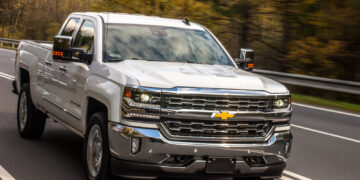

























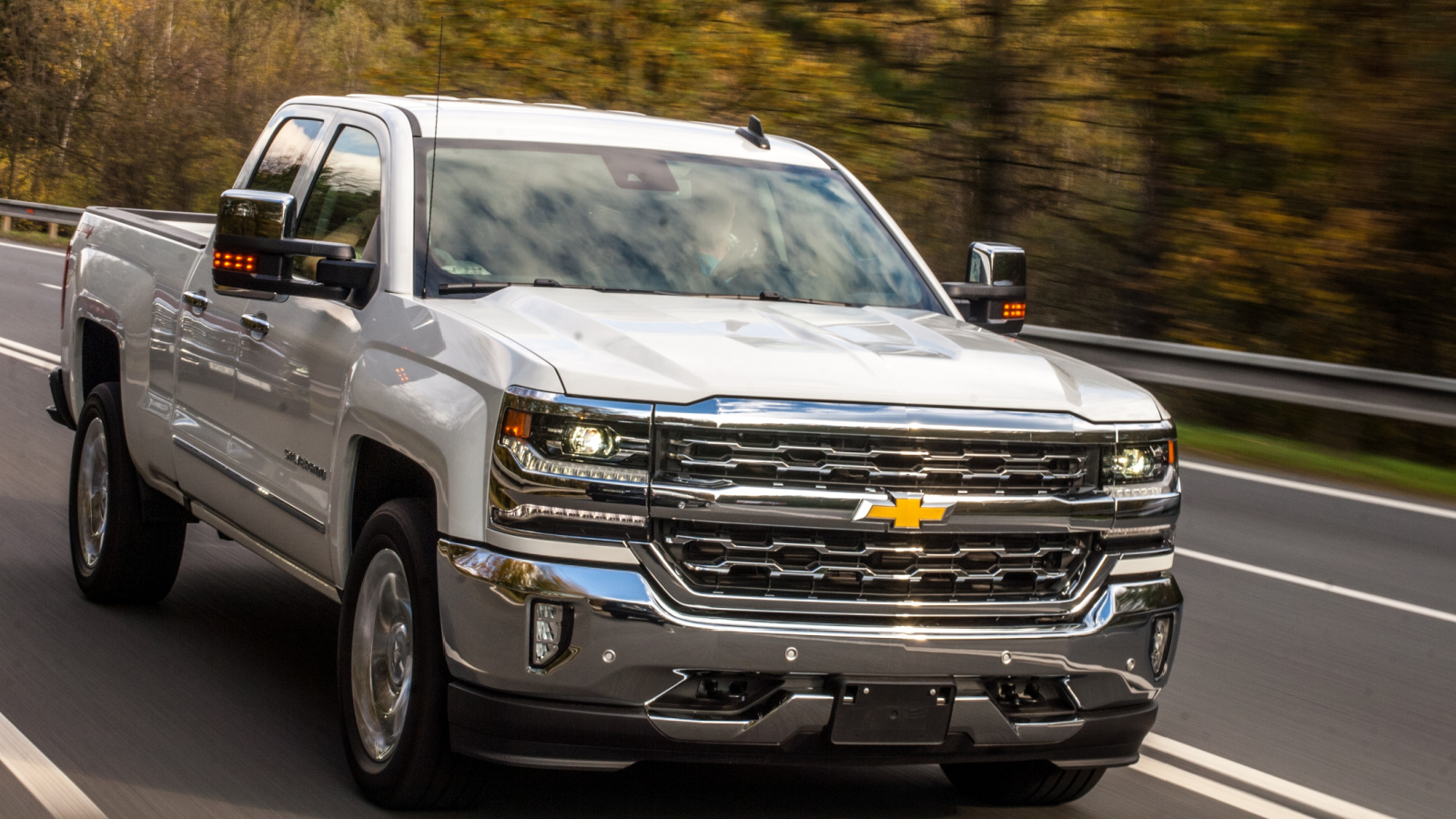
One of the trucks that helped bring General Motors’ Oshawa assembly plant back to life is about to disappear from its production line. GM has confirmed that Chevrolet Silverado 1500 assembly in Oshawa will end in November 2026, closing a chapter that began when light-duty pickup production returned to the Ontario plant in 2022.
The change is significant, but it is not another plant closure. GM says employment levels are expected to remain unchanged as Oshawa increases production of the heavier Chevrolet Silverado HD and prepares to add the GMC Sierra HD. For workers who have already endured a shutdown, reopening and another round of layoffs, that distinction matters. Oshawa is losing one of its highest-volume products, but GM is simultaneously reshaping the factory around the larger trucks it says will anchor its Canadian manufacturing operation for years to come.
November Is Now the Confirmed End of Oshawa’s Silverado 1500
GM spokesperson Jennifer Wright has confirmed that production of the light-duty Chevrolet Silverado 1500 at Oshawa Assembly will stop in November. Until now, the truck’s future at the plant had been increasingly clear from product schedules and industry forecasts, but GM had not formally confirmed the cutoff. The announcement removes that uncertainty: Oshawa will not carry its current Silverado 1500 program forward into the next phase of GM’s light-duty pickup production.
The distinction between the Silverado 1500 and Silverado HD is important. The 1500 is GM’s mainstream light-duty Chevrolet pickup, while the Silverado HD family consists of heavier-duty trucks aimed more heavily at towing, hauling and commercial work. Oshawa currently builds both categories on the same line, something GM described earlier this year as unique within its North American manufacturing network. Ending 1500 assembly therefore does not mean Silverado production disappears from Ontario. Instead, the factory is moving toward a heavier-duty product mix as GM launches a new generation of full-size pickups across North America.
The Silverado 1500 Was a Major Part of Oshawa’s Comeback
The November cutoff carries extra weight because pickup production was central to Oshawa’s remarkable return from closure. GM ended vehicle production at the historic factory in December 2019, leaving a community that had built automobiles for generations facing an uncertain manufacturing future. Less than a year later, GM committed roughly $1.2 billion to restart full-size pickup production. The reopened plant produced its first Silverado in November 2021, initially creating about 1,800 jobs across two shifts.
Light-duty Silverado 1500 assembly followed in May 2022. By that point, Oshawa was becoming one of GM’s most flexible truck facilities, capable of building light- and heavy-duty Silverados on the same assembly line. Production expanded quickly enough that the company later added a third shift. By June 2026, GM said the plant had built more than 500,000 Silverado pickups since reopening in 2021, along with more than one million aftermarket parts. That scale explains why removing the 1500 is more than an ordinary model-year change. Light-duty trucks helped transform Oshawa from a closed vehicle plant into a major GM pickup operation.
Silverado HD Production Will Increase to Replace Some of the Lost Volume
GM’s plan is not to leave a Silverado-sized hole in Oshawa after November. The automaker says it intends to increase Chevrolet Silverado HD production as light-duty assembly ends. Silverado HD remains part of GM’s next-generation truck strategy in Ontario, and the company has repeatedly said Oshawa will continue producing gasoline-powered full-size pickups. The plant is also receiving upgrades to stamping, assembly and other manufacturing operations to support the transition.
Heavy-duty trucks are produced in smaller volumes than mainstream 1500 pickups, which makes maintaining enough factory work an important issue. That helps explain why GM and Unifor have focused on adding another HD nameplate rather than relying solely on Chevrolet. The upcoming generation of Silverado HD will continue to be produced in Oshawa alongside GM’s Flint, Michigan operation. For employees on the Ontario line, the badge and specifications of the trucks passing through their workstations will increasingly change, but the basic industrial mission remains familiar: large body-on-frame pickups powered by gasoline and diesel engines will continue to be one of Oshawa’s core products.
The GMC Sierra HD Is the Key Addition to Oshawa’s Future
The most important replacement product may be the GMC Sierra HD. GM committed another $144 million to Oshawa following its 2026 negotiations with Unifor, specifically to bring next-generation Sierra HD production to the Ontario factory. That money builds on $343 million already committed to next-generation truck production and manufacturing improvements, taking planned Oshawa investment connected with these programs to nearly $500 million.
The union had pushed for the Sierra because relying on Silverado HD alone raised concerns about whether Oshawa could consistently support two shifts. Unifor Local 222 president Jeff Gray has said having both Chevrolet and GMC heavy-duty pickups should provide enough volume to help maintain the existing operation. Gray expects Sierra HD production in Oshawa by late 2028, although GM has not publicly confirmed that precise launch date. The distinction is important: Sierra HD production is confirmed, while the union’s 2028 timing remains an expectation rather than an official company schedule. For Oshawa, however, winning a second heavy-duty nameplate gives the plant a broader production base after the Silverado 1500 leaves.
GM Says the November Change Will Not Trigger Another Employment Cut
For Oshawa workers, the immediate employment message is more encouraging than it was at the beginning of 2026. GM says employment levels are expected to remain unchanged when Silverado 1500 production ends. Gray has similarly said he has not been told of another coming round of job losses. The planned increase in Silverado HD output is intended to absorb production capacity before Sierra HD assembly eventually joins the plant.
That assurance comes after a difficult year for the workforce. Oshawa returned from three production shifts to two on February 2, placing approximately 500 GM employees on layoff. Unifor said the impact extended further into the supplier network. During bargaining in August, the union listed 2,750 members associated with Oshawa Assembly, a figure that included active employees as well as temporary, inactive and laid-off members. The experience helps explain why workers are likely to watch the November transition closely even with GM promising stable employment. Product allocations can determine whether thousands of households have reliable factory work, and Oshawa’s recent history has shown how quickly manufacturing schedules can change.
Roughly Half of Oshawa’s 2026 Output Has Been Light-Duty Trucks
The scale of the transition becomes clearer when projected production is considered. AutoForecast Solutions vice-president Sam Fiorani expects Oshawa to produce roughly 114,000 trucks during 2026, with output divided nearly evenly between the Silverado 1500 and Silverado HD. GM itself does not disclose plant production forecasts, so those figures are independent industry estimates rather than company guidance.
If the forecast proves close, ending Silverado 1500 production means Oshawa is effectively changing the product mix responsible for about half of its recent annual assembly volume. That is why additional HD production and the future Sierra program are so important. Fiorani expects Oshawa to build approximately 40,000 Sierra HD trucks during the GMC model’s first year at the plant. The numbers may ultimately differ, but they illustrate the industrial challenge: replacing a mass-market light-duty pickup requires meaningful volume elsewhere. Oshawa is not simply switching badges on a few thousand trucks; GM is redesigning the plant’s production balance around a different portion of the highly profitable North American pickup market.
The Next Silverado 1500 Generation Will Be Built Elsewhere
Oshawa’s exit comes as Chevrolet launches an extensively redesigned Silverado 1500 for the 2027 model year. GM has introduced new sixth-generation small-block V8 engines and a redesigned truck with updated technology, styling and capability. The new model is scheduled to begin reaching customers near the end of 2026, just as the Ontario factory completes its outgoing light-duty production.
Industry reporting indicates next-generation Silverado 1500 assembly will be concentrated at Fort Wayne, Indiana, and Silao, Mexico rather than Oshawa. GM increased light-duty truck output at Fort Wayne after the U.S. imposed new automotive tariffs, adding production capacity there while Oshawa later moved back to two shifts. That means a Canadian shopping for a future Silverado 1500 will still be able to buy the truck, but it will no longer come from the Ontario factory. In 2025, Chevrolet sold 54,068 Silverados in Canada, making the nameplate the country’s fifth-best-selling light truck. Losing its Canadian assembly location is therefore notable for a vehicle that remains a major presence on Canadian roads.
The Tariff Fight Hangs Over Every Production Decision
GM has described its Oshawa changes in terms of both forecast demand and an evolving trade environment. The timing has nevertheless made tariffs impossible to separate from the broader debate. U.S. automotive tariffs have increased the cost of sending Canadian-built vehicles south of the border, while GM simultaneously expanded light-duty Silverado production at its Fort Wayne plant. Unifor has argued that shifting light-duty output into the United States is partly a response to American political pressure and has repeatedly called for vehicles sold in Canada to be built in Canada.
Ottawa has also tied its trade response directly to Canadian production. Canada created a remission system allowing automakers to import specified quantities of U.S.-assembled vehicles without paying Canadian counter-tariffs, provided they maintain domestic production and investment commitments. In October 2025, the federal government cut GM’s annual remission quota by 24.2% after the company reduced Canadian production. The framework was subsequently extended with new quota volumes for April 2026 through April 2027. None of that proves tariffs alone caused Oshawa to lose the 1500, but trade policy is now a major factor in decisions that once depended more heavily on demand, labour costs and factory capacity.
GM Is Still Putting Significant Money Into Canadian Truck Production
The Silverado 1500 departure can easily sound like another retreat from Canada, but GM’s investment commitments make the picture more complicated. Since 2020, the company says it has invested about $1.5 billion in Oshawa. The plant is currently backed by $343 million for next-generation full-size pickup production and manufacturing upgrades, plus the newly announced $144 million for GMC Sierra HD assembly.
GM is also investing elsewhere in Ontario to support the same truck business. St. Catharines Propulsion is slated to produce next-generation V8 engines following a $691-million commitment announced earlier in 2026, while the new collective agreement added a $215-million investment for a future transmission program. GM said in August that planned Oshawa and St. Catharines investments together total approximately $1.4 billion over the next three years. The strategy suggests the company is not abandoning Canadian internal-combustion manufacturing. Rather, it is concentrating Canadian operations on selected engines, transmissions and heavy-duty pickups while the highest-volume light-duty Silverado shifts elsewhere.
Oshawa Is Losing a Truck, but Not Its Truck Plant
For a community that watched GM stop vehicle production in 2019, the November change naturally carries uncomfortable echoes. This time, however, the factory is not heading toward an empty assembly line. Silverado HD production continues, output is expected to increase, investment is underway, and the Sierra HD has been formally secured for Oshawa. GM also continues to operate aftermarket stamping and parts activities at the site.
The unanswered question is whether the heavy-duty strategy can provide Oshawa with the volume and stability once supplied by a combination of light- and heavy-duty Silverados. The first test comes after November, when the 1500 disappears and Silverado HD must shoulder more of the workload. The second comes with the Sierra HD launch, currently expected by the union around 2028. Oshawa has experienced nearly every possible turn in the auto industry over the past decade—closure, reopening, rapid expansion, layoffs and reinvestment. The next transition will be watched just as closely. The Silverado 1500 is leaving Canada’s GM assembly line, but Oshawa’s future is now being built around bigger trucks.