

























South Korea’s imported-car market is changing at a remarkable pace. Tesla recorded 12,372 new passenger-vehicle registrations in September 2026, capturing more than one-third of the import market and outselling BMW and Mercedes-Benz combined. At the same time, battery-electric vehicles crossed an important threshold, accounting for 52.1% of all imported passenger-car registrations during the month
Tesla supplied most of that momentum through the Model Y, particularly its newer six-seat Model Y L. Yet another electric automaker is moving quickly behind it. China’s BYD registered 2,614 vehicles to hold fourth place among imported brands, while its nine-month total surged past 20,000. Strictly speaking, the figures are vehicle registrations reported by Korea’s import-car industry association rather than manufacturer-reported retail deliveries, but they provide a revealing picture of how quickly Korea’s imported-car hierarchy is being rewritten.
Tesla Captured More Than One-Third of the Import Market
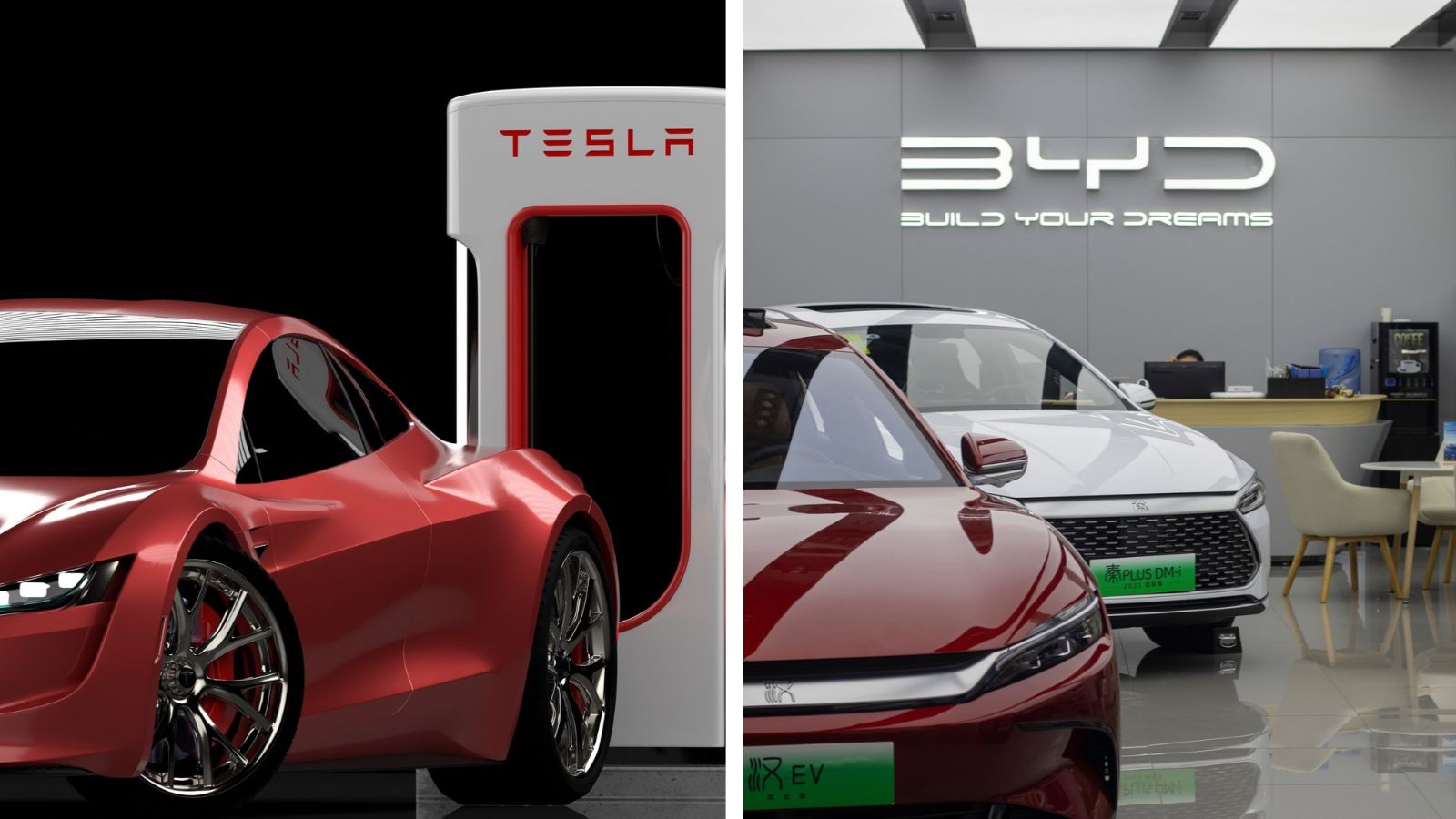
Tesla registered 12,372 passenger vehicles in South Korea during September, giving it approximately 35.5% of the country’s imported passenger-car market. Total import registrations reached 34,904 vehicles, up 17.1% from August and 6.3% from September 2025. Tesla grew considerably faster, with registrations up 19% month over month and 36.4% from the same period a year earlier.
The result also extended Tesla’s run as Korea’s best-selling imported brand to eight consecutive months, beginning in February. It was the only import brand to exceed 10,000 registrations during September. That is notable in a market historically associated with German premium manufacturers rather than a U.S.-branded electric-car company. Tesla’s monthly share means roughly one of every three imported passenger vehicles registered in Korea carried its badge. The scale is particularly striking because Tesla relies on a relatively concentrated model lineup, rather than competing across the many sedans, SUVs and luxury segments offered by manufacturers such as BMW and Mercedes-Benz.
The Model Y Is Doing Most of the Heavy Lifting
The Model Y remains the centre of Tesla’s Korean success. Combined Model Y registrations reached 11,421 during September, accounting for more than 92% of Tesla’s 12,372-vehicle monthly total. The six-seat Model Y L was the standout version, registering 8,690 units by itself. That means the longer, three-row variant was responsible for roughly seven out of every 10 Teslas registered during the month.
The Model Y L only entered the Korean market in April 2026, making the September number particularly significant. It stretches the Model Y formula into a 4,976-mm-long vehicle with a 3,040-mm wheelbase and a three-row, six-seat 2-2-2 cabin arrangement. That gives Tesla a product aimed at households that may previously have considered a larger SUV or people mover. Other Model Y variants remained important as well, but the L’s 8,690 registrations made it September’s best-selling imported model by a wide margin. A product introduced only months earlier has quickly become one of the central reasons Tesla sits atop Korea’s import market.
Electric Cars Have Crossed the 50% Mark
Tesla’s performance is part of a much larger shift. Battery-electric vehicles accounted for 18,181 imported passenger-car registrations in September, equal to 52.1% of the market. A year earlier, EVs represented only 39.3%. The category therefore gained 12.8 percentage points of market share in 12 months, while actual electric registrations increased 41% year over year.
Hybrids remained substantial, with 13,620 registrations and a 39% share, but their position moved in the opposite direction. Hybrid registrations fell 17.9% from September 2025, when they commanded 50.5% of imports. Gasoline vehicles accounted for only 2,857 registrations, or 8.2%, while diesel models fell to just 246 vehicles and 0.7%. Tesla alone represented roughly 68% of all imported battery-electric registrations in September. That concentration means the 52.1% EV figure should not be interpreted as every import manufacturer moving equally quickly toward electrification. Tesla’s extraordinary volume heavily influenced the monthly result, even as brands such as BYD added additional EV demand.
Tesla Even Beat BMW and Mercedes-Benz Combined
BMW remained Korea’s second-largest imported brand in September with 6,066 registrations, while Mercedes-Benz ranked third with 5,477. Together, the two German companies registered 11,543 vehicles—829 fewer than Tesla managed on its own. BMW’s monthly registrations were down 8.2% from a year earlier, while Mercedes-Benz fell 20.7%.
That comparison illustrates how dramatically the competitive landscape has changed. Premium German manufacturers spent years defining South Korea’s imported-car business, with the Mercedes E-Class and BMW 5 Series becoming familiar sights in cities such as Seoul. Those models are hardly disappearing: the Mercedes E-Class still recorded 2,733 registrations in September and the BMW 5 Series reached 1,781. What has changed is scale at the top. Tesla can now challenge two established premium giants simultaneously with a lineup dominated by one crossover family. The contrast is even sharper at the individual-trim level, where the Model Y L’s 8,690 registrations exceeded the entire monthly total of every competing imported brand other than Tesla itself.
Tesla Is Approaching 90,000 Registrations This Year
September was not an isolated delivery surge. Tesla accumulated 89,148 Korean registrations during the first nine months of 2026, up 104.4% from the same period last year. The brand commanded 31.9% of the year-to-date imported passenger-car market, which reached 279,729 vehicles. Tesla has therefore registered almost twice as many vehicles as BMW’s 57,929 through September and more than double Mercedes-Benz’s 43,249.
The comparison with 2025 makes the acceleration even clearer. Tesla registered 59,916 vehicles during all of last year, meaning its 2026 total had already surpassed that full-year result by almost 30,000 vehicles before the fourth quarter began. Monthly volume has also become remarkably consistent: after taking first place in February, Tesla moved above 10,000 registrations in March and has remained around or above that level through the subsequent months. April’s 13,190 registrations remain the 2026 high, but September came close at 12,372. Reaching 100,000 annual registrations now requires only another 10,852 vehicles during the final three months.
BYD’s No. 4 Position Reflects an Even Faster Rise
BYD registered 2,614 passenger vehicles in September, making it Korea’s fourth-largest imported brand behind Tesla, BMW and Mercedes-Benz. There is an important qualification to the headline: BYD did not move from fifth to fourth between August and September. It was already fourth in August, when it registered 3,002 vehicles. Its September volume actually declined 12.9% month over month.
The “climb” becomes clearer when the comparison is widened. BYD registered only 1,020 vehicles in September 2025 and ranked behind Tesla, Mercedes-Benz, BMW, Audi, Lexus and Volvo. September 2026 registrations were 156.3% higher year over year, moving BYD ahead of brands that had long held stronger positions in Korea. Its January-through-September total reached 20,137 vehicles, an extraordinary 578.7% increase from the comparable 2025 period. For a passenger-car business that entered Korea only in 2025, reaching fourth place alongside some of the world’s most established premium manufacturers represents a remarkably quick transition from newcomer to significant import-market competitor.
BYD Has Already Blown Past Its Original 2026 Goal
BYD entered South Korea’s passenger-car market in January 2025 and began customer deliveries of the Atto 3 that April. It finished its first year with 6,107 passenger vehicles sold. In January 2026, the company set what then appeared to be an ambitious goal: exceed 10,000 vehicles for the year while expanding its model range and growing its Korean showroom and service network.
Nine months into 2026, BYD’s 20,137 registrations had already doubled that original 10,000-unit target. Product expansion has been important. The company initially built its presence around the Atto 3, Seal and Sealion 7 before broadening its lineup, including the smaller Dolphin hatchback. BYD’s product strategy gives it several price points and body styles instead of relying on a single breakout vehicle. The Dolphin itself has quickly become one of Korea’s more visible imported EVs. The numbers suggest that Chinese vehicles are no longer simply a theoretical future challenge for established foreign brands in Korea. BYD is already competing with them for meaningful monthly volume.
The Electric Shift Is Bigger Than One Strong September
September’s 52.1% EV share looks dramatic, but year-to-date figures suggest the change is becoming structural rather than being caused by a single unusually strong month. Imported battery-electric registrations reached 132,582 during the first nine months of 2026, up 99.8% from the comparable period of 2025. EVs represented 47.4% of imported passenger vehicles through September, compared with only 29.5% a year earlier.
The overall imported-car market is growing as well. Total January-to-September registrations reached 279,729, up 24.1% from 225,348 during the same period last year. EVs are therefore gaining share within an expanding market rather than merely replacing sales in a shrinking import segment. Tesla and BYD account for much of the visibility around that transition, but the change affects traditional brands too as manufacturers expand their own electric offerings. For consumers walking through an imported-car showroom district today, the change is increasingly tangible: an electric drivetrain is no longer a niche alternative sitting at the edge of the market. In September, it became the majority choice among new imports.
Supply and New Products Are Helping Drive the Surge
Korea Automobile Importers & Distributors Association Vice Chairman Jung Yoon-young attributed September’s month-over-month market growth to several factors, including improved vehicle supply at some brands, new-model introductions and active marketing. Tesla’s Model Y L is a clear example of how a new product can alter the monthly rankings. Introduced in Korea in April, the six-seat SUV moved to 8,690 registrations by September and became the country’s dominant imported trim.
Government policy remains another part of the environment. South Korea maintained its basic national EV subsidy level for 2026 while introducing additional support for consumers switching from internal-combustion vehicles. Subsidy amounts still vary according to vehicle price, efficiency and other criteria. Tesla also raised Korean prices on several Model 3 and Model Y configurations in July, with increases ranging from 3 million to 7 million won. The subsequent registration strength is therefore notable, although monthly registrations can reflect orders placed earlier and should not be interpreted as a clean measure of consumer response to a single price change.
Korea Is Becoming an Important Bright Spot for Tesla
Tesla’s Korean growth stands out even more when placed beside its worldwide performance. The company delivered 486,532 vehicles globally during the third quarter of 2026, beating analyst expectations but declining roughly 2% from the unusually strong year-earlier quarter. South Korea moved in the opposite direction in September, with Tesla registrations rising 36.4% year over year. Registration data from one country and Tesla’s global delivery figures are not identical measures, so they should not be directly combined, but the contrast still shows how uneven EV demand can be across markets.
Korea also demonstrates the competitive challenge Tesla faces even where it is performing exceptionally well. BYD’s rapid ascent means the imported-EV market is not becoming a one-company story. Tesla currently has a huge lead, powered overwhelmingly by the Model Y, while BYD is building scale across a growing lineup. Meanwhile, BMW, Mercedes-Benz and other established manufacturers are unlikely to surrender a major market without responding. September’s numbers therefore capture more than a strong month for Tesla: they show an import market being reorganized around electrification, with both American and Chinese EV brands increasingly setting the pace.