


























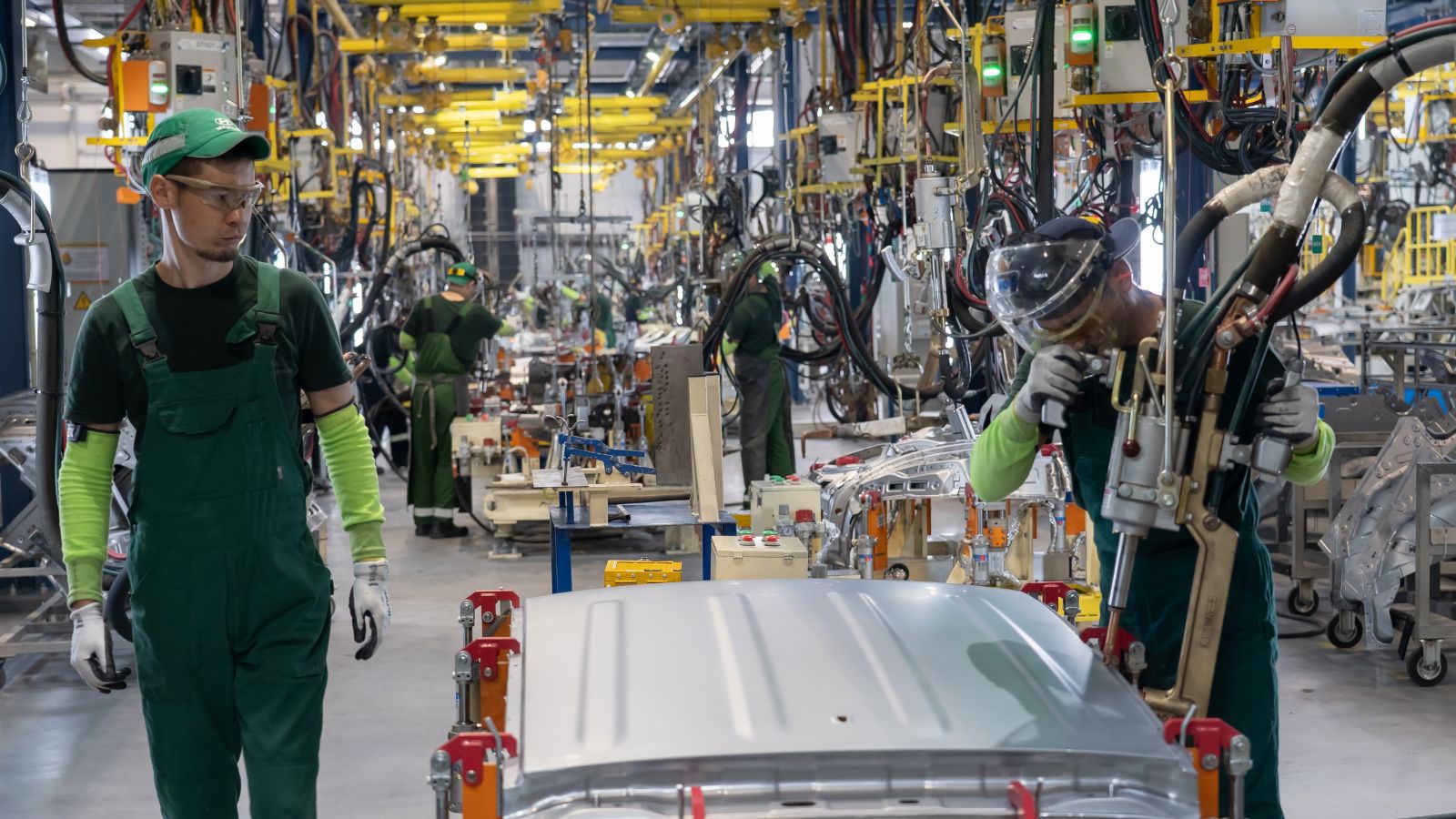
A damaged hood or fender once represented a fairly predictable stop at the body shop. For some American motorists, that timetable is becoming much harder to promise. A family-owned collision centre in Louisville, Kentucky, says delays obtaining Canadian-sourced components are stretching repairs that would normally take about two weeks into waits of one or even two months.
The problem arrives at an especially difficult moment for the deeply integrated Canadian and American automotive industries. Trade tensions, changing tariff rules, customs requirements and existing shortages of certain collision components are colliding with a repair system already dependent on tightly coordinated inventories. For body shops, one unavailable component can leave an otherwise repairable vehicle occupying valuable space. For its owner, the consequences can mean weeks of rental-car costs and uncertainty.
A Two-Week Repair Can Now Stretch Into Two Months
Bluegrass Collision Center in Louisville has become a small-business illustration of a much larger cross-border problem. General manager Derek McAllister said the shop has experienced significant delays getting certain automotive components from Canada, particularly collision items such as body panels, hoods, doors and fenders. In some cases, suppliers are unable to provide a firm delivery date at all.
That uncertainty changes the economics of an ordinary collision repair. McAllister told WHAS11 that a job normally expected to take roughly two weeks can instead require a month or two, depending on how the needed components are sourced. The frustration is easy to understand from a customer’s perspective: technicians may have completed much of the labour, yet the vehicle still cannot leave because one essential exterior component remains unavailable. The experience also shows why today’s repair timelines increasingly depend as much on logistics and inventory as on the actual hours required to straighten metal, paint panels or reassemble a vehicle.
Hoods, Doors and Fenders Are Particularly Difficult Pieces to Substitute
The parts creating problems in Louisville are not obscure mechanical components buried deep inside an engine. They include some of the most visible pieces of a collision repair: hoods, doors, fenders and other body panels. These components can be surprisingly difficult to replace quickly because they often have to match a specific model year, trim level, mounting configuration and sometimes an array of sensors or electronic equipment.
The Automobile Protection Association has reported that collision components—including body panels, front-mounted sensors and model-specific trim—remain among the categories vulnerable to prolonged backorders. That helps explain why a vehicle that still runs can nevertheless remain immobilized at a repair facility. Unlike an oil filter or a common brake component, a late-model quarter panel cannot necessarily be pulled from a generic warehouse shelf. A shop may need exactly the correct factory component, an acceptable aftermarket equivalent or a suitable recycled piece from another vehicle. If none is immediately available, the entire repair timetable can effectively stop.
The Canada-U.S. Auto Industry Was Built Around a Nearly Seamless Border
Canadian parts turning up inside American vehicles is not unusual—it is fundamental to how North America’s automotive industry developed. Canadian government data describes automotive production on the continent as highly integrated, with components and finished vehicles moving back and forth between manufacturing facilities before reaching customers. Ottawa has said roughly 60% of Canadian-made auto parts are exported to the United States.
The scale of that relationship makes disruptions noticeable far from the border. Canada had nearly 700 automotive parts manufacturers in recent government estimates, while total Canada-U.S. automotive trade reached about $152 billion in 2024. Prime Minister Mark Carney has described some vehicle components as crossing the border multiple times during the manufacturing process. That system works efficiently when customs treatment, transportation and inventories are predictable. When those conditions change, however, the same integration becomes a vulnerability. A parts shortage in Ontario can eventually become a repair delay in Kentucky, Ohio or another U.S. market hundreds of kilometres away.
The Tariff Story Is More Complicated Than a Blanket 50% Duty on Canadian Parts
It would be inaccurate to assume that every delayed Canadian fender or door is sitting behind a new 50% U.S. tariff. U.S. Customs and Border Protection guidance for the Section 338 measures that took effect August 22 specifically gives covered passenger-vehicle and light-truck parts a zero additional Section 338 rate because those products are handled under other sectoral trade provisions. Canada also says CUSMA-compliant auto and truck parts are not currently subject to the existing 25% Section 232 automotive-parts tariff.
That does not mean trade policy is irrelevant. Certain steel, aluminum and copper products and derivatives face separate sectoral duties, while non-CUSMA-compliant automotive goods can receive different tariff treatment. Classification has therefore become critical. A body-shop manager may simply see a component listed as unavailable, while several steps upstream suppliers and importers are dealing with tariff categories, origin rules, metal-content requirements and customs declarations. The result is a supply environment considerably less predictable than the headline tariff percentages alone suggest.
Customs Paperwork Can Become Another Bottleneck
Modern trade disruption does not always look like a truck physically stopped at a border crossing. Sometimes it appears as a coding problem on an electronic customs entry. Canada’s Trade Commissioner Service has warned exporters that brokers must apply additional tariff and exemption codes correctly and in a specific sequence. Incorrect classification can result in duties being assessed or shipments requiring correction.
That administrative burden matters in an automotive supply chain designed around speed. A replacement panel may move from a Canadian supplier through a distribution centre, dealer network and finally a collision shop. Every extra uncertainty creates another opportunity for the expected arrival date to slip. Mitchell, one of the major technology and data providers serving insurers and collision repairers, has highlighted parts availability, delivery timing, pricing and supply-chain disruption as factors affecting repair decisions. For a Louisville shop waiting on a single hood, none of that complexity is visible to the customer standing at the counter. What matters is that the promised component still has not arrived.
Shops Are Turning to Recycled and Non-OEM Parts When They Can
Bluegrass Collision Center has responded by looking beyond the traditional factory-parts pipeline. McAllister said the shop sometimes turns to recycled components or parts not produced by the original vehicle manufacturer when the preferred component cannot be obtained. That can mean locating an undamaged original panel from a dismantled vehicle or considering an aftermarket replacement that meets the requirements of the repair.
Alternative sourcing is already an established strategy in collision repair, and the Automobile Protection Association notes that recycled and aftermarket parts can sometimes shorten lengthy waits. The choice is not always available, however. Part specifications, insurer requirements, vehicle warranties and manufacturer repair procedures can narrow the acceptable options. A recycled door may be practical for one vehicle while a specialized electronic component has no realistic substitute. There is also a simple supply problem: when many repairers begin searching for the same alternative part, that inventory can disappear quickly too. Substitution helps, but it cannot completely replace a functioning original-equipment supply chain.
The Industry Was Already Fighting Long Repair Timelines
Canadian parts disruption is landing on a U.S. collision-repair industry that had not completely returned to its pre-pandemic rhythm. CCC Intelligent Solutions reported that overall repair cycle times improved from their recent peaks during 2025, yet they remained several days longer than comparable 2020 levels. Vehicle complexity, supplements to initial damage estimates and technician shortages have all contributed to longer repairs.
Parts availability can magnify those existing pressures because the collision process is sequential. Technicians may discover hidden damage after disassembly, triggering a supplemental insurance estimate and an additional parts order. A second unavailable component then resets the clock. Meanwhile, the vehicle continues occupying shop space that could otherwise be used for another repair. CCC’s 2026 data also showed continuing price increases in several component categories, including grilles, liftgates, quarter panels and rear lamps during 2025. That combination—more expensive components, more complex vehicles and uncertain delivery dates—means even relatively ordinary crashes can produce unusually complicated repair schedules.
A 60-Day Repair Can Outlast Rental-Car Insurance
The repair delay does not remain inside the body shop. For motorists whose damaged vehicle is not drivable, temporary transportation can become one of the biggest practical problems. Rental reimbursement is generally an optional feature of U.S. auto policies and usually comes with limits on how much an insurer will pay per day or for the entire claim.
Those limits matter when a two-week repair becomes a two-month wait. Progressive, for example, says its rental reimbursement coverage commonly runs for up to 30 or 45 days depending on the policy and state, with daily limits also applying. The National Association of Insurance Commissioners similarly advises consumers that rental reimbursement commonly has dollar or duration restrictions. Someone waiting roughly 60 days for an unavailable part could therefore reach the end of coverage before the vehicle is finished. At that point, a supply-chain delay that began with a missing Canadian fender can become a direct household expense involving rental fees, ride-hailing or complicated transportation arrangements for work and family responsibilities.
EVs Can Be Even More Exposed to OEM Parts Availability
The challenge is particularly important as more technologically complex vehicles enter collision shops. Mitchell’s second-quarter 2026 data found that 85% of parts dollars on estimates for repairable battery-electric vehicles were designated for original-equipment parts, compared with 61% for conventional gasoline-powered vehicles. Greater dependence on OEM components leaves fewer sourcing alternatives when a specific factory part is unavailable.
Repair costs also remain substantial. Mitchell reported average U.S. repairable severity of $5,684 for battery-electric vehicles in the second quarter, compared with $4,955 for internal-combustion vehicles. The difference has narrowed considerably, but advanced electronics, sensors and interconnected systems continue to influence how repairs are completed. A damaged bumper area, for example, may involve much more than plastic and paint if cameras, radar units or other driver-assistance components are incorporated nearby. In that environment, a repairer cannot always solve a backorder by choosing the first physically similar component available. Correct specifications, calibration requirements and approved repair procedures increasingly shape the parts decision.
The Bigger Risk Is What Happens if Trade Uncertainty Continues
The Louisville delays are occurring while Canada-U.S. trade tensions are still escalating. Canada put new counter-tariffs into effect at 12:01 a.m. on September 8, covering $27.6 billion worth of U.S. imports at rates of 15%, 25% and 50%, depending on the product. Existing Canadian measures on U.S. automobiles also remain in place. The latest countermeasures do not mean Canadian replacement parts headed south suddenly face equivalent Canadian duties, but they underscore how quickly the policy environment is changing.
There is an even larger question hanging over 2027. President Donald Trump threatened in August to raise U.S. tariffs on Canadian cars, trucks and automotive parts to 50% beginning January 1 if the dispute remains unresolved. That announced threat is distinct from the tariff treatment currently applied to CUSMA-compliant replacement parts. For body shops, suppliers and motorists, the uncertainty itself matters. Companies must decide what to stock, where to source it and how much inventory to carry without knowing what cross-border costs may look like months from now. The Louisville shop’s month-long waits could therefore prove either temporary—or an early warning of a more difficult repair environment ahead.