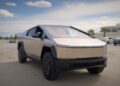




















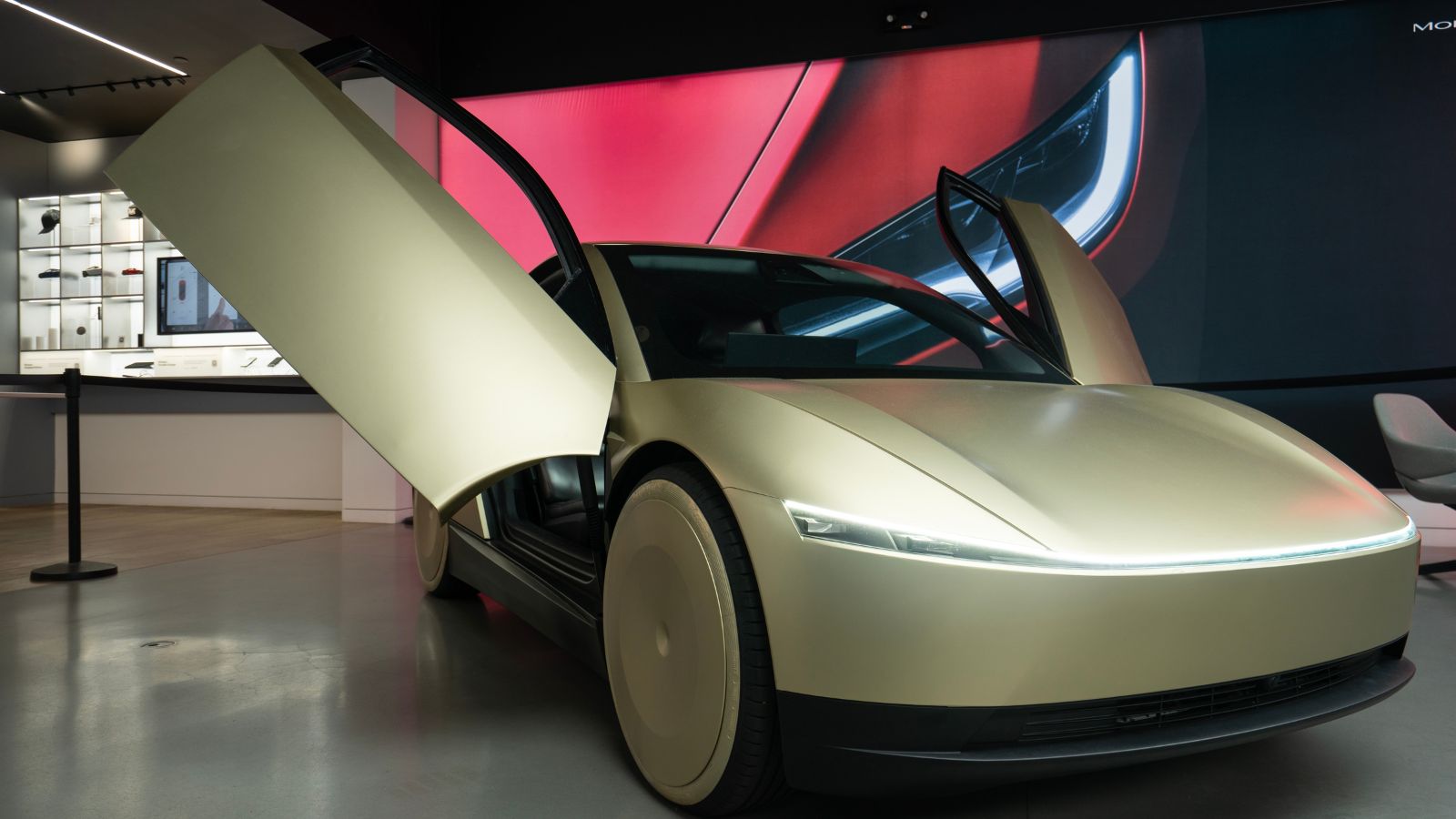
Tesla’s Cybercab was meant to mark a clean break from the human-driven car. Instead, its steering wheel-free debut has immediately become a test of how quickly U.S. safety rules can adapt to vehicles designed never to be driven by a person. On September 4, 2026, the National Highway Traffic Safety Administration opened an audit involving about 1,000 Cybercabs, examining the process and technical data Tesla used to certify the vehicles under federal safety standards.
The action came a day after Tesla began limited commercial Cybercab deployment in Austin, Texas. At issue is an unusual regulatory puzzle: the two-seat robotaxi has no permanently attached steering wheel, brake pedal, accelerator pedal or conventional mirrors, while federal standards are still being rewritten to accommodate exactly that kind of vehicle.
Federal Scrutiny Arrived Almost as Fast as the Cybercab
Tesla’s September 3 rollout put a small number of Cybercabs into commercial service in limited areas of Austin. By the next morning, NHTSA had moved from saying it was evaluating the deployment to opening an audit query covering about 1,000 vehicles. The agency said it wants to examine the process and evidence Tesla relied on when it certified the Cybercab as compliant with Federal Motor Vehicle Safety Standards.
That timing makes the probe consequential. Tesla did not merely show a prototype or run a closed-course demonstration; it began deploying a purpose-built vehicle on public roads as part of its Robotaxi business. NHTSA’s review therefore goes directly to whether the legal foundation for that rollout is sound. The agency has not announced that Cybercabs are unsafe or noncompliant. It is asking Tesla to substantiate why a vehicle without conventional driver controls can lawfully fit within standards developed around human-driven cars.
The Missing Steering Wheel Is a Regulatory Issue, Not Just a Design Choice
The Cybercab’s cabin is unlike a normal passenger car. Tesla’s rider guide says the vehicle has two seats and no steering wheel, accelerator pedal or brake pedal. NHTSA has also highlighted the absence of conventional mirrors. Those omissions are central to the investigation because several federal safety standards were written on the assumption that a human driver would sit behind physical controls and use equipment designed around that role.
Federal policy is changing, but not all at once. In 2022, NHTSA modernized occupant-protection rules so vehicles without traditional controls could still be evaluated for crash protection. In June 2026, the agency proposed eliminating the manual brake-pedal mandate for vehicles designed exclusively for automated driving, while preserving stopping-distance requirements. That proposal illustrates the current gap: regulators agree some human-oriented equipment may become unnecessary, yet manufacturers still must comply with rules actually in force—or establish why particular provisions do not apply.
Tesla’s Self-Certification Strategy Is at the Center of the Audit
The United States does not use a pre-market vehicle approval system in which NHTSA signs off on every new model before it is sold. Manufacturers instead self-certify that vehicles comply with all applicable federal motor vehicle safety standards. Tesla told NHTSA it used that process for Cybercab, placing the company’s engineering analysis and interpretation of the standards squarely under the regulator’s microscope.
There is another route when a novel vehicle cannot comply with certain rules: a manufacturer can seek a temporary exemption. NHTSA says Part 555 exemptions can permit up to 2,500 vehicles per year in qualifying cases, including automated vehicles without traditional steering wheels, driver-operated brakes or rearview mirrors, if the applicant meets the required safety showing. Tesla’s Cybercab audit is therefore not a dispute over whether driverless vehicles are allowed in principle. It is about whether Tesla correctly concluded that Cybercab complied without needing that exemption pathway.
The 1,000-Vehicle Audit Is Much Larger Than the Initial Texas Fleet
The headline figure can be misleading without context. NHTSA’s audit covers about 1,000 Cybercabs, but Texas records cited on September 4 showed Tesla with 420 autonomous vehicles registered in the state, only 45 of them Cybercabs. The commercial launch itself was limited, with Cybercab rides beginning in selected parts of Austin rather than across the company’s robotaxi footprint.
That gap matters because the audit population reflects more than the handful of cars passengers may encounter. It gives regulators room to examine Tesla’s broader certification population as production and deployment expand. Tesla already operates Robotaxi service in limited areas of several Texas and Florida cities, but Cybercab represents a different regulatory step because it was designed from the outset without human driving controls. For an Austin rider, the experience may feel like a local launch. For NHTSA, it is the beginning of oversight for a potentially much larger vehicle program.
Cybercab Turns Passengers Into the Only Human Occupants
Tesla describes Cybercab as an autonomous, two-seat vehicle with butterfly-style doors, a touchscreen and rear cargo space. Its rider guide confirms that both front positions are passenger seats; there is no driver position to take over if the automation encounters trouble. Instead, riders can use an overhead Stop button to request an immediate pull-over and connect with Robotaxi Support, while the touchscreen controls doors, climate settings, media and ride functions.
That design makes the autonomy system inseparable from the vehicle itself. Tesla says Cybercab navigates using camera vision and sensors, while reporting has described the company’s approach as camera-based and unlike rivals that combine cameras with lidar and radar. For customers, the humanizing detail may be simple: there is no wheel to grab when uncertainty rises. The vehicle must either manage the situation autonomously or execute support and pull-over procedures, raising the stakes for software performance and regulatory confidence.
Cybercab Is Supposed to Become a High-Volume Product, Not a Small Experiment
Tesla had moved beyond prototype work before the Austin launch. In its second-quarter 2026 update, the company said Cybercab production had started, engineering drives of production vehicles were underway on public roads, and employee rides began at Gigafactory Texas in July. Tesla also reported expanding unsupervised Robotaxi operations in Austin and launching unsupervised rides in Miami, Orlando and Tampa during the quarter.
The commercial stakes are now larger than 45 registered Cybercabs. Recent reporting says Tesla has built annual Cybercab manufacturing capacity of 125,000 units, while the company has positioned the model as a future workhorse of its Robotaxi network. That scale makes the certification audit more than a paperwork dispute. A regulatory finding that requires redesign, exemption filings or deployment changes could affect how quickly Tesla converts factory capacity into revenue-generating vehicles. Conversely, a clean resolution would remove one of the federal uncertainties surrounding its purpose-built robotaxi strategy.
Older Tesla Autonomy Investigations Make This Review More Sensitive
Cybercab arrives while NHTSA is already examining Tesla’s driver-assistance technology in separate investigations. One probe opened in 2024 after four crashes involving Full Self-Driving in reduced-visibility conditions such as glare, fog and airborne dust; one crash killed a pedestrian. In March 2026, NHTSA upgraded that review to an engineering analysis covering about 3.2 million vehicles after identifying additional incidents and concerns about how the camera-based system detected degraded visibility.
A separate 2025 preliminary evaluation focuses on alleged traffic-law violations by FSD, including red-light behavior and movements into opposing lanes. Those investigations concern FSD systems that Tesla classifies as supervised driver assistance, not the steering wheel-free Cybercab itself. Still, the context matters. Cybercab removes the human driver who, in a supervised Tesla, is expected to monitor the system and intervene. Regulators are assessing a new vehicle architecture while unresolved questions remain about related Tesla automation technology operating on public roads.
Zoox Shows the Regulatory Path Tesla Chose Not to Follow
Amazon-owned Zoox offers a comparison because its purpose-built robotaxi also lacks conventional human controls. In July 2026, NHTSA granted Zoox a commercial exemption allowing up to 2,500 vehicles annually for two years, subject to oversight. Reuters described it as the first federal approval for paid robotaxi service in a vehicle without human driving controls. Zoox had to demonstrate that its exempted design provided an acceptable safety level under the exemption framework.
The contrast matters. Tesla says Cybercab complies with all applicable standards through self-certification, while Zoox ultimately used a formal exemption. NHTSA has been trying to make that exemption process faster while rewriting outdated safety standards for automated vehicles. The government is not blocking steering wheel-free robotaxis as a category. The question is which legal path a manufacturer uses to put one into commercial service, what technical evidence supports that choice, and whether regulators agree with the company’s interpretation.
A Previous Zoox Audit Offers a Striking Precedent
NHTSA has seen a similar certification dispute before. In 2023, the agency opened an audit query into Zoox after the company self-certified purpose-built vehicles that lacked traditional driving controls. The agency later said an inspection identified apparent noncompliances with federal standards. Zoox subsequently applied for an exemption, and NHTSA closed that audit in August 2025 after the demonstration exemption was granted.
That history does not mean Tesla will reach that outcome. An audit query is an investigation tool, not a finding that a manufacturer violated the law. But the Zoox record shows what NHTSA examines: engineering data, the manufacturer’s reasoning about which standards apply, and the vehicle. It also demonstrates that a self-certification dispute can evolve into an exemption-based solution rather than outright rejection of the technology. For Tesla, the precedent matters because Cybercab raises the question—how existing standards apply when software replaces the driver and traditional controls disappear.
The Next Phase Will Decide Whether Cybercab Can Scale Smoothly
NHTSA now has to determine whether Tesla’s certification logic and evidence satisfy federal law. If the agency concludes the vehicles comply, the audit could close without a recall. If it finds noncompliance, federal law gives NHTSA mechanisms that can require notification and a remedy, while manufacturers can face enforcement consequences. A separate exemption process could remain relevant if specific standards cannot be met by the current design.
For Tesla, timing is the immediate practical issue. The company wants Cybercab to grow smoothly from Austin deployment into a high-volume autonomous transportation platform. Every city, fleet partner and production increase makes regulatory certainty more commercially valuable. For riders, the stakes are immediate: the promise of a car with no steering wheel depends on trusting both the software and the rules governing it. The audit will test whether Tesla’s boldest vehicle design moved faster than the federal framework—or fits within it already.