





















• About
  • Contact
AutoIgloo
  • News & Trends
    Geely Auto’s Core Profit Jumps 46% as Chinese EV Expansion Accelerates — With Canada Now Opening to Geely-Owned Lotus

    ⁠Geely’s New 800-Volt EV Tops 20,000 Pre-Orders Before It Even Launches

    Nio’s Onvo L60 Sales Triple July’s Total in 28 Days After Price Cut

    Nio’s Onvo L60 Sales Triple July’s Total in 28 Days After Price Cut

    Volkswagen Opens Pre-Sales on a US$20,225 EV Built With XPeng Technology

    Volkswagen Opens Pre-Sales on a US$20,225 EV Built With XPeng Technology

    BYD Opens 10,000th Ultra-Fast Charging Station, Doubling Network in Under Five Months

    BYD Opens 10,000th Ultra-Fast Charging Station, Doubling Network in Under Five Months

    ⁠Toyota Plans to Build Its Next-Generation Lexus EV in China First, Report Says

    ⁠Toyota Plans to Build Its Next-Generation Lexus EV in China First, Report Says

    18 Red Flags a Used Vehicle May Be a Money Pit

    Gas Cars, Not EVs, Dominate ‘Park Outside’ Fire Recalls, New Analysis Finds

  • Car Reviews
    18 Things That Can Make a Car Unsafe for Winter Road Trips

    Why Some Drivers Are Avoiding Vehicles With Complex Infotainment Systems

    21 Cars Canadians Are Starting to Regret Buying

    Why Some Drivers Regret Buying Big Wheels and Low-Profile Tires

    17 Vehicles That Are Quietly Getting Crushed by Insurance Costs in Canada

    Why So Many Drivers Are Nervous About Chinese-Made EV Batteries

    20 Used SUVs Canadians Should Think Twice About Buying

    20 Used SUVs Canadians Should Think Twice About Buying

    15 Vehicles That Are Starting to Feel Like a Bad Deal Around May Long Weekend

    15 Vehicles That Are Starting to Feel Like a Bad Deal Around May Long Weekend

    15 Vehicles That Are Starting to Scare Off Canadian Buyers

    15 Vehicles That Are Starting to Scare Off Canadian Buyers

  • Buying Guides
    17 Things That Make Car Leasing in Canada Feel More Expensive Than It Looks

    20 Reasons a Cheap Monthly Payment Can Still Be a Bad Deal

    27 Things Canadian Drivers Should Do Before Pothole Season Destroys Their Suspension

    The Bad Habit That Makes Your Engine Work Harder Than It Should

    19 Signs a Used SUV That Looks Like a Deal Probably Isn’t

    17 Things Drivers Should Check Before Buying a Car at Auction

    25 EV Charging Mistakes Canadians Make in March (That Wreck Range)

    Why Some Canadians Are Choosing Hybrids Over Full EVs Again

    22 Signs a Car Has Been in a Serious Crash Even if the Report Looks Clean

    21 Things That Make a Used Car Listing Seem Suspicious

    23 Features That Are Making New Cars Harder (and Pricier) to Repair in Canada

    Why Some Buyers Regret Choosing the Cheapest Trim Level

  • Comparisons
    25 EV Charging Mistakes Canadians Make in March (That Wreck Range)

    Why Some Canadians Are Choosing Hybrids Over Full EVs Again

    21 Used Car Features That Can Become Expensive Problems Later

    Why Some Canadians Are Choosing Front-Wheel Drive Over All-Wheel Drive

    Canada’s Auto Fight Gets Uglier as BYD Threatens to Sue Trump Administration

    Tesla Vs. BYD: Are Chinese EV’s Actually Better for Canadians?

    17 Vehicles That Are Quietly Getting Crushed by Insurance Costs in Canada

    Why So Many Drivers Are Nervous About Chinese-Made EV Batteries

    20 Used SUVs Canadians Should Think Twice About Buying

    20 Used SUVs Canadians Should Think Twice About Buying

    16 Cars That Are a Nightmare to Repair Because Parts Are Backordered

    23 Cars Canadians Love That Have One Deal-Breaker Flaw

  • EVs & Hybrids
    20 Signs Your Car Battery Is About to Leave You Stranded

    Canadian Auto Jobs Become a Central Fault Line as Ottawa Reveals Why It Rejected U.S. Vehicle Terms

    25 EV Charging Mistakes Canadians Make in March (That Wreck Range)

    Why Some Canadians Are Choosing Hybrids Over Full EVs Again

    The EV Charging Habit That Can Annoy Everyone Around You

    Canada Is Missing an EV-Battery Export Opening as EU Lithium Demand Heads for a 9-to-12-Fold Jump: Report

    16 Used-EV Surprises Canadians Don’t See Coming Until After They Buy

    The EV Charging Habit That Can Annoy Everyone Around You

    17 SUVs That Are Losing Their Appeal Fast in Canada

    GM Canada Says EV Sales Jumped More Than 30% as CUSMA Uncertainty Hangs Over Showrooms

    9 Auto Brands Canadians Are Watching Much More Closely Right Now

    Toyota Canada Says Electrified Vehicles Are Now Nearly 70% of Its Q2 Sales

  • More
    • Pricing & Deals
    • Winter Driving
    • Ownership & Maintenance
No Result
View All Result
AutoIgloo
  • News & Trends
    Geely Auto’s Core Profit Jumps 46% as Chinese EV Expansion Accelerates — With Canada Now Opening to Geely-Owned Lotus

    ⁠Geely’s New 800-Volt EV Tops 20,000 Pre-Orders Before It Even Launches

    Nio’s Onvo L60 Sales Triple July’s Total in 28 Days After Price Cut

    Nio’s Onvo L60 Sales Triple July’s Total in 28 Days After Price Cut

    Volkswagen Opens Pre-Sales on a US$20,225 EV Built With XPeng Technology

    Volkswagen Opens Pre-Sales on a US$20,225 EV Built With XPeng Technology

    BYD Opens 10,000th Ultra-Fast Charging Station, Doubling Network in Under Five Months

    BYD Opens 10,000th Ultra-Fast Charging Station, Doubling Network in Under Five Months

    ⁠Toyota Plans to Build Its Next-Generation Lexus EV in China First, Report Says

    ⁠Toyota Plans to Build Its Next-Generation Lexus EV in China First, Report Says

    18 Red Flags a Used Vehicle May Be a Money Pit

    Gas Cars, Not EVs, Dominate ‘Park Outside’ Fire Recalls, New Analysis Finds

  • Car Reviews
    18 Things That Can Make a Car Unsafe for Winter Road Trips

    Why Some Drivers Are Avoiding Vehicles With Complex Infotainment Systems

    21 Cars Canadians Are Starting to Regret Buying

    Why Some Drivers Regret Buying Big Wheels and Low-Profile Tires

    17 Vehicles That Are Quietly Getting Crushed by Insurance Costs in Canada

    Why So Many Drivers Are Nervous About Chinese-Made EV Batteries

    20 Used SUVs Canadians Should Think Twice About Buying

    20 Used SUVs Canadians Should Think Twice About Buying

    15 Vehicles That Are Starting to Feel Like a Bad Deal Around May Long Weekend

    15 Vehicles That Are Starting to Feel Like a Bad Deal Around May Long Weekend

    15 Vehicles That Are Starting to Scare Off Canadian Buyers

    15 Vehicles That Are Starting to Scare Off Canadian Buyers

  • Buying Guides
    17 Things That Make Car Leasing in Canada Feel More Expensive Than It Looks

    20 Reasons a Cheap Monthly Payment Can Still Be a Bad Deal

    27 Things Canadian Drivers Should Do Before Pothole Season Destroys Their Suspension

    The Bad Habit That Makes Your Engine Work Harder Than It Should

    19 Signs a Used SUV That Looks Like a Deal Probably Isn’t

    17 Things Drivers Should Check Before Buying a Car at Auction

    25 EV Charging Mistakes Canadians Make in March (That Wreck Range)

    Why Some Canadians Are Choosing Hybrids Over Full EVs Again

    22 Signs a Car Has Been in a Serious Crash Even if the Report Looks Clean

    21 Things That Make a Used Car Listing Seem Suspicious

    23 Features That Are Making New Cars Harder (and Pricier) to Repair in Canada

    Why Some Buyers Regret Choosing the Cheapest Trim Level

  • Comparisons
    25 EV Charging Mistakes Canadians Make in March (That Wreck Range)

    Why Some Canadians Are Choosing Hybrids Over Full EVs Again

    21 Used Car Features That Can Become Expensive Problems Later

    Why Some Canadians Are Choosing Front-Wheel Drive Over All-Wheel Drive

    Canada’s Auto Fight Gets Uglier as BYD Threatens to Sue Trump Administration

    Tesla Vs. BYD: Are Chinese EV’s Actually Better for Canadians?

    17 Vehicles That Are Quietly Getting Crushed by Insurance Costs in Canada

    Why So Many Drivers Are Nervous About Chinese-Made EV Batteries

    20 Used SUVs Canadians Should Think Twice About Buying

    20 Used SUVs Canadians Should Think Twice About Buying

    16 Cars That Are a Nightmare to Repair Because Parts Are Backordered

    23 Cars Canadians Love That Have One Deal-Breaker Flaw

  • EVs & Hybrids
    20 Signs Your Car Battery Is About to Leave You Stranded

    Canadian Auto Jobs Become a Central Fault Line as Ottawa Reveals Why It Rejected U.S. Vehicle Terms

    25 EV Charging Mistakes Canadians Make in March (That Wreck Range)

    Why Some Canadians Are Choosing Hybrids Over Full EVs Again

    The EV Charging Habit That Can Annoy Everyone Around You

    Canada Is Missing an EV-Battery Export Opening as EU Lithium Demand Heads for a 9-to-12-Fold Jump: Report

    16 Used-EV Surprises Canadians Don’t See Coming Until After They Buy

    The EV Charging Habit That Can Annoy Everyone Around You

    17 SUVs That Are Losing Their Appeal Fast in Canada

    GM Canada Says EV Sales Jumped More Than 30% as CUSMA Uncertainty Hangs Over Showrooms

    9 Auto Brands Canadians Are Watching Much More Closely Right Now

    Toyota Canada Says Electrified Vehicles Are Now Nearly 70% of Its Q2 Sales

  • More
    • Pricing & Deals
    • Winter Driving
    • Ownership & Maintenance
No Result
View All Result
AutoIgloo
No Result
View All Result

Home » Uncategorized

Europe’s EV Share Tops 25% as Canada Heads Into a Much Different Electric-Car Market

Nate Brewer by Nate Brewer
August 25, 2026
Reading Time: 5 mins read
A A
Photo Credit: Shutterstock

Photo Credit: Shutterstock

466
SHARES
1.5k
VIEWS
Share on FacebookShare on Twitter

Europe’s electric-car transition has reached a milestone that would have seemed ambitious only a few years ago. Battery-electric vehicles captured 25.7% of new registrations across 16 key European markets in July 2026, helped by rapid growth in Germany and France, more affordable models and government support. Canada is moving in the same technological direction, but its market is taking a markedly different route. After a difficult 2025, Canadian zero-emission registrations have begun recovering, even as Ottawa replaces its national EV sales mandate with emissions standards and a redesigned incentive program. The contrast shows how two wealthy car markets can embrace electrification under very different conditions. Europe is increasingly treating battery-electric vehicles as a mainstream choice, while Canada is balancing affordability, charging access, consumer preferences, trade tensions and the future of its domestic auto industry.

Europe Has Crossed a Significant EV Threshold

Battery-electric cars accounted for 25.7% of new registrations in July across 16 major European markets tracked by E-Mobility Europe, representing 224,266 vehicles and a 13.6% increase from a year earlier. The number is striking because it means roughly one in four new cars in those markets was fully electric. France reached a battery-electric share of about 35%, while Germany reached 29.3%. Denmark remained far ahead, with electric vehicles accounting for more than four-fifths of registrations. The Netherlands, Belgium and Sweden were also above 40%, illustrating how far electrification has progressed in several northern European markets.

That 25.7% figure should not be confused with the entire European Union’s year-to-date share. ACEA reported that battery-electric vehicles represented 20.7% of EU registrations during the first half of 2026, up from 15.6% during the same period in 2025. More than 1.22 million battery-electric cars were registered in the EU during those six months. Hybrid-electric vehicles were even more dominant, holding 37.3% of the market. Europe therefore is not becoming exclusively battery-electric overnight. Instead, traditional gasoline and diesel vehicles are losing ground while several forms of electrification gain share simultaneously.

Lower-Cost Models Are Changing the European Equation

Europe’s 2026 EV acceleration is not being driven by a single policy or automaker. Higher fuel costs, government support in several countries and a growing selection of comparatively affordable electric cars have combined to make battery power more practical for mainstream households. Reuters reported that European EV sales accelerated sharply during the first half of the year as manufacturers introduced less expensive models and governments continued using subsidies and other market-support measures. Renault provided a telling example: electric vehicles accounted for more than half of its United Kingdom orders in July, compared with roughly 10% two years earlier.

The Renault 5 also became the United Kingdom’s top-selling electric vehicle during July, showing why smaller models matter. European buyers traditionally purchase more compact cars than Canadians and Americans, giving manufacturers a larger market for relatively inexpensive EVs with smaller batteries. New electric city cars are helping push the technology beyond premium buyers who can absorb a large price difference. Yet Europe remains highly uneven. Italy’s battery-electric share was only 5.9% in July after incentive changes, while Poland and the Czech Republic remained in the single digits. Europe’s experience therefore demonstrates both the power and fragility of incentives, pricing and vehicle availability.

Canada Is Recovering From a Difficult 2025

Canada entered 2026 from a much weaker position. Statistics Canada reported that zero-emission vehicles represented only 8.7% of new motor vehicles sold in 2025, down sharply from 13.8% in 2024. Total ZEV sales fell 35.7% to 169,972 vehicles. Statistics Canada linked that decline in part to changes in government incentives, including the January 2025 suspension of the former federal iZEV program and reductions to Quebec’s Roulez vert rebates. For dealers accustomed to growing electric demand, the abrupt shift demonstrated how quickly the market could react when purchase incentives changed.

The first quarter of 2026 brought a notable rebound. Canadians registered 43,113 new zero-emission vehicles, up 15.8% from the same quarter a year earlier and equal to 10.8% of all new registrations. Quebec registrations jumped 42.1% year over year, while Manitoba rose 36.8%, Saskatchewan 22.1% and Ontario 5%. British Columbia increased only 0.7%. Those figures make Canada’s situation substantially different from Europe’s headline 25.7% battery-electric share. They also measure somewhat different categories: Canada’s ZEV statistics include qualifying battery-electric and plug-in hybrid vehicles, while the European headline refers specifically to fully battery-electric cars.

Ottawa Has Rewritten the Rules of the Transition

Canada’s policy framework has changed significantly. The federal government announced in February that it would repeal the Electric Vehicle Availability Standard, which had originally envisioned steadily increasing mandatory ZEV sales requirements. Instead, Ottawa is moving toward stronger greenhouse-gas standards for 2027 through 2032 model-year vehicles, allowing manufacturers to use different technologies while requiring progressively lower fleet emissions. The government says the standards are intended to produce emissions reductions comparable to approximately 75% EV adoption by 2035 and has set a longer-term goal equivalent to roughly 90% adoption by 2040.

At the same time, purchase incentives have returned in a more targeted form. The Electric Vehicle Affordability Program provides up to $5,000 in 2026 for qualifying battery-electric and fuel-cell vehicles and up to $2,500 for plug-in hybrids. For most imported vehicles, the final transaction value must be $50,000 or less, while Canadian-made EVs are exempt from that price ceiling. Ottawa provided approximately $2.275 billion for the five-year program, and Transport Canada reported about $2.05 billion remained available as of August 1. Incentive amounts are scheduled to decline over the program’s life, gradually shifting more responsibility for affordability toward manufacturers.

Canadian Buyers Still Want Much Larger Vehicles

Vehicle preferences create another important difference. Canadians overwhelmingly buy trucks, crossovers, SUVs and vans rather than conventional passenger cars. Statistics Canada reported that vehicles classified broadly as trucks accounted for 88% of Canadian new-vehicle sales in 2025. Multipurpose vehicles alone represented 63.2% of new registrations. Passenger-car sales have fallen dramatically since 2019, while models such as the Ford F-Series, Toyota RAV4 and GMC Sierra remain among the country’s most popular vehicles. Electrifying a market structured around larger vehicles poses different cost and battery requirements than electrifying Europe’s compact-car-heavy markets.

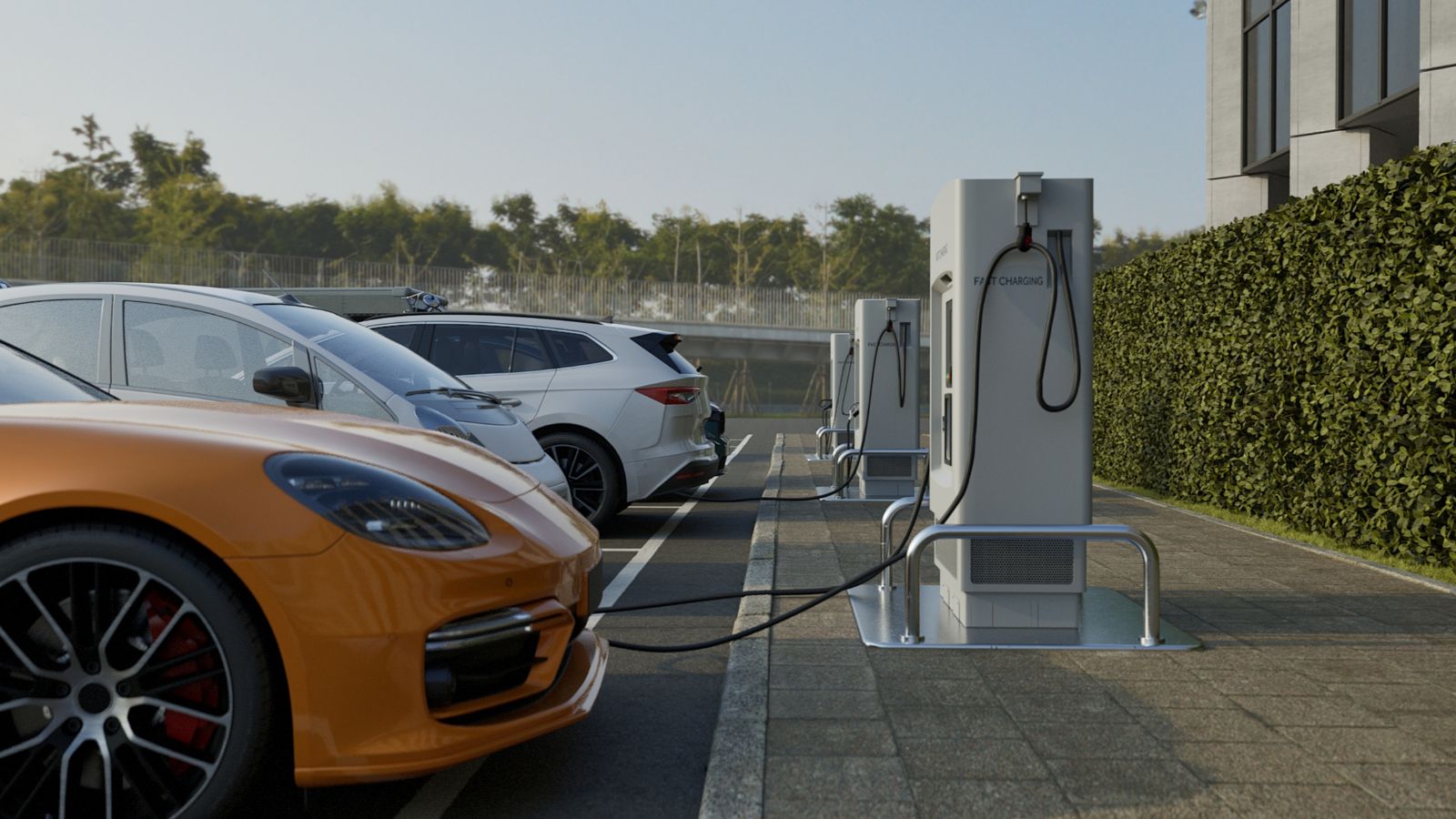
Charging also remains part of the Canadian equation. The federal government says more than 30,000 chargers have been installed through its Zero Emission Vehicle Infrastructure Program and has announced a $1.5-billion charging and hydrogen infrastructure initiative through the Canada Infrastructure Bank. Ottawa has specifically identified rural and northern charging availability as a barrier. Natural Resources Canada modelling has estimated that rapid EV adoption could eventually require hundreds of thousands of public charging ports. That challenge is magnified by Canada’s enormous distances, colder climates and substantial population living outside the largest urban centres.

Chinese EVs Could Reshape Canada’s Price Competition

Canada has also made a trade-policy decision that could change what buyers see in dealerships. The government repealed its 100% surtax on Chinese-made electric vehicles and, beginning March 1, 2026, established a country-specific quota allowing an initial 49,000 Chinese EVs annually at Canada’s normal 6.1% most-favoured-nation tariff. The quota represents less than 3% of Canada’s annual new-vehicle market, so it cannot transform sales overnight. However, its composition is designed to change progressively: by the fifth year, half of the quota is intended for EVs priced at $35,000 or less before shipping and related costs.

That creates an intriguing contrast with Europe, where Chinese automakers have already become visible competitors and European manufacturers are responding with cheaper electric cars of their own. Reuters reported in June that BYD, Chery and other Chinese manufacturers were pursuing Canadian expansion following Ottawa’s policy change. For Canadian households, the importance may extend beyond the first 49,000 imports. If lower-cost Chinese vehicles force established manufacturers to respond with discounts, cheaper trims or new compact models, competition could lower the effective entry price for EV ownership. Ottawa, meanwhile, is hoping managed Chinese access can also encourage joint-venture investment in Canadian manufacturing rather than simply increasing imports.

Canada Is Not Simply Several Years Behind Europe

It would be tempting to look at Europe’s 25.7% July share and Canada’s 10.8% first-quarter ZEV share and conclude that Canada is simply behind on the same road. The reality is more complicated. Canada’s market is dominated by larger vehicles, stretches across vast distances and remains deeply connected to U.S. automotive manufacturing. Its federal government has stepped away from a fixed national ZEV sales mandate while simultaneously restoring consumer incentives, financing more chargers and opening controlled access to Chinese electric vehicles. Those choices could produce a transition that looks less linear than Europe’s.

Europe provides evidence that EV adoption can accelerate quickly once affordable products, incentives, fuel economics and charging availability line up. It also offers a warning: large differences between countries show that policy changes can rapidly alter demand. Canada’s rebound during early 2026 indicates that consumer interest has not disappeared after the slump of 2025. The bigger question is whether manufacturers can provide electric crossovers, SUVs and trucks at prices Canadians consider competitive while charging infrastructure keeps pace. Europe has crossed an important threshold. Canada is now testing a distinctly Canadian route toward the same technological transformation.

Recommended.

23 Features That Are Making New Cars Harder (and Pricier) to Repair in Canada

Quebec Makes 80% EV Target Official as New Automaker Rules Hit the Gazette Today

August 19, 2026
15 Ways a Low Monthly Payment Can Fool Canadian Car Buyers

17 Things That Make Car Leasing in Canada Feel More Expensive Than It Looks

May 13, 2026

Trending.

⁠$28 Billion in Canadian Goods Face 50% Trump Tariffs at Midnight as Deal Still Isn’t Final

Canada-U.S. Trade Deal Fell Apart After Washington Left Ontario-Built Ford and GM Trucks Out of Auto Tariff Relief

August 23, 2026
Quebec’s BRP Prepares 2027 Vehicle Reveal Tonight as Canadian Manufacturer Pushes New Can-Am Lineup

Quebec’s BRP Prepares 2027 Vehicle Reveal Tonight as Canadian Manufacturer Pushes New Can-Am Lineup

August 17, 2026
Doug Ford Says U.S. ‘Wasn’t Budging’ on 25% Auto Tariffs as Ontario Puts ‘Every Single Tool’ on the Table

Doug Ford Says U.S. ‘Wasn’t Budging’ on 25% Auto Tariffs as Ontario Puts ‘Every Single Tool’ on the Table

August 23, 2026
Mexico Pushes U.S. to Cut Auto Tariff From 25% to 5%–10% — and Give Canadian Parts More Room

Ottawa’s Chinese-EV Quota Opens Canada to 6.1% Tariffs Instead of the Former 100% Surtax

August 22, 2026
19 Things That Can Make Your Car Insurance Claim Get Denied

Foreign Insurer Can Apply to Enter Canada’s Auto-Insurance Market Starting Today

August 17, 2026
  • About
  • Contact
  • Privacy Policy
  • Disclaimer
  • Editorial Policies
  • Terms and Conditions
A Revir Media Group Website

2026 Autoigloo - © All rights reserved

No Result
View All Result
  • News & Trends
  • Car Reviews
  • Buying Guides
  • Comparisons
  • EVs & Hybrids
  • More
    • Pricing & Deals
    • Winter Driving
    • Ownership & Maintenance

2026 Autoigloo - © All rights reserved

This website uses cookies. By continuing to use this website you are giving consent to cookies being used. Visit our Privacy and Cookie Policy.


