
























For one Sunday in August, downtown Port Coquitlam becomes less a conventional city centre than a sprawling celebration of automotive culture. The Downtown Port Coquitlam Car Show returned on August 16, 2026, with organizers expecting more than 400 classic and custom vehicles and a crowd surpassing 70,000 people.
Now in its 21st year, the event has grown far beyond the parking-lot gathering from which it emerged. Cars occupy the downtown streets from 10 a.m. to 4 p.m., while music, children’s activities, vendors and a beverage garden turn the occasion into a broader community festival. The scale is significant even by British Columbia car-show standards, but the thousands of individual stories behind restored, customized and carefully preserved vehicles remain a central part of its appeal.
Downtown Port Coquitlam Becomes a Giant Open-Air Garage
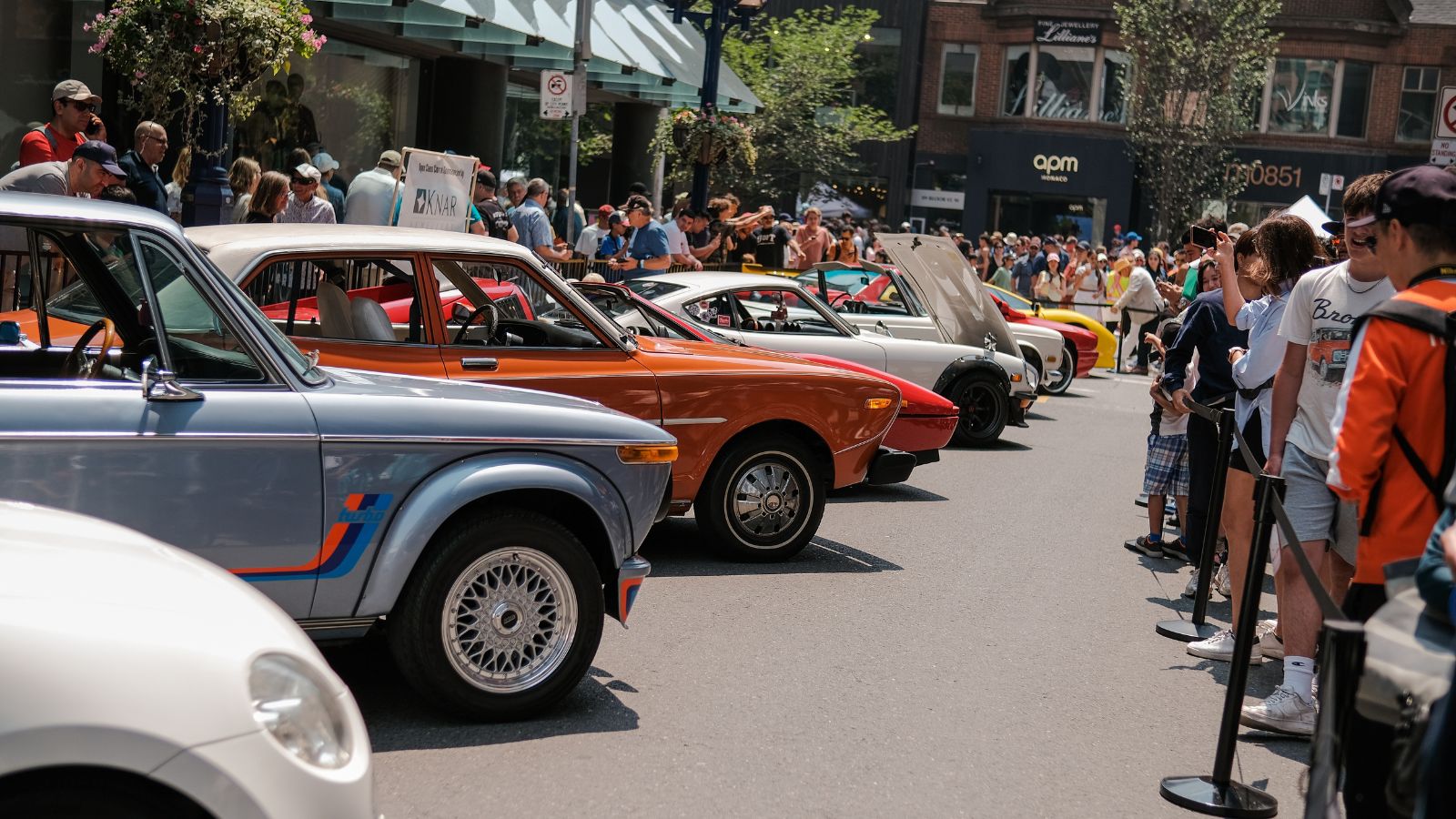
More than 400 vehicles were scheduled to fill downtown Port Coquitlam during the main Sunday show, giving spectators six hours to move through a collection dominated by classic and custom cars. Organizers describe the event as one of British Columbia’s largest outdoor car shows, an important distinction because the cars are not confined inside a convention centre. Instead, the downtown itself becomes the venue, with ordinary streets transformed into pedestrian viewing areas lined with vehicles that owners have often spent years preserving or modifying.
That format changes the experience. A restored classic can be examined from only a few feet away, while its owner may be standing nearby to explain what was replaced, rebuilt or deliberately left original. The result is as much about personal history as polished paint and chrome. With more than 70,000 people expected during the event, those one-on-one encounters take place against the backdrop of a very large public gathering rather than a specialist meet intended only for dedicated collectors.
A Local Car Show Has Grown Into One of the City’s Biggest Events
The spectacle on the streets is the result of roughly two decades of growth. Port Coquitlam councillor Dean Washington’s city profile identifies him as one of the event’s co-founders in 2005 and describes its evolution from a parking-lot car show into the city’s largest event. Organizers are billing the 2026 edition as the show’s 21st year, underscoring how firmly it has become established on the community calendar.
The scale is not entirely new. In 2016, a report on the 12th annual show recorded roughly 400 entries from British Columbia and Washington State and an estimated attendance of about 70,000. A decade later, organizers are again working around the 400-plus-vehicle and 70,000-plus-attendee marks. That history matters because it gives context to what could otherwise sound like an unusually optimistic attendance forecast. The Port Coquitlam event has demonstrated before that an outdoor car gathering in a relatively compact downtown can attract a crowd normally associated with much larger regional festivals.
The Cars Bring Different Generations of Automotive Culture Together
The show’s official description emphasizes classic and custom vehicles, giving the display a character quite different from an exhibition devoted primarily to new cars. Instead of focusing on the newest model-year technology, much of the attraction comes from seeing vehicles whose significance has grown with age, restoration work or personalization. A factory-style classic may sit within walking distance of a heavily customized machine, illustrating two very different approaches to keeping older automotive culture alive.
That mix also helps explain why such shows can attract people well beyond dedicated collectors. Some visitors recognize cars their parents drove. Others come for muscle cars, unusual modifications or the mechanical detail involved in a restoration. Younger spectators may encounter vehicles they know mainly through films, games or family photographs. More than 400 cars provides enough variety for these interests to overlap. The machinery becomes a starting point for stories about changing design, performance and tastes, allowing several generations to find something familiar even when they arrived for completely different reasons.
Saturday’s Cruise Turned the Show Into a Full Weekend Event
The cars did not simply appear downtown on Sunday morning. The weekend began Saturday, August 15, with the show’s 12th annual Car Cruise and barbecue. Organizers scheduled a barbecue for registered participants from 4 p.m. to 6 p.m., followed by a community cruise from 6 p.m. until 8 p.m. More than 400 vehicles were expected to participate, with approximately 5,000 spectators anticipated along the route.
The cruise creates a different experience from Sunday’s static displays. Instead of walking around parked vehicles, residents can watch them travel through the community as functioning machines. Organizers explicitly encouraged spectators to bring chairs or blankets and find a place along the route. That neighbourhood element helps make the weekend feel less like an isolated attraction and more like a citywide occasion. It also provides owners with a chance to do what their vehicles were built to do: move. For spectators, hearing hundreds of engines approach can create a very different impression from simply inspecting the same cars once they are parked.
Two Stages Keep the Festival Running Beyond the Car Displays
The vehicle lineup is only part of the Sunday schedule. While more than 400 cars are displayed from 10 a.m. to 4 p.m., the 2026 program extends live entertainment until 7 p.m. Organizers added two performance areas: the Main Stage at Leigh Square and the GRiP Stage at Me-N-Eds. The schedule includes multiple bands and tribute performances, with the car-show awards scheduled for 4 p.m. on the Main Stage.
Children’s programming adds another layer. The Kids Zone is scheduled to operate from 11 a.m. until 5 p.m., while community vendors and a beverage garden broaden the activities available away from the rows of vehicles. This programming matters when organizers are anticipating tens of thousands of visitors with very different levels of automotive enthusiasm. A family member who is less interested in engine specifications can still find music, children’s entertainment or community booths. Extending the programming beyond the vehicle display also gives the downtown celebration a natural second act once the formal car portion winds down.
Free Admission Helps Make a 70,000-Person Crowd Possible
The event is promoted as free for spectators, removing one of the most obvious barriers to attracting a large regional crowd. That makes it possible for families to spend an hour examining cars, return for entertainment or simply incorporate the show into a Sunday downtown without committing to an expensive ticket. Independent event listings for the 2026 show confirm free admission while promoting the August 15 and 16 weekend schedule.
Accessibility is particularly important when the organizers’ attendance expectation exceeds 70,000 people. The show must appeal not only to serious automotive enthusiasts but also to residents who may attend because downtown has effectively become a festival site. A parent can bring children for the Kids Zone, someone else may arrive for live music, and another visitor may spend most of the afternoon studying restorations. That mixture is part of what separates a community car show of this size from a conventional collector event. Cars provide the identity, but free public access helps create the crowd.
Volunteers Turn Automotive Enthusiasm Into Community Support
Despite its size, the Downtown Port Coquitlam Car Show says it has remained entirely volunteer-led for more than 20 years. That is notable for an event involving hundreds of participating vehicles, entertainment programming, crowd management, parking considerations and a large section of the downtown core. The organizing model also gives the event a purpose beyond attracting spectators: organizers say proceeds raised through the show are donated back into community groups, charities and local initiatives.
Beneficiaries named by the organizers over the years include Scouts, the Port Coquitlam Firefighters’ Charitable Society, the Port Coquitlam Community Foundation, Coquitlam Express, PoCo Saints Lacrosse and United Rugby Club, among others. The list reflects the unusually broad community footprint of the event. Enthusiasts may arrive primarily to display a prized vehicle, but the money generated through the weekend can ultimately support activities that have little direct connection to automobiles. That arrangement helps explain why the car show has endured as more than a recurring hobbyist gathering.
Moving Tens of Thousands of People Requires a Major Traffic Plan
Transforming normal city streets into display space inevitably affects transportation. The City of Port Coquitlam issued a notice on August 10 warning that road closures would be in place during the August 15 and 16 car-show weekend and advised motorists to plan ahead, observe signage and allow extra travel time. Event organizers similarly encouraged people to walk, cycle or use public transit rather than relying exclusively on private vehicles.
Free parking options were identified around downtown, including the West Coast Express lot at Wilson and Kingsway, although organizers cautioned that space there was limited. Other listed areas included the Port Coquitlam Community Centre underground parking lot, Gates Park and additional downtown lots. Organizers also paired traffic planning with a strict safety message for participating drivers. Burnouts and irresponsible driving are prohibited, participants are required to obey British Columbia’s Motor Vehicle Act, and organizers said Port Coquitlam bylaw officers would be present. Anyone engaging in dangerous driving could face fines and exclusion from future shows.
The Numbers Show Why Port Coquitlam’s Car Weekend Endures
A crowd projection above 70,000 and a field surpassing 400 vehicles are impressive headline numbers, but the longevity of the event may say more about its place in Port Coquitlam. The format has managed to combine two experiences that do not always coexist: a serious showcase for people who devote substantial time and money to their vehicles, and a free community festival designed to work for families and casual visitors.
The weekend’s structure reinforces that balance. Saturday gives enthusiasts an opportunity to put their vehicles on the road during the cruise. Sunday gives the public hours to examine them closely, while two stages, children’s programming and vendors keep activity going around the downtown core. More than two decades after its beginnings as a much smaller gathering, the Port Coquitlam show has become an example of how automotive enthusiasm can spill beyond car-club boundaries. Hundreds of machines may supply the spectacle, but tens of thousands of people turning out year after year are what transformed it into a local institution.