


























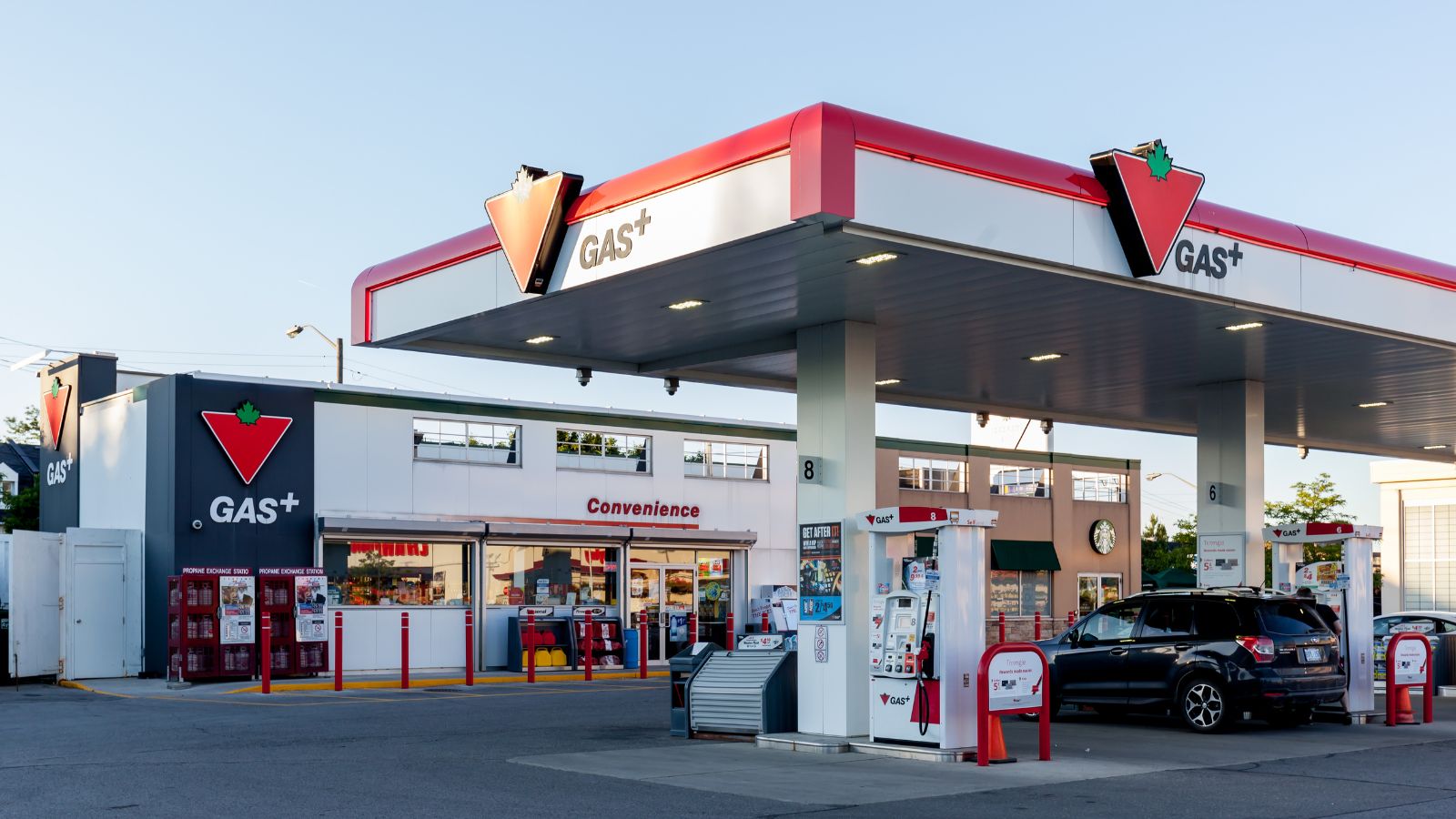
Gas prices have delivered another jolt to Canadian household budgets, with the national average climbing to 168.8 cents per litre after an overnight increase of 1.8 cents. The more striking comparison is with last summer: the average is now 34.6 cents per litre higher than it was a year ago.
That gap turns an ordinary trip to the service station into a noticeably larger expense, particularly for households commuting long distances or driving larger vehicles. The increase is also arriving during an unusually volatile year for energy markets, shaped by geopolitical disruptions, refining constraints and changing fuel costs. While pump prices remain below their recent peak, the latest move shows how quickly relief can disappear—and why gasoline continues to matter well beyond the family car.
The National Average Has Climbed Back to 168.8¢/L
CAA’s national gasoline tracker puts the Canadian average at 168.8 cents per litre, compared with 167.0 cents the previous day. That makes the latest overnight increase 1.8 cents. It may seem small when displayed on a service-station sign, but even incremental changes matter when they are multiplied across millions of litres purchased by Canadian motorists every day.
The broader movement is even more revealing. The national average stood at 162.9 cents per litre one week earlier, meaning motorists are paying nearly six cents more than they were just seven days ago. At the same time, the current price remains slightly below the 170.5-cent average recorded a month earlier. In other words, this is not a simple straight-line increase. Prices have been moving sharply in both directions, leaving drivers trying to determine whether today’s fill-up is expensive or merely less expensive than the latest spike.
Canadians Are Paying 34.6¢ More Than Last Year
The year-over-year comparison puts the current pressure into perspective. CAA records the national average a year earlier at 134.2 cents per litre. At 168.8 cents today, that represents an increase of 34.6 cents per litre, or roughly 26 per cent. For households that remember much cheaper fill-ups last summer, the difference is substantial enough to alter monthly transportation budgets.
Consider a typical 50-litre purchase. At today’s national average, that fuel costs about $84.40. At 134.2 cents per litre, the same amount would have cost approximately $67.10. That is a difference of $17.30 on a single fill-up. A commuter buying 50 litres four times in a month would therefore spend almost $70 more than under last year’s average price. For families already managing groceries, housing and insurance costs, the extra money disappearing at the pump can quickly become difficult to ignore.
Crude Oil Is Only Part of the Story
Gasoline prices are closely connected to crude oil, but crude is not the only factor determining the number appearing on a station’s sign. Refining costs and margins, distribution expenses, taxes, regional competition, seasonal demand and local market conditions can all affect the final pump price. That helps explain why gasoline occasionally remains expensive even after crude oil has begun retreating.
The Bank of Canada has highlighted precisely that dynamic in 2026. Global disruptions associated with conflict in the Middle East affected shipments of crude oil and refined petroleum products, initially pushing oil prices higher. At the same time, gasoline refinery margins widened. The Bank noted in July that gasoline prices had not declined as much as the earlier drop in crude prices might have suggested, partly because global gasoline supplies were constrained by damage to refining capacity and restrictions affecting Chinese gasoline exports. For motorists, lower crude therefore does not always translate immediately into cheaper gasoline.
Refinery Conditions Can Keep Prices Elevated
A barrel of crude oil cannot simply be poured into a vehicle. It must first be processed into gasoline and other petroleum products, making refining capacity an important link between global oil markets and Canadian service stations. When refinery capacity becomes constrained or supplies of finished gasoline tighten, the value of gasoline can rise relative to the crude oil used to produce it.
That distinction has become particularly important this year. The Bank of Canada reported that refinery margins remained elevated even after oil prices fell substantially from their spring peak. This helps explain why motorists may hear that crude prices have dropped and still find unexpectedly expensive gasoline at the neighbourhood station. Refined fuel is itself traded in international markets, and Canada is affected by conditions well beyond domestic oil production. A disruption affecting a major refining region thousands of kilometres away can eventually influence wholesale fuel prices and, after working through inventories and distribution networks, the amount Canadian motorists pay.
The Increase Is Happening During a Federal Excise-Tax Holiday
One of the most important details surrounding today’s price is what Canadians are temporarily not paying. Ottawa suspended the federal fuel excise tax on gasoline beginning April 20, 2026. The regular federal excise tax is 10 cents per litre, but its rate has been temporarily reduced to zero through September 7 as part of the government’s response to unusually high fuel costs.
That means the national average of 168.8 cents is being recorded even with the federal excise tax removed. The suspension is scheduled to end after Labour Day, with the regular 10-cent-per-litre gasoline rate returning on September 8. The eventual movement in retail prices will still depend on oil markets, wholesale gasoline values, margins and other factors, so the pump price cannot simply be forecast by adding 10 cents to today’s figure. Still, the return of the tax creates another cost factor motorists and businesses will be watching closely in September.
The Federal Consumer Carbon Fuel Charge Is Not Causing This Jump
High gasoline prices often revive confusion about Canada’s former federal consumer fuel charge. That charge is not behind the latest increase. The Canada Revenue Agency states that federal fuel-charge rates under the Greenhouse Gas Pollution Pricing Act were set to zero beginning April 1, 2025. As a result, the former federal consumer carbon charge on gasoline is no longer being collected at the pump.
That distinction matters because several different taxes have historically appeared in discussions about fuel prices. The federal fuel charge and the federal excise tax are separate measures. The fuel charge has been zero since 2025, while the regular 10-cent federal gasoline excise tax has been temporarily suspended for part of 2026. Provincial fuel taxes, sales taxes and other regional arrangements can still apply. When prices rise abruptly today, consumers therefore need to look beyond outdated assumptions about the carbon charge. Current movements are being heavily influenced by oil markets, refined-fuel availability and other components of gasoline pricing.
Where Canadians Live Still Makes a Major Difference
A national average is useful for understanding the overall direction of gasoline prices, but it does not mean every Canadian is paying 168.8 cents. Pump prices can vary significantly among provinces, cities and even neighbourhoods. Provincial taxation, transportation distances, competition among retailers, sales volumes and access to fuel supply infrastructure can all influence what motorists encounter locally.
CAA notes that taxes are only one component of the retail price. The cost of crude oil, refining and distribution margins also matter, while individual stations face different operating costs and competitive pressures. A busy urban corridor with several competing service stations may behave differently from a remote community where fuel must travel much farther before reaching consumers. That is why the national figure should be viewed as a benchmark rather than a guaranteed price. For a household doing its monthly budget, the sign at the local station remains more important than Canada’s average—and regional differences can become especially noticeable during volatile periods.
Gasoline Has Been Pushing Canada’s Inflation Rate Higher
Pump prices matter to policymakers because gasoline is included in Canada’s Consumer Price Index and can move headline inflation significantly. Statistics Canada’s June 2026 CPI report showed annual inflation at 2.8 per cent, following a 3.2 per cent increase in May. The Bank of Canada has said that the earlier rise above 3 per cent was driven largely by higher gasoline prices rather than broad acceleration across every part of the economy.
The distinction is important. The Bank reported that inflation excluding gasoline had remained close to 2 per cent even while the headline number climbed. Gasoline is unusually visible to consumers because prices are displayed on enormous roadside signs and households often make repeated purchases. The Bank has also observed that fuel costs can have an outsized effect on people’s perception of inflation. A driver watching an $80 fill-up replace a $65 one experiences the increase immediately, even if prices elsewhere in the household budget are moving more slowly.
Higher Fuel Costs Can Spread Beyond the Gas Station
The consequences of expensive gasoline and oil do not stop when a vehicle leaves the pump. Businesses also use fuel to move employees, machinery, supplies and merchandise. Higher energy costs can therefore work through supply chains, increasing transportation expenses and creating pressure for companies to raise prices or introduce surcharges.
The Bank of Canada reported this summer that some businesses had introduced fuel surcharges for goods and services as oil costs increased. It also identified pressure in energy-linked inputs such as petrochemicals, plastic resins and fertilizer. Not every cost increase is automatically passed on to consumers; weak demand and competition can force businesses to absorb part of it. Even so, prolonged periods of expensive fuel can eventually become visible in industries ranging from construction and agriculture to delivery services. This is why a sustained gasoline shock matters even to households that drive relatively little: energy is embedded throughout much of the economy.
Recent Price Swings Show How Quickly the Picture Can Change
The current 168.8-cent average looks expensive compared with last year, but Canada’s recent range demonstrates just how volatile 2026 has been. CAA’s data show that the national average reached 180.3 cents per litre on July 25 before falling as low as 153.3 cents on August 6. That is a swing of 27 cents per litre within less than two weeks.
For a 50-litre fill-up, the difference between those two prices is $13.50. Timing alone could therefore produce a noticeable difference in a household’s weekly expenses. The volatility also makes short-term predictions difficult. Geopolitical developments can move crude markets quickly, while refinery outages, finished-gasoline inventories and wholesale markets create another layer of uncertainty before changes appear at retail stations. The latest 1.8-cent overnight increase is therefore best understood as another movement inside an unusually unsettled market rather than proof that gasoline will rise continuously from here.
Small Efficiency Changes Matter More When Gas Is Expensive
Motorists cannot control international oil prices or refinery margins, but fuel consumption remains one part of the equation that households can influence. CAA recommends smoother acceleration, avoiding unnecessary hard braking, reducing excessive highway speeds and combining errands into fewer trips. Keeping a vehicle properly maintained can also help prevent unnecessary fuel consumption.
The financial value of those habits becomes more noticeable as gasoline rises. CAA says a poorly maintained vehicle can increase fuel consumption by as much as 25 per cent. Even smaller efficiency improvements can add up for someone commuting hundreds of kilometres every week. Route planning can also reduce unnecessary driving, particularly when several errands can be completed during one outing. None of these measures eliminates the financial effect of a 34.6-cent year-over-year gasoline increase, but they can reduce exposure to it. When fuel approaches $1.70 per litre nationally, kilometres that never need to be driven become increasingly valuable.
September Could Become the Next Important Date for Drivers
The immediate direction of gasoline prices will depend heavily on energy markets, refining conditions and geopolitical developments, but another known change is already approaching. Canada’s temporary federal fuel excise-tax suspension runs only through September 7. Unless policy changes again, the regular federal gasoline excise-tax rate of 10 cents per litre is scheduled to return on September 8.
That does not guarantee that service-station prices will be exactly 10 cents higher the next morning. Wholesale fuel prices, retailer margins, inventory purchased at different costs and other market movements can offset or amplify tax changes. Still, September represents an important point for Canadian motorists because one component of the pump price is scheduled to reappear. The current 168.8-cent average is already 34.6 cents above last year’s level without that federal excise tax. If underlying gasoline markets remain expensive as the suspension expires, affordability concerns surrounding driving and transportation costs are unlikely to disappear quickly.