


























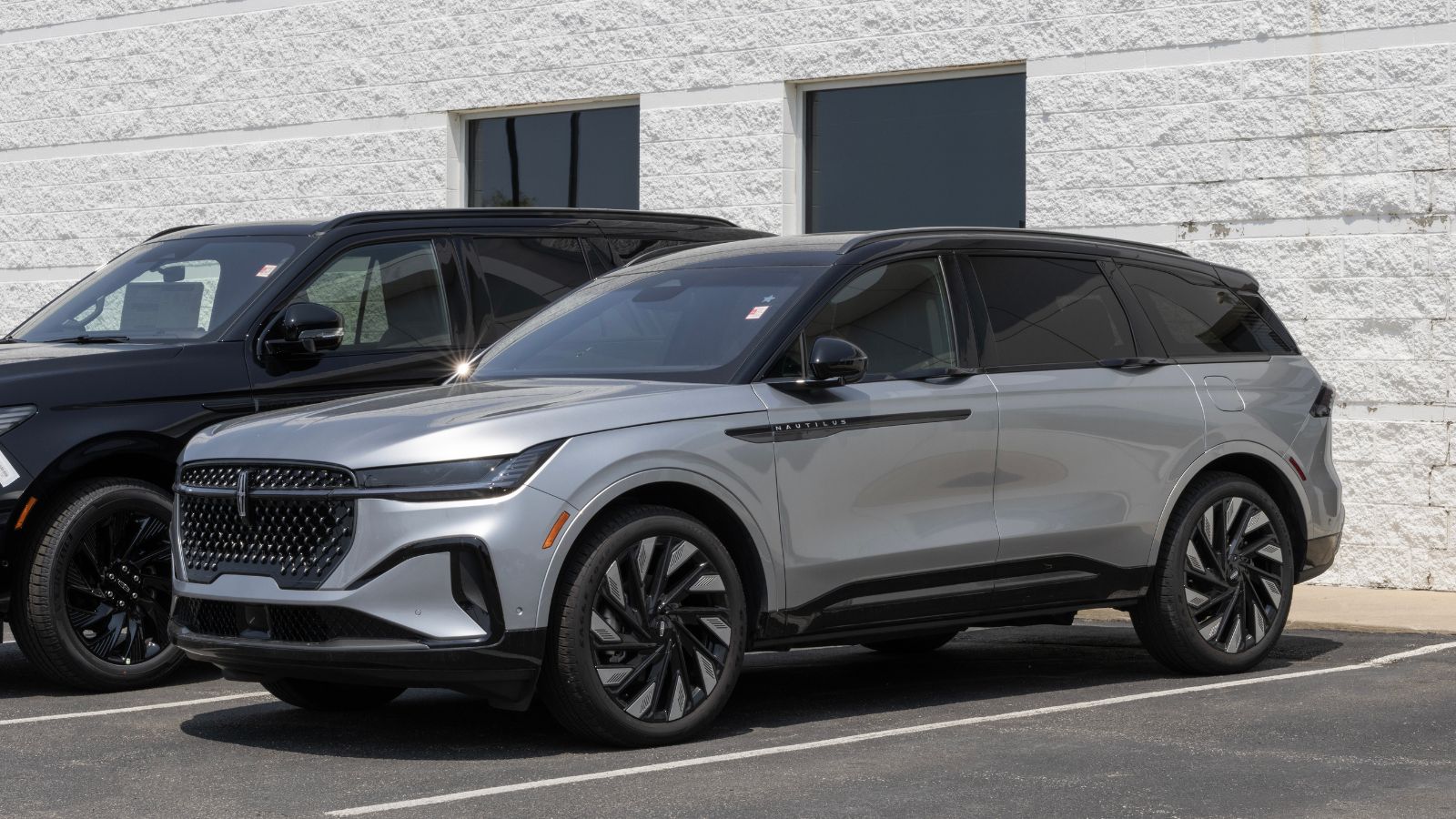
A luxury SUV that became collateral damage in Canada’s tariff fight with China is returning to Canadian showrooms. Ford Canada has confirmed that the first 2026 Lincoln Nautilus Hybrids have arrived in the country and are being distributed to retailers, with the China-built model carrying a Canadian starting price of $62,996 including delivery.
Its return comes just as federal import data show an unusual development: 259 conventional hybrid SUVs and passenger vans from China entered Canada in July under the new China vehicle quota. Ottawa’s data do not identify the manufacturer or model, and Ford has not publicly said its shipment used the quota. Still, the vehicle category, price range, timing and sourcing all closely match the Nautilus, making it the strongest explanation for the 259-unit arrival.
Ford Has Confirmed the Nautilus Hybrid Is Back
For Canadian Lincoln shoppers, the most concrete development is simple: the hybrid is no longer merely a possibility. Ford Canada spokesperson Rosemarie Pao told Automotive News Canada that the first 2026 Lincoln Nautilus Hybrids had arrived in Canada and were making their way to retailers. Lincoln Canada’s current Nautilus page also again promotes an available 2.0-litre turbocharged hybrid powertrain alongside the regular gasoline engine.
That matters because the hybrid had effectively vanished from the Canadian market after Ottawa’s tariff policy made importing electrified vehicles from China dramatically more expensive. The standard gasoline Nautilus remained available, but buyers wanting the electrified version faced a very different situation. Now dealers can once again receive the hybrid. Ford has not announced how many vehicles are in the first shipment, so availability could initially vary considerably between regions and dealerships rather than resembling a full nationwide inventory reset.
The 100% Tariff Had Changed the Economics Overnight
Canada imposed a 100% surtax on Chinese-made electric and electrified vehicles on October 1, 2024. Because the current-generation Nautilus is assembled in China and the policy covered the relevant hybrid tariff categories, the measure transformed the economics of selling the hybrid version in Canada. A luxury crossover that had been priced in the low-$60,000 range could not realistically absorb an additional tariff of that magnitude without either a huge price increase or manufacturer support.
The situation changed again in 2026. Ottawa replaced the blanket 100% surtax with a managed import system negotiated with Beijing. Under that framework, eligible vehicles receiving import permits can enter at Canada’s 6.1% most-favoured-nation tariff rate. The shift did not create unrestricted access to Chinese vehicle production. Instead, it created a controlled lane through which models such as the Nautilus Hybrid can once again become commercially realistic for the Canadian market.
The Mystery of the 259 Chinese Hybrids
The number attracting attention is 259. Global Affairs Canada data reported by Canadian automotive publications show that 259 non-plug-in hybrid SUVs and passenger vans from China entered Canada in July. All were recorded under customs classification HS 8703409090, a category covering spark-ignition hybrid SUVs and passenger vans with customs values above $35,000. The government data do not provide a badge, VIN list or manufacturer name.
That distinction is important. It would be inaccurate to say Ottawa officially confirmed that all 259 vehicles are Lincoln Nautilus Hybrids. The evidence is circumstantial but unusually strong. The Nautilus fits the vehicle type, exceeds the $35,000 customs-value threshold, is assembled in China and returned at essentially the same moment. Automotive News Canada also reported that Volvo, previously another source of China-built hybrids, had not shifted its Canadian sourcing back to China. That leaves Lincoln as the clearest candidate.
Canada’s “EV Quota” Is Broader Than Its Name Suggests
The arrangement is routinely described as Canada’s Chinese EV quota, which can create the impression that it applies only to fully electric vehicles. The regulations are broader. Canada’s Import Control List includes several tariff classifications covering conventional hybrids, plug-in hybrids and battery-electric vehicles originating in China. That is why a gasoline-electric Nautilus that never needs to be plugged into a charger can potentially qualify for the same managed import system.
The first-year ceiling is 49,000 vehicles, with the quota scheduled to increase by 6.5% annually. Global Affairs Canada administers the program and issues shipment-specific permits, while the Canada Border Services Agency handles enforcement. Vehicles covered by the system cannot simply continue entering after the annual quota is exhausted. Ottawa has described the initial 49,000-unit allowance as less than 3% of Canada’s new-vehicle market, presenting the arrangement as controlled market access rather than an unrestricted opening to Chinese production.
At $62,996, This Is Not the “Cheap Chinese EV” Story
The 2026 Nautilus starts at $59,531 in Canada including delivery, while reports based on Ford’s Canadian pricing put the hybrid at $62,996. That means choosing electrification adds roughly $3,500 before taxes and additional options. At that price, the Nautilus sits far removed from the inexpensive Chinese electric cars that dominated much of the political debate surrounding Ottawa’s agreement with Beijing.
That creates an interesting early test for the quota. Canada’s agreement is designed to gradually reserve a larger portion of future import volumes for vehicles with a free-on-board value of $35,000 or less. The reserve begins at 10% of the quota in year two and is intended to reach 50% in year five. The returning Nautilus falls on the opposite side of that policy story: it is a premium Western-brand SUV using Chinese manufacturing rather than a low-cost Chinese-brand vehicle entering Canada for the first time.
The Hybrid Offers a Meaningful Efficiency Advantage
The appeal of the Nautilus Hybrid is not based on electric-only commuting or home charging. It is a conventional self-charging hybrid combining a turbocharged 2.0-litre four-cylinder engine with an electric motor and a power-split continuously variable transmission. All-wheel drive is part of the package, making the configuration particularly relevant in a Canadian luxury-SUV market where year-round traction remains an important buying consideration.
Natural Resources Canada ratings cited for the 2026 model put the hybrid at approximately 8.2 L/100 km in city driving, 7.5 L/100 km on the highway and 7.9 L/100 km combined. The gasoline Nautilus is rated around 11.3 L/100 km city, 8.1 highway and 9.9 combined. That roughly two-litre-per-100-kilometre difference in combined consumption can become noticeable for households covering substantial annual mileage, especially because drivers receive the efficiency benefit without changing their normal gasoline-refuelling routine.
Buyers Are Getting More Than a Different Powertrain
The Nautilus has become one of Lincoln’s most technology-heavy vehicles. The Canadian model features the Lincoln Digital Experience, a panoramic dashboard display and a separate central interface, while available equipment includes massaging Perfect Position front seats, premium Revel audio and Lincoln Rejuvenate functions designed to coordinate cabin features. The vehicle is deliberately positioned less as a sporty European-style SUV and more as a quiet, technology-rich luxury cruiser.
Lincoln Canada also lists its Co-Pilot360 Drive 2.0 suite with more than 20 driver-assistance features and offers BlueCruise hands-free highway technology across the Nautilus range. Ford says compatible BlueCruise roads now cover more than 200,000 kilometres across North America. Those features help explain why the hybrid’s reappearance matters beyond fuel economy. A customer who previously wanted Lincoln’s combination of electrification, all-wheel drive and high-end cabin technology had effectively lost that configuration in Canada when the tariff disrupted imports.
The China-Built Lincoln Creates an Unusual Trade Paradox
The Nautilus illustrates how complicated the modern auto supply chain has become. Lincoln is an American luxury brand owned by Ford, yet the current Nautilus sold in North America is assembled in China. That made it vulnerable when Canada and the United States tightened policies toward Chinese vehicle imports, even though the badge on its grille belongs to one of Detroit’s oldest automakers rather than a Chinese car company.
The contrast has become even sharper in the United States. Ford CEO Jim Farley told Reuters in August that the company plans to shift production of some Lincoln models from China to the U.S. beginning in 2030. Ford also confirmed that the Nautilus currently faces a 52.5% U.S. import tariff. Canada, meanwhile, has moved in the other direction by creating a limited 6.1% tariff channel. The same vehicle therefore sits at the centre of two increasingly different North American approaches to China.
The Nautilus Return Is Also Part of a Much Bigger China Deal
Canada’s vehicle quota did not emerge as a stand-alone auto policy. It formed part of a broader reset in economic relations between Ottawa and Beijing following Prime Minister Mark Carney’s January 2026 visit to China. In exchange for changes affecting vehicle access and other trade measures, China sharply reduced tariffs on Canadian canola seed and suspended additional duties on several agricultural and seafood products for 2026.
The scale goes well beyond a few hundred luxury SUVs. Global Affairs Canada said Canadian merchandise exports to China totalled $34.1 billion in 2025, while imports reached $90.6 billion. Ottawa has set a goal of increasing exports to China by 50% by 2030 as it tries to diversify trade beyond the United States. Seen in that context, the Nautilus is a small but highly visible consequence of a much larger strategic bargain involving agriculture, manufacturing, trade diversification and Canada’s relationship with its two largest economic partners.
What Canadian Buyers Should Watch Next
The immediate question is inventory. Ford has confirmed that vehicles are moving toward Canadian dealerships, but it has not disclosed the size of its first shipment or confirmed that the 259 July imports were all Nautilus Hybrids. Until more dealer inventory appears or Ford releases additional numbers, claims that exactly 259 Nautilus Hybrids have entered Canada should be treated as a strong inference rather than an established manufacturer fact.
The larger story will unfold as Canada’s quota begins filling with a wider mix of vehicles. Early shipments have already demonstrated that the arrangement can benefit companies beyond emerging Chinese brands. A familiar American luxury nameplate can use Chinese manufacturing, Canadian import permits and a dramatically lower tariff to re-enter the market. For consumers, the result is straightforward: a hybrid option that effectively disappeared because of trade policy is available again. For policymakers, it is a reminder that modern automotive trade rarely follows the nationality printed on the badge.