




















A Vancouver battery-technology company is putting an executive with a complicated piece of Canadian EV history at the centre of its next growth phase. Battery X Metals has appointed William Fan as president, giving him responsibility for advancing its lithium-ion battery rebalancing technology, building industry relationships and supporting corporate-development and capital-markets initiatives. Battery X says Fan previously led a 2023 bid for intellectual property and operating assets belonging to ElectraMeccanica Vehicles Corp., the former maker of the three-wheeled SOLO EV.
The appointment comes as Battery X tries to turn years of laboratory work, vehicle trials and prototype development into a commercially deployable battery-service platform. Its central proposition is straightforward: some aging EV packs may lose usable capacity because their individual cells drift out of balance, and correcting that imbalance could potentially restore part of the range owners thought was permanently gone.
Fan Takes Over a Broader Job Than Technology Development
Fan became president effective August 13, 2026, but his mandate extends well beyond supervising engineers. Battery X says he will help execute its technology and corporate-development strategy, expand relationships throughout the EV and battery industries, evaluate complementary opportunities in the broader battery ecosystem and strengthen investor engagement. Chief executive Massimo Bellini Bressi remains CEO, creating a leadership structure in which Fan is expected to focus heavily on commercialization, partnerships and business development while working alongside existing management.
That distinction matters because Battery X is no longer presenting its rebalancing system simply as an experimental concept. During the past year, the company has moved through laboratory demonstrations, vehicle testing, adapter development and early commercialization work. It has also been building an ecosystem around the machine, including battery diagnostics, vehicle-specific connectors and standardized reporting. Fan therefore inherits a task familiar to many clean-technology companies: proving that encouraging technical results can become a repeatable service that repair shops, fleets or other automotive operators could actually deploy.
His ElectraMeccanica Connection Comes From a Turbulent Period
Battery X says Fan led a 2023 bid to acquire ElectraMeccanica intellectual property and operating assets. That was an unusually unsettled period for the once-prominent Canadian EV company. ElectraMeccanica had built its story around the one-seat, three-wheeled SOLO, but in February 2023 it recalled the vehicle over a potential loss-of-propulsion problem. Regulatory filings later said the company planned to repurchase 429 vehicles and had recorded an estimated recall provision of about US$8.9 million. Production had already been halted.
ElectraMeccanica subsequently searched for another path forward. A proposed combination with British electric-truck company Tevva collapsed in October 2023, and the company eventually agreed to combine with California electric-truck manufacturer Xos. Xos completed its acquisition in March 2024, with ElectraMeccanica shareholders receiving about 21% of the combined company immediately after closing. Fan’s bid therefore was not the transaction that ultimately acquired ElectraMeccanica. Still, Battery X is clearly emphasizing the episode as evidence that its new president has experience evaluating EV assets and transactions when companies and technologies are in transition.
Battery Rebalancing Targets a Specific Kind of Capacity Loss
An EV battery pack contains many cells that must work together, and those cells do not always age at exactly the same rate. Differences in temperature, manufacturing characteristics, internal resistance and usage can gradually create variations in voltage or state of charge. Because a pack’s operation can be constrained by its weakest or most highly charged cells, imbalance can reduce the amount of energy that can safely be used even when other cells still have capacity available. Academic research has repeatedly identified cell imbalance as a factor that can reduce usable energy, vehicle range and battery longevity.
Battery X’s hardware-and-software system is designed to diagnose those differences and redistribute energy at the cell level. In a test described by the company as involving validation by the National Research Council of Canada, a 15-cell lithium-iron-phosphate module fell from 71.10 ampere-hours of measured discharge capacity to 46.24 Ah after three cells were deliberately placed at different states of charge. Following rebalancing, capacity reached 70.94 Ah. Battery X characterizes that result as recovery of roughly 99% of the capacity lost specifically to cell imbalance. That distinction is important: rebalancing is not presented as reversing every chemical form of battery aging.
Real-World Trials Have Produced Large Range Gains — With Caveats
Battery X has since taken its technology beyond that controlled module demonstration. In January 2026, the company reported an estimated driving-range increase of about 135 kilometres after rebalancing a previously inoperable light-duty EV with severe cell imbalance. In May, it reported trials conducted by arm’s-length automotive service centres on BYD Song, Seal and Han vehicles, with estimated range improvements reaching roughly 84 kilometres per charge. A July commercialization update summarized earlier tests showing reported estimated improvements as high as approximately 255 kilometres in severely affected vehicles.
Those figures are attention-grabbing, but they should not be treated as a guarantee that an aging EV will suddenly recover hundreds of kilometres. Battery X itself describes the results as preliminary, and the effect depends heavily on what is causing the battery’s deterioration. A pack primarily limited by correctable imbalance may respond much differently from one suffering substantial irreversible chemical degradation, damaged cells or thermal problems. The company also cautions that previous test results may not be reproduced across different vehicles, chemistries, battery configurations or operating environments. Commercial credibility will depend on repeatable results across a much larger population.
Tesla Compatibility Could Open a Much Larger Installed Base
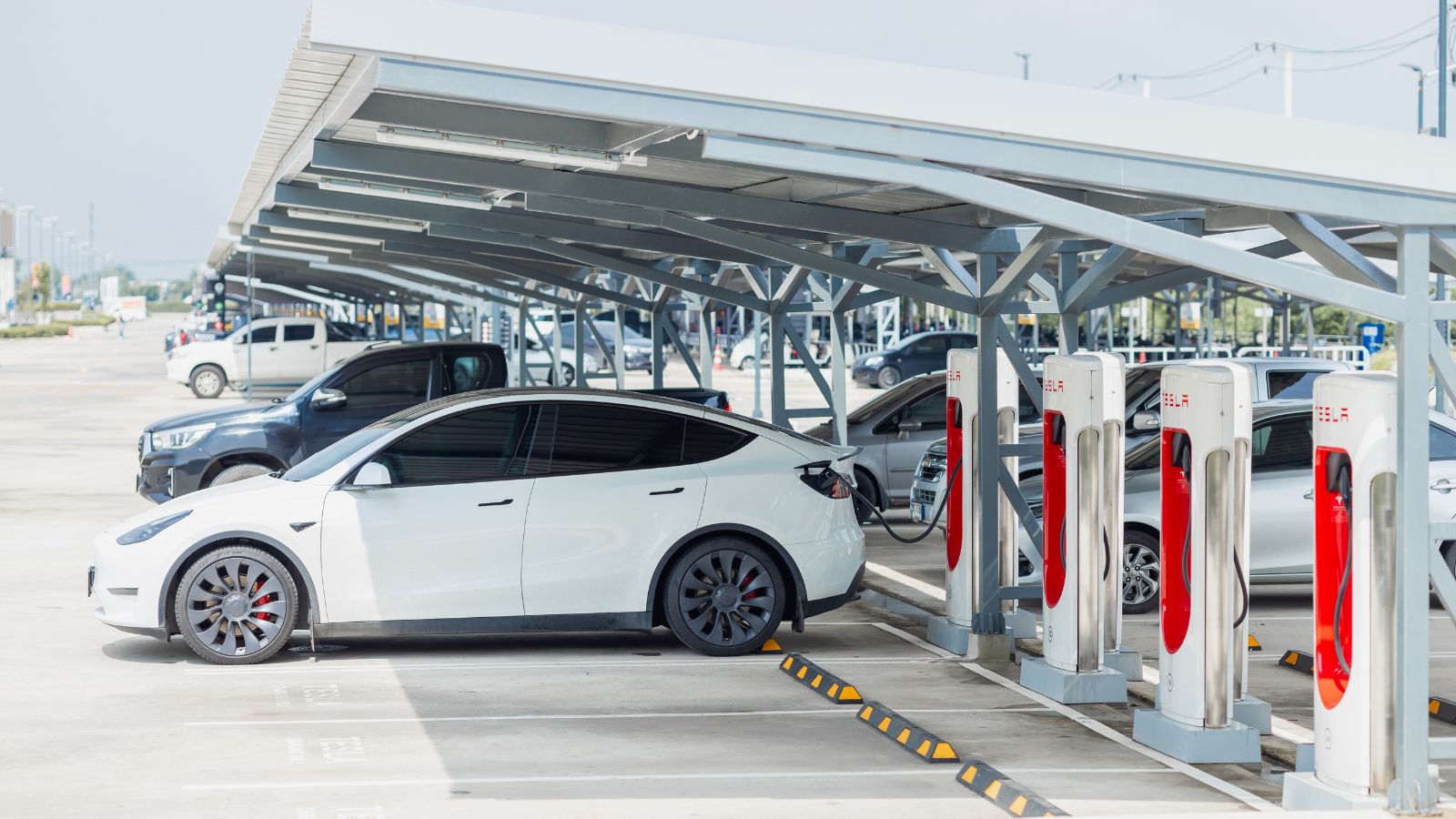
One of Battery X’s most significant engineering projects is adapting its system to high-volume vehicle platforms rather than treating every battery as a bespoke job. In July, the company announced a first-generation working prototype of an adapter designed for Tesla Model 3 and Model Y battery packs. Battery X said the development work confirmed mechanical fitment, dimensional accuracy, electrical-interface alignment and standardized connectivity. It has also acquired a Model 3 battery pack for research, engineering validation and prototype testing.
The commercial logic is clear. Tesla’s Model Y and Model 3 are among the world’s most widely deployed battery-electric cars. International Energy Agency data show the Model Y alone accounted for nearly 8% of global battery-electric vehicle sales in 2025, while the Model 3 accounted for another 3.6%. Battery X is also working on compatibility involving platforms such as the Nissan Leaf, Hyundai Ioniq, Chevrolet Volt and commercial EVs. If the company wants rebalancing to become a service-network product rather than specialized battery engineering, repeatable adapters and procedures for common models will be essential.
Commercialization Will Require Capital as Well as Engineering
Fan is arriving while Battery X is simultaneously raising money and attempting to strengthen its capital-markets profile. On August 13, the company reported closing a second tranche of a private placement, bringing aggregate gross proceeds from the first two tranches to about C$713,261. The company said the proceeds are intended for corporate development, regulatory and capital-markets work, payables, corporate-awareness initiatives and working capital, as well as supporting its broader exploration, rebalancing and recycling strategy. Earlier in January, it had completed another private placement raising about C$2.41 million.
The financial backdrop adds context to Fan’s investor-engagement responsibilities. Battery X’s unaudited financial statements for the quarter ended March 31, 2026 showed a C$2.09-million quarterly loss, an accumulated deficit of roughly C$22.6 million and a working-capital deficiency of about C$381,000. The filing said additional financing and future revenue would be necessary and identified material uncertainty concerning the company’s ability to continue as a going concern. None of that determines whether the technology will succeed, but it illustrates why commercialization speed, financing and strategic partnerships matter alongside technical performance.
The Market Opportunity Is Growing Along With the Global EV Fleet
Battery X is pursuing battery-life extension at a moment when the installed population of EV batteries is expanding rapidly. The International Energy Agency says more than 20 million electric cars were sold globally in 2025, representing roughly one in four new cars. EV battery deployment reached approximately 1.2 terawatt-hours that year, almost 30% higher than in 2024 and more than seven times the 2020 level. The IEA expects global electric-car sales to reach around 23 million in 2026, even though growth has become uneven across regions.
Every additional year of EV sales also enlarges the future population of aging vehicles entering second-owner markets and moving beyond their original warranty periods. That creates potential demand not only for battery recycling, but for diagnostics, repair, reconditioning and lifespan-extension services that could delay replacement when a pack remains usable. Battery X is betting that rebalancing can occupy part of that middle ground. Fan’s appointment does not settle whether the technology can scale economically, but it signals that the Vancouver company is moving its attention from demonstrating what its equipment can do toward proving someone will pay to use it repeatedly.
What Comes Next Will Matter More Than the Headline Numbers
The next stage is likely to be less about producing a single dramatic range-recovery figure and more about building evidence across many vehicles. Battery X will need to show how technicians identify which packs are suitable for rebalancing, how long the recovered performance lasts, what the procedure costs, how consistently equipment performs across different battery architectures and whether automotive-service businesses can operate it efficiently. Its own disclosures identify further engineering, certification, manufacturing and commercialization work as necessary before broad deployment.
There is nevertheless a potentially useful distinction at the heart of the company’s strategy. A degraded battery is not necessarily a uniformly degraded battery. Research shows that cell-to-cell differences can limit the effective performance of an entire pack, creating room for balancing and reconditioning approaches when the underlying cells remain sufficiently healthy. Fan is now responsible for helping Battery X turn that technical possibility into a scalable business. His experience around ElectraMeccanica adds an unusual EV-industry connection, but the larger test will be whether Battery X can move from promising trials to repeatable economics in the repair bay.