



















• About
  • Contact
AutoIgloo
  • News & Trends
    27 Things Canadian Drivers Should Do Before Pothole Season Destroys Their Suspension

    15 Signs Your Vehicle Is Becoming Too Expensive to Keep

    19 Things to Photograph Immediately After a Car Accident

    19 Things to Photograph Immediately After a Car Accident

    18 Auto Repairs Canadians Keep Putting Off Until the Bill Gets Ugly

    Washington’s 50% American-Made Auto Demand Crosses a Red Line for Canada

    9 Auto Brands Canadians Are Watching Much More Closely Right Now

    Toyota Canada Says Electrified Vehicles Are Now Nearly 70% of Its Q2 Sales

    25 EV Charging Mistakes Canadians Make in March (That Wreck Range)

    Ottawa Orders New Study on Whether Canada’s EV Grid Can Handle the Next Wave of Chargers

    9 Auto Brands Canadians Are Watching Much More Closely Right Now

    Subaru Cuts Canadian Solterra EV by $4,500 as Dealers Chase Nervous Buyers

  • Car Reviews
    21 Cars Canadians Are Starting to Regret Buying

    Why Some Drivers Regret Buying Big Wheels and Low-Profile Tires

    17 Vehicles That Are Quietly Getting Crushed by Insurance Costs in Canada

    Why So Many Drivers Are Nervous About Chinese-Made EV Batteries

    20 Used SUVs Canadians Should Think Twice About Buying

    20 Used SUVs Canadians Should Think Twice About Buying

    15 Vehicles That Are Starting to Feel Like a Bad Deal Around May Long Weekend

    15 Vehicles That Are Starting to Feel Like a Bad Deal Around May Long Weekend

    15 Vehicles That Are Starting to Scare Off Canadian Buyers

    15 Vehicles That Are Starting to Scare Off Canadian Buyers

    25 Vehicles That Make the Most Sense for Canadian Families in 2026

    16 Vehicles That Suddenly Look Smart for a Canadian Summer Road Trip

  • Buying Guides
    19 Things That Can Make Your Car Insurance Claim Get Denied

    Why Your Car Payment Is Only the Beginning of the Real Cost

    23 Features That Are Making New Cars Harder (and Pricier) to Repair in Canada

    21 Used Car Features That Can Become Expensive Problems Later

    17 Car Scams Canadians Should Watch for Before Sending a Deposit

    Why Car Dealership Trade-In Offers Can Change After You Arrive

    19 Things That Can Make Your Car Insurance Claim Get Denied

    20 Questions to Ask Before Letting a Car Dealership Run Your Credit

    20 Signs a Used Car Was Abused Before It Hit the Lot

    22 Signs a Car Has Been in a Serious Crash Even if the Report Looks Clean

    20 Signs a Used Car Was Abused Before It Hit the Lot

    20 Signs a Used Car Was Abused Before It Hit the Lot

  • Comparisons
    Canada’s Auto Fight Gets Uglier as BYD Threatens to Sue Trump Administration

    Tesla Vs. BYD: Are Chinese EV’s Actually Better for Canadians?

    17 Vehicles That Are Quietly Getting Crushed by Insurance Costs in Canada

    Why So Many Drivers Are Nervous About Chinese-Made EV Batteries

    20 Used SUVs Canadians Should Think Twice About Buying

    20 Used SUVs Canadians Should Think Twice About Buying

    16 Cars That Are a Nightmare to Repair Because Parts Are Backordered

    23 Cars Canadians Love That Have One Deal-Breaker Flaw

    21 Vehicles Insurance Companies Are Quietly Flagging as “High Risk” in Canada (2026 Update)

    19 Vehicles Canadians Regret Leasing (And the Ones They Don’t)

    Why the Next Wave of Chinese EVs Could Force Canada’s Biggest Price War Yet

    Why the Next Wave of Chinese EVs Could Force Canada’s Biggest Price War Yet

  • EVs & Hybrids
    17 SUVs That Are Losing Their Appeal Fast in Canada

    GM Canada Says EV Sales Jumped More Than 30% as CUSMA Uncertainty Hangs Over Showrooms

    9 Auto Brands Canadians Are Watching Much More Closely Right Now

    Toyota Canada Says Electrified Vehicles Are Now Nearly 70% of Its Q2 Sales

    25 EV Charging Mistakes Canadians Make in March (That Wreck Range)

    Ottawa Orders New Study on Whether Canada’s EV Grid Can Handle the Next Wave of Chargers

    23 Features That Are Making New Cars Harder (and Pricier) to Repair in Canada

    Why the Cheapest EVs May Not Be the Best Deal After Three Winters

    Canada’s Auto Fight Gets Uglier as BYD Threatens to Sue Trump Administration

    Tesla Vs. BYD: Are Chinese EV’s Actually Better for Canadians?

    15 Cars That Are Becoming Harder to Resell in Canada

    Used EV prices jump as affordable vehicles disappear

  • More
    • Pricing & Deals
    • Winter Driving
    • Ownership & Maintenance
No Result
View All Result
AutoIgloo
  • News & Trends
    27 Things Canadian Drivers Should Do Before Pothole Season Destroys Their Suspension

    15 Signs Your Vehicle Is Becoming Too Expensive to Keep

    19 Things to Photograph Immediately After a Car Accident

    19 Things to Photograph Immediately After a Car Accident

    18 Auto Repairs Canadians Keep Putting Off Until the Bill Gets Ugly

    Washington’s 50% American-Made Auto Demand Crosses a Red Line for Canada

    9 Auto Brands Canadians Are Watching Much More Closely Right Now

    Toyota Canada Says Electrified Vehicles Are Now Nearly 70% of Its Q2 Sales

    25 EV Charging Mistakes Canadians Make in March (That Wreck Range)

    Ottawa Orders New Study on Whether Canada’s EV Grid Can Handle the Next Wave of Chargers

    9 Auto Brands Canadians Are Watching Much More Closely Right Now

    Subaru Cuts Canadian Solterra EV by $4,500 as Dealers Chase Nervous Buyers

  • Car Reviews
    21 Cars Canadians Are Starting to Regret Buying

    Why Some Drivers Regret Buying Big Wheels and Low-Profile Tires

    17 Vehicles That Are Quietly Getting Crushed by Insurance Costs in Canada

    Why So Many Drivers Are Nervous About Chinese-Made EV Batteries

    20 Used SUVs Canadians Should Think Twice About Buying

    20 Used SUVs Canadians Should Think Twice About Buying

    15 Vehicles That Are Starting to Feel Like a Bad Deal Around May Long Weekend

    15 Vehicles That Are Starting to Feel Like a Bad Deal Around May Long Weekend

    15 Vehicles That Are Starting to Scare Off Canadian Buyers

    15 Vehicles That Are Starting to Scare Off Canadian Buyers

    25 Vehicles That Make the Most Sense for Canadian Families in 2026

    16 Vehicles That Suddenly Look Smart for a Canadian Summer Road Trip

  • Buying Guides
    19 Things That Can Make Your Car Insurance Claim Get Denied

    Why Your Car Payment Is Only the Beginning of the Real Cost

    23 Features That Are Making New Cars Harder (and Pricier) to Repair in Canada

    21 Used Car Features That Can Become Expensive Problems Later

    17 Car Scams Canadians Should Watch for Before Sending a Deposit

    Why Car Dealership Trade-In Offers Can Change After You Arrive

    19 Things That Can Make Your Car Insurance Claim Get Denied

    20 Questions to Ask Before Letting a Car Dealership Run Your Credit

    20 Signs a Used Car Was Abused Before It Hit the Lot

    22 Signs a Car Has Been in a Serious Crash Even if the Report Looks Clean

    20 Signs a Used Car Was Abused Before It Hit the Lot

    20 Signs a Used Car Was Abused Before It Hit the Lot

  • Comparisons
    Canada’s Auto Fight Gets Uglier as BYD Threatens to Sue Trump Administration

    Tesla Vs. BYD: Are Chinese EV’s Actually Better for Canadians?

    17 Vehicles That Are Quietly Getting Crushed by Insurance Costs in Canada

    Why So Many Drivers Are Nervous About Chinese-Made EV Batteries

    20 Used SUVs Canadians Should Think Twice About Buying

    20 Used SUVs Canadians Should Think Twice About Buying

    16 Cars That Are a Nightmare to Repair Because Parts Are Backordered

    23 Cars Canadians Love That Have One Deal-Breaker Flaw

    21 Vehicles Insurance Companies Are Quietly Flagging as “High Risk” in Canada (2026 Update)

    19 Vehicles Canadians Regret Leasing (And the Ones They Don’t)

    Why the Next Wave of Chinese EVs Could Force Canada’s Biggest Price War Yet

    Why the Next Wave of Chinese EVs Could Force Canada’s Biggest Price War Yet

  • EVs & Hybrids
    17 SUVs That Are Losing Their Appeal Fast in Canada

    GM Canada Says EV Sales Jumped More Than 30% as CUSMA Uncertainty Hangs Over Showrooms

    9 Auto Brands Canadians Are Watching Much More Closely Right Now

    Toyota Canada Says Electrified Vehicles Are Now Nearly 70% of Its Q2 Sales

    25 EV Charging Mistakes Canadians Make in March (That Wreck Range)

    Ottawa Orders New Study on Whether Canada’s EV Grid Can Handle the Next Wave of Chargers

    23 Features That Are Making New Cars Harder (and Pricier) to Repair in Canada

    Why the Cheapest EVs May Not Be the Best Deal After Three Winters

    Canada’s Auto Fight Gets Uglier as BYD Threatens to Sue Trump Administration

    Tesla Vs. BYD: Are Chinese EV’s Actually Better for Canadians?

    15 Cars That Are Becoming Harder to Resell in Canada

    Used EV prices jump as affordable vehicles disappear

  • More
    • Pricing & Deals
    • Winter Driving
    • Ownership & Maintenance
No Result
View All Result
AutoIgloo
No Result
View All Result

Home » News & Trends

Trump Official Asks ‘Why Do We Make Cars in Canada?’ as Auto Tariff Fight Heats Up

Henry Sheppard by Henry Sheppard
May 27, 2026
Reading Time: 6 mins read
A A
Photo Credit: Shutterstock

Photo Credit: Shutterstock

467
SHARES
1.5k
VIEWS
Share on FacebookShare on Twitter

A single question from Commerce Secretary Howard Lutnick has sharpened one of the most sensitive disputes in Canada-U.S. trade: who gets to build the cars North Americans buy? His remark came as the Trump administration keeps pressure on Canada’s auto sector through tariffs, rules-of-origin demands, and a broader push to pull manufacturing deeper into the United States.

The fight is about much more than factory jobs. It reaches into Ontario assembly plants, Detroit supply chains, dealership prices, union politics, and the future of the USMCA trade pact. Canada’s auto industry has spent decades operating as part of a shared North American manufacturing system. Washington is now challenging that model at its core.

A Washington Remark Becomes an Industrial Warning

When Lutnick asked why cars are made in Canada, the phrasing sounded blunt. But the setting made it more significant. The comment came during a high-level Canada-U.S. exchange in which President Donald Trump framed auto production as a “natural conflict” between two neighbouring economies that both want the same factories, jobs, and industrial investment.

That language matters because it moves the debate away from technical tariff schedules and into a political argument about national advantage. Canada has long viewed its auto plants as part of a deeply integrated continental system, not as foreign competition. The Trump administration is increasingly treating Canadian production as something that must justify itself against the goal of expanding U.S.-based manufacturing.

Canada’s Auto Sector Is Small Globally but Huge Domestically

Canada is not the world’s dominant auto producer, but the sector has an outsized role in the national economy. Federal industry data shows the Canadian automotive industry contributed $16.8 billion to GDP in 2024, directly employed more than 125,000 people, and indirectly supported roughly 427,000 additional jobs through dealerships, aftermarket services, suppliers, and related networks.

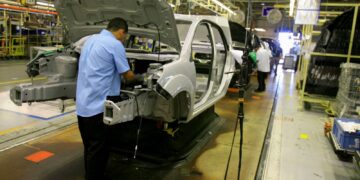
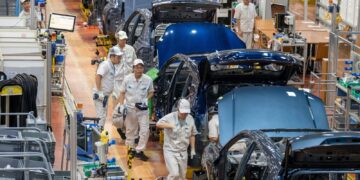
The geography is just as important as the headline numbers. Five major automakers — Ford, General Motors, Honda, Stellantis, and Toyota — assemble vehicles in Canada, with Ontario at the centre of the industry. For communities around Windsor, Oshawa, Alliston, Cambridge, Woodstock, and Oakville, the auto sector is not an abstraction. It is shift work, tool-and-die shops, trucking contracts, apprenticeships, and local tax bases.

The Tariff Fight Is Not Just About Finished Cars

Trump’s auto tariff policy was designed around a 25 percent levy on imported passenger vehicles, light trucks, and selected auto parts. For vehicles imported under USMCA rules, the structure is more complicated than a flat tax. The White House said importers would be able to certify U.S. content, with tariffs applying only to the non-U.S. portion of qualifying vehicles.

That distinction is crucial for Canada and Mexico because many North American vehicles are not purely “Canadian,” “American,” or “Mexican” in any simple sense. A vehicle assembled in Ontario may contain U.S.-made parts, Canadian labour, Mexican components, and imported electronics. Tariffing only the non-U.S. content may reduce the immediate shock, but it also adds paperwork, uncertainty, and pressure to redesign sourcing around U.S. content.

Canada Retaliated, but Tried to Limit the Damage

Canada responded with its own 25 percent tariffs on certain U.S.-made vehicles, but Ottawa structured the measures carefully. The Canadian countermeasures apply to non-CUSMA-compliant U.S.-made vehicles and to the non-Canadian and non-Mexican content of CUSMA-compliant U.S.-made vehicles. Canada also said the measures would remain until the U.S. removed its auto-sector tariffs.

That design reflects Canada’s dilemma. Ottawa wants to hit back hard enough to create leverage, but not so hard that it injures Canadian consumers, dealers, and auto plants that rely on U.S. parts. In a normal trade dispute, retaliation can be aimed at a distant competitor. In the auto sector, retaliation can boomerang because the same companies, parts, and customers often sit on both sides of the border.

The Supply Chain Makes the Border Hard to Draw

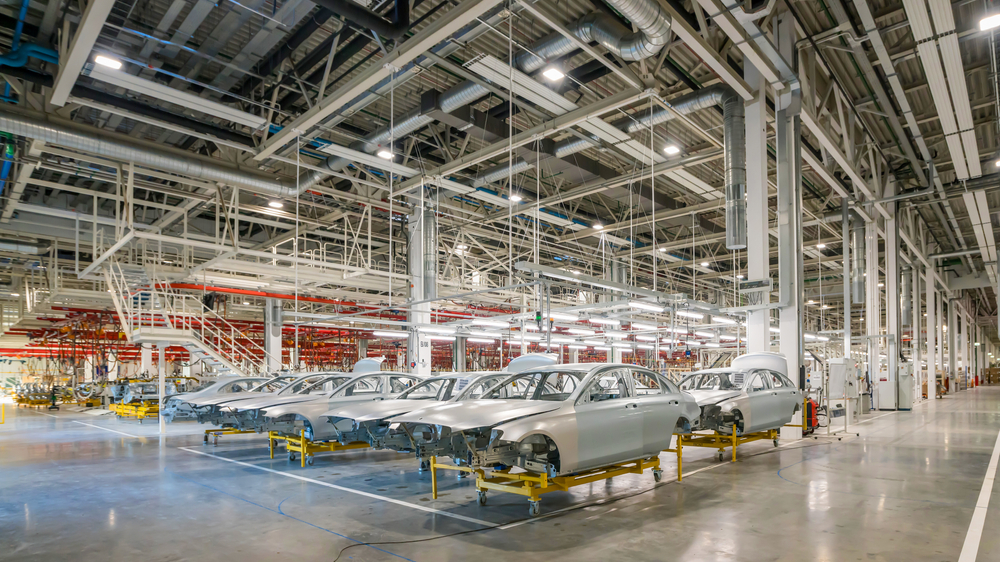
A modern vehicle is less like a single national product and more like a moving supply chain. Engines, transmissions, electronics, stampings, and other components can cross borders several times before final assembly. Trade analysts have warned that, depending on how tariffs are applied, repeated border crossings can create a “stacking” effect that raises costs at multiple stages.

This is why automakers tend to fear uncertainty as much as the tariff rate itself. A plant manager needs to know whether a part will arrive on time, how much it will cost, and whether the vehicle will still qualify for preferential treatment. A sudden rule change can interrupt production planning, supplier contracts, and pricing decisions months before a vehicle reaches a dealership lot.

Ontario Is the Canadian Province Most Exposed

The auto tariff fight lands hardest in Ontario because the province is Canada’s manufacturing engine and the core of its auto corridor. Ontario’s exposure runs from major assembly plants to hundreds of suppliers, logistics companies, engineering firms, and tool-and-die shops. A tariff dispute does not only hit the plant with the automaker’s logo on the gate.

Ontario’s Financial Accountability Office estimated that U.S. tariffs and Canadian countermeasures would slow provincial growth, reduce employment, and raise consumer prices under its tariff scenario. Its modelling showed the largest manufacturing hits falling on primary metals, motor vehicles, and motor vehicle parts. That is why the dispute feels so urgent in communities where one production shift can support many additional jobs nearby.

The USMCA Review Is Becoming the Main Battleground

The fight is now tied to the future of USMCA, the trade agreement that replaced NAFTA in 2020. U.S. Trade Representative Jamieson Greer has said upcoming negotiations will focus on regional content rules and economic security. He has also indicated that the Trump administration wants rules that push more production and content into the United States.

That could put Canada in a difficult position. USMCA already requires higher North American content than NAFTA did, including a 75 percent regional value-content requirement for passenger vehicles and light trucks. If Washington pushes further toward U.S.-specific content, Canada may argue that the deal is being transformed from a regional trade pact into an American industrial relocation tool.

Automakers Face an Investment Freeze Risk

Auto companies plan years ahead. Retooling a plant, assigning a vehicle program, or building a battery supply chain requires confidence that trade rules will stay stable. Tariff fights can delay those decisions, especially when companies are already managing the expensive transition to electric vehicles, hybrids, software-defined cars, and new battery technologies.

Canada has already been trying to secure its place in the next generation of auto manufacturing through EV and battery investments. But when U.S. officials openly question why cars are made in Canada, boardrooms hear a warning. Future product mandates could be steered toward U.S. plants if executives decide the political risk of Canadian production is too high.

Consumers Could See the Fight at the Dealership

Tariffs are often described as a fight between governments, but the cost can eventually reach buyers. If automakers face higher costs for vehicles, parts, compliance, or logistics, some of that pressure can show up in sticker prices, financing offers, lease payments, repair costs, or reduced model availability. Even uncertainty can affect dealer inventory and incentives.

Canada is especially exposed because imports make up a large share of its new-vehicle market. U.S. trade data also shows how important Canada is as a destination for American vehicle exports. That creates a strange consumer reality: policies meant to protect domestic production can make cross-border vehicles more expensive in both countries, including vehicles from the same automakers that operate on both sides.

The Political Message Is Aimed at Workers

The Trump administration’s auto message is politically powerful because it is easy to understand: build more cars at home. For U.S. workers who watched factories close or shift production over decades, the argument has emotional force. It connects tariffs to jobs, national pride, and the promise of industrial revival.

Canada’s counterargument is more technical but economically serious. Canadian officials and industry groups can point out that Canadian-built vehicles often contain substantial U.S. content, that Canada buys many U.S.-built vehicles, and that the North American industry competes globally as a region. The challenge is that integrated supply-chain arguments rarely travel as well politically as a simple promise to bring jobs back.

The Bigger Question Is Whether North America Still Acts Like a Region

The sharpest risk is that the tariff fight turns North America’s auto system from a shared production platform into a zero-sum contest. For decades, the industry was built around the idea that cars could be designed, sourced, assembled, and sold across Canada, the United States, and Mexico with relatively predictable rules. That model made the region more competitive against Europe and Asia.

Lutnick’s question captures the new mood in Washington. Canada now has to defend not only individual plants, but the idea that Canadian production strengthens North America rather than weakening the United States. If the dispute escalates, the result could be more than higher tariffs. It could be a fundamental rewrite of how cars are built across the continent.


Recommended.

The Car Wash Mistake That Can Damage Vehicles in Winter

The Car Wash Mistake That Can Damage Vehicles in Winter

June 11, 2026
9 Auto Brands Canadians Are Watching Much More Closely Right Now

Subaru Cuts Canadian Solterra EV by $4,500 as Dealers Chase Nervous Buyers

July 7, 2026

Trending.

9 Auto Brands Canadians Are Watching Much More Closely Right Now

Toyota Canada Says Electrified Vehicles Are Now Nearly 70% of Its Q2 Sales

July 7, 2026
16 Used SUVs That Suddenly Don’t Look Like Smart Buys in Canada

Toyota Adds U.S. RAV4 Production as Demand Overwhelms Dealers

June 29, 2026
9 Auto Brands Canadians Are Watching Much More Closely Right Now

Unifor Opens Auto Talks With Ford as 5,000 Canadian Workers Face Tariff Pressure

June 22, 2026
16 Cars That Could Be Hit Hardest by Canada’s New Price Pressures

20 Cars Canadians Love Buying but Hate Owning Long Term

June 24, 2026
9 Auto Brands Canadians Are Watching Much More Closely Right Now

Toyota Says Electrified Vehicles Now Make Up 64% of Its Canadian Sales

June 18, 2026
  • About
  • Contact
  • Privacy Policy
  • Disclaimer
  • Editorial Policies
  • Terms and Conditions
A Revir Media Group Website

2026 Autoigloo - © All rights reserved

No Result
View All Result
  • News & Trends
  • Car Reviews
  • Buying Guides
  • Comparisons
  • EVs & Hybrids
  • More
    • Pricing & Deals
    • Winter Driving
    • Ownership & Maintenance

2026 Autoigloo - © All rights reserved

This website uses cookies. By continuing to use this website you are giving consent to cookies being used. Visit our Privacy and Cookie Policy.


