


























Diesel vehicles still hold a strong appeal in Canada, especially for drivers who tow, travel long highway distances, or value effortless low-speed pulling power. Yet the modern diesel is no longer a simple “fill it and drive” machine. Particulate filters, diesel exhaust fluid, high-pressure fuel systems, winter fuel behaviour, and specialized maintenance can make ownership very different from the gasoline alternative parked beside it.
The right choice depends less on reputation and more on how the vehicle will actually be used, serviced, and financed. These 22 considerations explain where diesel power can genuinely deliver value, where hidden costs can appear, and which questions deserve answers before any purchase agreement is signed.
Driving Patterns Matter More Than the Badge

A diesel vehicle is usually happiest when it regularly reaches full operating temperature and spends meaningful time at steady road speeds. That pattern suits long commutes, highway travel, towing, and work routes. It is less compatible with a routine built around five-minute errands, school drop-offs, and repeated cold starts. Modern emissions systems need heat and time to operate properly, so two drivers can own the same model and have very different experiences.
Before comparing horsepower or fuel economy, buyers should map a normal month of driving. How many trips exceed 20 or 30 minutes? How often will the vehicle tow, carry weight, or travel outside a city? A rural contractor covering hundreds of kilometres may benefit from diesel torque and range, while an urban household making short trips could spend more time dealing with incomplete filter regeneration. The most important diesel question is not whether the engine is “good,” but whether its operating needs match the life it will actually lead.
Fuel Economy Must Be Compared Model by Model

Diesel models often post lower fuel-consumption figures than comparable gasoline versions, but the advantage is not universal and should never be estimated from reputation alone. Vehicle weight, gearing, aerodynamics, tires, four-wheel drive, cab configuration, and emissions calibration all affect litres per 100 kilometres. A diesel pickup may look efficient beside a gasoline pickup, yet a lighter gasoline crossover could still consume much less fuel overall.
Natural Resources Canada publishes model-specific ratings for city, highway, and combined driving, along with estimated annual fuel use and carbon-dioxide emissions. Those figures are a useful starting point because they allow like-for-like comparisons under a common test procedure. Buyers should compare the exact engine, drivetrain, body style, and model year being considered—not a different trim used in advertising. Real-world consumption will still vary with weather, towing, speed, and idling, but a precise official comparison is far more reliable than claims that every diesel automatically saves a fixed percentage at the pump.
Diesel Prices Can Change the Break-Even Point
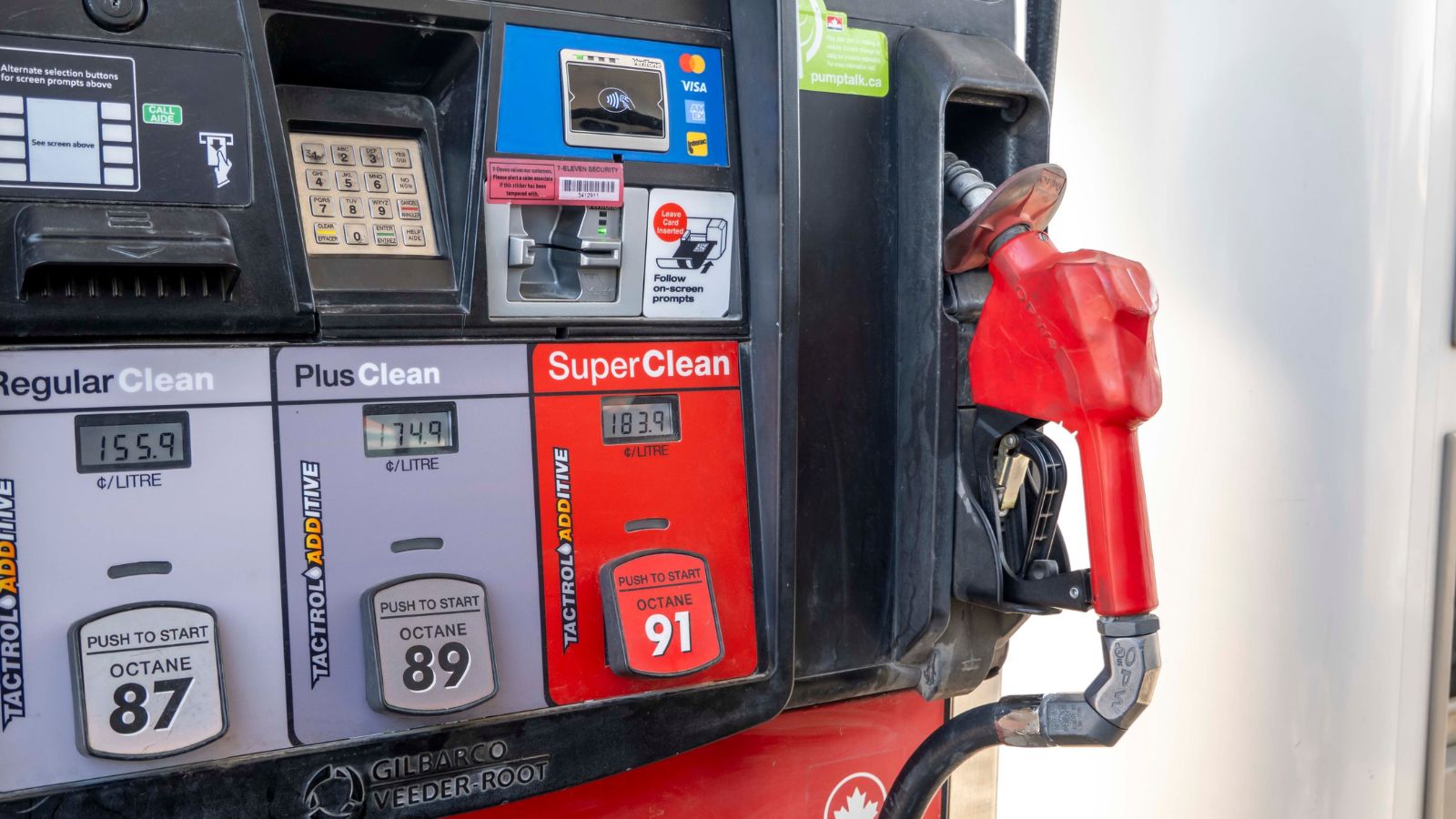
Lower fuel consumption does not guarantee a lower fuel bill. Diesel and gasoline prices move independently, and the gap can differ sharply by city, season, refinery conditions, and local supply. In some months diesel may be close to regular gasoline; in others it can carry a substantial premium. A calculation based on one roadside sign can therefore make a diesel purchase look better—or worse—than it will over several years.
Statistics Canada tracks average retail fuel prices by fuel type and metropolitan area, making it possible to review more than a single day’s price. A practical comparison uses at least a 12-month local average and the annual kilometres the vehicle is expected to cover. For example, saving two litres per 100 kilometres over 25,000 kilometres equals 500 fewer litres consumed, but the dollar value depends on the price of each fuel. That saving must then be weighed against diesel exhaust fluid, maintenance, financing, and any higher purchase price. The pump price is only one variable in the ownership equation.
The Upfront Premium Needs a Payback Calculation
A diesel powertrain may be bundled with a higher trim, towing package, upgraded transmission, or other equipment, so the true purchase premium can be larger than the engine option shown on a brochure. Interest charges also magnify that difference when the vehicle is financed. The right question is not simply whether diesel uses less fuel, but how long it will take for all operating savings to recover the full transaction-cost gap.
A basic payback calculation starts with annual fuel use for each version, using official litres-per-100-kilometre ratings and realistic kilometres driven. Then add diesel exhaust fluid, model-specific oil and filter service, insurance quotes, expected repairs, and financing costs. Resale value can be included, but it should be treated cautiously because used-vehicle demand changes. CAA’s driving-cost tools emphasize total ownership expenses rather than fuel alone, including depreciation and maintenance. A diesel that saves $900 a year but costs $7,000 more upfront may still suit a long-term, high-mileage owner; it may make little financial sense for a low-mileage buyer who trades every three years.
Low-RPM Torque Is the Real Diesel Advantage
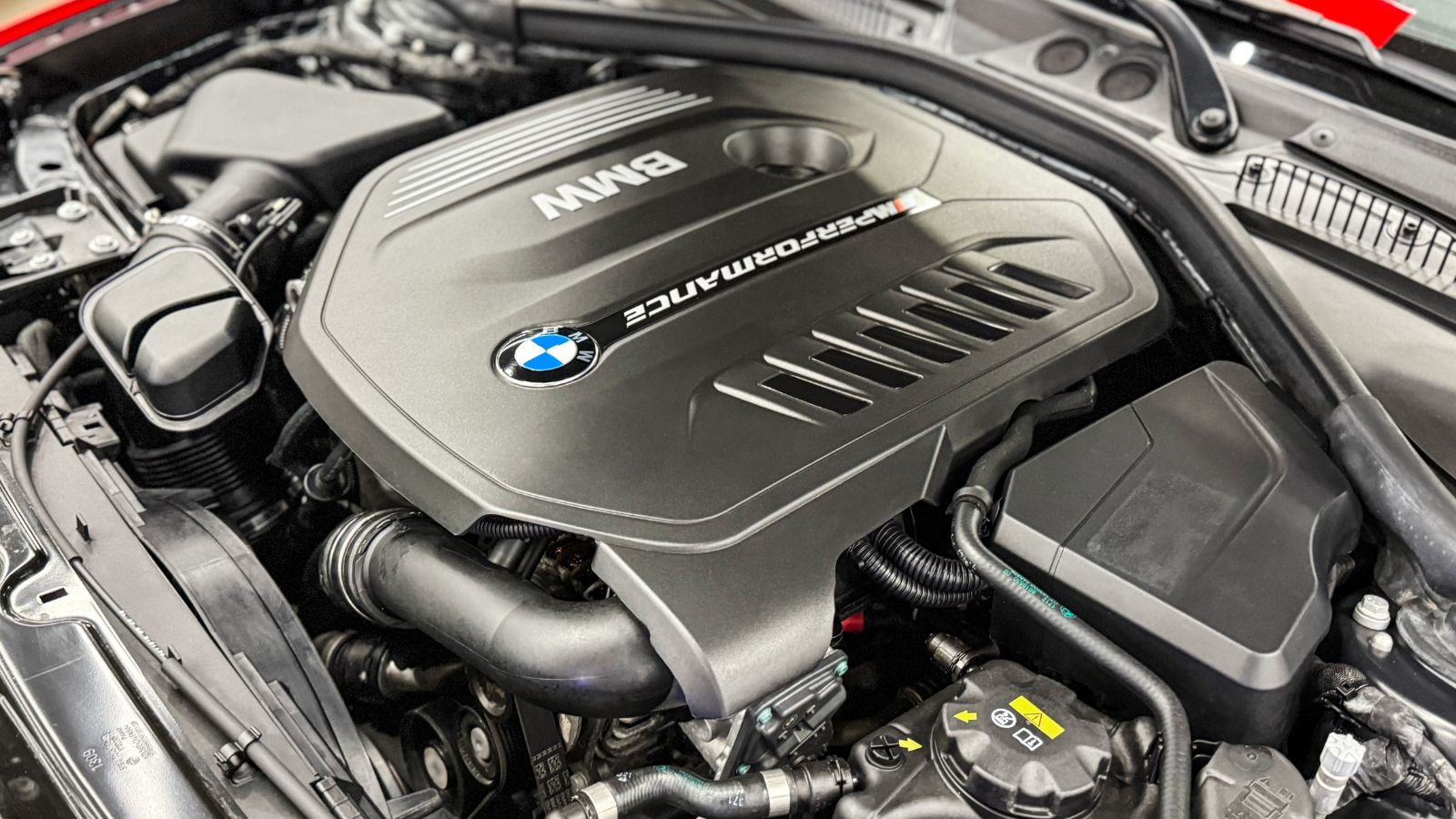
The most useful diesel characteristic is usually torque delivered at low engine speeds. That strong early pull helps a heavy vehicle move away smoothly, climb grades without constant downshifts, and maintain speed with a trailer. It can make a large pickup or SUV feel relaxed rather than hurried. Horsepower still matters at higher speeds, but torque delivery is what many owners notice during everyday hauling and towing.
Current engines illustrate the point. General Motors lists 495 lb-ft of torque for its 3.0-litre Duramax, with most of that output available near 1,500 rpm. That does not automatically make it the best choice for every buyer, but it explains why diesel can feel so capable without revving loudly. Someone towing a travel trailer through the Rockies may value that calm, low-speed response far more than a commuter on level city streets. Buyers should test-drive both powertrains under conditions resembling real use, because an advantage that looks impressive on a specification sheet only has value when the vehicle’s workload actually calls for it.
Tow Rating Is a Whole-Vehicle Number

A diesel badge does not establish how much a vehicle can tow. Maximum trailer weight depends on the entire configuration: engine, transmission, axle ratio, cooling package, brakes, wheelbase, cab, box length, drivetrain, hitch type, and gross combined weight rating. Even within one model line, two visually similar trucks can have ratings separated by thousands of pounds. Marketing usually highlights the strongest configuration, not every vehicle on the lot.
GMC’s towing guidance defines gross vehicle weight rating, gross combined weight rating, tongue weight, and axle ratio because all of them affect safe operation. Ford’s Super Duty tables likewise show configuration-specific ratings rather than one universal diesel number. A buyer should obtain the exact VIN-specific or door-label information and consult the manufacturer’s towing guide before signing. The loaded trailer weight must include water, propane, batteries, cargo, and accessories—not just the trailer’s dry brochure weight. Leaving a sensible margin below the maximum also helps account for passengers, changing cargo, steep grades, heat, and headwinds.
More Towing Ability Can Mean Less Payload

Diesel engines and their emissions hardware are heavy. That extra mass can reduce the amount of people, cargo, hitch equipment, and trailer tongue weight a vehicle can legally carry, even when the diesel version has a higher tow rating. Payload and towing are related but different limits. A truck may have enough power to pull a large trailer yet run out of payload once a family, gear, and a heavy fifth-wheel hitch are added.
Ford’s 2026 Super Duty figures show the trade-off clearly: the company advertises a maximum payload of 8,000 pounds in a gasoline configuration, while its published maximum diesel payload is lower. Those are best-case ratings, and real trucks often carry less after options are installed. The decisive number is the payload statement on the specific vehicle’s door jamb. Buyers should subtract passenger weight, tools, bed covers, accessories, hitch hardware, and trailer tongue or kingpin weight. A towing spreadsheet that ignores payload can produce a combination that looks acceptable on engine power but exceeds a chassis, axle, or tire limit.
Short Trips Can Be Hard on the DPF

Modern diesel particulate filters trap soot that would otherwise leave the tailpipe. The vehicle periodically raises exhaust temperature to burn much of that soot away in a process called regeneration. Problems can arise when driving repeatedly ends before the exhaust becomes hot enough or before an active regeneration finishes. Frequent short trips, low-speed operation, and constant stopping can therefore be harder on the system than long highway runs.
Ford’s diesel guidance specifically warns that short journeys and stop-and-go use can prevent effective filter cleaning, and it may instruct the driver to continue at road speed until regeneration is complete. The exact procedure varies by model, so the owner’s manual controls. A city-based buyer should ask how often the vehicle requests a longer drive and what happens when regeneration is repeatedly interrupted. In severe cases, soot loading can lead to warning lights, reduced performance, a forced service regeneration, or filter damage. That does not make the technology unreliable; it means the vehicle needs a duty cycle that allows the system to do its job.
Regeneration Can Feel Strange Without Being a Fault
A diesel can behave differently while its particulate filter is regenerating. The idle speed may rise, the exhaust note can change, cooling fans may run, fuel consumption may temporarily increase, and a hot or metallic smell may be noticeable. Clicking or ticking sounds after shutdown can also occur as the exhaust system cools. These symptoms can alarm a new owner even though the system is working as designed.
Manufacturer guidance describes elevated exhaust temperatures and changes in sound or smell during regeneration as normal. The heat is real, however, so the vehicle should not be parked over dry grass, leaves, or other combustible material during or immediately after the process. A normal regeneration should also be distinguished from a persistent warning lamp, repeated “drive to clean” messages, loss of power, or unusually frequent cycles. Those signs deserve diagnosis rather than repeated clearing. Before buying, it is worth learning the dashboard messages and normal regeneration behaviour of the exact model so an ordinary event is not mistaken for a breakdown—or a genuine fault dismissed as normal.
DEF Becomes Another Fluid to Manage
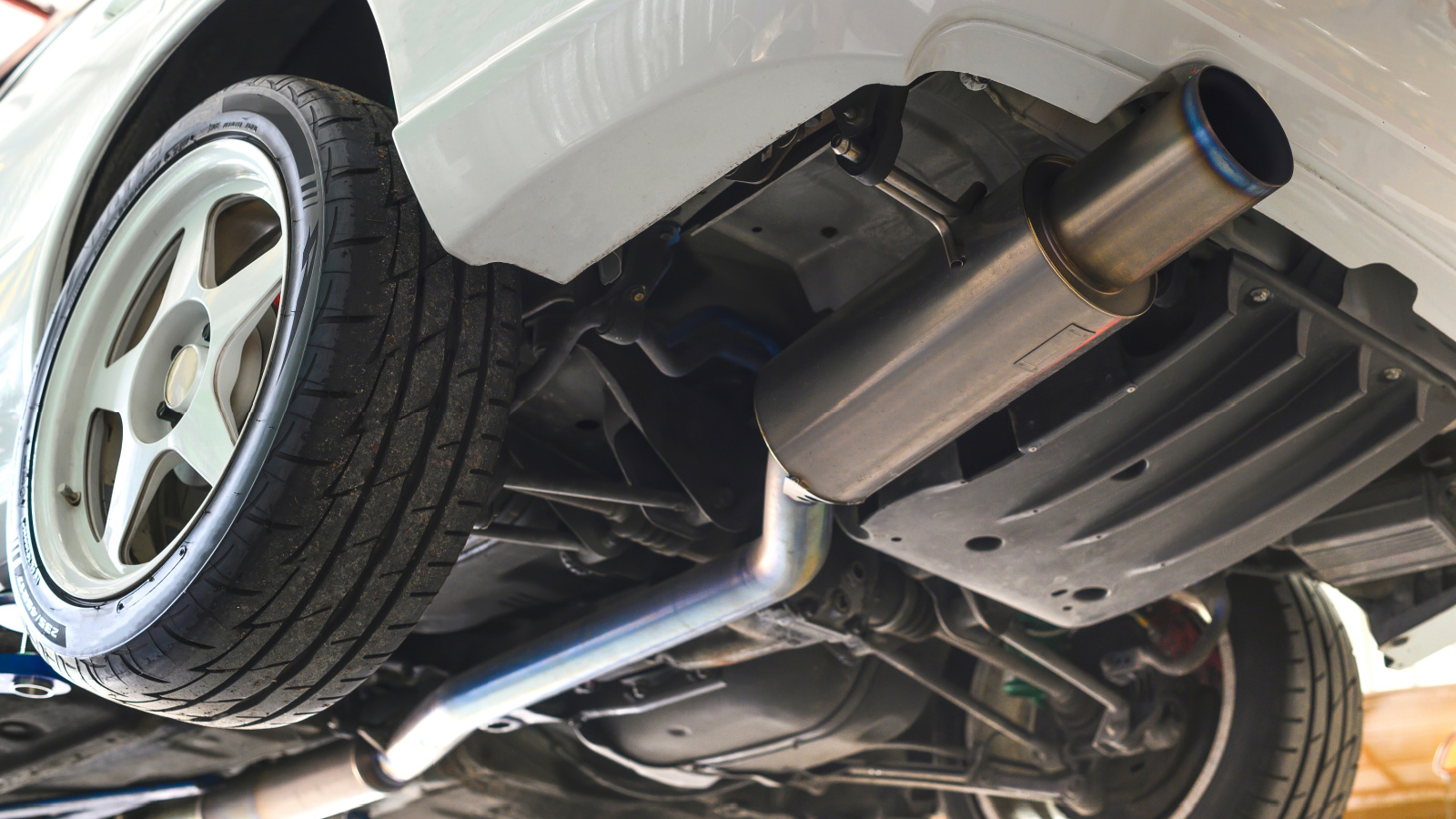
Most current light-duty diesels use selective catalytic reduction, which injects diesel exhaust fluid into the exhaust stream to reduce nitrogen oxides. DEF is not a fuel additive and never belongs in the diesel tank. It is a separate, standardized fluid—usually a urea-and-water solution—stored in its own reservoir. Consumption varies with engine load, temperature, towing, and calibration, so a heavy towing season can empty the tank faster than gentle commuting.
Canadian winters add a detail that often surprises first-time owners: DEF freezes at about -11°C. Vehicles designed for cold climates use heaters to thaw it, and freezing itself is expected. Owners should still use fluid meeting the specification in the manual, keep the filler area clean, avoid overfilling, and store containers properly. Old or contaminated DEF can trigger system faults. The cost per fill is usually modest compared with fuel, but the inconvenience matters, especially in remote areas. A buyer should locate the filler, learn the tank capacity and warning sequence, and confirm that appropriate fluid is easy to obtain along normal routes.
Ignoring DEF Warnings Can Limit the Vehicle
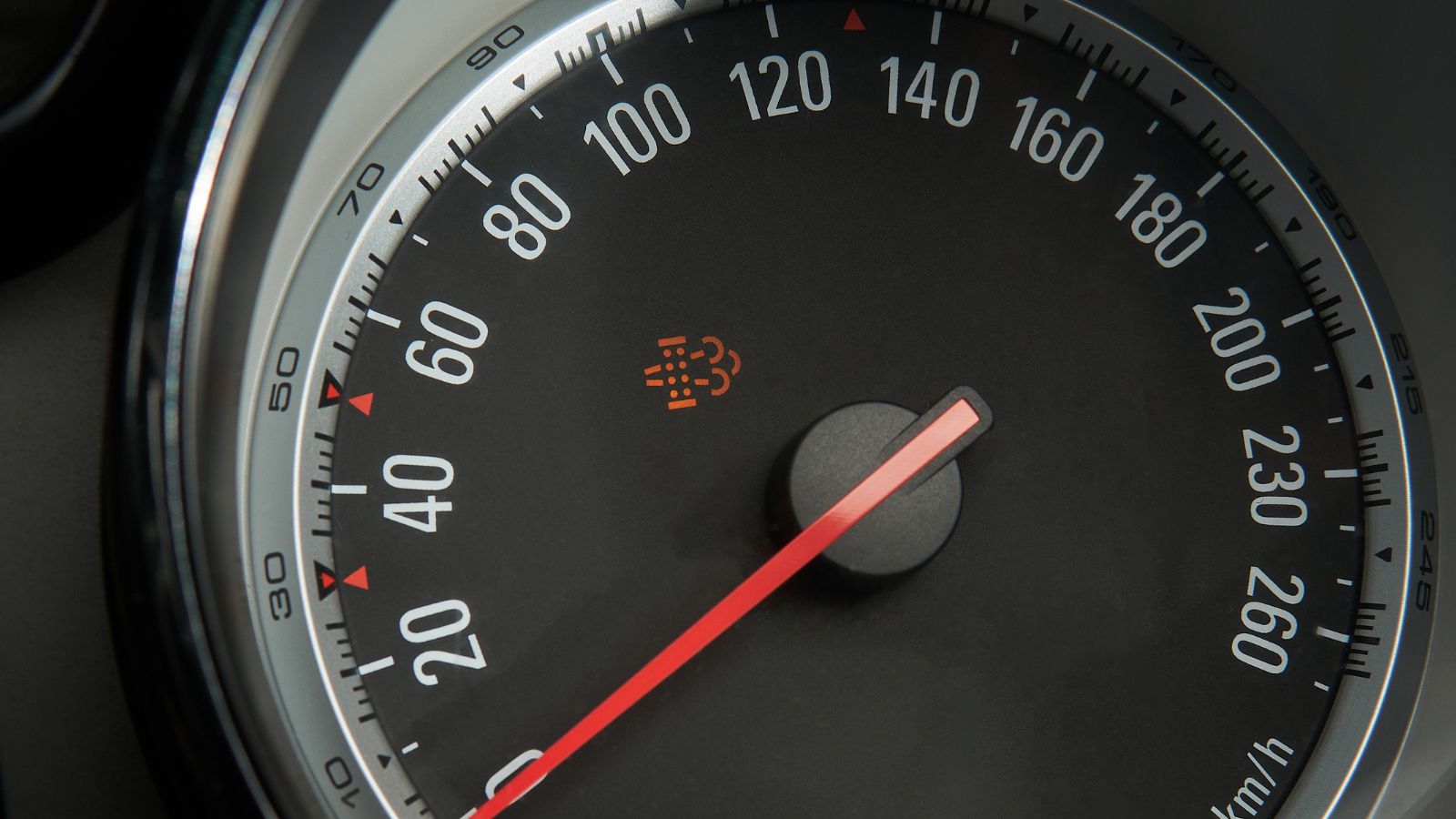
Running low on diesel exhaust fluid is not the same as ignoring a washer-fluid light. Emissions regulations require manufacturers to discourage operation when the SCR system cannot function, so vehicles provide escalating warnings as DEF falls or if the fluid is contaminated. Depending on the model, the system may eventually limit speed, restrict restarts, or permit only low-speed or idle operation until the problem is corrected.
Ford’s current diesel guidance, for example, describes progressive distance warnings and speed limitations before more severe restrictions. Other brands use different thresholds and messages, which is why the exact owner’s manual matters. A driver heading into northern Ontario or across the Prairies should not assume the remaining range displayed under light use will hold while towing into a headwind. Keeping a sealed, specification-compliant container available can be sensible, but it must be protected from contamination and extreme storage conditions. Buyers should also ask whether DEF-related repairs are covered under the emissions warranty and which local shops can diagnose SCR sensors, heaters, pumps, and injectors.
Canadian Winters Require the Right Diesel Fuel

Diesel fuel can thicken and form wax crystals in severe cold, restricting flow through the filter and causing hard starting or stalling. Fuel suppliers adjust seasonal blends for regional temperatures, but problems can still occur when a vehicle travels from a warmer area into a much colder one, sits for a long period, or contains off-season fuel. A nearly empty tank also leaves less margin during a storm or an unexpected delay.
Manufacturer guidance recommends using the fuel grade appropriate for prevailing conditions and warns that incorrect formulations can gel and clog filters. Additives should only be used when permitted by the vehicle maker and in the stated concentration; improvised mixtures can harm modern high-pressure systems or emissions equipment. Buying from a busy, reputable station helps reduce the chance of stale or contaminated fuel, although it cannot replace correct winter preparation. Before a northern trip, owners should review the forecast, fill with local winter-grade diesel, keep the tank comfortably above one-quarter, and know where the vehicle’s fuel filter and emergency starting instructions are located.
Cold Starting Depends on More Than the Engine

Cold starting depends on a system, not one component. Glow plugs or intake heaters help warm the combustion chamber, while the battery must deliver high cranking current through cold, thick oil. Correct winter-grade oil, healthy electrical connections, functioning heaters, and suitable fuel all matter. A diesel with a marginal battery may start acceptably in October and fail dramatically during the first deep freeze.
A block heater can reduce the work required at startup and shorten the period before the engine reaches an efficient temperature. Natural Resources Canada notes that block heaters can improve winter fuel economy when used appropriately and recommends a timer rather than leaving them energized all night. The required plug-in time varies with temperature and manufacturer guidance. Buyers without access to reliable outdoor power—such as condominium residents or street parkers—should consider that limitation before choosing a diesel in a very cold region. A pre-purchase inspection should include battery testing, glow-plug or heater fault checks, and confirmation that the block-heater cord and connections are undamaged.
Extended Idling Is Not a Winter Cure

Long idling is often treated as a winter warm-up strategy, but a diesel may produce too little heat at idle to reach normal operating temperature quickly. Prolonged cold idling can encourage deposits, waste fuel, and add engine hours without adding odometer kilometres. It can also delay cabin heat, especially in large vehicles, creating the impression that still more idling is needed.
Ford cautions that extended cold-weather idling may prevent normal engine warming and can contribute to deposits or damage. A better routine is to follow the manual: allow the engine and oil pressure to stabilize, then drive gently until temperatures rise, avoiding heavy load while cold. Some work vehicles genuinely need idle time for power take-off equipment or job-site functions, but that is a duty-cycle decision rather than a universal warm-up method. Used-diesel buyers should check engine-hour data when available, because a truck with moderate kilometres may have spent thousands of hours running stationary. Maintenance plans based only on the odometer can understate that kind of use.
Correct Oil Specifications Are Non-Negotiable

Diesel oil is part lubricant, part cooling medium, and part of the emissions-system strategy. Modern engines may require a particular viscosity and an API or manufacturer specification designed for turbochargers, high soot loads, and particulate-filter compatibility. Using oil that merely says “diesel” on the label is not enough. The wrong product can affect cold starting, wear protection, aftertreatment durability, and warranty coverage.
Specifications are engine-specific. Ford, for example, calls for API CK-4 oil in its 6.7-litre Power Stroke and recommends different viscosities for certain temperatures, severe service, or biodiesel use. That example should not be copied to another brand; it demonstrates why the manual and under-hood label must be checked. Buyers should price the correct quantity of approved oil, since large diesel engines can require considerably more than a small gasoline engine. They should also determine whether towing, idling, dusty roads, or biodiesel moves the vehicle into a severe-service schedule. Saving a few dollars with an unsuitable oil or an extended interval can be a costly false economy.
Fuel Filters and Water Separators Add Routine Work

Many diesels use more than one fuel filter and include a water separator because high-pressure injection equipment has very little tolerance for dirt or moisture. Draining the separator, watching for a water-in-fuel warning, and replacing filters at the specified interval are ordinary ownership tasks—not optional extras. The schedule can be based on kilometres, time, operating conditions, or a combination of all three.
Ford’s diesel maintenance information includes regular checks of the fuel-and-water separator and model-specific fuel-filter replacement intervals. Other manufacturers set different requirements, so buyers should price the exact parts and labour before purchase. Service records matter because a skipped filter change may not cause an immediate symptom, yet contamination can shorten injector or pump life. Owners who refuel from farm tanks, auxiliary tanks, or remote sources face additional exposure and should maintain those storage systems carefully. During a used-vehicle inspection, the technician should check filter age, water warnings, leaks, and evidence of improvised aftermarket filtration. A clean fuel system is one of the least glamorous—and most valuable—parts of diesel ownership.
Fuel Contamination Can Become a Major Repair
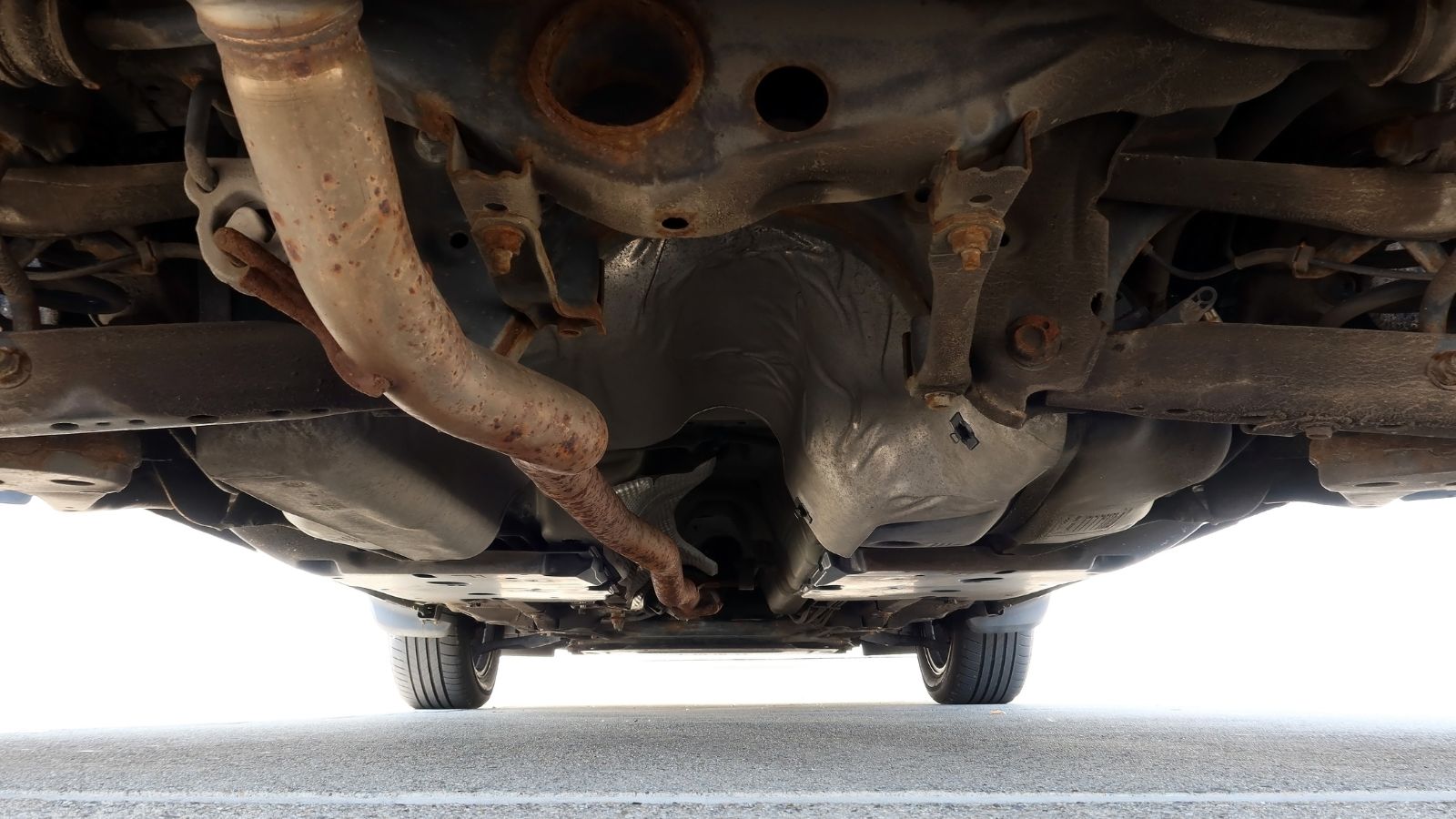
Modern common-rail diesel systems operate at extremely high pressure and rely on fuel for lubrication and cooling. Water, gasoline, dirt, or diesel exhaust fluid in the fuel tank can damage pumps, injectors, rails, and lines. A contamination event may spread metallic debris through the entire system, turning one mistake at the filler neck into a major repair. Warning lights do not always appear before damage begins.
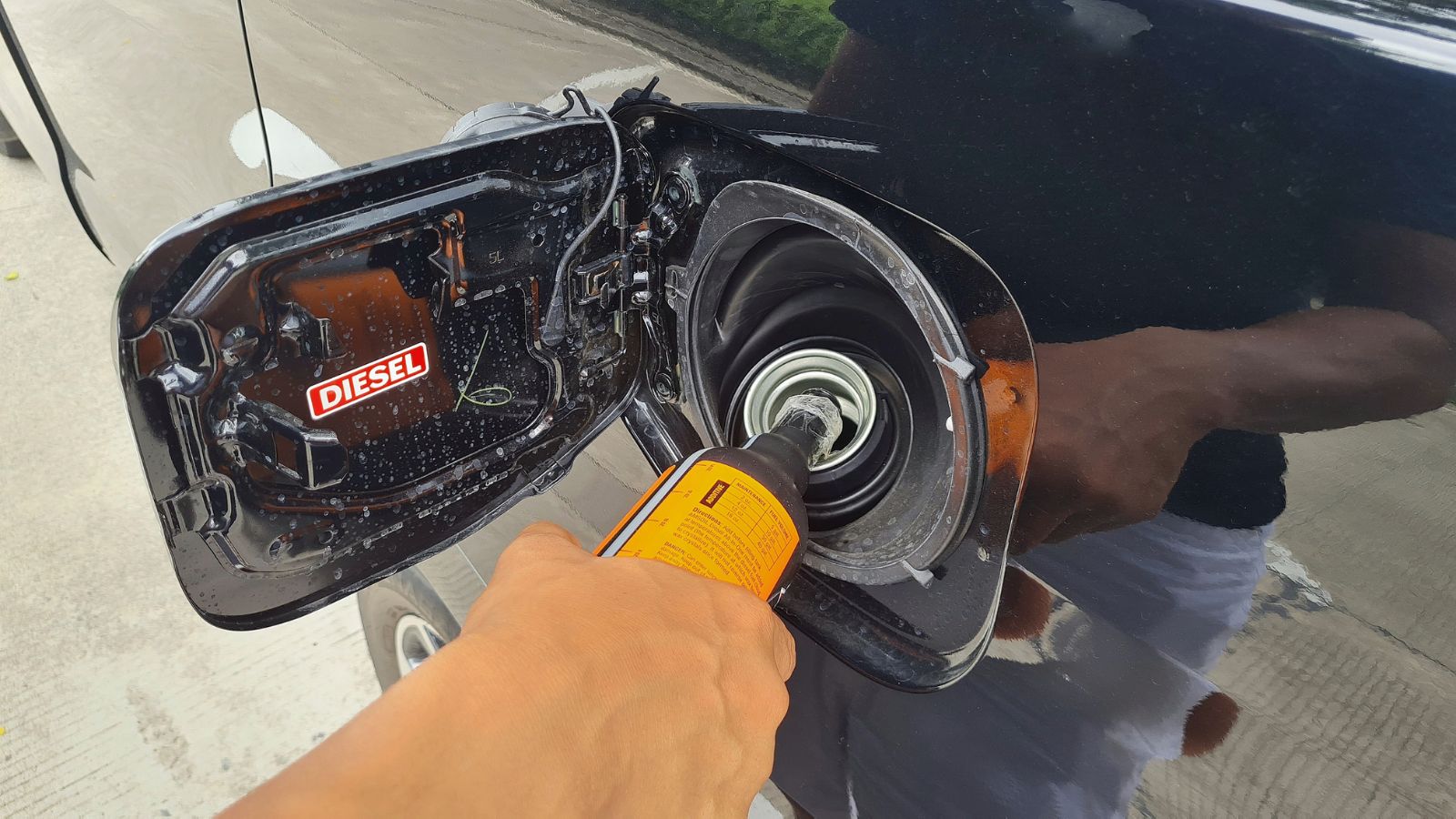
Manufacturer instructions are blunt about misfuelling. Ford warns that water in fuel can cause extensive injection-system damage and says the ignition should not be switched on if DEF is accidentally added to the diesel tank. The safest response to any wrong-fluid incident is to stop, avoid starting the engine, and arrange professional draining and inspection. Buyers should also examine capless fillers, auxiliary tanks, and transfer equipment for signs of cross-contamination. Fuel receipts and maintenance history can help when evaluating a used vehicle, but a diesel specialist’s scan and fuel-system inspection are more meaningful. The high-pressure system is one reason unusually cheap diesel maintenance history deserves careful scrutiny.
Biodiesel Compatibility Varies by Model and Climate

Biodiesel blends are part of Canada’s fuel landscape because several provinces require renewable content in diesel, while federal clean-fuel policy targets lower life-cycle carbon intensity. A blend labelled B5 contains up to five percent biodiesel; B20 contains up to 20 percent. The fact that a fuel is legally sold does not mean every engine accepts every concentration under every operating condition.
Compatibility varies by manufacturer, model year, temperature, storage time, and maintenance schedule. Some manuals permit blends up to B20 but call for different oil, shorter intervals, or lower biodiesel content in extreme cold. Biodiesel can also degrade during long storage, which matters for seasonal trucks, motorhomes, and backup vehicles. Buyers should check the fuel section of the exact Canadian owner’s manual rather than relying on a salesperson’s general assurance. Those planning to refuel at cardlocks, farms, or remote stations should ask what blend is dispensed and how quickly the fuel turns over. Renewable content can reduce life-cycle emissions, but it adds another compatibility question to responsible ownership.
Service Access Matters Before the Purchase
A diesel vehicle is easier to own when qualified service is nearby. Routine maintenance can often be handled by a competent independent shop, but emissions diagnostics, high-pressure fuel work, software updates, and warranty repairs may require brand-specific equipment or an authorized dealer. A low purchase price loses some appeal when every warning light means a long tow, a day off work, or a rental vehicle.
Innovation, Science and Economic Development Canada advises consumers to read warranty terms carefully, including where repairs must be performed and which owner responsibilities can affect coverage. Before buying, a Canadian in a smaller community should call local shops and ask whether they service the exact engine and its DPF, DEF, SCR, turbocharger, and fuel system. It is also worth checking parts availability and typical booking delays. The issue is not that diesels are impossible to service outside large cities; many rural technicians know them extremely well. The goal is to confirm support in advance instead of discovering after a breakdown that the nearest properly equipped facility is several hours away.
A Used Diesel Needs a Diesel-Specific Inspection
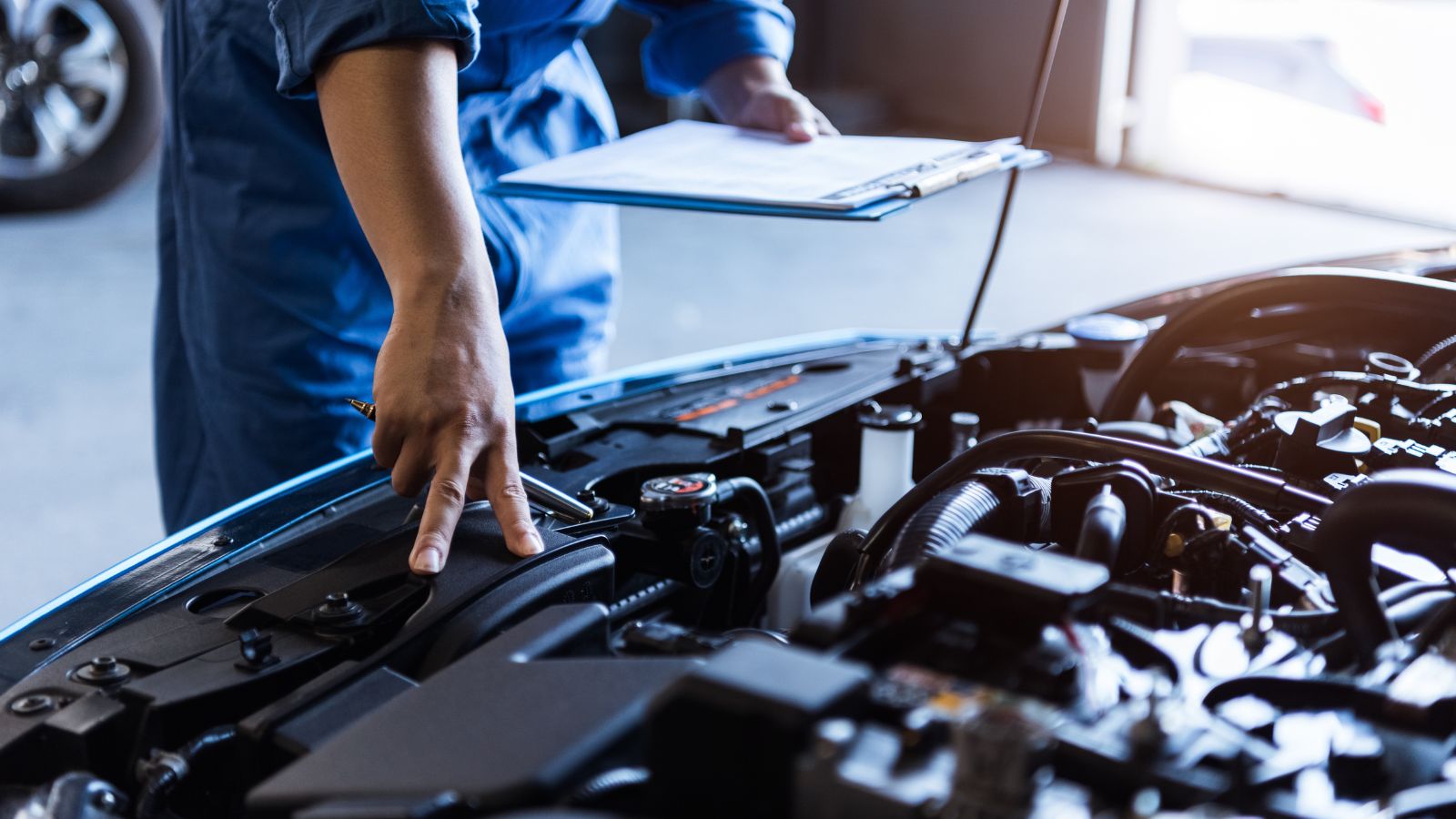
A general mechanical inspection is not enough for a used modern diesel. The technician should begin with a true cold start, listen for abnormal combustion or turbo noises, check for leaks, and scan every powertrain and emissions module. Where the diagnostic system allows it, the inspection should review particulate-filter soot or ash loading, regeneration history, differential-pressure readings, DEF faults, and pending codes. Maintenance records should show the correct oil, fuel filters, and emissions-related repairs.
The vehicle’s history deserves equal attention. Transport Canada provides VIN-based recall information, while vehicle-history and lien reports can reveal reported collisions, registration changes, or outstanding financing. An independent inspection remains essential because no database captures every mechanical problem. A seller who pre-warms the engine, clears warning lights, refuses a scan, or cannot explain deleted equipment is creating risk. Buyers should also tow-test or load-test the vehicle when practical and safe, because some fuel-delivery, cooling, and boost problems appear only under demand. Paying for a diesel specialist before purchase is far cheaper than learning afterward that a filter, injector set, or turbocharger is near the end of its life.
Deleted Emissions Equipment Can Create Trouble

“Deleted” diesels have had emissions equipment such as the DPF, EGR, or SCR system removed, bypassed, or disabled through hardware and software changes. Sellers sometimes claim deletion improves reliability or fuel economy, but it can create legal, inspection, resale, warranty, and diagnostic problems. A tuned truck may also have been operated at higher cylinder pressure or exhaust temperature than the manufacturer intended.
Rules differ across Canada, but buyers should not assume tampering is acceptable. Ontario’s Highway Traffic Act, for example, prohibits removing, bypassing, or defeating prescribed emission-control systems and also restricts defeat devices. Enforcement and inspection programs vary by province and vehicle class. Before purchasing, a technician should verify that factory hardware is present, check calibration identifiers where possible, and inspect for welded exhaust sections, unplugged sensors, simulators, or suspicious programming. Restoring a deleted vehicle can require multiple expensive components, and a dealer may decline warranty coverage for related damage. A clean-looking truck with no dashboard light is not proof that its emissions system is intact.
The Environmental Trade-Off Is More Complicated Than L/100 km

Diesel’s environmental case cannot be reduced to one fuel-economy number. Lower litres per 100 kilometres can mean less carbon dioxide emitted per kilometre than a comparable gasoline vehicle, particularly during efficient highway operation. At the same time, diesel combustion produces nitrogen oxides and fine particles, which is why modern vehicles rely on EGR, particulate filters, oxidation catalysts, and SCR systems. Those controls substantially change tailpipe performance, but only when they remain installed and function correctly.
Health Canada identifies diesel exhaust as a health concern linked to respiratory, cardiovascular, and cancer risks, with nitrogen dioxide and particulate matter among the important pollutants. Federal Clean Fuel Regulations address the life-cycle carbon intensity of fuels, while Natural Resources Canada publishes vehicle-specific consumption and CO2 ratings. A responsible comparison should therefore consider the exact model, annual kilometres, duty cycle, fuel source, and emissions-system condition. A diesel used for sustained towing may deliver strong efficiency for the work performed; an oversized diesel used mainly for short urban errands may offer little environmental advantage.
22 Things Canadians Do to Their Cars in Spring That Mechanics Hate

Spring brings relief to many Canadian drivers after months of snow, freezing temperatures, and icy roads that put serious strain on vehicles. As temperatures rise across the country, drivers begin washing cars, switching tires, and preparing vehicles for warmer weather and upcoming road trips. However, mechanics across Canada notice the same mistakes every spring when drivers attempt to recover from winter damage. Road salt, potholes, and harsh winter driving conditions often leave vehicles with hidden problems that drivers ignore. Some spring habits even create new mechanical issues that could have been avoided with proper maintenance. Here are 22 things Canadians do to their cars in spring that mechanics hate.