


























A vehicle can feel perfectly acceptable during a short dealership loop and become exhausting two hours into a highway trip. Comfort depends on more than soft upholstery or a quiet engine. It comes from how well the seat, controls, cabin dimensions, suspension, tires, climate system, and displays fit the bodies and habits of the people inside.
These 22 reasons explain why discomfort often appears gradually rather than immediately. Some involve obvious pressure points, while others create fatigue through vibration, noise, heat, restricted movement, poor visibility, or repeated mental effort. The result may be a stiff neck, numb legs, sore shoulders, queasiness, or the simple feeling that a vehicle demands more energy than it should.
The Lumbar Support Does Not Match the Driver’s Back

A seat can have “lumbar support” on the feature list and still provide support in the wrong place. Human spines vary in length and curvature, so a fixed bulge that feels helpful to one driver may press awkwardly into another person’s lower back. When the support sits too high, too low, or protrudes too far, the driver may subtly arch away from it. Over a long drive, that small adjustment can become muscle fatigue, stiffness, or a persistent ache.
Adjustable lumbar systems are more useful when they move both vertically and inward or outward. The goal is not to create a dramatic curve, but to maintain even contact from the hips toward the shoulders without gaps or hard pressure points. A familiar example is the driver who keeps shifting forward in the seat because the backrest feels “too aggressive.” That movement removes support from the rest of the spine, making the original problem worse as the trip continues.
The Seat Cushion Is Too Long or Too Short

Seat cushion length determines whether the thighs are supported without the front edge pressing into the backs of the knees. A cushion that is too long can force shorter occupants to slide forward, which separates the lower back from the backrest and concentrates pressure near the knees. Ergonomic guidance commonly recommends leaving roughly two or three finger-widths between the cushion edge and the back of the knee so circulation and leg movement are not restricted.
A cushion that is too short creates the opposite problem. Taller drivers may feel as though much of each thigh is suspended, leaving the buttocks to carry more of the body’s weight. The discomfort may not appear during a 15-minute test drive, but it can build into burning pressure or restlessness after an hour. Extendable thigh supports can help, yet they also need careful adjustment; extending them too far simply recreates the pressure problem in a different form.
The Seat Height and Cushion Angle Are Working Against the Body

Seat height affects far more than outward visibility. When a seat is too low, the knees may sit noticeably above the hips, increasing hip flexion and encouraging the pelvis to roll backward. When it is too high, the thighs may lose support or the driver may feel pressure under the legs. Either position can make the lower body feel cramped even when the vehicle appears to offer generous legroom on paper.
The cushion angle matters just as much. A steep upward tilt can support the thighs but also press into the backs of the knees, while a flat or downward-sloping cushion may allow the body to slide forward. Ergonomic recommendations call for supporting the thighs along the cushion’s length without creating pressure near the knees. In practice, drivers often improve comfort by raising the seat for visibility, then reducing cushion tilt slightly so the hips, thighs, and pedals remain naturally aligned.
The Backrest Angle Encourages Slouching or a Forward Head Position

A deeply reclined backrest can initially feel relaxed, especially in a showroom. On the road, however, the driver still needs to see ahead, reach the wheel, and monitor mirrors. If the backrest leans too far rearward, the head and shoulders may drift forward while the pelvis stays back. That creates a curved posture in which the neck muscles work continuously to hold the eyes level with the road.
An overly upright backrest can be tiring for a different reason, particularly if it feels as though it is pushing the torso forward. The best angle allows the full back to remain supported while the shoulders stay relaxed and the elbows remain slightly bent. A common clue is repeated head repositioning: the driver presses back, then leans forward, then adjusts again. That cycle suggests the backrest is not supporting the posture required to operate the vehicle comfortably. The problem often becomes clearest after the first fuel or coffee stop, when standing upright suddenly feels like relief.
The Steering Wheel Cannot Come Close Enough

When the steering wheel is too far away, the driver must reach with straighter arms or lean the shoulders away from the seatback. The effort is small, but it is continuous. Over several hours, the upper back, neck, and shoulder muscles may become sore because they are stabilizing the arms instead of resting against the seat. A wheel that tilts but does not telescope may be especially difficult for drivers with shorter arms or longer legs.
Good adjustment should allow comfortable pedal operation while keeping the wheel within easy reach and the shoulders supported. Canadian ergonomic guidance suggests roughly 25 to 30 centimetres between the breastbone and the wheel centre, partly for airbag clearance. The practical test is simpler: with the shoulders against the seat, the driver should be able to steer without locking the elbows or stretching. If moving closer fixes the arms but cramps the knees, the cabin’s basic geometry may not fit that driver.
The Pedals Force an Awkward Ankle or Hip Position

Driving is an asymmetrical activity. One foot may rest while the other repeatedly moves between accelerator and brake, and a manual transmission adds clutch work on the opposite side. If the pedals are too far away, the driver may reach with the toes or rotate the pelvis forward. If they are too close, the knees remain sharply bent and may crowd the steering column or dashboard.
Pedal spacing can also create fatigue. Closely grouped pedals may feel awkward with wide shoes or winter boots, while an offset pedal box can cause the right leg to angle inward or outward for hours. Ergonomic guidance recommends being able to press each pedal through its full range with the whole foot rather than only the toes. A driver who develops a foot cramp or hip ache on one side may blame the seat, when the underlying problem is the relationship among seat position, pedal distance, and pedal alignment.
The Head Restraint Pushes the Head Forward
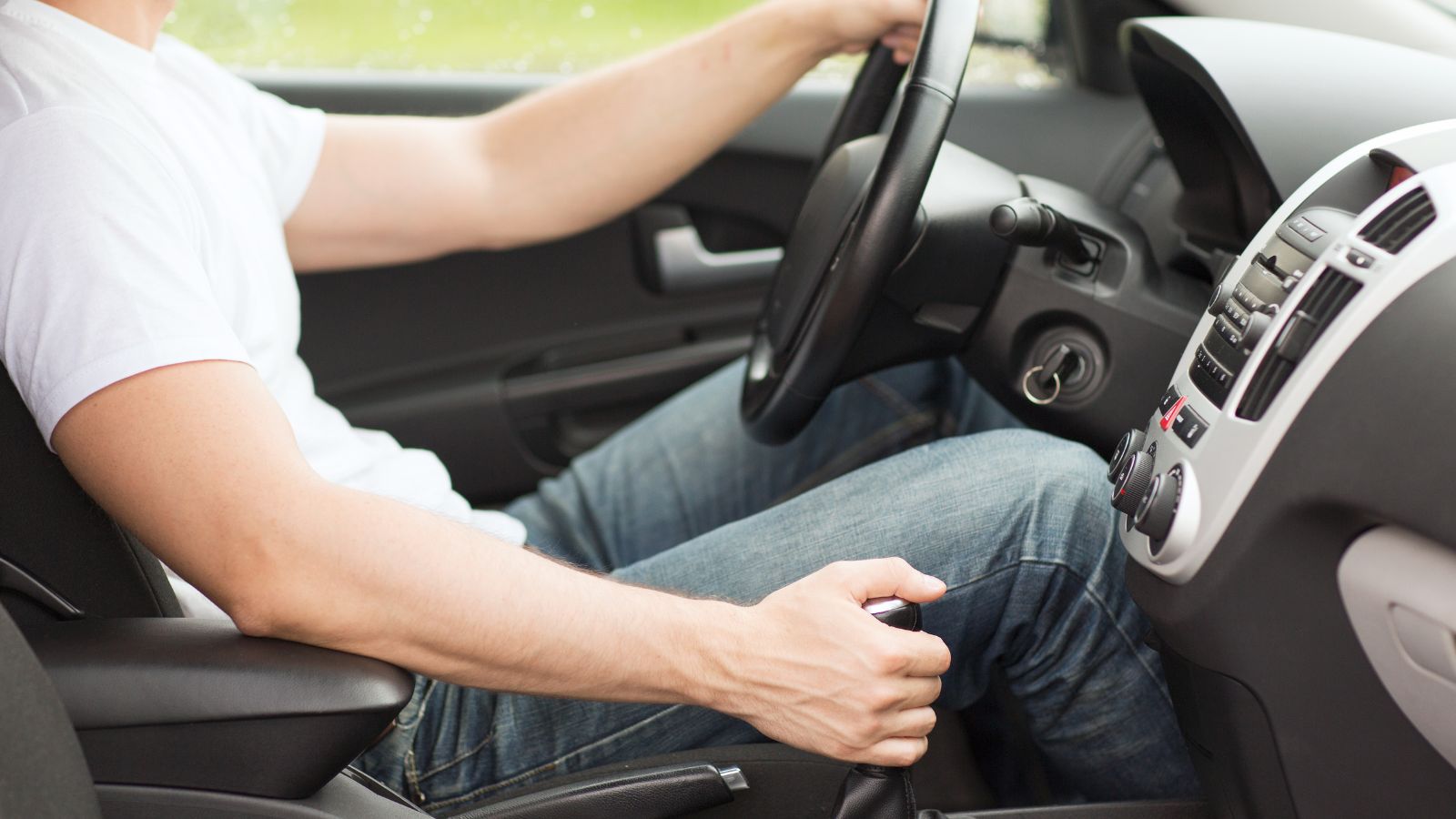
Modern head restraints are primarily safety devices, not pillows. They are designed to limit rearward head movement in a rear impact, which means they need to sit relatively close to the head. In some vehicles, however, the forward angle feels excessive for people whose upper-back shape, hairstyle, or preferred seatback angle differs from the assumed design posture. The result can be a chin-forward position that strains the neck during long drives.
Height and backset both matter. Guidance from the Canadian Centre for Occupational Health and Safety recommends placing the top near the top of the occupant’s head and keeping the head close to the restraint. Yet “close” should not mean constant pressure that forces the skull forward. A driver who repeatedly removes a hair clip, reclines the seat, or cranes the neck may be compensating for restraint geometry. Because the restraint is safety-critical, the better solution is usually seat and restraint adjustment—not removing or reversing it.
The Seat Is Too Narrow or the Side Bolsters Create Pressure Points

Pronounced side bolsters can make a seat look supportive and sporty, but body shape determines whether they stabilize or squeeze. If the cushion bolsters are too close together, they may press against the outer thighs or hips. If the backrest bolsters are narrow, they can push the shoulders forward or create concentrated pressure along the ribs. The irritation often grows slowly because the same areas remain loaded for an extended period.
Seat shape also affects circulation and the ability to change posture. Ergonomic guidance notes that concentrated pressure on the legs, back, or buttocks can cause discomfort and may affect blood flow to the lower limbs. A broad driver in a tightly bolstered seat may feel trapped rather than supported, while a smaller occupant may slide around in a very wide, flat seat. Long-distance comfort usually comes from gentle contouring that distributes load without preventing small, natural shifts in position.
The Cushion Firmness Does Not Suit the Occupant
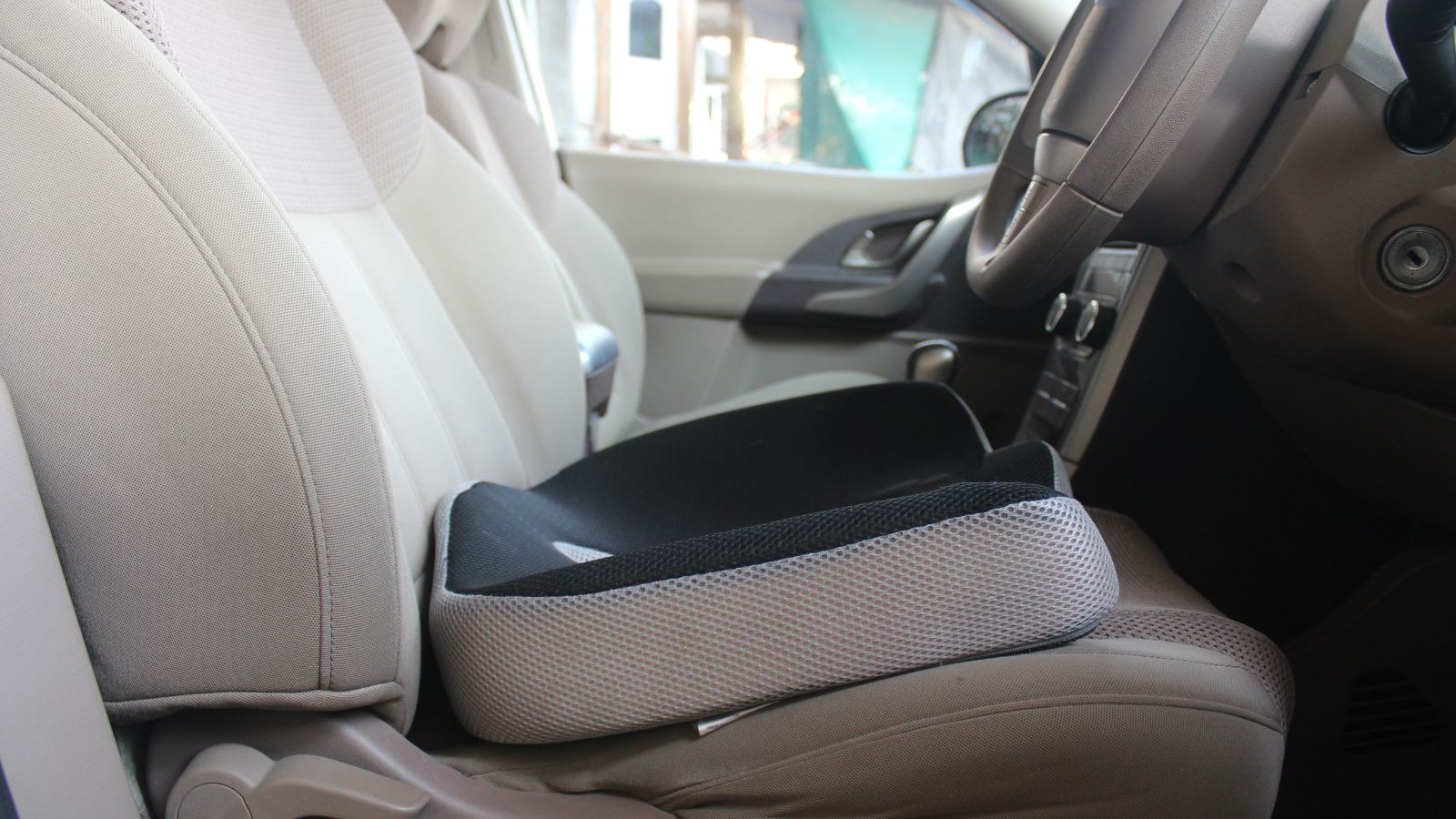
“Soft” and “comfortable” are not automatically the same thing. A very soft cushion may allow the pelvis to sink unevenly or make it harder to change position, while a very firm cushion can concentrate pressure beneath the sitting bones and thighs. Comfort depends on how the foam, suspension mat, upholstery, and body shape interact, so two seats with similar dimensions can feel entirely different after an hour.
Research comparing automotive seats has found meaningful differences in contact area and pressure distribution between softer and firmer designs. In one study, the softer seat produced a larger contact surface and a more even pressure pattern. That does not prove that every soft seat is superior, but it explains why showroom impressions can be misleading: initial plushness is only one factor. A useful long-drive seat spreads load broadly, avoids hard pressure peaks, and remains supportive as the foam warms and compresses. That is why a longer test drive can reveal far more than pressing a hand into the cushion in a showroom.
The Backrest Does Not Support the Shoulders and Upper Torso

Lower-back support receives most of the attention, but the upper back also needs a stable surface. A backrest that is too narrow may leave the shoulders outside its supportive area, while one with an aggressive upper curve may round them forward. Drivers then hold the arms up toward the wheel without a relaxed base, placing extra demand on the muscles around the shoulder blades and neck.
Ergonomic vehicle guidance recommends a backrest high and wide enough to support the shoulders without interfering with rearward vision. The need becomes obvious during crosswinds, dense traffic, or winding roads, when the driver makes frequent small steering corrections. A supportive backrest lets the torso remain settled while the arms move. Without it, the entire upper body may tense with each correction. The discomfort can resemble poor steering-wheel reach, and in many vehicles the two problems occur together because seat and wheel geometry are interdependent.
The Seat Belt Sits on the Neck or Pulls Across the Shoulder

A seat belt can become a constant source of irritation when the upper anchorage does not match the occupant’s height. If the shoulder belt runs across the neck, every head turn may produce rubbing. If it sits too far toward the edge of the shoulder, the occupant may keep tugging it inward. Heavy coats, short torsos, unusual seat heights, and limited B-pillar adjustment can all change how the belt lies.
The ideal shoulder belt route is across the middle of the collarbone, not the neck and not off the shoulder. Adjustable upper anchorages help accommodate different body sizes, but they are often overlooked when a driver sets up a new vehicle. Backrest angle matters as well: excessive recline can create a gap between the shoulder and belt, while sitting too close may change belt tension. The irritation is more than a nuisance because discomfort can tempt people to place the belt behind the back or under an arm, which undermines proper restraint use.
The Cabin Does Not Provide Enough Space for a Neutral Posture

Published legroom and headroom measurements cannot reveal every fit problem. A tall driver may have adequate numerical legroom yet still strike a knee on the centre console. A shorter driver may move close enough to reach the pedals but then feel crowded by the wheel. Roof shape, door trim, console width, wheel-arch intrusion, and dashboard depth all determine whether the available space can actually be used comfortably.
A neutral posture requires enough room to operate controls without twisting, stretching, slouching, or squeezing the legs together. Ergonomic guidance specifically highlights headroom, knee clearance, sightlines, and the ability to reach pedals and controls. Consider a compact crossover with a high console: it may feel spacious around the head and shoulders, yet the driver’s right knee remains pressed against hard trim for the entire trip. Small contact points like that can dominate the experience after several hours. They may also prevent the driver from making the tiny posture changes that normally relieve pressure.
Whole-Body Vibration Is Reaching the Seat
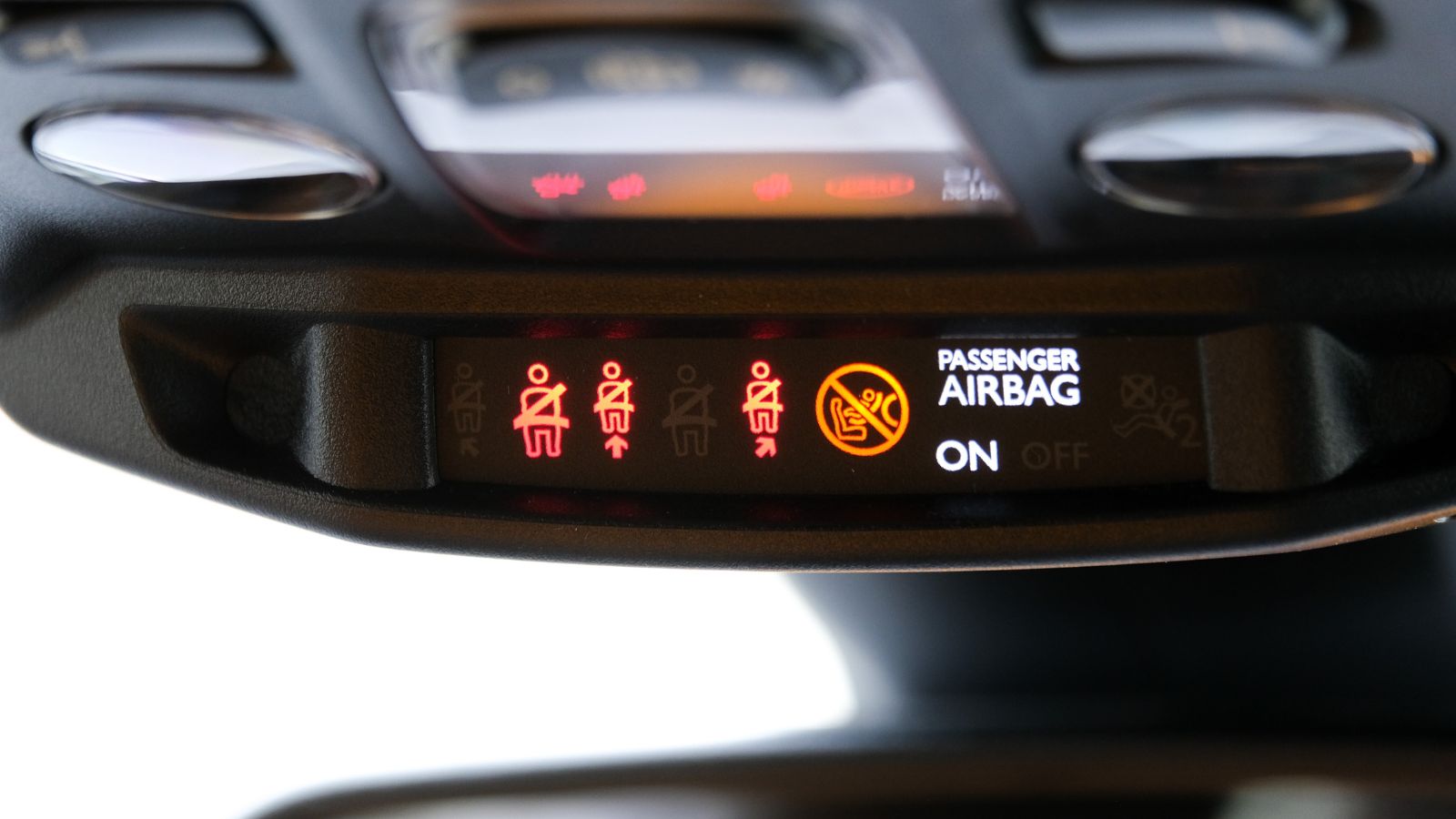
Every moving vehicle sends some vibration through the floor, seat rails, cushion, and backrest. Rough pavement, powertrain movement, tire imbalance, and structural resonance can all contribute. The body may tolerate those inputs during a short trip, but prolonged low-frequency vibration has been associated with faster discomfort development and lower-back concerns in occupational driving research. It can also make muscles work continually to stabilize the torso.
A 2015 vehicle-seat study found that vibration increased the rate at which discomfort appeared compared with static sitting. Research involving long-haul truck drivers has likewise examined active seat suspension designed to reduce whole-body vibration. Passenger vehicles expose occupants to different levels than heavy equipment, but the principle remains useful: a seat that looks supportive can still feel tiring if it transmits constant buzzing, bouncing, or shuddering. The sensation may be subtle enough to notice only after the road surface changes and the body suddenly relaxes.
The Suspension Is Tuned for Control More Than Compliance
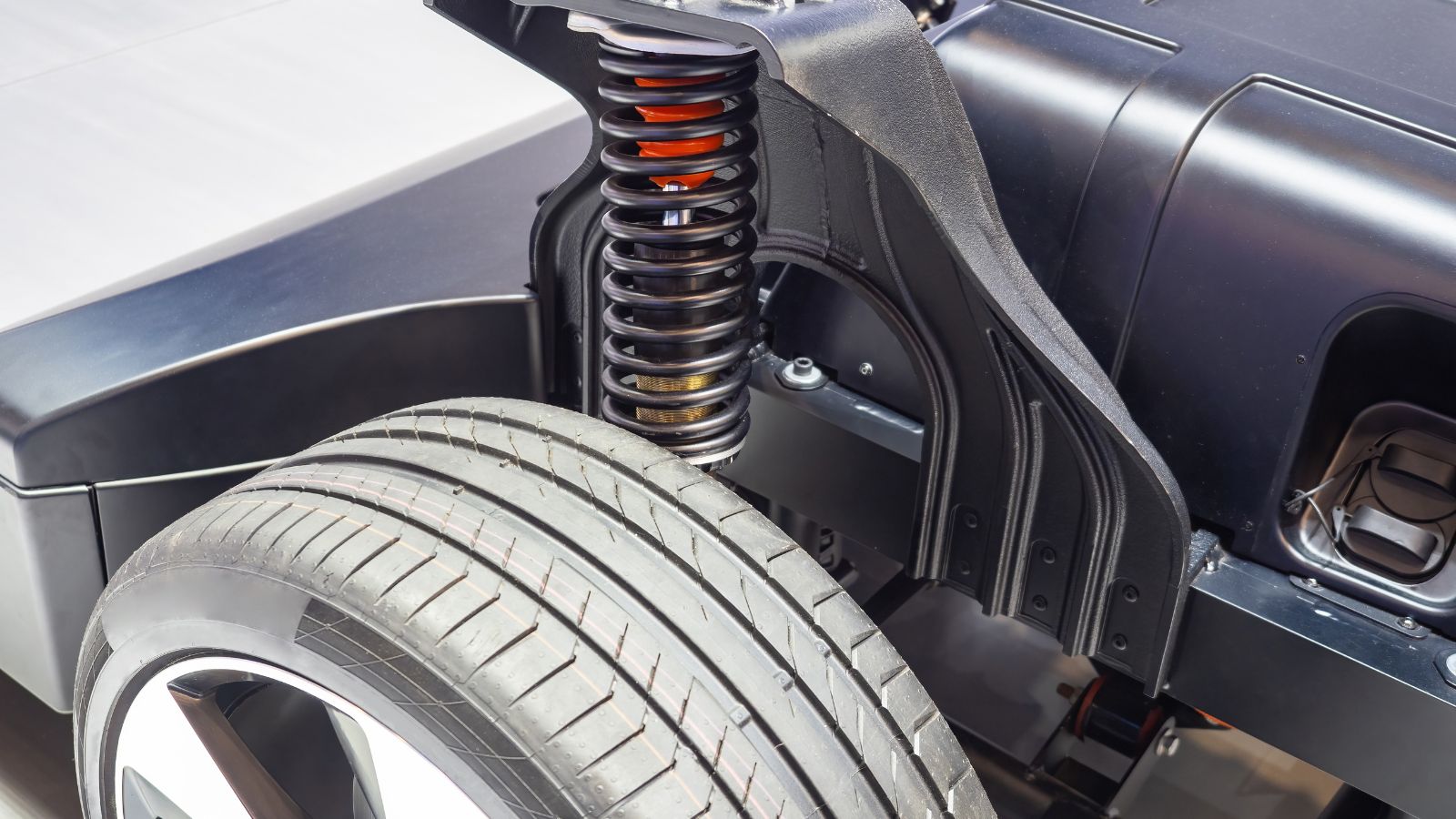
Suspension design must balance body control, steering response, load capacity, cost, and ride comfort. A setup with stiff springs, firm dampers, short wheel travel, or rigid bushings may keep the body composed during quick direction changes but transmit more road disturbance into the cabin. Repeated small impacts can be more tiring than one large bump because occupants never receive a long, settled interval.
Research on ride comfort commonly evaluates vehicle-body acceleration and vibration caused by road irregularities. Active and adaptive systems attempt to reduce those motions by changing damping or applying controlled forces, while conventional suspensions must rely on fixed compromises. The difference becomes clear on broken pavement: one vehicle rounds off each edge, while another produces a sharp vertical kick followed by a second rebound. A sporty test route may flatter the latter, but a long highway with expansion joints can expose how much physical work the occupants are doing.
The Tires and Wheels Amplify Harshness

Tires are the first suspension elements to encounter a road defect. Their sidewall stiffness, inflation pressure, construction, width, tread, and wheel size influence how much vibration reaches the chassis. Large wheels paired with short tire sidewalls leave less flexible material to absorb sharp edges. Incorrectly high pressure can also make impacts feel abrupt, while damaged, imbalanced, or non-uniform tires may create a steady shake.
Vehicle-service information filed with NHTSA has specifically warned that excessive tire pressure can produce harshness and increased vibration, while NHTSA advises owners to investigate changes in tire noise or vibration. Research also treats tire vibration as an important contributor to vehicle noise, vibration, and harshness. The practical example is familiar: a vehicle may ride acceptably on smooth asphalt but become brittle over patched concrete. Before blaming the seat or suspension, tire pressure should be checked against the door-jamb specification when the tires are cold. A wheel that is bent or out of balance can also turn one narrow speed range into the least comfortable part of the trip.
The Cabin Is Too Noisy at Cruising Speed
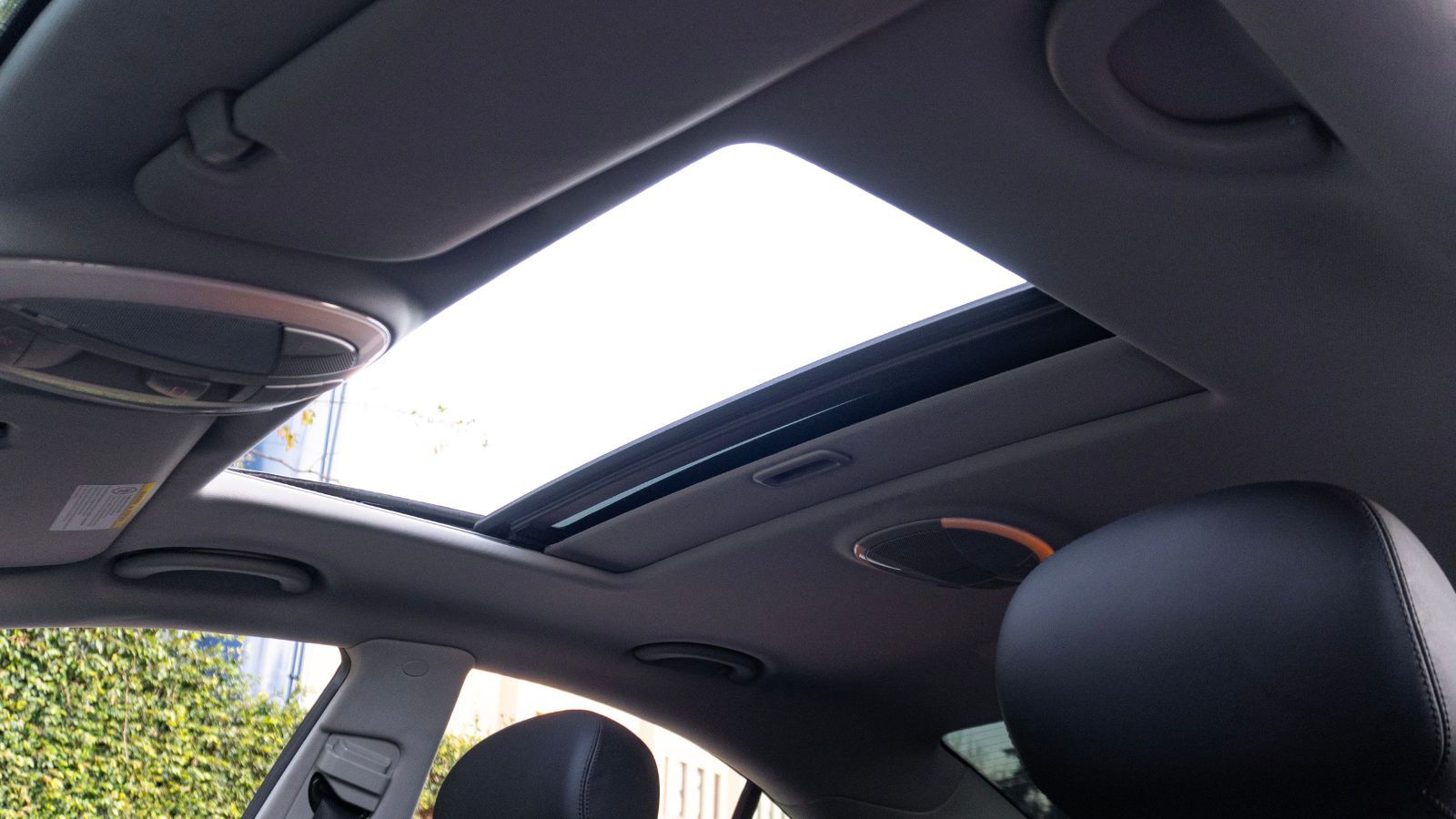
Noise creates discomfort even when it is far below the level associated with hearing damage. Tire roar, wind rush, engine drone, exhaust resonance, and vibration from trim panels can make conversation difficult and encourage occupants to raise their voices. The brain must also keep filtering the sound, which can turn a steady highway trip into a surprisingly tiring experience.
The Canadian Centre for Occupational Health and Safety lists acceptable noise levels as part of driving comfort and notes that lower cabin noise can make driving more relaxing and less stressful. Experimental research using truck-cabin-like broadband noise has also examined its fatiguing effect through brain activity and performance measures. Tone matters as much as volume: a low-frequency boom that appears at one cruising speed may be more irritating than a louder but varied sound. That is why a vehicle can seem refined in city traffic yet become wearing at 100 kilometres per hour.
The Upholstery Traps Heat and Moisture

A seat can have excellent shape and still become unpleasant when the material does not breathe. The back, hips, and thighs remain in close contact with upholstery, limiting airflow and allowing heat and moisture to build. Leather-like surfaces may feel premium but can become hot after sun exposure and clammy during long periods of contact. Dense foam and dark colours can add to the sensation, especially when the cabin starts warm.
Ergonomic guidance for vehicle selection specifically recommends breathable upholstery for thermal comfort. Heated and ventilated seats exist because local seat temperature can differ from the rest of the cabin; a driver may feel cool air on the face while the back remains damp. The discomfort can trigger constant repositioning and may make a supportive cushion feel softer or stickier as it warms. Perforation helps only when the underlying construction allows air movement, so appearance alone does not reveal how a seat will behave after two hours.
The Climate System Creates Uneven or Irritating Conditions

Cabin temperature is rarely uniform. Sunlight may heat one side of the body, vents may chill the hands or face, and the footwell may remain warm while the upper cabin cools. A strong air-conditioning system can lower the average temperature quickly yet still feel uncomfortable if airflow is concentrated on one occupant. Multi-zone controls help, but vent placement and air distribution remain important.
Research on automotive thermal comfort treats the cabin as a dynamic, non-uniform environment rather than a single temperature reading. Canadian ergonomic guidance also identifies temperature, humidity, heating, cooling, and ventilation as comfort factors. The real-world example is a driver who repeatedly changes the fan speed because each setting solves one problem and creates another: fogging at low airflow, dry eyes at high airflow, or cold fingers while the seat remains hot. Constant climate adjustment becomes both a physical annoyance and an additional task during the drive. Passengers may experience the same cabin very differently because solar exposure, clothing, and vent position vary by seat.
Glare and Poor Sightlines Increase Visual and Neck Strain

Comfort is not only what the body feels against the seat. A low roofline, thick pillars, a high dashboard, small mirrors, or a poorly positioned display can force repeated leaning and head movement to see around the cabin. Sunlight reflecting from glossy trim or a bright screen can add visual discomfort, while nighttime glare makes the eyes work harder to detect low-contrast details.
NHTSA has studied nighttime glare and driving performance, and ergonomic guidance stresses that a properly fitted driver should have clear views through the windshield, side windows, instruments, and mirrors. Seat height is therefore part of visual comfort: raising it may improve sightlines but reduce headroom, while lowering it may ease roof clearance but hide nearby road edges. A vehicle may feel tiring because the driver is constantly lifting the chin, peering around a pillar, or refocusing between a very bright display and a dark roadway. Those repeated adjustments can be subtle enough to escape notice until the trip ends.
The Vehicle’s Motions Trigger Queasiness

Some vehicles produce more noticeable pitching, rolling, or head toss than others. Soft suspension can reduce sharp impacts but allow larger body movement, while abrupt acceleration, braking, or steering can make passengers feel unsettled. Those motions are especially uncomfortable when they are difficult to predict, as on winding roads or in stop-and-go traffic with an uneven throttle response.
The most widely accepted explanation for motion sickness involves conflict among visual, vestibular, and body-motion signals. The CDC notes that limited outside visibility can worsen this mismatch because the inner ear senses movement while the eyes see a relatively stationary cabin. That helps explain why rear-seat passengers reading a phone may feel ill even when the driver feels fine. Large pillars, high beltlines, small side windows, and a view blocked by front seats can therefore magnify discomfort by reducing access to the horizon and other visual motion cues. Reading or looking down at a device often intensifies the mismatch.
Basic Functions Require Too Much Screen Interaction

A vehicle may be physically comfortable yet mentally tiring if simple tasks require several visual and manual steps. Adjusting temperature, changing fan speed, dismissing alerts, or selecting a radio station can become frustrating when controls are buried in menus or use small touch targets. The driver repeatedly glances away, waits for visual confirmation, and corrects missed inputs, all while maintaining lane position.
NHTSA’s visual-manual distraction guidance recommends designing tasks around brief glances, including individual glances of two seconds or less and limited cumulative eyes-off-road time. Those limits are safety-oriented, but they also illustrate why a cluttered interface feels exhausting. Physical knobs can often be located by touch, whereas a flat screen generally demands visual attention. On a long trip, dozens of small interactions add up. A system that frequently changes layouts through software updates can make matters worse because learned hand movements no longer lead to the expected control. Even minor delays or missed taps can create repeated irritation over a full day of travel.
The Vehicle Makes It Difficult to Change Position

Even a well-designed seat can become uncomfortable when the body remains almost motionless for hours. Driving limits the natural posture changes available in an office chair because the feet must stay near the pedals, the hands must control the wheel, and the eyes must remain oriented toward the road. Static loading gradually tires muscles and concentrates pressure in the same tissues.
Canadian occupational-health guidance notes that prolonged driving can contribute to foot cramps, low-back pain, stiff neck, and sore shoulders, and it recommends stretching or taking a break every hour or two where possible. Cabin design affects how manageable the problem feels. A wide footwell, supportive armrests, and enough space for small leg movements allow harmless adjustments at safe moments; a tightly packaged cockpit does not. The vehicle may therefore feel “bad on trips” even though no single component is defective—the body simply has too few opportunities to redistribute load.
22 Things Canadians Do to Their Cars in Spring That Mechanics Hate

Spring brings relief to many Canadian drivers after months of snow, freezing temperatures, and icy roads that put serious strain on vehicles. As temperatures rise across the country, drivers begin washing cars, switching tires, and preparing vehicles for warmer weather and upcoming road trips. However, mechanics across Canada notice the same mistakes every spring when drivers attempt to recover from winter damage. Road salt, potholes, and harsh winter driving conditions often leave vehicles with hidden problems that drivers ignore. Some spring habits even create new mechanical issues that could have been avoided with proper maintenance. Here are 22 things Canadians do to their cars in spring that mechanics hate.