

























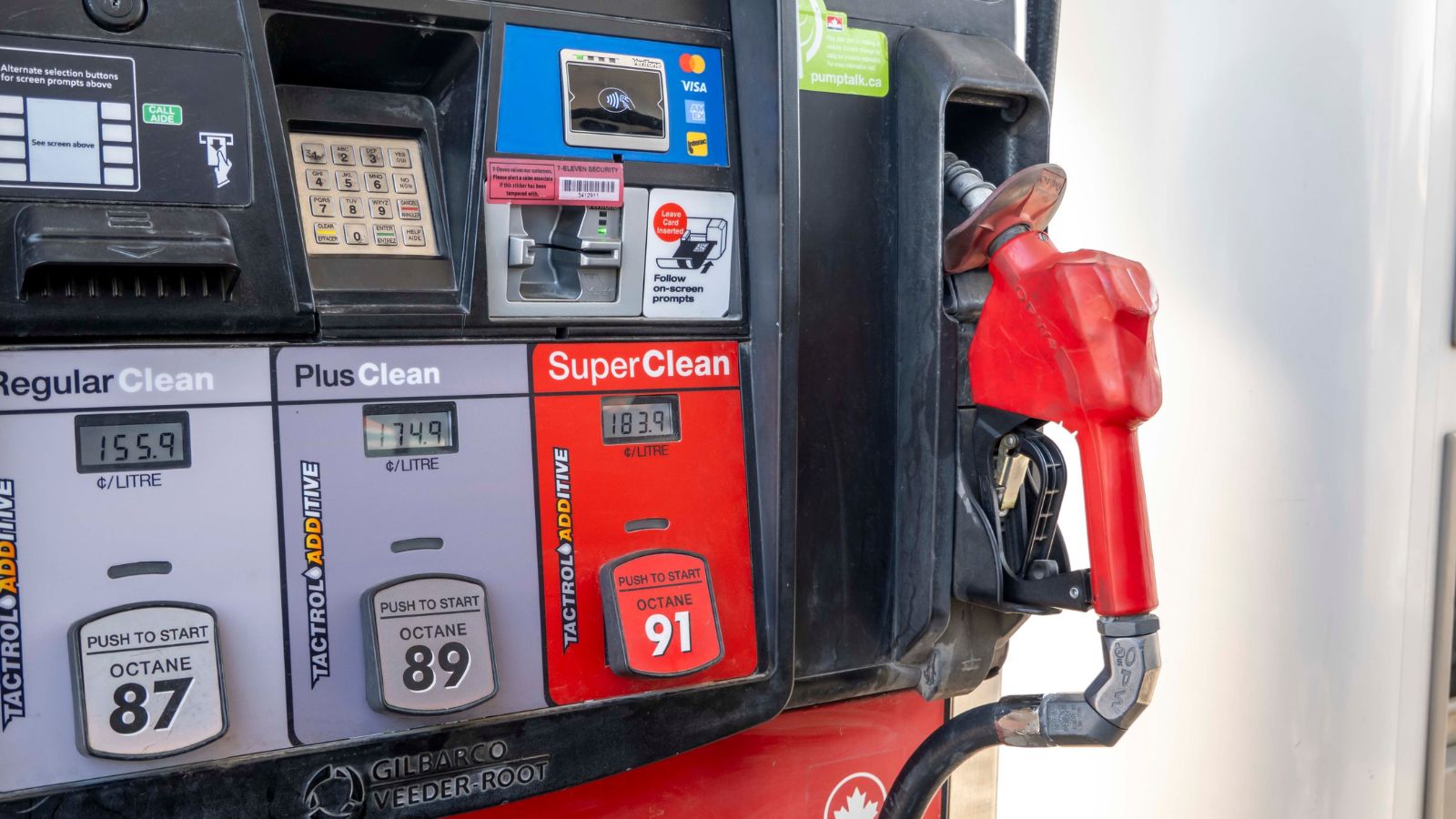
The price displayed above a fuel pump has once again become a shorthand for a much bigger global problem. South Korea is extending temporary fuel-tax reductions through November as instability in the Middle East keeps crude oil expensive and governments search for ways to soften the impact on households and businesses.
The decision has particular resonance in Canada, where gasoline costs have climbed sharply from a year ago and Ottawa has already extended its own temporary federal fuel-excise-tax suspension. With crude benchmarks hovering around US$100 a barrel and fuel costs feeding into transportation and inflation, both countries are confronting a familiar dilemma: governments can reduce the tax portion of a litre of fuel, but they have far less control over the global oil market setting much of its underlying cost.
South Korea Extends Relief Through November
South Korea will keep its existing fuel-tax reductions in place through November 30, extending a measure that had been scheduled to expire at the end of September. The government is maintaining a 15% reduction on gasoline taxes and deeper 25% reductions on diesel and butane. Officials said the decision reflects concern about the public’s fuel-cost burden and the possibility of renewed volatility in international oil markets as Middle East tensions continue.
The extension is notable because Seoul is not treating the current surge as a short-lived price spike that can simply be ignored. Earlier extensions had already carried the cuts through July and then September. Keeping them for another two months effectively acknowledges that global energy uncertainty remains capable of reaching household budgets quickly. For a commuter filling a car or a small business operating delivery vehicles, the policy does not eliminate high fuel prices. It instead reduces one component of the final pump price while global markets remain unsettled.
Diesel Gets More Protection Because the Cost Travels Through the Economy
The difference between South Korea’s 15% gasoline-tax reduction and its 25% cut for diesel is deliberate. The finance ministry has emphasized diesel’s importance to logistics and industrial activity, while butane is commonly used by small commercial trucks. That makes fuel policy about more than the amount paid by motorists. When trucks, delivery fleets and industrial vehicles become more expensive to operate, those costs can eventually appear in freight bills, shop prices and business margins.
Seoul is also layering temporary measures around the major Chuseok travel period. Authorities said 226 gas stations on state-financed expressways would offer fuel prices 100 won per litre lower from September 24 through September 27, while daytime electric-vehicle charging discounts were also planned. The holiday measures are separate from the national fuel-tax reduction, but they illustrate the same approach: reduce highly visible transportation expenses at moments when millions of households are especially likely to feel them.
Oil Above US$100 Keeps Governments Under Pressure
Crude prices remain the force that neither Seoul nor Ottawa can set by decree. Brent crude was trading around US$104 a barrel during September 18 trading, while West Texas Intermediate was roughly US$102 to US$103. Prices had retreated from recent highs, but both benchmarks remained around the psychologically important US$100 level after renewed conflict and infrastructure disruptions created fresh uncertainty over global supply.
Recent pressure has centred on the Middle East. Damage to Saudi Arabia’s East-West Pipeline, threats to tanker movements and disruptions involving key regional shipping routes have forced traders to continually reassess how much crude can safely reach world markets. Saudi Arabia has attempted to offset some disruption by arranging additional shipments through Oman, helping prices ease from their peaks. Yet the episode demonstrates why pump prices can change faster than household budgets can adjust. Even an oil-producing country such as Canada participates in a globally priced market for crude and refined products, leaving motorists exposed to international shocks.
Canada Has Already Turned to Its Own Fuel-Tax Holiday
South Korea’s announcement comes only days after Canada reinforced a remarkably similar affordability strategy. Ottawa announced that the temporary suspension of the federal fuel excise tax would continue through January 31, 2027. The tax had initially been reduced to zero on April 20, 2026, removing the normal 10-cent-per-litre federal excise levy on gasoline and four-cent levy on diesel during the relief period.
The government’s current schedule would restore only half of the normal tax from February 1 through March 31, 2027, before returning to the full statutory rates on April 1. Ottawa estimates the extension itself will have an additional fiscal impact of approximately $2.9 billion and bring total estimated federal fuel-tax relief in 2026-27 to $5.3 billion. Canada had already eliminated the federal consumer carbon price in April 2025, meaning the latest debate is no longer simply about carbon pricing. It increasingly concerns how much conventional fuel taxation governments should temporarily surrender when crude prices spike.
Canadian Drivers Are Paying Far More Than a Year Ago
The pressure behind Ottawa’s response is visible in current pump data. CAA’s daily national average put regular gasoline at 183.4 cents per litre early on September 18. That was slightly below the previous day’s 183.9 cents, but substantially above the 176.6-cent average recorded one week earlier and the 167.9-cent level a month earlier. A year ago, the same national measure stood at only 137 cents per litre.
For an ordinary 50-litre fill, today’s national average works out to roughly $91.70. At last year’s average, the same volume would have cost about $68.50 — a difference of more than $23 on a single visit to the station. That kind of increase explains why fuel prices attract outsized attention even when other categories of household spending are growing more slowly. Fuel is purchased repeatedly, its price is displayed in giant numbers beside major roads, and many commuters cannot immediately reduce the kilometres they travel.
A National Average Hides Canada’s Complicated Fuel Market
Canadian motorists do not all experience an oil shock in the same way. Pump prices vary because crude costs are only one part of the final number. Refining margins, transportation expenses, retail competition, seasonal fuel requirements, local supply conditions, exchange rates and provincial or regional taxes can all widen the difference between what drivers pay in separate parts of the country. CAA identifies crude supply, refining capacity, geopolitical conflict and the value of the U.S. dollar among the variables affecting Canadian gasoline prices.
The tax structure is equally layered. Although the federal excise levy is temporarily suspended, GST or HST treatment and provincial fuel taxes remain relevant, while some metropolitan areas have additional transportation-related levies. That helps explain why a drop in crude does not necessarily produce identical overnight savings nationwide. Canada can therefore have a national debate about fuel affordability while households see very different numbers on their local signs. The global shock is shared, but the final retail price remains distinctly regional.
Gasoline Is Already Leaving a Mark on Canadian Inflation
Statistics Canada’s August inflation report shows why policymakers are watching fuel so closely. The Consumer Price Index was 3.0% higher than a year earlier, matching July’s annual inflation rate. Gasoline prices, however, were 22.8% above August 2025 levels. The increase was slightly slower than July’s 25.7% rise, but it remained large enough that Statistics Canada specifically identified elevated gasoline prices as an important influence on the inflation picture.
The contrast becomes clearer when gasoline is removed. Statistics Canada reported that CPI excluding gasoline increased 2.4% year over year in August, compared with the 3.0% headline figure. Transportation prices overall were up 7.5%. That does not mean every additional dollar spent on fuel translates directly into broader inflation, but energy costs have unusually wide reach. A higher gasoline bill affects commuters immediately, while more expensive diesel and jet fuel can work through trucking, agriculture, aviation and tourism, spreading the consequences beyond households that personally visit filling stations.
Diesel May Matter Even More Than Regular Gasoline
Regular gasoline receives most of the public attention because it is the price most motorists see every week, but diesel can produce a wider economic ripple. Trucks move food and consumer goods, farms rely on diesel-powered machinery, and construction and industrial operations consume substantial amounts of fuel. When diesel becomes substantially more expensive, companies must either absorb those costs, improve efficiency or attempt to recover some of them through higher prices.
That explains why South Korea is maintaining a larger tax reduction for diesel than gasoline and why Canadian energy analysts have focused on diesel during the latest oil disruption. The timing is particularly sensitive for agriculture because September overlaps with harvest activity in many regions. A family can sometimes postpone a discretionary drive, but a farmer cannot indefinitely postpone harvesting a crop and a freight company cannot simply stop transporting groceries. The broader fuel-cost debate therefore extends beyond motorists and into the cost structure of the economy itself.
Tax Cuts Can Reach the Pump, but the Pass-Through Is Not Guaranteed
Temporary fuel-tax cuts have an intuitive appeal: remove a fixed tax and the retail price should fall by roughly the same amount. Canada’s government said gasoline prices declined by 11 cents per litre on the first day of the federal excise-tax suspension in April, when the 10-cent gasoline levy was removed. Academic evidence, however, suggests the amount ultimately reaching consumers can depend on market competition, supply constraints and how fuel retailers respond.
Recent economic research examining earlier fuel-tax holidays has found meaningful but sometimes incomplete pass-through. Yale’s Budget Lab used an 80% consumer pass-through rate as its central estimate when studying a U.S. federal gas-tax proposal, while a 2026 study of Italy’s temporary fuel-tax reduction found pass-through of roughly 65% at less competitive stations and around 80% where competition was stronger. The evidence suggests tax relief can reduce prices, but it should not be assumed that every cent of forgone government revenue will always appear as an identical cent of consumer savings.
The Bigger Debate Is About What Temporary Relief Can Accomplish
Canada and South Korea are demonstrating both the usefulness and the limits of fuel-tax policy. Governments can change domestic taxes quickly, producing relief without waiting for new vehicles, infrastructure or energy projects. Canada’s current suspension removes as much as 10 cents per litre in federal gasoline excise tax, while South Korea is maintaining sizeable percentage reductions. For households facing repeated fill-ups, those reductions are tangible even if they do not reverse the entire rise in fuel costs.
The harder question begins when temporary measures last through repeated oil shocks. Canada’s planned $5.3 billion in fuel-tax relief represents revenue the government will not collect, while global crude prices can still overwhelm a fixed tax saving. Seoul is simultaneously emphasizing diversified energy supplies and monitoring oil availability, underscoring the distinction between cushioning a price shock and eliminating its cause. As long as crude remains near triple-digit levels, Canada’s pump-cost discussion is therefore likely to remain centred on that trade-off: immediate consumer relief versus the fiscal and structural limits of tax cuts.