

























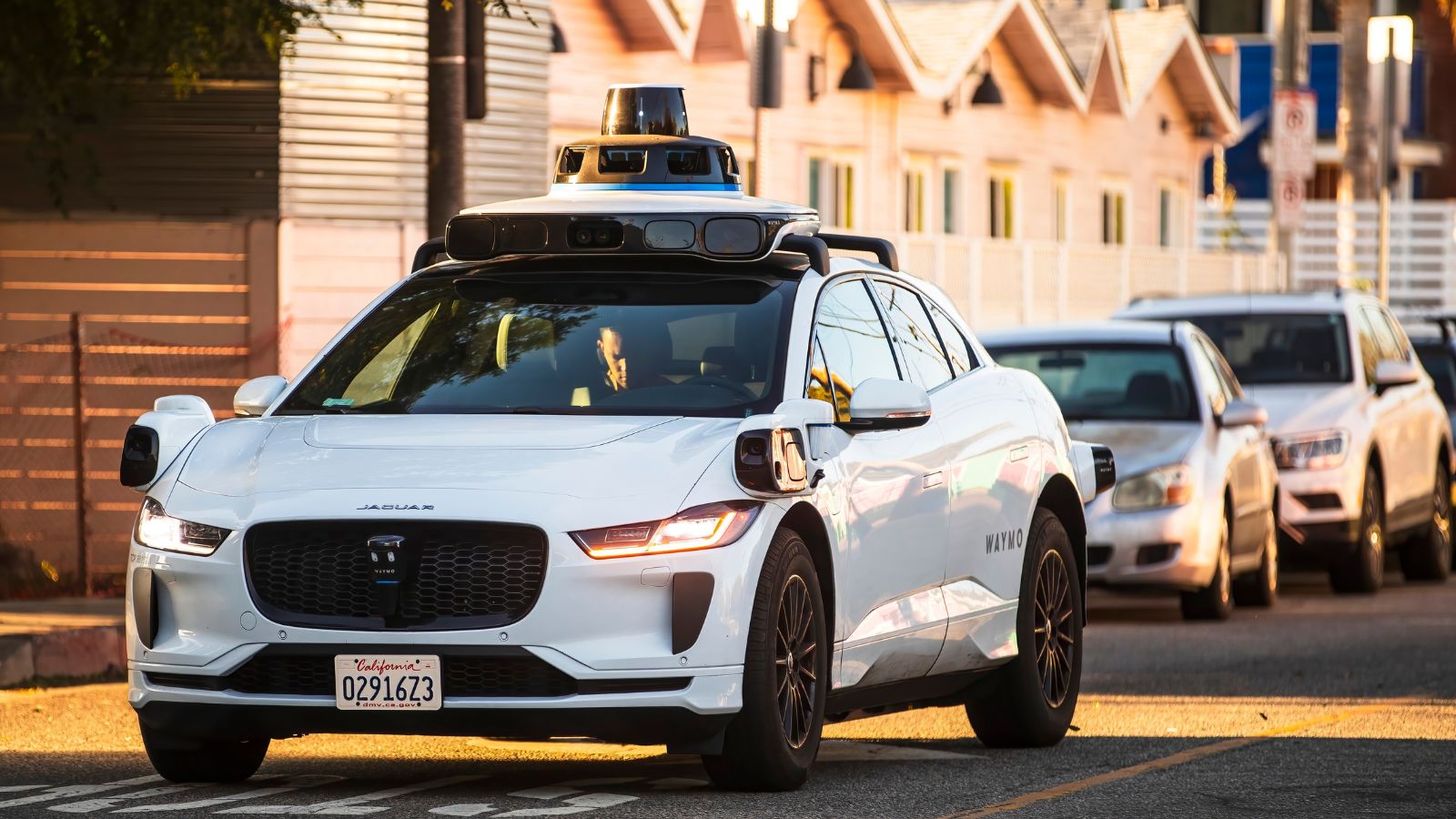
Singapore has given Waymo something increasingly valuable in the global robotaxi race: a staged route toward commercial service with a target date attached. Alphabet’s autonomous-driving company is preparing to bring vehicles to the city-state within months, conduct a readiness phase in 2027 and, subject to regulatory approval, begin fully autonomous ride-hailing in 2028.
The contrast with Canada is increasingly noticeable. Canada does not lack autonomous-vehicle rules, research or testing programs. Instead, responsibilities are divided among Ottawa, provinces and municipalities, while key national automated-driving standards are still being developed. Ontario permits sophisticated driverless testing, but other provinces take different approaches and a clear route from testing to large-scale commercial robotaxi service remains difficult to identify. As autonomous mobility moves from demonstrations toward real passenger businesses overseas, that distinction is becoming more important.
A Phased Singapore Rollout, Not a Blank Cheque
Waymo’s Singapore announcement is significant because it lays out an unusually concrete sequence rather than simply promising future expansion. An initial fleet of all-electric Jaguar I-PACE vehicles is expected to arrive in the coming months while the company establishes local operations. During 2027, trained specialists are expected to drive the vehicles manually while Waymo adapts its autonomous-driving system to Singaporean roads, including local geometry, traffic patterns and monsoon conditions. Commercial, fully autonomous rides through the Waymo app are then targeted for 2028.
That timetable should not be mistaken for unconditional approval. Singapore’s Land Transport Authority has made clear that deployments must meet its safety and regulatory requirements. Transport Minister Jeffrey Siow said preparations will initially focus on western Singapore, beginning around Labrador and HarbourFront. That creates a defined geographic starting point where authorities and Waymo can examine commuting, weekend travel and service to industrial areas before expanding. The structure resembles a regulatory staircase: arrive, learn the roads, demonstrate readiness and only then move toward paying passengers without a driver behind the wheel.
Singapore Has Spent Years Building the Test Bed
Waymo is entering a country that has already spent more than a decade learning how autonomous vehicles behave outside laboratories. Singapore’s Land Transport Authority says work on integrating autonomous vehicles into its transport system dates to 2014, while the one-north district became an on-road autonomous-vehicle test bed in 2016. More recently, the focus has shifted from experimental technology toward everyday transportation. Autonomous shuttle services began operating in Punggol in 2025, with public rides opening in April 2026.
The public response has given regulators useful real-world information. By July 12, more than 11,500 unique riders had used Punggol’s autonomous shuttle services, according to LTA. In a post-ride poll of roughly 900 respondents, 99% said they felt safe and would recommend the experience. Singapore has also been preparing to expand beyond fixed routes toward more flexible point-to-point service. The lesson is less about moving quickly than about building regulatory familiarity. Waymo’s 2028 target follows years of progressively more complex deployments, public exposure and safety assessments rather than an abrupt decision to put driverless taxis throughout the city.
Waymo Brings Scale — and a Safety Case Regulators Can Measure
Singapore is also dealing with a company that now has a large body of real-world autonomous-driving data. Waymo said with its Singapore announcement that it has completed more than 20 million fully autonomous passenger rides and accumulated more than 300 million fully autonomous kilometres. The company’s June 2026 safety update covered more than 220 million driverless miles through March and reported substantially fewer serious-injury and injury crashes than human-driver benchmarks in the U.S. locations it studied.
Independent research adds useful context without eliminating the need for caution. In July, the Insurance Institute for Highway Safety reported that Waymo vehicles in San Francisco, Phoenix, Los Angeles and Austin had a 68% lower rate of police-reportable crashes per mile than comparable human-driven vehicles. Earlier peer-reviewed work using Swiss Re insurance data also found lower liability-claim frequencies for Waymo operations. Those findings do not prove that the same performance will automatically transfer to Singapore or Canada. Different road layouts, weather, driving cultures and operating areas matter. What they do provide regulators is an expanding evidence base that can be compared against measurable safety benchmarks instead of relying only on demonstrations or company promises.
Canada’s Rules Are Split Across Three Levels of Government
Canada’s biggest regulatory complication is structural. Transport Canada regulates the safety of new and imported vehicles and equipment under the Motor Vehicle Safety Act. Provinces and territories, however, decide how vehicles may operate on public roads, including rules involving licensing, registration, insurance, liability and autonomous-vehicle trials. Municipalities can add another layer because they may regulate taxis, ride-hailing operations, parking, local streets and transportation infrastructure.
That division is manageable for ordinary vehicles because decades of established rules already exist. A Level 4 robotaxi is different. It can raise questions about who is legally responsible when nobody occupies the driver’s seat, how a remote operator interacts with police or emergency crews, where driverless taxis can pick up passengers and what happens when the system reaches the limits of its operating environment. Ottawa is working toward greater consistency. Transport Canada consulted Canadians in 2026 on a proposed United Nations Global Technical Regulation for automated driving systems, and the department says it intends to undertake further pre-regulatory work by June 2027. For now, however, operational approval remains largely jurisdiction-specific.
Ontario Allows Driverless Testing, But Not an Open Robotaxi Market
Ontario demonstrates both how far Canadian regulation has advanced and where the gap remains. The province started its Automated Vehicle Pilot Program in 2016 and expanded it in 2019 to permit Level 4 and Level 5 vehicles to be tested without a driver under specified conditions. Participants seeking driverless testing must obtain provincial approval, describe the environment in which the vehicle is designed to operate, maintain monitoring and safe-stop capabilities, accept liability and meet reporting requirements.
The crucial word is still testing. Ontario’s regulation states that automated vehicles permitted under the program are being operated for testing purposes, and the passenger-vehicle pilot is currently scheduled to expire on October 13, 2027. Insurance requirements are substantial: participating vehicles generally require at least $5 million in liability coverage, rising to $8 million for vehicles seating eight or more passengers. Ontario has gone even further with automated commercial trucks, launching a separate 10-year program in 2025 that includes a driverless testing stream. Those are meaningful regulatory steps, but they do not yet amount to a general authorization for a company such as Waymo to open an unrestricted commercial robotaxi network to paying customers.
B.C. and Quebec Show How Different the Provincial Rules Can Be
The national picture becomes more complicated outside Ontario. British Columbia’s Motor Vehicle Act prohibits the operation of Level 3, Level 4 and Level 5 automated vehicles on highways unless regulations provide otherwise. The legislation gives the provincial government authority to create future rules covering permits, insurance, safety measures, users and other requirements, but the starting legal position is restrictive rather than one of broad commercial permission.
Quebec uses another model. Provincial guidance updated in July 2026 says autonomous vehicles at Levels 3 through 5 are generally prohibited from roads and other public-access areas. Level 3 vehicles can be allowed when Transport Canada has authorized their sale in Canada, while Level 3-or-higher vehicles can also operate as part of an authorized Quebec government pilot project. Developers wishing to experiment on public roads need authorization and must fit within a provincial pilot. These differences do not mean Canadian jurisdictions are ignoring autonomous driving. They show why a national robotaxi rollout could require separate legal and operational work from province to province, rather than one authorization unlocking several major Canadian cities at once.
Canadian Weather Raises the Technical Bar as Well as the Legal One
Canada also poses operating conditions that make safety validation unusually important. Transport Canada’s own automated-driving safety assessment specifically asks manufacturers how their systems deal with snow, ice, freezing rain, low temperatures, accumulation on sensors and changing road features. It also highlights situations such as lane markings being hidden beneath snow and seasonal changes altering what perception systems see. Those are not hypothetical concerns for a robotaxi expected to provide dependable service through a Toronto, Montreal or Ottawa winter.
Academic research supports the caution. Recent studies have found that snowfall, fog and other precipitation can interfere with lidar through attenuation, backscatter, false detections and sensor contamination. Modern autonomous vehicles mitigate those problems through sensor fusion, redundancy, cleaning systems, radar and sophisticated software, but adverse weather remains an important challenge when defining a vehicle’s safe operating domain. Singapore has its own difficult conditions—especially heavy tropical rain—and Waymo specifically plans to adapt its system to monsoon weather. Canada would similarly need evidence that a commercial system can reliably recognize when winter conditions remain within its capabilities and when the safest response is to stop or suspend service.
The Real Gap Is a Commercial Deployment Path
Canada therefore should not be described as having no autonomous-vehicle policy. It has federal safety oversight, detailed guidance, provincial pilots, cybersecurity work, research programs and increasingly sophisticated testing rules. What is less developed is the kind of visible bridge Singapore is now constructing between experimentation and everyday commercial robotaxi service. Transport Canada itself says it is advancing a coordinated national automated-driving framework and expects additional standards and pre-regulatory consultations as that work continues.
There is also clear commercial interest. Waymo registered federally to communicate with Canadian officials about autonomous-driving deployment and potential rules covering operational approvals, commercial operations, goods delivery and ride-hailing. Its representatives have previously said the company is interested in bringing fully autonomous ride-hailing to Canada when legal frameworks allow it. Turning that interest into service would likely require coordination among federal vehicle-safety rules, provincial operating permissions, insurance systems and municipal ride-hailing requirements. Singapore’s advantage is not that every issue has already disappeared. It is that regulators, operators and the public can now see the intended sequence leading toward 2028. Canada is still assembling several pieces of that sequence.