















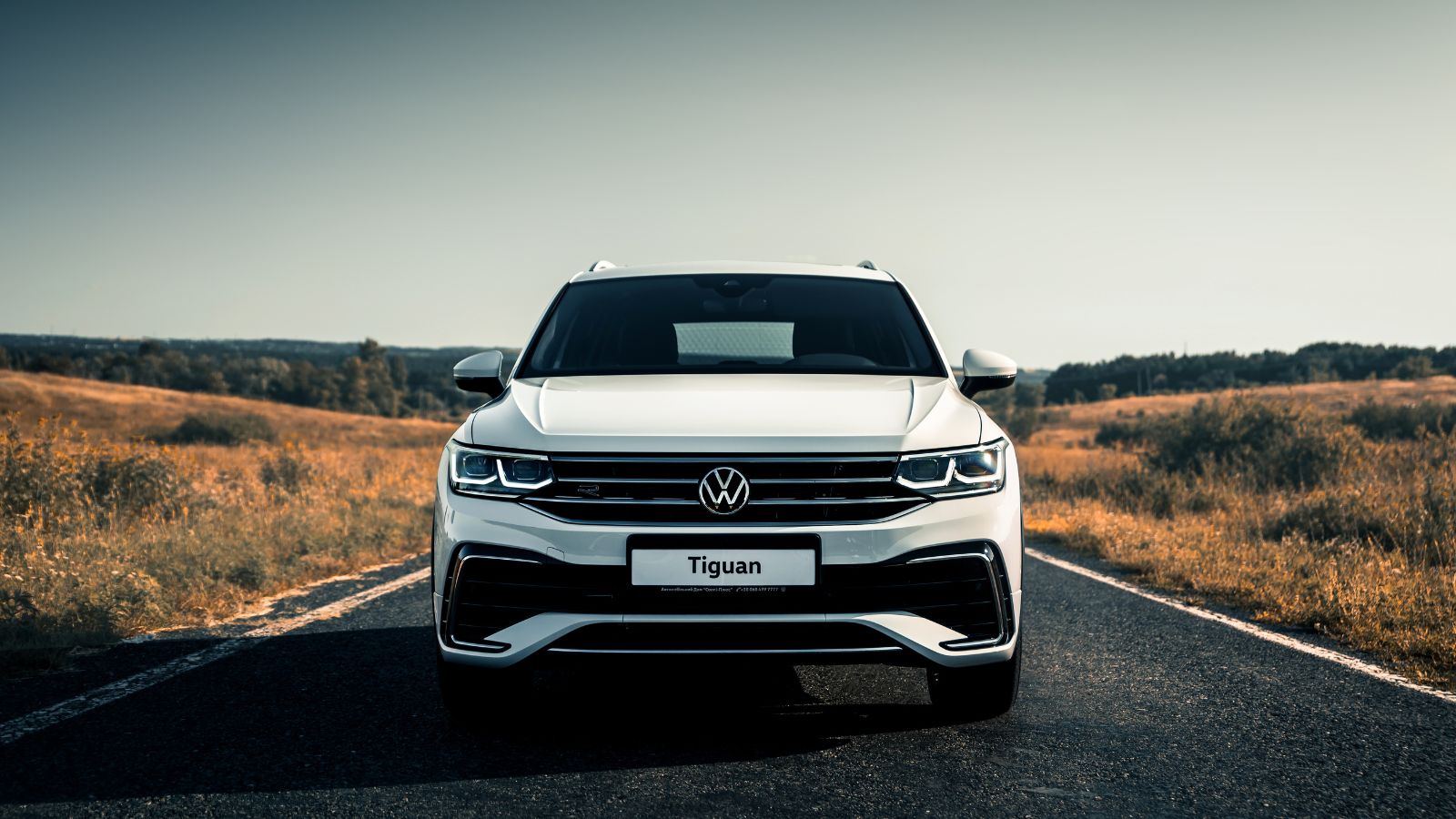
Volkswagen has made one of its clearest moves yet to simplify the identity of its electric lineup. The company has confirmed that the new ID. Tiguan will take over the role currently held by the ID.4 and ID.5, with the electric SUV scheduled to reach European markets in early 2027 after a world premiere in early October 2026. The change brings one of Volkswagen’s best-known SUV names into the ID. family instead of relying on a numbered EV badge. For Canada, however, the announcement stops short of a launch commitment. Volkswagen has confirmed a North American future for the model, but Canadian timing, pricing, trims, range figures and production details remain unannounced. That leaves the ID. Tiguan as a major replacement with a clear global mission but an incomplete Canadian roadmap.
Volkswagen Has Finally Put a Name on the ID.4’s Successor
Volkswagen’s September 28 announcement removes one of the biggest uncertainties surrounding the future of its midsize electric SUV. The automaker says the ID. Tiguan will succeed both the ID.4 and the coupe-shaped ID.5, and that the new model will begin reaching markets in early 2027. Before sales begin, Volkswagen plans to stage the world premiere in early October, while near-production prototypes continue to run under camouflage. That wording matters because this is no longer a rumoured name change attached to a distant product plan. Volkswagen is now publicly positioning ID. Tiguan as the next generation of its core electric SUV offering, giving the vehicle a defined role in the lineup even though complete technical specifications have not yet been released.
The transition also clarifies that the electric Tiguan will not eliminate the conventional Tiguan. Volkswagen says the battery-electric ID. Tiguan will be offered alongside Tiguan models using combustion and hybrid powertrains, creating vehicles that share a familiar product name while serving different drivetrain preferences. That approach is important for shoppers who might otherwise assume the electric version is replacing the gasoline model outright. Instead, Volkswagen is building a parallel family around the Tiguan badge. In practical terms, the company is treating “Tiguan” as the vehicle identity and “ID.” as the marker for the electric version. It is a cleaner message than asking customers to understand how a numbered ID.4 relates to one of Volkswagen’s best-known gasoline SUVs.
The Tiguan Name Is Becoming Part of Volkswagen’s EV Language
The naming shift is part of a broader Volkswagen strategy rather than a one-off decision. The company has already introduced the ID. Polo and ID. Cross names, and it describes ID. Tiguan as the third major established model name being carried into its electric era. Volkswagen says familiar names are intended to give customers clearer orientation within the range. That represents a significant departure from the first generation of ID. vehicles, where models such as the ID.3, ID.4 and ID.5 were deliberately separated from Volkswagen’s traditional badges. The newer approach suggests the company wants electric vehicles to feel less like members of a distinct sub-brand and more like direct extensions of recognizable products as battery-powered models become increasingly integrated into its mainstream lineup.
Few Volkswagen names carry more weight than Tiguan. In its ID. Tiguan announcement, the company said more than 8.3 million Tiguans had been produced and described the SUV as the current worldwide bestseller for both the Volkswagen brand and the broader Volkswagen Group. Volkswagen also said deliveries of the Tiguan and its closely related Tayron exceeded one million vehicles in the previous year. Those figures help explain why the badge is attractive for an EV that needs immediate recognition. A customer who has never followed Volkswagen’s ID. naming system may already understand roughly where a Tiguan belongs in the range. Borrowing that recognition could make the next electric SUV easier to place before a showroom conversation even begins.
This Is More Than an ID.4 With a Different Badge
Volkswagen is presenting the ID. Tiguan as more than a badge swap. The company calls it a new-generation electric SUV with a completely new design and says the vehicle has the visual presence of something from the next segment up. Official images released so far show a heavily camouflaged near-production vehicle, meaning much of the final bodywork is still intentionally concealed. Volkswagen has also emphasized generous interior space, intuitive operation and new technologies, although those descriptions remain broad until the formal reveal. The important point is that the automaker is framing the vehicle as a substantive successor rather than simply placing different lettering on the back of an existing ID.4. The complete exterior, cabin and technology package should become considerably clearer when Volkswagen stages the planned October premiere.
What Volkswagen has not published is equally important. The September 28 global announcement does not provide final battery capacities, official driving range, motor outputs, charging speeds, dimensions or market-specific trim structures for the ID. Tiguan. That creates a sharp dividing line between confirmed information and the growing number of estimates surrounding the vehicle. Reports discussing possible platform changes or substantial range improvements should not be treated as Canadian specifications until Volkswagen releases them for this market. For Canadian drivers, cold-weather efficiency, available all-wheel drive and fast-charging performance may ultimately matter as much as the styling. Those details will determine whether the ID. Tiguan feels like a meaningful generational advancement over the ID.4 rather than simply a more recognizable name attached to Volkswagen’s next electric crossover.
The ID.4 and ID.5 Leave Behind a Large Global Footprint
The ID.4 and ID.5 leave behind a substantial global footprint. Volkswagen says the two related electric SUVs have accumulated more than 950,000 deliveries since 2021, making them an important part of the company’s battery-electric expansion. The ID.4 served as the more conventionally shaped SUV, while the ID.5 was its sleeker fastback counterpart in markets where both were available. Combining their roles under the ID. Tiguan name therefore represents more than an ordinary model-year change. Volkswagen is effectively consolidating two established electric nameplates into one familiar SUV identity. That could simplify marketing and showroom positioning, particularly in regions where customers previously had to distinguish between two closely related electric crossovers whose most obvious difference was their roofline and rear styling.
The consolidation also illustrates how quickly Volkswagen’s EV product strategy continues to evolve. As recently as March 2026, the company was announcing digital upgrades for the ID.4 and ID.5, including a newer software generation and additional technology features. Six months later, Volkswagen is publicly defining ID. Tiguan as their successor. That does not make existing ID.4 and ID.5 vehicles obsolete. Hundreds of thousands are already on roads around the world and will continue to require servicing, software support, parts and charging access for years. From a product-planning perspective, however, the centre of gravity is moving. Existing owners are seeing a familiar pattern in a rapidly changing EV market: the vehicle category remains important even while the branding and technology surrounding it can change considerably between generations.
North America Is Confirmed, but the Calendar Is Still Open
North America is part of Volkswagen’s plan, but the calendar is not yet settled. Volkswagen told Edmunds that the ID. Tiguan is planned as the ID.4’s successor in the North American market and that regional timing and specifications will be provided after the European introduction in early 2027. Car and Driver similarly reported that the electric Tiguan is expected to eventually reach the United States after its European debut. That is considerably more concrete than the uncertainty surrounding the ID.4 replacement earlier in 2026, when Volkswagen had ended American production of the existing vehicle without attaching a firm arrival date to a successor. Volkswagen is now explicitly keeping North America in the ID. Tiguan plan, even though it has not yet published a specific sales calendar for the region.
For Canada, the distinction between a “North American” plan and a Canadian launch announcement matters. Vehicle timing, trims, equipment and pricing can differ between Canada and the United States, and Volkswagen’s current statement does not provide a Canadian on-sale date. It also does not identify where vehicles intended for North America will ultimately be produced or whether Canadian deliveries would begin at the same time as U.S. sales. Until Volkswagen Canada publishes those details, the most accurate description is that the ID. Tiguan is planned for the broader North American region while its Canadian schedule remains unconfirmed. The next significant information could emerge during the October world premiere, but market-specific details may also be held until Volkswagen is further into its 2027 rollout.
The Current Canadian ID.4 Sets the Benchmark
The outgoing ID.4 provides a useful benchmark for what Canadian customers already recognize from Volkswagen’s electric SUV. Volkswagen Canada’s 2025 buyer’s guide lists three primary performance configurations: a 201-horsepower Base model, a 282-horsepower rear-wheel-drive Pro and a 335-horsepower Pro AWD with two motors. The same guide lists Natural Resources Canada-estimated driving ranges of 332 kilometres for the Base, 468 kilometres for the Pro and 423 kilometres for the Pro AWD. Gross battery capacity is listed at 62 kWh for the Base and 82 kWh for the Pro versions. Those figures create a meaningful standard for its eventual successor. A new Volkswagen electric SUV will inevitably be measured against the range, performance and all-weather capability that Canadian ID.4 customers can already purchase.
Charging performance creates another benchmark. Volkswagen Canada lists maximum DC charging acceptance of 140 kW for the 2025 ID.4 Base and 175 kW for the Pro and Pro AWD, while an 11-kW AC onboard charger is listed across the range. The Canadian buyer’s guide also identifies an available heat pump, a feature with particular relevance in colder regions where cabin heating and battery temperature can influence winter energy consumption. None of those specifications should automatically be carried over to the ID. Tiguan. Their value is in showing where Volkswagen’s current Canadian EV offering stands. If the replacement is to feel meaningfully more advanced, buyers will be watching for improvements in charging performance, cold-weather efficiency, highway range and the balance between rear-wheel-drive and all-wheel-drive variants.
The ID.5 Part of the Story Is Mostly European for Canada
The claim that ID. Tiguan replaces both the ID.4 and ID.5 needs an important Canadian footnote. The ID.5 was never positioned as a mainstream North American offering. When Volkswagen unveiled the coupe-like electric SUV in 2021, Canadian automotive coverage reported that the company did not plan to offer it in North America. Volkswagen Canada’s current electric-vehicle information instead focuses on the ID.4 and ID. Buzz, not the ID.5. Canadians therefore are not watching two familiar showroom models disappear at the same time. For this market, the practical product transition is principally from the ID.4 toward a future ID. Tiguan. The ID.5 side of Volkswagen’s global consolidation is more relevant in Europe and other markets where customers could choose between both electric SUV body styles.
That difference may actually make Volkswagen’s new naming strategy easier to understand in Canada. Volkswagen describes the ID.4 as the model that began its Canadian electric-crossover push, while the conventional Tiguan has long given the brand an established SUV name. An ID. Tiguan would connect those two strands of the lineup instead of asking customers to remember that the electric ID.4 and gasoline or hybrid Tiguan occupy related areas of the market under entirely different names. The shared badge could create some confusion of its own, however, particularly when used-car listings and dealership inventories contain multiple powertrains. Volkswagen will need clear distinctions in trim naming, pricing and marketing so that “ID. Tiguan” immediately communicates an electric vehicle rather than becoming another variation shoppers must decode.
U.S. ID.4 Production Has Already Ended
The North American transition is unfolding against an unusual production backdrop. Volkswagen Group’s first-quarter 2026 report says production of the ID.4 at its Chattanooga, Tennessee, factory was discontinued in mid-April as the company refocused the facility on higher-volume products. Volkswagen reported approximately €0.5 billion in impairment losses and provisions connected with that change in production strategy. Reuters reported at the time that Volkswagen intended to continue selling existing U.S. ID.4 inventory and expected supplies to stretch into 2027. The decision effectively separated the end of local ID.4 manufacturing from the eventual introduction of its successor, leaving a transition period during which the automaker could rely heavily on vehicles already built before its next electric SUV becomes available to North American customers.
What that means for Canada is still not fully defined. Volkswagen has not announced a Canadian production source for the ID. Tiguan, and its latest North American statement does not say whether future vehicles would be imported or eventually assembled on this continent. Production origin can affect logistics, vehicle costs and exposure to changing trade rules, making it more than a technical detail about where a VIN originates. Chattanooga’s shift also demonstrates how regional market conditions can influence manufacturing decisions even while Volkswagen continues developing electric vehicles globally. For Canadian shoppers, the clearest conclusion is that ID. Tiguan is entering a North American strategy that has already changed substantially during 2026. The name and eventual regional role are becoming clearer, while the industrial plan supporting Canadian deliveries remains unanswered.
Canada’s ZEV Market Is Showing Signs of Recovery
Canada’s electrified-vehicle market is also moving again after an uneven period. Statistics Canada reported that 18,920 new zero-emission vehicles were sold in July 2026, representing a 36 percent increase from July 2025. ZEVs accounted for 10.7 percent of all new-vehicle sales that month, compared with 7.7 percent one year earlier. Registration data show a similar rebound: 58,811 new ZEVs were registered during the second quarter of 2026, up from 43,113 in the first quarter and 46,413 in the second quarter of 2025. Statistics Canada’s ZEV definition in these datasets includes both battery-electric vehicles and plug-in hybrids, meaning the figures are broader than pure EV sales. Even with that distinction, the numbers show electrified-vehicle activity strengthening again during 2026.
That timing could give the ID. Tiguan a useful opening if Volkswagen brings it to Canada without a long delay. Volkswagen already has recognition through the gasoline and hybrid Tiguan as well as the electric ID.4, while Statistics Canada’s latest figures show zero-emission vehicle volumes rising again. A replacement arriving during that recovery would enter a more developed Canadian EV market than the ID.4 faced at launch, but it would also confront a broader field of electric crossovers. Familiar branding can make the model easier to understand, yet it cannot answer the questions that shape a purchase. Range, charging speed, winter efficiency, all-wheel-drive availability, equipment and price will decide whether the ID. Tiguan feels like progress rather than simply a new badge.
Charging, Pricing and Winter Hardware Are the Big Canadian Questions
Charging compatibility will be one of the most important Canadian details to watch. The current Canadian ID.4 uses a CCS charging interface, while Volkswagen Canada now offers a NACS DC fast-charging adapter for compatible ID.4 and ID. Buzz models. The adapter gives eligible vehicles access to compatible Tesla NACS Partner Superchargers across Canada and the United States, although Volkswagen notes that it is intended for DC fast charging and not NACS Level 1 or Level 2 charging. That broadens the fast-charging options available to current owners, but Volkswagen has not said what connector arrangement a future Canadian ID. Tiguan would receive. Whether it arrives with native NACS hardware, continues with CCS plus an adapter or follows another transition strategy would directly affect everyday charging convenience.
The broader Canadian specification sheet remains largely blank as of September 28, 2026. Volkswagen has not announced Canadian pricing, trim levels, official driving range, battery choices, motor outputs, towing capability, heat-pump availability, charging speeds or a confirmed on-sale date for the ID. Tiguan. Those details will ultimately matter considerably more than the badge change once purchase decisions begin. The most useful comparison will be against the outgoing ID.4’s Canadian specifications, including its maximum listed 468-kilometre range, available 335-horsepower all-wheel-drive powertrain and 175-kW peak DC charging capability, rather than against estimates for European-market vehicles. Until Volkswagen Canada provides a dedicated product announcement, ID. Tiguan is best understood as a confirmed global successor and planned North American model whose Canadian roadmap remains unfinished.