





















• About
  • Contact
AutoIgloo
  • News & Trends
    Debit Tap Processing Fees Rise 75% for Some Canadian Auto-Parts and Home-Supply Merchants

    Debit Tap Processing Fees Rise 75% for Some Canadian Auto-Parts and Home-Supply Merchants

    Top U.S. Senate Democrat Targets Trump’s Canada Tariffs, but Election Gains Offer No Guaranteed Relief for Auto Makers

    Top U.S. Senate Democrat Targets Trump’s Canada Tariffs, but Election Gains Offer No Guaranteed Relief for Auto Makers

    Ontario EV Owners Face a 10-to-1 Electricity Price Gap Under New November Rates

    Ontario EV Owners Face a 10-to-1 Electricity Price Gap Under New November Rates

    Nova Scotia CAA Auto Insurance Renewals Bring Credit-Score Discounts and a 30% Coverage Increase

    Nova Scotia CAA Auto Insurance Renewals Bring Credit-Score Discounts and a 30% Coverage Increase

    GM’s Chinese Joint-Venture Sales Collapse 51% as SAIC’s Own Brand Jumps 33%

    GM’s Chinese Joint-Venture Sales Collapse 51% as SAIC’s Own Brand Jumps 33%

    Toronto Battery Maker Lands $26-Million Deal to Convert Diesel Trucks to Electric Across Canada and U.S.

    Teamsters Say Some Canadian Trucking Firms Cut Driver Costs 20–30% by Misclassifying Workers

  • Car Reviews
    Mitsubishi Outlander Review: Is It Still the Underrated Family SUV?

    Mitsubishi Outlander Review: Is It Still the Underrated Family SUV?

    19 Cars With Windshields That Crack Constantly on Canadian Highways

    Subaru Forester vs Toyota RAV4: Which SUV Is Better for Canadian Winters?

    20 Cars Canadians Should Avoid If They Hate Expensive Windshield Replacements

    Hyundai Tucson vs Kia Sportage: Which Compact SUV Is the Better Everyday Buy?

    BYD, CATL and Xiaomi Are in the Mix for Xi’s Washington Trip as Canada and U.S. Split on Chinese EV Access

    Toyota RAV4 Plug-In Hybrid vs Regular Hybrid: Which One Should Canadians Buy?

    17 Vehicles That Are Quietly Getting Crushed by Insurance Costs in Canada

    Honda CR-V Hybrid Review: The Family SUV That Plays It Safe

    2026 Toyota RAV4 vs Honda CR-V: Which SUV Makes More Sense for Canadians?

    2026 Toyota RAV4 vs Honda CR-V: Which SUV Makes More Sense for Canadians?

  • Buying Guides
    Mitsubishi Outlander Review: Is It Still the Underrated Family SUV?

    Mitsubishi Outlander Review: Is It Still the Underrated Family SUV?

    16 Used SUVs That Suddenly Don’t Look Like Smart Buys in Canada

    Nissan Rogue vs Honda CR-V: Which SUV Feels Better After the Test Drive?

    19 Cars With Windshields That Crack Constantly on Canadian Highways

    Subaru Forester vs Toyota RAV4: Which SUV Is Better for Canadian Winters?

    Mazda CX-5 vs Mazda CX-50: Which One Feels More Premium for the Money?

    Mazda CX-5 vs Mazda CX-50: Which One Feels More Premium for the Money?

    17 Vehicles That Are Quietly Getting Crushed by Insurance Costs in Canada

    Honda CR-V Hybrid Review: The Family SUV That Plays It Safe

    18 Cars With Parts Prices So Wild They’re Becoming Hard to Own in Canada

    Is the New Toyota RAV4 Still the Safest Bet in Canada?

  • Comparisons
    19 Cars With Windshields That Crack Constantly on Canadian Highways

    Subaru Forester vs Toyota RAV4: Which SUV Is Better for Canadian Winters?

    21 Vehicles With the Best Real-World Fuel Economy in Canada (Not Just the Sticker)

    Toyota Corolla Cross vs Honda HR-V: Which Small SUV Is Less Compromised?

    20 Cars Canadians Should Avoid If They Hate Expensive Windshield Replacements

    Hyundai Tucson vs Kia Sportage: Which Compact SUV Is the Better Everyday Buy?

    BYD, CATL and Xiaomi Are in the Mix for Xi’s Washington Trip as Canada and U.S. Split on Chinese EV Access

    Toyota RAV4 Plug-In Hybrid vs Regular Hybrid: Which One Should Canadians Buy?

    Honda Asked Suppliers for 30% Parts Cost Cuts as $9.4-Billion Savings Drive Hits Global Supply Chain

    Why Some Buyers Are Choosing Older Hondas Over Newer SUVs

    25 EV Charging Mistakes Canadians Make in March (That Wreck Range)

    Why Some Canadians Are Choosing Hybrids Over Full EVs Again

  • EVs & Hybrids
    BYD, CATL and Xiaomi Are in the Mix for Xi’s Washington Trip as Canada and U.S. Split on Chinese EV Access

    Toyota RAV4 Plug-In Hybrid vs Regular Hybrid: Which One Should Canadians Buy?

    Geely Auto’s Core Profit Jumps 46% as Chinese EV Expansion Accelerates — With Canada Now Opening to Geely-Owned Lotus

    Geely Confirms Canadian Vehicle Sales for 2027 as Chinese Automakers Challenge Established Brands

    18 Cars That Will Feel Dated Fast as New Chinese EVs Arrive

    12 EVs Now Price Below $41,000 in Canada—Fiat 500e Falls Under $30,000 With Rebate

    The Used EV Question Canadians Should Ask Before Buying One

    The Used EV Question Canadians Should Ask Before Buying One

    Why Some EV Owners Are Getting Sticker Shock From Home Charging Setups

    Why Some EV Owners Are Getting Sticker Shock From Home Charging Setups

    20 Signs Your Car Battery Is About to Leave You Stranded

    Canadian Auto Jobs Become a Central Fault Line as Ottawa Reveals Why It Rejected U.S. Vehicle Terms

  • More
    • Pricing & Deals
    • Winter Driving
    • Ownership & Maintenance
No Result
View All Result
AutoIgloo
No Result
View All Result

Home » News & Trends

U.S. Military Bans BYD Vehicles From Major Air Base as Chinese Automaker Prepares to Enter Canada

Nate Brewer by Nate Brewer
October 23, 2026
Reading Time: 6 mins read
A A
Photo Credit: Shutterstock

Photo Credit: Shutterstock

466
SHARES
1.5k
VIEWS
Share on FacebookShare on Twitter

A vehicle arriving at the gate of one of America’s most important Pacific air bases will soon face a new question: who made it? The U.S. military says BYD vehicles will be barred from Kadena Air Base in Okinawa, Japan, beginning October 26, citing a security risk to personnel and operations.

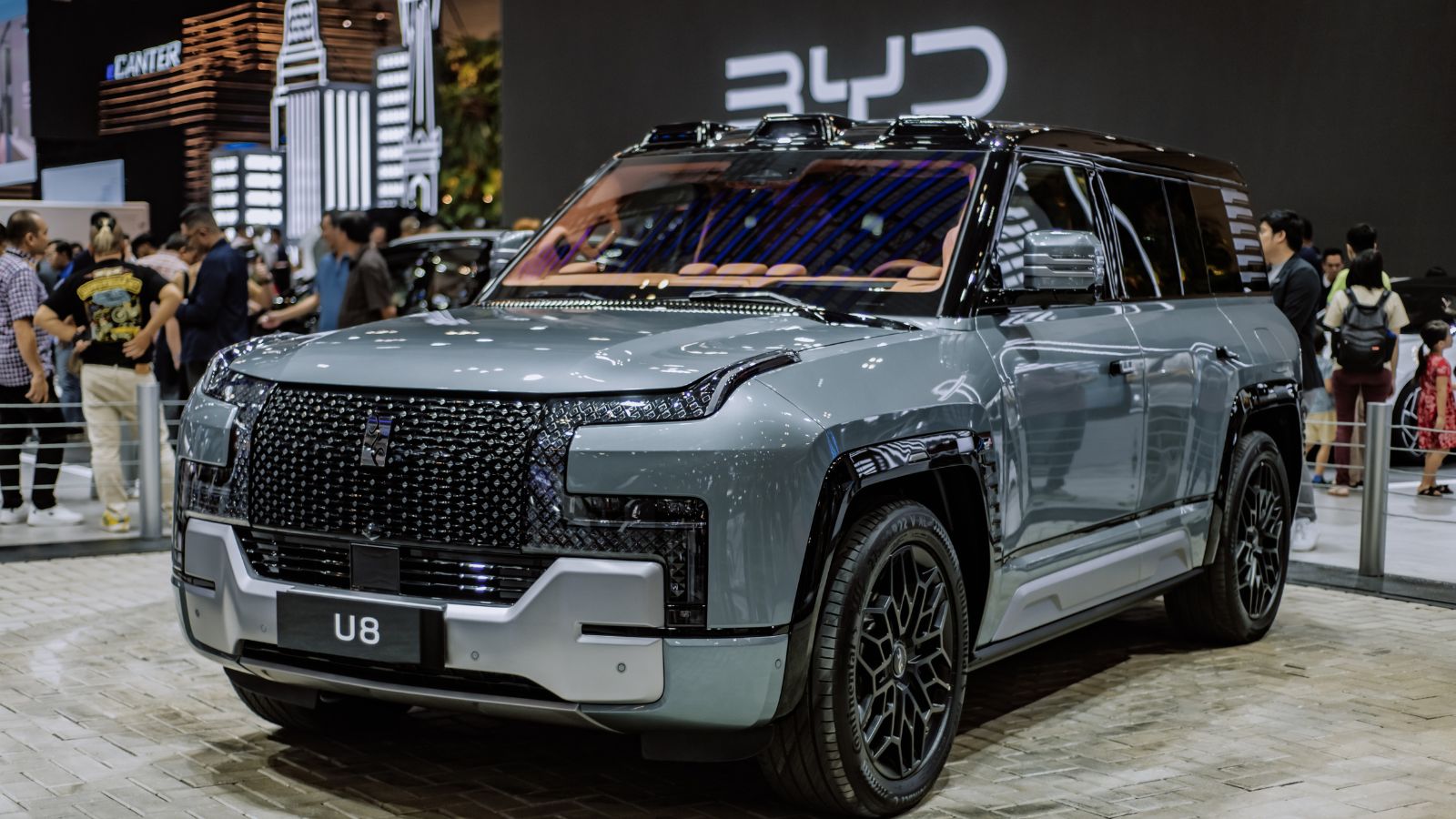
The move lands at an awkward moment for the Chinese automaker. BYD has become the world’s largest seller of battery-electric vehicles and is laying the groundwork for a Canadian passenger-vehicle launch just as Washington is tightening restrictions on Chinese connected-car technology. Canada, meanwhile, has reopened limited market access for Chinese EVs and is still working through the privacy, cybersecurity and industrial-policy questions that come with them.

Kadena Draws a Hard Line at the Gate

The restriction is unusually concrete. Kadena security personnel are expected to turn away BYD vehicles at entry points starting October 26, with the measure reported to cover privately owned cars, contractor vehicles, taxis, delivery vehicles and other commercial traffic. That means the issue is not limited to military procurement. A service member who owns a BYD, a contractor arriving for work or a taxi carrying someone onto the installation could all be affected. Base spokesperson Lt. Col. Alli Stormer said the vehicles represent an “unacceptable and unmitigable risk” to personnel and the mission, but the base did not publicly identify a specific software system, data transmission or technical flaw behind the decision.

The location makes the order more significant than an ordinary access-policy change. Kadena hosts the U.S. Air Force’s 18th Wing and sits on Okinawa, close to the East China Sea and major regional flashpoints. The Air Force describes the 18th Wing as its largest combat wing and Kadena as the largest Air Force installation in the Pacific. Its role includes tactical airpower, staging, command-and-control support and rapid response across the Indo-Pacific. The publicly confirmed restriction is specific to Kadena; U.S. Forces Korea said the same day that it had no access-policy change to announce.

The Security Concern Is the Car’s Data, Not Its Battery

The fear behind the ban is less about electric propulsion than about what modern vehicles can see, record and transmit. Today’s connected cars can contain multiple exterior cameras, microphones, GPS receivers, cellular links, driver-assistance sensors and software that communicates with remote servers. Reporting on the Kadena order said U.S. officials were concerned that cameras and sensors could collect sensitive information from inside the base. The military has not publicly released evidence that a particular BYD at Kadena transmitted classified information, so the restriction is best understood as a risk-control measure rather than proof that a specific vehicle was used for espionage.

That distinction matches broader U.S. policy. The Commerce Department has already finalized connected-vehicle rules targeting certain hardware and software with links to China or Russia. For model year 2027, the rules prohibit covered connected vehicles using specified Chinese- or Russian-linked software and also restrict sales by manufacturers subject to those countries’ jurisdiction or direction. Restrictions on certain vehicle-connectivity hardware phase in later, for model year 2030 or January 1, 2029 for components without a model year. Washington’s stated concern is that connected vehicles can expose sensitive data or, in extreme cases, create a pathway for remote manipulation.

BYD Is Already on the Pentagon’s Section 1260H List

The Kadena decision did not emerge in a policy vacuum. In June 2026, the U.S. Department of Defense added BYD to its Section 1260H list of companies it determines qualify as “Chinese military companies.” The same update included prominent technology and automotive names such as Alibaba, Baidu and NIO, expanding a list that reached 188 organizations. The Pentagon’s public notice said BYD had affiliations that, in its assessment, met statutory criteria tied to China’s state sector and military-civil fusion framework. Separate procurement restrictions associated with the list limit the Defense Department’s ability to contract with designated companies.

BYD strongly disputes the designation. In a June filing with the Hong Kong Stock Exchange, the company said it is neither a Chinese military company nor a military-civil fusion contributor and argued there was no justification for placing it on the list. BYD also emphasized that the designation is not a general U.S. sanctions list and does not, by itself, prohibit ordinary private parties from doing business with the company. That nuance matters. The Pentagon listing adds to Washington’s security concerns around BYD, but it should not be presented as proof that BYD passenger vehicles are spying. The Kadena ban is a separate installation-security decision layered on top of a broader U.S. policy shift.

BYD’s Scale Makes This More Than a Niche Dispute

BYD is no longer a small foreign brand trying to break into mature auto markets. The company reported sales of about 4.6 million new-energy vehicles in 2025, up 7.7% from the previous year. Its battery-electric passenger-vehicle sales reached roughly 2.26 million, enough to move ahead of Tesla on annual BEV volume for the first time. BYD also said overseas sales exceeded one million vehicles in 2025, showing how quickly the company has moved beyond dependence on its home market. That global expansion is what gives a single-base security restriction wider commercial significance.

For consumers, BYD’s appeal has been built around a broad range of vehicles and aggressive pricing in many international markets. For governments, the same scale raises a different issue: a connected vehicle platform that spreads quickly can create a large data and software footprint just as fast as it creates market share. That is why the debate is increasingly about more than tariffs or factory jobs. BYD’s rise forces policymakers to answer questions about software governance, data access, remote updates and supply-chain dependence at the same time they are evaluating affordability and competition. The company’s size ensures those questions will follow it into every major new market.

Canada Has Reopened the Door to Chinese EVs

Canada is moving in a notably different direction from the United States on market access. Under the Canada-China trade arrangement announced in January 2026, Ottawa established an initial annual quota of 49,000 China-origin electric vehicles that can enter at Canada’s 6.1% most-favoured-nation tariff rate rather than the previous 100% surtax. The quota took effect March 1. Government documents say the volume is scheduled to rise by 6.5% annually, while an increasing share is to be reserved for lower-priced EVs, with 50% of the quota targeted for vehicles with a free-on-board price of C$35,000 or less by the fifth year.

Ottawa has framed the arrangement as a way to expand consumer choice, lower EV costs and encourage future Chinese investment in Canada’s auto sector. It is also a carefully managed opening rather than unrestricted access: importers need shipment-specific permits, and the quota caps how many eligible vehicles can receive the lower tariff. The policy creates an unusual North American split. Chinese automakers face growing technology-based barriers in the United States while Canada is deliberately creating a lane for limited imports. That makes Canada commercially attractive, but it also ensures every security decision south of the border will be watched closely in Ottawa, Ontario and the Canadian auto industry.

BYD Is Building a Canadian Launch Without Selling Cars Yet

BYD’s Canadian entry is real, but it is still in the preparation stage. Reuters reported in June that the company was scouting six Canadian dealership locations and had begun compliance procedures to import two passenger vehicles. By August, BYD had established a dedicated Canadian web presence. Its own Canadian terms of use say vehicles will be sold through approved, independently operated dealers, confirming a conventional retail-network strategy rather than a direct-sales-only model. The same terms identify BYD Canada Company Limited as the operator of the Canadian site.

What is not yet confirmed is just as important. BYD’s Canadian terms state that the site does not currently permit purchases, leases, financing applications, reservations, pre-orders or deposits. They also warn that vehicles shown on the website may be international-market models that are never ultimately offered in Canada. As of the company’s latest public Canadian materials, there is no official consumer launch date, finalized Canadian model lineup or Canadian pricing. That gap is important because speculative prices and model lists have circulated online. The verifiable picture is simpler: BYD is staffing, establishing dealer infrastructure and working through regulatory steps, but Canadian retail sales have not yet formally begun.

Canada’s Next Question Is How to Regulate the Connected Car

The Kadena ban arrives while Canadian officials are already debating many of the same underlying risks. The Office of the Privacy Commissioner of Canada warned Parliament in 2026 that modern EVs can collect and generate large amounts of data and that the privacy risk is not unique to vehicles from one country. It also noted that a foreign manufacturer may be subject to the laws of its home jurisdiction, potentially creating circumstances in which Canadian vehicle data could become accessible to foreign law-enforcement or national-security authorities. Public Safety Canada has similarly acknowledged security risks across connected devices, including vehicles, while saying imported cars must meet Canadian standards.

That creates a more complicated policy choice than simply “ban” or “allow.” Canada can permit Chinese EV imports while still imposing cybersecurity, privacy, procurement or access restrictions for sensitive facilities. The U.S. example shows those layers can coexist: a consumer vehicle may be legal to own in one jurisdiction yet prohibited from a military base because the risk tolerance is much lower. For BYD, the Canadian launch will therefore be judged on more than price, range and charging speed. Regulators, fleet operators and consumers will also be looking for clear answers about where data goes, who can access it, how software is updated and what safeguards apply when a connected car enters a sensitive environment.


Recommended.

27 Things Canadian Drivers Should Do Before Pothole Season Destroys Their Suspension

18 Things Canadians Forget to Budget For Before the First Summer Drive

May 8, 2026
Chevrolet Restricts Silverado’s Multi-Flex Tailgate to Three Trims—and Raises the U.S. Option Price

Chevrolet Restricts Silverado’s Multi-Flex Tailgate to Three Trims—and Raises the U.S. Option Price

October 4, 2026

Trending.

Canada’s Ballard Puts a 250,000-Mile Performance Guarantee Behind Hydrogen Buses

Canada’s Ballard Puts a 250,000-Mile Performance Guarantee Behind Hydrogen Buses

October 2, 2026
10 Reasons the Canadian Car Market Feels Different Heading Into Summer

Canadian Auto Sales Rise 3.4% for a Fourth Straight Month—but 2026 Still Trails Last Year

October 3, 2026
PBO Warns U.S. Tariff War Threatens Up to 185,000 Canadian Jobs, With Auto Manufacturing Among Hardest Hit

PBO Warns U.S. Tariff War Threatens Up to 185,000 Canadian Jobs, With Auto Manufacturing Among Hardest Hit

October 21, 2026
22 Ways Canadians Accidentally Void Their Vehicle Warranty

B.C. Drivers Vote Today on the Future of ICBC Insurance as Parties Clash Over Private Competition and No-Fault Coverage

October 24, 2026
15 Vehicles Canadians May Want to Avoid Before May Long Weekend

Tesla Buyers in Canada Are Reporting Fresh Model Y Delivery Delays as Some Orders Slip Into October and November 2.

September 27, 2026
  • About
  • Contact
  • Privacy Policy
  • Disclaimer
  • Editorial Policies
  • Terms and Conditions
A Revir Media Group Website

2026 Autoigloo - © All rights reserved

No Result
View All Result
  • News & Trends
  • Car Reviews
  • Buying Guides
  • Comparisons
  • EVs & Hybrids
  • More
    • Pricing & Deals
    • Winter Driving
    • Ownership & Maintenance

2026 Autoigloo - © All rights reserved

This website uses cookies. By continuing to use this website you are giving consent to cookies being used. Visit our Privacy and Cookie Policy.




