




















• About
  • Contact
AutoIgloo
  • News & Trends
    Stellantis Puts 800,000 Connected Work Vehicles Under New Monitoring System — Canada Rollout Not Named

    More Than 2,000 Brampton Auto Jobs Hang in the Balance as Stellantis Workers Begin Strike Vote

    Waymo Picks Singapore for Its First Southeast Asian Robotaxi Market With All-Electric Jaguar Fleet

    Waymo’s Toronto Robotaxis Face a Major Canadian Winter Test as Experts Warn Snow Can Confuse Sensors

    Canadian Gas Prices Jump More Than Three Cents to Nearly $1.80/L as $1.85 Looms

    Canadian Gasoline Falls 2.9 Cents, but Diesel Remains Near $2.64 a Litre

    ⁠Oil Drops 2% but Stays Near $100 as Canadian Drivers Face Another Volatile Fuel Day

    Trump Waives 100% Tariffs on Major Russian-Oil Buyers as Canadian Drivers Face High Fuel Prices

    Ottawa Commits $18.5 Million to Volvo-Owned Quebec Plant to Help Protect 1,265 Auto-Sector Jobs

    Ottawa Commits $18.5 Million to Volvo-Owned Quebec Plant to Help Protect 1,265 Auto-Sector Jobs

    Stellantis Launches Up to $7,500 in Canadian Jeep Discounts as Tariff Fight Squeezes Auto Market

    Stellantis Explores China-Built Jeep Imports for Canada as 2,200 Brampton Jobs Hang in the Balance

  • Car Reviews
    Honda Asked Suppliers for 30% Parts Cost Cuts as $9.4-Billion Savings Drive Hits Global Supply Chain

    Why Some Buyers Are Choosing Older Hondas Over Newer SUVs

    18 Things That Can Make a Car Unsafe for Winter Road Trips

    Why Some Drivers Are Avoiding Vehicles With Complex Infotainment Systems

    21 Cars Canadians Are Starting to Regret Buying

    Why Some Drivers Regret Buying Big Wheels and Low-Profile Tires

    17 Vehicles That Are Quietly Getting Crushed by Insurance Costs in Canada

    Why So Many Drivers Are Nervous About Chinese-Made EV Batteries

    20 Used SUVs Canadians Should Think Twice About Buying

    20 Used SUVs Canadians Should Think Twice About Buying

    15 Vehicles That Are Starting to Feel Like a Bad Deal Around May Long Weekend

    15 Vehicles That Are Starting to Feel Like a Bad Deal Around May Long Weekend

  • Buying Guides
    18 Things That Can Make a Car Harder to Park Than Expected

    Why Some Buyers Regret Choosing the Sport Package

    The Traffic Stop Mistake That Can Turn a Warning Into a Ticket

    20 Things Canadians Should Check Before Buying a Vehicle With a Loan Still Owing

    The Dealership Fee That Buyers Should Always Ask About

    The Dealership Fee That Buyers Should Always Ask About

    23 Features That Are Making New Cars Harder (and Pricier) to Repair in Canada

    Why Some Canadians Are Avoiding Cars With Expensive Windshields

    18 Red Flags a Used Vehicle May Be a Money Pit

    The Car Buying Mistake That Makes Negotiating Almost Impossible

    Why Some Canadians Are Regretting Buying Vehicles With No Spare Tire

    Why Some Canadians Are Regretting Buying Vehicles With No Spare Tire

  • Comparisons
    Honda Asked Suppliers for 30% Parts Cost Cuts as $9.4-Billion Savings Drive Hits Global Supply Chain

    Why Some Buyers Are Choosing Older Hondas Over Newer SUVs

    25 EV Charging Mistakes Canadians Make in March (That Wreck Range)

    Why Some Canadians Are Choosing Hybrids Over Full EVs Again

    21 Used Car Features That Can Become Expensive Problems Later

    Why Some Canadians Are Choosing Front-Wheel Drive Over All-Wheel Drive

    Canada’s Auto Fight Gets Uglier as BYD Threatens to Sue Trump Administration

    Tesla Vs. BYD: Are Chinese EV’s Actually Better for Canadians?

    17 Vehicles That Are Quietly Getting Crushed by Insurance Costs in Canada

    Why So Many Drivers Are Nervous About Chinese-Made EV Batteries

    20 Used SUVs Canadians Should Think Twice About Buying

    20 Used SUVs Canadians Should Think Twice About Buying

  • EVs & Hybrids
    Geely Auto’s Core Profit Jumps 46% as Chinese EV Expansion Accelerates — With Canada Now Opening to Geely-Owned Lotus

    Geely Confirms Canadian Vehicle Sales for 2027 as Chinese Automakers Challenge Established Brands

    18 Cars That Will Feel Dated Fast as New Chinese EVs Arrive

    12 EVs Now Price Below $41,000 in Canada—Fiat 500e Falls Under $30,000 With Rebate

    The Used EV Question Canadians Should Ask Before Buying One

    The Used EV Question Canadians Should Ask Before Buying One

    Why Some EV Owners Are Getting Sticker Shock From Home Charging Setups

    Why Some EV Owners Are Getting Sticker Shock From Home Charging Setups

    20 Signs Your Car Battery Is About to Leave You Stranded

    Canadian Auto Jobs Become a Central Fault Line as Ottawa Reveals Why It Rejected U.S. Vehicle Terms

    25 EV Charging Mistakes Canadians Make in March (That Wreck Range)

    Why Some Canadians Are Choosing Hybrids Over Full EVs Again

  • More
    • Pricing & Deals
    • Winter Driving
    • Ownership & Maintenance
No Result
View All Result
AutoIgloo
No Result
View All Result

Home » News & Trends

Trump Expects Canada to Contact Him in 3–4 Weeks as U.S. Motorcycle Import Ban Starts Tuesday

Nate Brewer by Nate Brewer
September 29, 2026
Reading Time: 5 mins read
A A
Photo Credit: Shutterstock

Photo Credit: Shutterstock

466
SHARES
1.5k
VIEWS
Share on FacebookShare on Twitter

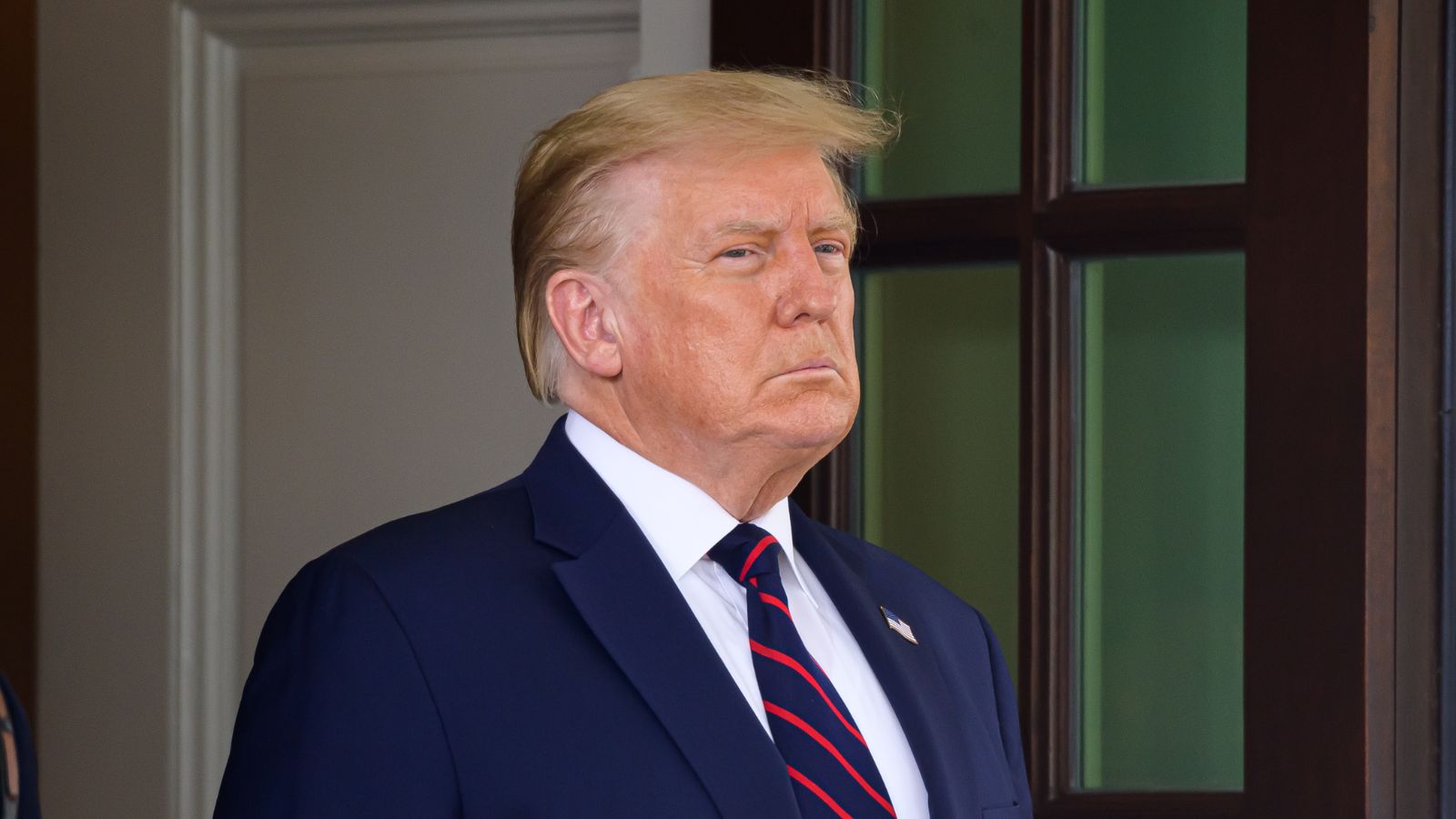
With only hours remaining before another U.S. trade restriction takes effect, President Donald Trump says he expects Canada to return to the negotiating table within three or four weeks. Speaking in the Oval Office on Monday, Trump predicted Canadian officials would contact Washington, apologize and agree to what he described as a fair trade deal. Canada has not publicly adopted that timetable.

At 12:01 a.m. Eastern Time Tuesday, the United States is scheduled to begin excluding a specific category of Canadian motorcycles from importation. The measure is narrower than a blanket motorcycle ban: it covers Canadian-origin motorcycles and similar cycles with internal-combustion engines larger than 800 cc. It arrives after weeks of escalating tariffs, counter-tariffs and stalled negotiations between two economies that remain deeply connected.

Trump’s Three-to-Four-Week Timeline Is His Expectation, Not a Jointly Announced Schedule

Trump’s comments on September 28 introduced a surprisingly specific window into a dispute that had recently appeared stuck. The Canadian Press reported that Trump told reporters he expected Canada to contact the United States in the next three or four weeks and ultimately agree to a deal. He also predicted that Canadian officials would apologize. Those comments represent Trump’s description of what he believes will happen, rather than a timetable announced jointly by Ottawa and Washington. The distinction matters because negotiations have been suspended since August and neither government announced a new negotiating round alongside Trump’s remarks.

The comments also came only days after U.S. Trade Representative Jamieson Greer described Washington’s posture differently. On September 25, Greer said the Trump administration was comfortable with the existing situation and saw “no urgency” to reach an agreement with Canada. Reuters reported that the administration was prepared to maintain the standoff even as additional import restrictions approached. Canada’s publicly reported response Monday was similarly cautious: Canada-U.S. Trade Minister Dominic LeBlanc’s office emphasized protecting Canadian workers, farmers, families and businesses rather than endorsing Trump’s proposed timetable.

The Motorcycle Ban Is Much Narrower Than a Ban on Every Canadian Motorcycle

The motorcycle measure taking effect Tuesday does not cover every two-wheeled vehicle manufactured in Canada. The official White House annex identifies a single tariff classification, HTSUS 8711.50.00. It covers motorcycles, mopeds and similar cycles equipped with reciprocating internal-combustion piston engines exceeding 800 cubic centimetres. That means smaller-engine motorcycles and electric motorcycles are not included in this particular motorcycle prohibition. The effective time specified in the presidential proclamation is 12:01 a.m. Eastern Time on September 29, 2026

There is another important customs detail. Covered products imported before September 29 but not yet entered for consumption or withdrawn from a warehouse remain subject to the earlier 50 per cent duty rather than automatically becoming prohibited imports. For newly imported covered goods, however, the new measure changes the treatment from a steep tariff to outright exclusion from the U.S. market. The White House annex also cautions that its written product description is informational; the precise legal scope comes from the Harmonized Tariff Schedule classification, with questions ultimately handled by U.S. Customs and Border Protection.

Washington Is Using an Obscure 1930 Law to Impose the Restriction

The legal mechanism behind the motorcycle ban is Section 338 of the Tariff Act of 1930. The statute allows a U.S. president, under specified circumstances involving alleged discrimination against American commerce, to impose additional duties of up to 50 per cent. It also contains authority to exclude products from a foreign country if the alleged discrimination is maintained or increased and the president determines exclusion is consistent with U.S. and public interests. The Trump administration relied on that provision first for tariffs and is now using its exclusion authority for selected Canadian goods.

The use of Section 338 is unusual enough to add another layer of uncertainty. The Associated Press reported in August that the authority had never previously been used to impose tariffs and had therefore never been tested in court in this form. Legal experts interviewed by AP disagreed about how modern trade laws interact with the Depression-era provision. Washington says Canadian treatment of U.S. autos, dairy and alcoholic beverages justified the measures. Ottawa disputes important parts of that characterization, including maintaining that its administration of CUSMA dairy tariff-rate quotas complies with the agreement. Those competing positions remain central to the broader dispute.

The Dispute Shifted Quickly From Promising Talks to 50 Per Cent Tariffs

The current confrontation looked considerably less severe in mid-August. On August 18, Prime Minister Mark Carney said Canada and the United States had made “substantial progress” in intensive discussions, while acknowledging that important work remained. Washington postponed implementation of its planned 50 per cent Section 338 tariffs until the end of August 21, effectively creating a three-day window for negotiations to continue. That extension did not produce an agreement. The additional U.S. duties became effective at 12:01 a.m. Eastern Time on August 22.

The two governments subsequently described the collapse differently. U.S. proclamations said Canada had reneged on a commitment and stopped negotiating in good faith. Ottawa said the United States introduced terms that were not in Canada’s economic interest and that Canada suspended negotiations rather than accept them. Reuters reported at the time that talks had failed after several intense days of negotiations in Washington. That disagreement over how negotiations ended helps explain why Trump’s new three-to-four-week prediction should not be mistaken for evidence that the underlying disputes have already been resolved.

Canada Has Already Answered With C$27.6 Billion in Counter-Tariffs

Ottawa has moved beyond verbal objections. According to the Department of Finance, Canada imposed counter-tariffs effective September 8 covering C$27.6 billion worth of U.S. imports. Depending on the product, the surtaxes are 15, 25 or 50 per cent, with affected areas including steel, aluminum, dairy, appliances, agricultural equipment, pulp and paper, plastics and electronics. The government described the measures as a dollar-for-dollar response to the U.S. Section 338 actions. Existing Canadian countermeasures affecting some other U.S. products also remain in place.

Canada has paired the retaliation with programs intended to cushion businesses and workers from the resulting disruption. Ottawa announced C$7.5 billion in new and enhanced assistance, on top of nearly C$25 billion it says had already been provided since U.S. tariff measures began affecting Canadian industries. The government has also retained a tariff-remission process for exceptional circumstances, including cases where necessary inputs cannot reasonably be sourced domestically or from non-U.S. suppliers. That mechanism is significant because tariffs intended as retaliation can also increase costs for Canadian companies that rely on specialized American components or machinery.

Motorcycles Are a Small Piece of a Much Larger Economic Relationship

The significance of Tuesday’s action goes well beyond the number of motorcycles affected. Statistics Canada reported that 71.7 per cent of Canada’s merchandise exports went to the United States in 2025. That was already down sharply from 75.9 per cent in 2024 as Canadian companies expanded sales elsewhere. Merchandise exports to the U.S. fell 5.8 per cent during 2025, while exports to countries other than the United States increased 17.2 per cent. Those figures show both Canada’s continued dependence on the American market and the scale of the diversification already underway.

Employment exposure makes the relationship even more tangible. A Statistics Canada study estimated that about 1.9 million Canadians, or 9.3 per cent of total employment in 2024, worked in industries significantly dependent on U.S. demand for Canadian exports. Transportation equipment manufacturing was especially exposed, with an estimated 62.5 per cent of jobs linked to U.S. export demand under the study’s methodology. The motorcycle prohibition therefore matters partly as a precedent: businesses throughout cross-border manufacturing must now consider not only tariffs but the possibility that selected products can move from expensive to import to impossible to import under current rules.

The Ban Has No Automatic Three-to-Four-Week Expiry

Nothing in Tuesday’s motorcycle measure says it will disappear automatically if Canada’s expected contact with Washington occurs within the period Trump described. The September 8 proclamation makes the exclusion effective beginning September 29 without setting a three- or four-week expiration date. Section 338 does, however, allow the president to suspend, revoke, supplement or amend proclamations when the president determines that the public interest calls for a change. That means a future agreement could alter the restrictions, but another official action would be required.

For Canadian exporters, importers and suppliers, the practical signals to watch are therefore more concrete than political rhetoric: new Customs and Border Protection guidance, another presidential proclamation, changes to Canada’s countermeasures and a formal announcement that negotiations have resumed. Trump’s Monday remarks suggest he expects movement within weeks, while Greer’s comments only days earlier indicated Washington did not feel pressured to make a deal quickly. Both statements can be reported as positions of the administration; neither establishes when an agreement will actually occur. For now, the firm date is September 29—the point at which the targeted motorcycle restriction and other selected Canadian import bans take effect.


Recommended.

18 Cars With Parts Prices So Wild They’re Becoming Hard to Own in Canada

16 Vehicles That Are Getting Punished by the New Cost of Ownership in Canada

May 20, 2026
15 Cars That Dealers Are Quietly Struggling to Move in Canada (Spring 2026)

I drove the Ford Mustang Mach E in a Canadian Winter (An Honest Review)

April 1, 2026

Trending.

Chinese EV Price Pressure Gets a New Benchmark as Voyah Opens $63,420 Luxury MPV Orders

Europe’s EV Share Jumps to 30.5% as Electric-Car Sales Blow Past Forecasts

September 17, 2026
GM Readies New Gas and Duramax Engines for Silverado HD and Sierra HD Ahead of November Production

GM’s New V8s Put Canadian Auto Jobs Back in Focus at St. Catharines Plant

September 19, 2026
Canada’s Auto Industry Says Tariff Fight Has Already Cost the Sector More Than $100 Billion

Trump’s 50% Canada Auto-Tariff Threat Is Now Forcing Automakers to Plan Around a January 1 Deadline

September 27, 2026
Canada’s Ballard Puts a 250,000-Mile Performance Guarantee Behind Hydrogen Buses

Canada’s Ballard Puts a 250,000-Mile Performance Guarantee Behind Hydrogen Buses

October 2, 2026
Volvo Starts Scoring How Drivers Brake and Corner for Insurance Discounts — Canada Is Left Out of First Rolloutv

Volvo Plans 13 New Models by 2030 as EV and Hybrid Battle Intensifies

September 17, 2026
  • About
  • Contact
  • Privacy Policy
  • Disclaimer
  • Editorial Policies
  • Terms and Conditions
A Revir Media Group Website

2026 Autoigloo - © All rights reserved

No Result
View All Result
  • News & Trends
  • Car Reviews
  • Buying Guides
  • Comparisons
  • EVs & Hybrids
  • More
    • Pricing & Deals
    • Winter Driving
    • Ownership & Maintenance

2026 Autoigloo - © All rights reserved

This website uses cookies. By continuing to use this website you are giving consent to cookies being used. Visit our Privacy and Cookie Policy.