



















• About
  • Contact
AutoIgloo
  • News & Trends
    Toronto Gas Forecast Drops to $1.79, but Diesel Climbs to $2.63 a Litre—An 84-Cent Gap

    Montréal Diesel Prices Reach $2.92 a Litre Sunday, Nearly $1 More Than Regular Gas

    19 Things That Can Make Your Car Insurance Claim Get Denied

    B.C. Conservatives Win 64 Seats, Putting ICBC Insurance Changes and EV-Quota Repeal on the Agenda

    Nine in 10 Car Buyers Still Finish at a Dealership, Global Survey Including Canada Finds

    Ottawa Warns EV Dealers of Rebate Portal Interruption Through Sunday Afternoon

    18 Cars That Could Be the Next Big “Pass” for Canadian Buyers

    Toyota’s bZ EV Sales Surge 378% in Canada as Volkswagen Tiguan Jumps 90%

    22 Ways Canadians Accidentally Void Their Vehicle Warranty

    B.C. Drivers Vote Today on the Future of ICBC Insurance as Parties Clash Over Private Competition and No-Fault Coverage

    Tesla Stops $39,490 Model 3 Orders in Canada, Blames Import Quota Despite 33,069 Unused Slots

    Tesla’s New Roadster Goes on Public Display for Four Days as Questions Remain About Its Extreme Performance Claims

  • Car Reviews
    Honda Asked Suppliers for 30% Parts Cost Cuts as $9.4-Billion Savings Drive Hits Global Supply Chain

    Why Some Buyers Are Choosing Older Hondas Over Newer SUVs

    18 Things That Can Make a Car Unsafe for Winter Road Trips

    Why Some Drivers Are Avoiding Vehicles With Complex Infotainment Systems

    21 Cars Canadians Are Starting to Regret Buying

    Why Some Drivers Regret Buying Big Wheels and Low-Profile Tires

    17 Vehicles That Are Quietly Getting Crushed by Insurance Costs in Canada

    Why So Many Drivers Are Nervous About Chinese-Made EV Batteries

    20 Used SUVs Canadians Should Think Twice About Buying

    20 Used SUVs Canadians Should Think Twice About Buying

    15 Vehicles That Are Starting to Feel Like a Bad Deal Around May Long Weekend

    15 Vehicles That Are Starting to Feel Like a Bad Deal Around May Long Weekend

  • Buying Guides
    18 Things That Can Make a Car Harder to Park Than Expected

    Why Some Buyers Regret Choosing the Sport Package

    The Traffic Stop Mistake That Can Turn a Warning Into a Ticket

    20 Things Canadians Should Check Before Buying a Vehicle With a Loan Still Owing

    The Dealership Fee That Buyers Should Always Ask About

    The Dealership Fee That Buyers Should Always Ask About

    23 Features That Are Making New Cars Harder (and Pricier) to Repair in Canada

    Why Some Canadians Are Avoiding Cars With Expensive Windshields

    18 Red Flags a Used Vehicle May Be a Money Pit

    The Car Buying Mistake That Makes Negotiating Almost Impossible

    Why Some Canadians Are Regretting Buying Vehicles With No Spare Tire

    Why Some Canadians Are Regretting Buying Vehicles With No Spare Tire

  • Comparisons
    Honda Asked Suppliers for 30% Parts Cost Cuts as $9.4-Billion Savings Drive Hits Global Supply Chain

    Why Some Buyers Are Choosing Older Hondas Over Newer SUVs

    25 EV Charging Mistakes Canadians Make in March (That Wreck Range)

    Why Some Canadians Are Choosing Hybrids Over Full EVs Again

    21 Used Car Features That Can Become Expensive Problems Later

    Why Some Canadians Are Choosing Front-Wheel Drive Over All-Wheel Drive

    Canada’s Auto Fight Gets Uglier as BYD Threatens to Sue Trump Administration

    Tesla Vs. BYD: Are Chinese EV’s Actually Better for Canadians?

    17 Vehicles That Are Quietly Getting Crushed by Insurance Costs in Canada

    Why So Many Drivers Are Nervous About Chinese-Made EV Batteries

    20 Used SUVs Canadians Should Think Twice About Buying

    20 Used SUVs Canadians Should Think Twice About Buying

  • EVs & Hybrids
    Geely Auto’s Core Profit Jumps 46% as Chinese EV Expansion Accelerates — With Canada Now Opening to Geely-Owned Lotus

    Geely Confirms Canadian Vehicle Sales for 2027 as Chinese Automakers Challenge Established Brands

    18 Cars That Will Feel Dated Fast as New Chinese EVs Arrive

    12 EVs Now Price Below $41,000 in Canada—Fiat 500e Falls Under $30,000 With Rebate

    The Used EV Question Canadians Should Ask Before Buying One

    The Used EV Question Canadians Should Ask Before Buying One

    Why Some EV Owners Are Getting Sticker Shock From Home Charging Setups

    Why Some EV Owners Are Getting Sticker Shock From Home Charging Setups

    20 Signs Your Car Battery Is About to Leave You Stranded

    Canadian Auto Jobs Become a Central Fault Line as Ottawa Reveals Why It Rejected U.S. Vehicle Terms

    25 EV Charging Mistakes Canadians Make in March (That Wreck Range)

    Why Some Canadians Are Choosing Hybrids Over Full EVs Again

  • More
    • Pricing & Deals
    • Winter Driving
    • Ownership & Maintenance
No Result
View All Result
AutoIgloo
No Result
View All Result

Home » News & Trends

Toyota’s bZ EV Sales Surge 378% in Canada as Volkswagen Tiguan Jumps 90%

Nate Brewer by Nate Brewer
October 25, 2026
Reading Time: 5 mins read
A A
Photo Credit: Shutterstock

Photo Credit: Shutterstock

465
SHARES
1.5k
VIEWS
Share on FacebookShare on Twitter

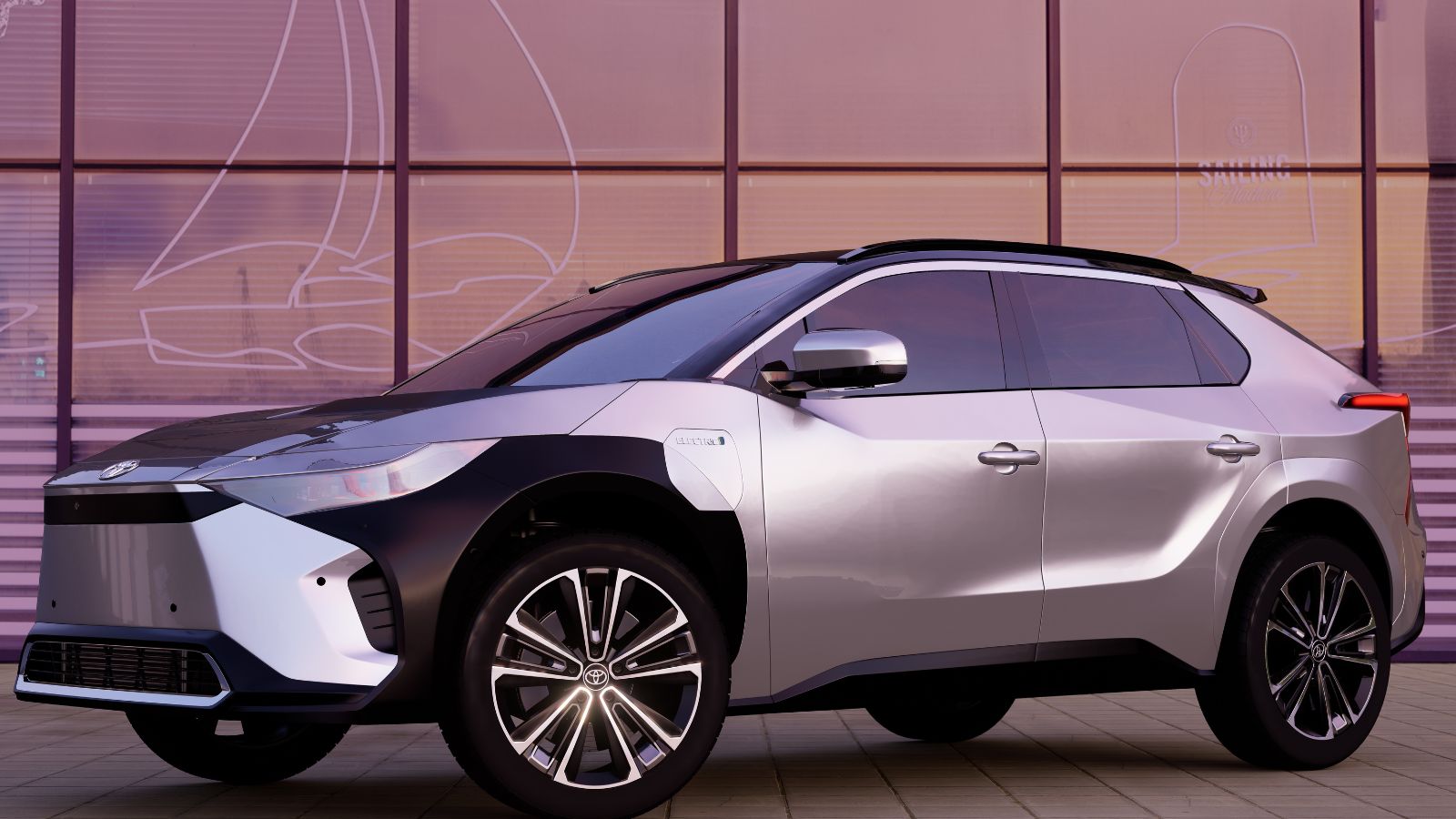
Canada’s new-vehicle market has hardly been booming in 2026, which makes two of the year’s biggest model-level gains especially striking. Through the first nine months, Toyota’s bZ battery-electric SUV reached 11,030 Canadian sales, an extraordinary 378.1% increase from the same period last year. Volkswagen’s Tiguan moved in a very different direction technologically but produced another eye-catching result, with 24,392 sales and year-over-year growth of 89.9%.

Those gains came while Canada’s overall new light-vehicle market was essentially flat, with roughly 1.45 million vehicles sold through September and volumes down about 0.4% from a year earlier. The numbers therefore point to more than a rising tide. Toyota has transformed the appeal of its electric crossover at the same time federal EV incentives have returned, while Volkswagen is benefiting from a major Tiguan redesign and a product positioned directly in the heart of Canada’s compact-SUV market.

Toyota bZ Turns a Weak Starting Point Into One of Canada’s Biggest EV Comebacks

Toyota’s 11,030 bZ sales through September represent a dramatic turnaround from roughly 2,300 units during the comparable nine months of 2025. Part of that 378% increase needs to be understood in the context of an unusually weak base year for electric vehicles. Canada’s zero-emission vehicle market fell sharply in 2025 as incentive programs changed: Statistics Canada reported that new ZEV registrations declined 34.7% for the year, including a 43.1% drop in registrations of battery-electric vehicles. The environment changed again in 2026. Ottawa’s Electric Vehicle Affordability Program made qualifying battery-electric vehicles eligible for incentives of up to $5,000, with purchases or leases initiated from February 16 potentially qualifying. By the second quarter, Statistics Canada recorded 40,585 new battery-electric registrations, up 37.4% from the same quarter of 2025. Total ZEV registrations reached 58,811, or 10.7% of all new registrations. Toyota entered that improving market with a much more competitive vehicle than the original bZ4X. For 2026, the automaker shortened the name to bZ and substantially revised the electric crossover. The XLE AWD version received a manufacturer-estimated range of up to 468 kilometres, compared with 367 kilometres for the outgoing AWD model, while the Limited AWD is rated at 436 kilometres and the front-wheel-drive XLE at 380 kilometres. AWD output climbed from 214 horsepower to 338 horsepower, giving the vehicle an estimated 0-100 km/h time of about 5.1 seconds. Toyota also adopted a native North American Charging System port, increased the onboard AC charger from 7 kW to 11 kW and added battery preconditioning to improve charging performance in cold weather. Under ideal conditions, Toyota says DC fast charging can take the battery from 10% to 80% in approximately 30 minutes.

Those improvements help explain why the bZ is behaving differently from the model that struggled through much of 2025. The entry XLE FWD launched with a Canadian MSRP of $45,990 before applicable charges, putting at least part of the range within reach of the federal incentive rules, subject to the program’s transaction-value and other eligibility requirements. That combination matters because the federal government is offering up to $5,000 for eligible battery-electric vehicles in 2026, an amount scheduled to fall to $4,000 in 2027. For households already comparing a gasoline crossover with an EV, several thousand dollars of assistance combined with substantially longer range and easier access to DC fast charging can change the calculation. The bZ’s performance is also part of a wider acceleration in Toyota Canada’s electrified business. Toyota Canada reported 40,019 electrified Toyota and Lexus vehicles sold in the third quarter, representing 65.7% of company sales during the period. Through September, the company had sold 130,369 electrified vehicles, already exceeding the 123,879 it sold during all of 2025. The bZ itself recorded its best-ever third quarter. None of that means Toyota has suddenly become dependent on battery-electric vehicles; hybrids remain central to its Canadian strategy, and established products such as the RAV4 still sell at far greater volumes. What the 378% increase does show is that Toyota has finally found significant traction for its dedicated electric crossover. It is also a reminder that percentage gains this large usually involve several forces at once: a depressed comparison year, stronger government incentives, increased supply and a redesigned vehicle addressing some of the weaknesses that previously discouraged buyers. If that momentum carries into 2027 after the federal incentive begins shrinking, it would provide stronger evidence that the bZ’s improvement is sustainable rather than simply a rebate-assisted rebound.

Volkswagen Tiguan Nearly Doubles Sales as Its Redesign Finds Canadian Buyers

Volkswagen’s Tiguan tells a different story. There is no federal EV incentive driving its growth, and the Canadian 2026 lineup remains powered by turbocharged gasoline engines. Yet sales reached 24,392 units during the first nine months of 2026, an increase of 89.9% from approximately 12,848 during the same period a year earlier. The Tiguan sold 8,705 units in the third quarter alone, 26.1% more than in Q3 2025, suggesting that the improvement did not disappear once the easier early-year comparisons passed. By September, the 2026 year-to-date total had already surpassed the roughly 21,500 Tiguans sold during the entire 2025 calendar year. A major reason is timing. Volkswagen introduced the third-generation Tiguan for the 2025 model year, with Canadian deliveries beginning as the redesigned vehicle reached dealerships that spring. The previous Tiguan’s 184-horsepower engine was replaced by a 201-horsepower version of Volkswagen’s turbocharged 2.0-litre four-cylinder, paired with an eight-speed automatic transmission and standard 4MOTION all-wheel drive in Canada. The redesigned model also switched fully to a two-row, five-passenger layout and received a noticeably more upscale interior, redesigned dashboard and larger infotainment system. In other words, much of 2025 was a transition year, while 2026 has given Volkswagen a longer period with the new generation fully established in showrooms. That distinction matters when interpreting a 90% growth rate: the number represents genuine volume growth, but it also reflects how model changeovers can temporarily suppress the previous year’s comparison base.

Volkswagen has continued adding reasons for buyers to notice the Tiguan rather than leaving the redesign untouched. The regular 2026 versions produce 201 horsepower and 221 lb-ft of torque, while the Highline Turbo R-Line now offers 268 horsepower and 258 lb-ft from a more powerful version of the same 2.0-litre turbo engine. All-wheel drive remains standard, and Volkswagen says the regular 4MOTION versions are rated at an estimated 9.2 L/100 km combined, with the higher-output Turbo R-Line at 9.5 L/100 km. Maximum cargo volume is listed at 1,668 litres with the second-row seats folded. Those specifications place the Tiguan squarely in the practical family-crossover market while giving the most expensive version a stronger performance angle than the 2025 lineup offered. Its success is particularly noteworthy because broader Canadian registration data have not been uniformly favourable to gasoline vehicles. In the second quarter of 2026, Statistics Canada recorded gasoline-vehicle registrations down 7.3% from a year earlier, while battery-electric registrations increased 37.4% and conventional hybrids jumped 39.5%. The Tiguan is therefore growing rapidly even as the broader powertrain mix shifts toward electrification. That contrast may be the most important takeaway from the Toyota and Volkswagen numbers. Canadian buyers are not moving in a single direction at the same speed. A substantially improved EV with greater range, easier charging and government support can post a 378% increase at the same time a redesigned gasoline SUV with standard all-wheel drive nearly doubles its sales. Product cycles, pricing, availability and practicality are still powerful enough to override broader market trends. The caution for Volkswagen is similar to Toyota’s: nearly 90% growth will become harder to repeat once the Tiguan is compared against a full year of strong redesigned-model sales. But with 24,392 units already delivered through September, the new generation has moved well beyond a short launch bump and established itself as one of Volkswagen Canada’s most consequential products.

Recommended.

14 Vehicles Canadians Could Regret Financing in 2026

14 Vehicles Canadians Could Regret Financing in 2026

May 24, 2026
23 Cars With Subscription Features Canadians Refuse to Pay For

23 Cars With Subscription Features Canadians Refuse to Pay For

March 30, 2026

Trending.

Canada’s Auto Industry Says Tariff Fight Has Already Cost the Sector More Than $100 Billion

Trump’s 50% Canada Auto-Tariff Threat Is Now Forcing Automakers to Plan Around a January 1 Deadline

September 27, 2026
Canada’s Ballard Puts a 250,000-Mile Performance Guarantee Behind Hydrogen Buses

Canada’s Ballard Puts a 250,000-Mile Performance Guarantee Behind Hydrogen Buses

October 2, 2026
15 Vehicles Canadians May Want to Avoid Before May Long Weekend

Tesla Buyers in Canada Are Reporting Fresh Model Y Delivery Delays as Some Orders Slip Into October and November 2.

September 27, 2026
10 Reasons the Canadian Car Market Feels Different Heading Into Summer

Canadian Auto Sales Rise 3.4% for a Fourth Straight Month—but 2026 Still Trails Last Year

October 3, 2026
PBO Warns U.S. Tariff War Threatens Up to 185,000 Canadian Jobs, With Auto Manufacturing Among Hardest Hit

PBO Warns U.S. Tariff War Threatens Up to 185,000 Canadian Jobs, With Auto Manufacturing Among Hardest Hit

October 21, 2026
  • About
  • Contact
  • Privacy Policy
  • Disclaimer
  • Editorial Policies
  • Terms and Conditions
A Revir Media Group Website

2026 Autoigloo - © All rights reserved

No Result
View All Result
  • News & Trends
  • Car Reviews
  • Buying Guides
  • Comparisons
  • EVs & Hybrids
  • More
    • Pricing & Deals
    • Winter Driving
    • Ownership & Maintenance

2026 Autoigloo - © All rights reserved

This website uses cookies. By continuing to use this website you are giving consent to cookies being used. Visit our Privacy and Cookie Policy.




